There used to be a tiny, wood-paneled pub tucked away on a side street in Portland called The Rusty Spoke that made a beef stew so good it ruined me for all others. When they closed suddenly in 2018 — the landlord sold the building, typical story — I actually stood outside the locked door for a minute, staring at the painted-over windows. I know, dramatic. But that stew? It was the kind of thing you’d order on a rainy Tuesday and think about for the rest of the week. The beef was impossibly tender, the broth was dark and rich, and the vegetables had this perfect texture — soft but not mushy, holding their shape while soaking up all that flavor.
After about twelve attempts — and I’m not exaggerating, my family got real tired of eating “test batches” — I finally cracked the code. The secret wasn’t some fancy wine or a complicated marinating process. It was patience, the right cut of meat, and letting my slow cooker do what it does best. Honestly, I burned through three different slow cookers before I figured out the timing and temperature sweet spot. Let me tell you, there were some truly sad, watery stews in those early days.
This slow cooker beef stew with root vegetables is my love letter to that lost pub. It’s the dish I bring to every potluck, the one friends request when they’re coming over for Sunday dinner, and the meal that makes my house smell like comfort from the moment I walk in the door. Maybe you’ve had that one recipe you just can’t let go of — the one you keep tweaking until it’s absolutely perfect. This is that recipe for me.
Why You’ll Love This Recipe
This isn’t just another beef stew recipe you’ll find floating around the internet. I’ve tested this version more times than I care to count, and every single batch has taught me something new. Here’s why this one stands out from the pack:
- Set It and Forget It : The slow cooker does all the heavy lifting. You’ll spend about 20 minutes prepping in the morning, and by dinner time, you’ve got a meal that tastes like you’ve been slaving over the stove all day.
- Simple Pantry Ingredients : Nothing weird here. No hard-to-find spices, no specialty cuts of meat. You can grab everything at your regular grocery store without breaking the bank.
- Perfect for Hosting : This is the ultimate dinner party move. You can prep everything the night before, toss it in the slow cooker before your guests arrive, and spend your time actually enjoying their company instead of being stuck in the kitchen.
- Crowd-Pleasing Guaranteed : I’ve served this at everything from casual family dinners to holiday gatherings, and it’s never failed me. Even picky eaters come back for seconds.
- Next-Level Comfort : The broth is rich and velvety, the beef melts in your mouth, and the root vegetables add this earthy sweetness that makes every spoonful better than the last.
What really sets this recipe apart is the technique. Instead of just dumping everything in the slow cooker raw, I take a few extra minutes to sear the beef first and deglaze the pan. That little bit of effort creates layers of flavor that you simply can’t get any other way. It’s the difference between a good stew and a memorable one — the kind that makes people close their eyes after that first bite.
This is comfort food at its finest. It’s the meal you make when you want to feed the people you love something that feels like a hug in a bowl. And honestly? It’s pretty impressive to pull off without breaking a sweat.
What Ingredients You Will Need
This recipe uses simple, hearty ingredients that work together to create something truly special. Most of these are pantry staples or easy to find at any grocery store, which makes this perfect for last-minute hosting or meal planning.
For the Beef and Base
- 2 1/2 pounds beef chuck, cut into 2-inch cubes (look for well-marbled pieces — this is key for tenderness)
- 3 tablespoons all-purpose flour (helps thicken the stew and gives the beef a nice crust when searing)
- 2 tablespoons olive oil, divided (I use extra virgin for better flavor)
- 1 large yellow onion, diced (about 2 cups)
- 4 cloves garlic, minced (fresh is non-negotiable here)
- 2 tablespoons tomato paste (adds depth and richness to the broth)
- 1 cup dry red wine (use something you’d actually drink — I like a good Cabernet or Merlot)
- 3 cups beef broth (low-sodium so you can control the salt)
- 2 bay leaves
- 1 teaspoon dried thyme
- 1 teaspoon dried rosemary
- Salt and black pepper to taste
For the Root Vegetables
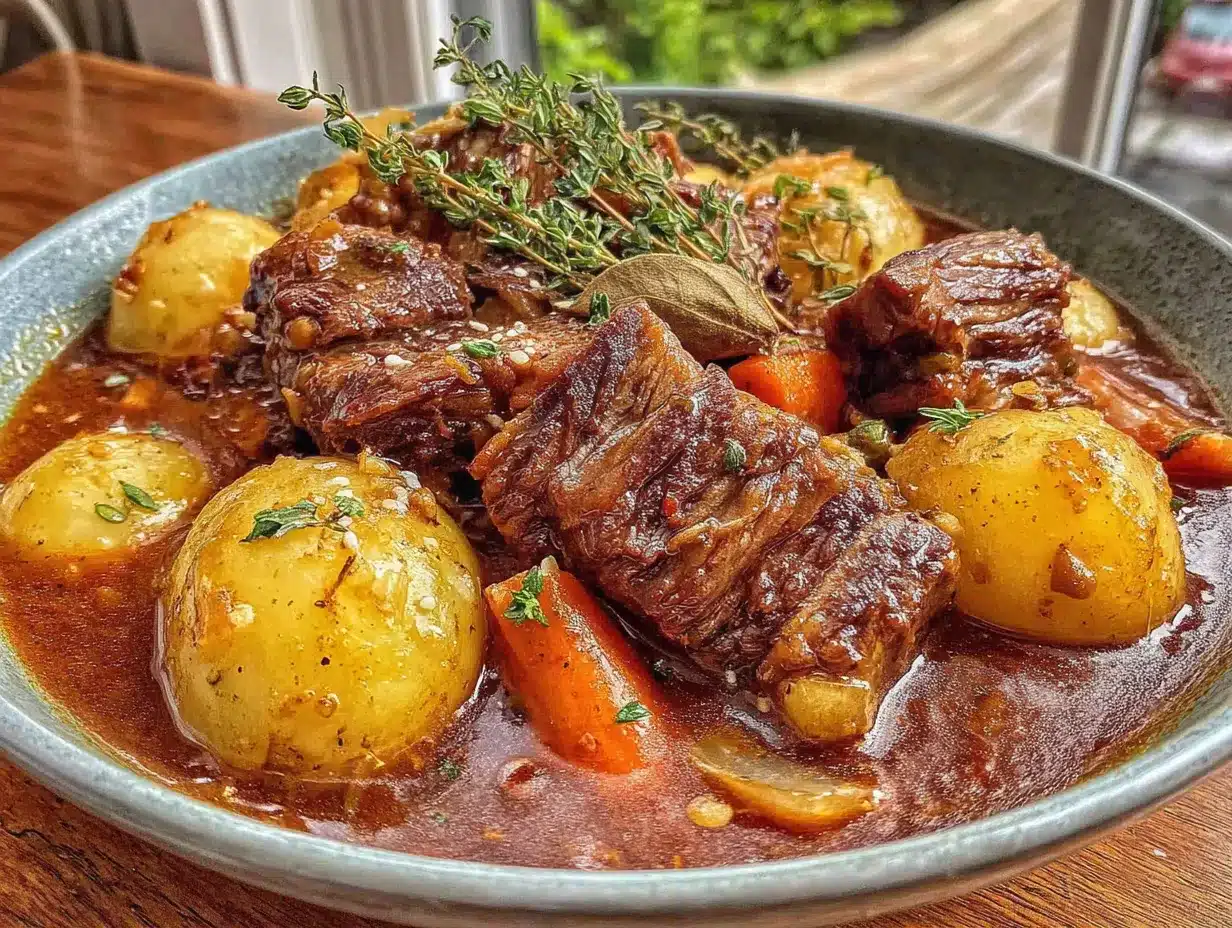
- 4 large carrots, peeled and cut into 2-inch chunks
- 3 parsnips, peeled and cut into 2-inch chunks (adds a subtle sweetness that balances the savory broth)
- 1 1/2 pounds Yukon Gold potatoes, cut into 2-inch chunks (they hold their shape better than russets)
- 2 celery stalks, cut into 1-inch pieces
- 1 cup frozen peas (added at the end for color and sweetness)
For the Garnish
- Fresh parsley, chopped (a sprinkle right before serving makes everything look finished)
- Crusty bread for serving (absolutely essential for soaking up that broth)
Ingredient Tips from My Kitchen
I’ve tried this recipe with different cuts of beef, and chuck is hands-down the winner. It has enough fat and connective tissue to break down into tender, juicy pieces after hours of slow cooking. Stay away from lean cuts like sirloin — they’ll end up dry and tough no matter how long you cook them.
For the wine, I usually grab a bottle of something mid-range — nothing fancy, but nothing from a box either. If you don’t cook with wine, you can substitute an equal amount of additional beef broth with a splash of balsamic vinegar for acidity.
When it comes to potatoes, Yukon Golds are my go-to. They have a buttery texture and hold their shape beautifully, even after hours in the slow cooker. Red potatoes work well too, but russets tend to fall apart and make the broth cloudy.
Equipment Needed
You don’t need a fully decked-out kitchen to make this stew. Here’s what you’ll actually use:
- 6-quart slow cooker (anything between 5 and 7 quarts works fine — just don’t go smaller or you’ll have trouble fitting everything)
- Large heavy-bottomed skillet or Dutch oven (for searing the beef and sautéing the aromatics — cast iron is ideal)
- Sharp chef’s knife (makes cutting beef and vegetables so much easier and safer)
- Cutting board (preferably two — one for meat, one for vegetables)
- Wooden spoon (for scraping up those browned bits from the pan)
- Measuring cups and spoons
- Tongs (for flipping the beef while searing)
- Ladle (for serving)
If you don’t have a slow cooker, you can absolutely make this in a Dutch oven on the stovetop or in the oven at 325°F for about 2 1/2 to 3 hours. I’ve done it both ways, and honestly, the slow cooker version is more forgiving if you get distracted or need to run errands.
One thing I learned the hard way: don’t skip the skillet step just to save on dishes. That fond — the browned bits stuck to the bottom of the pan — is pure flavor gold. Trust me, I tried the “dump and go” method once, and the stew was bland and watery. Never again.
Preparation Method
This recipe comes together in a few simple stages. The active time is about 30 minutes, and then your slow cooker takes over from there.
Step 1: Prep the Beef
Pat the beef cubes dry with paper towels. This is crucial — if the meat is wet, it won’t sear properly and you’ll end up steaming it instead. Season generously with salt and pepper, then toss with the flour until evenly coated. Let it sit for about 5 minutes while you heat your skillet.
Step 2: Sear the Beef
Heat 1 tablespoon of olive oil in your large skillet over medium-high heat until it shimmers. Working in batches so you don’t overcrowd the pan, add the beef cubes in a single layer. Sear for 3-4 minutes per side until deeply browned. You’re looking for a dark, crusty exterior — this is where the flavor lives. Transfer the seared beef to your slow cooker.
Here’s a mistake I made the first few times: I’d move the beef around too much in the pan. Let it sit and develop that crust before you flip it. If it sticks to the pan, it’s not ready to turn yet.
Step 3: Sauté the Aromatics
Reduce the heat to medium and add the remaining 1 tablespoon of olive oil to the same skillet. Add the diced onion and cook for 5-6 minutes, stirring occasionally, until softened and starting to turn golden. Add the minced garlic and cook for another 30 seconds until fragrant. Your kitchen should smell incredible at this point.
Step 4: Build the Flavor Base
Stir in the tomato paste and cook for 1-2 minutes, stirring constantly. It’ll darken slightly and smell even richer. Pour in the red wine and use your wooden spoon to scrape up all those browned bits from the bottom of the pan — that’s pure flavor. Let the wine simmer for 2-3 minutes until it reduces by about half.
Step 5: Assemble in the Slow Cooker
Pour the wine mixture over the beef in the slow cooker. Add the beef broth, bay leaves, thyme, and rosemary. Give everything a gentle stir to combine. Now add the carrots, parsnips, potatoes, and celery on top — don’t stir them in yet. This helps them cook evenly without getting too soft.
Step 6: Cook Low and Slow
Cover and cook on LOW for 8 hours or on HIGH for 4-5 hours. I strongly recommend LOW — the longer, gentler cooking time makes the beef incredibly tender and allows the flavors to meld together beautifully. About 30 minutes before serving, remove the bay leaves and stir in the frozen peas. Let them warm through for a few minutes.
Your stew is ready when the beef is fork-tender and the vegetables are soft but still hold their shape. The broth should be thick and rich, not watery. If it seems thin, you can mash a few of the potato chunks against the side of the slow cooker to thicken it naturally.
Cooking Tips & Techniques
After countless batches of this stew, I’ve picked up a few tricks that make a real difference:
Don’t skip the sear. I know it’s tempting to just throw everything in the slow cooker and walk away, but that browning step creates a depth of flavor that you simply can’t get any other way. The Maillard reaction — that chemical process that happens when meat browns — is responsible for all those rich, savory notes.
Cut your vegetables uniformly. This sounds fussy, but it actually matters. If some pieces are bigger than others, you’ll end up with undercooked chunks next to mushy ones. Aim for 2-inch pieces all around, and they’ll cook at the same rate.
Add peas at the end. Frozen peas only need a few minutes to warm through. If you add them at the beginning, they’ll turn into sad, mushy green specks. Trust me on this one — I learned the hard way.
Season in layers. Season the beef before searing, add salt to the onion mixture, and taste the broth before serving. Building flavor gradually gives you a more complex, well-rounded result than dumping all the salt in at once.
Let it rest. If you have time, let the stew sit in the slow cooker on warm for 30 minutes before serving. The flavors continue to meld and deepen, and the texture improves as everything settles.
One of my biggest failures? I once forgot to add the flour to the beef before searing. The stew came out thin and watery, and I spent an hour trying to fix it with a cornstarch slurry. It worked okay, but it wasn’t the same. That flour coating on the beef does double duty — it helps with browning and acts as a natural thickener as it cooks.
Variations & Adaptations
This recipe is wonderfully flexible. Here are some ways to make it your own:
Gluten-Free Version : Swap the all-purpose flour for a gluten-free all-purpose blend or arrowroot powder. Toss the beef with the alternative flour before searing, and the stew will thicken just the same. I’ve tested this with Bob’s Red Mill 1-to-1 flour and it worked perfectly.
Low-Carb Adaptation : Skip the potatoes and add extra turnips, cauliflower florets, or celery root instead. The texture is similar, and they absorb the broth beautifully without the carbs. My keto friends swear by this version.
Herb Variations : Feel free to play with the herbs. Fresh rosemary and thyme work wonderfully if you have them — just use about double the amount since dried herbs are more concentrated. A sprig of fresh sage adds a lovely earthy note that pairs beautifully with the root vegetables.
Make It Spicy : Add a pinch of red pepper flakes or a chopped chipotle pepper in adobo sauce when you sauté the onions. The heat doesn’t overpower the stew — it just adds a subtle warmth that builds as you eat.
Beer Instead of Wine : Substitute the red wine with a dark beer like a stout or brown ale. It gives the stew a slightly different, maltier flavor that’s absolutely delicious. I tried this on a whim one rainy Sunday, and it’s become my second-favorite version.
Seasonal Vegetable Swap : In the summer, swap the root vegetables for zucchini, bell peppers, and green beans. Add them in the last hour of cooking so they don’t turn to mush. It’s a completely different dish, but still wonderful.
Serving & Storage Suggestions
This stew is a meal in itself, but the right accompaniments can take it to another level.
How to Serve : Ladle the stew into deep bowls and sprinkle with fresh parsley. Serve with thick slices of crusty bread for dipping — a good sourdough or a rustic boule is my favorite. For a dinner party, I like to set out a basket of warm bread and a dish of softened butter on the table.
What to Serve Alongside : A simple green salad with a tangy vinaigrette cuts through the richness of the stew beautifully. If you’re hosting, roasted Brussels sprouts or a side of steamed green beans round out the meal nicely. For drinks, a full-bodied red wine or a dark beer complements the flavors perfectly.
Storage Instructions : This stew actually gets better the next day as the flavors continue to meld. Store leftovers in an airtight container in the refrigerator for up to 4 days. The flavors deepen and become even more complex overnight.
Freezing Instructions : This stew freezes beautifully. Let it cool completely, then transfer to freezer-safe containers or zip-top bags. Leave a little room for expansion, and freeze for up to 3 months. Thaw overnight in the refrigerator before reheating.
Reheating Tips : Reheat gently on the stovetop over medium-low heat, stirring occasionally. Add a splash of beef broth or water if the stew has thickened too much. You can also microwave individual portions in 30-second bursts, stirring between each. Avoid boiling, as it can make the beef tough.
One thing I love about this recipe is that it’s perfect for making ahead. I often prep everything the night before a gathering, store the seared beef and sautéed aromatics in the fridge, and assemble everything in the morning. It’s a huge time-saver when you’re hosting.
Nutritional Information & Benefits
This hearty stew is packed with nutrients that make it as good for you as it is delicious.
Estimated Nutritional Values (per serving, serves 8) :
- Calories: 425
- Protein: 35g
- Fat: 18g
- Carbohydrates: 32g
- Fiber: 6g
- Sugar: 8g
- Sodium: 680mg
Health Benefits : Beef is an excellent source of high-quality protein, iron, and B vitamins, which support energy levels and immune function. The root vegetables — carrots, parsnips, and potatoes — provide fiber, vitamin A, and potassium. The garlic and onions offer anti-inflammatory properties and support heart health.
Dietary Considerations : This recipe is naturally dairy-free and nut-free. For a gluten-free version, use the substitution mentioned above. It’s also relatively low in sugar, with sweetness coming naturally from the vegetables.
Potential Allergens : Contains gluten (from the flour) and sulfites (from the wine). Check your beef broth for any added allergens or preservatives if you’re sensitive.
I love that this stew feels indulgent but is actually quite balanced. It’s the kind of meal that fills you up without weighing you down — perfect for a cozy winter dinner or a satisfying post-hike meal.
Conclusion
This slow cooker beef stew with root vegetables is more than just a recipe — it’s the kind of dish that brings people together. It’s the meal you make when you want to show someone you care, without spending all day in the kitchen. The rich broth, the tender beef, the sweet root vegetables — every spoonful is a reminder that good food doesn’t have to be complicated.
I’ve made this stew for lazy Sunday dinners, for holiday gatherings, for friends who needed a warm meal on a cold day. Every time, it delivers. And every time, I think about that little pub in Portland and how something as simple as a bowl of stew can hold so much memory.
Now it’s your turn. Make this stew your own — tweak the vegetables, adjust the herbs, serve it with your favorite bread. I’d love to hear how it turns out. Drop a comment below and let me know what you think, or share your own twist on this recipe. And if you’re looking for more comfort food inspiration, be sure to check out my hearty chicken pot pie and easy slow cooker pulled pork for more set-it-and-forget-it meals that never disappoint.
Happy cooking, friends. Your kitchen is about to smell amazing.
Frequently Asked Questions
Can I make this stew without a slow cooker?
Absolutely. You can make this in a Dutch oven on the stovetop or in the oven at 325°F. Follow the same searing and sautéing steps, then add all the ingredients to the pot, bring to a simmer, and cook covered for 2 1/2 to 3 hours until the beef is tender. Check occasionally and add more broth if needed.
Why is my stew watery?
Watery stew usually means one of two things: you didn’t sear the beef properly, or you added too much liquid. Make sure the beef is well-browned and coated in flour before cooking. Also, resist the urge to add extra broth — the vegetables release moisture as they cook, so the stew will end up with plenty of liquid.
Can I use frozen vegetables?
You can use frozen carrots and peas, but I’d avoid frozen potatoes as they tend to get mushy. If using frozen vegetables, add them in the last 2 hours of cooking so they don’t overcook. Fresh root vegetables really do give the best texture and flavor, though.
How do I thicken the stew if it’s too thin?
If your stew is thinner than you’d like, mix 2 tablespoons of cornstarch with 2 tablespoons of cold water to make a slurry. Stir it into the stew during the last 30 minutes of cooking. Alternatively, mash a few of the potato chunks against the side of the slow cooker — they’ll naturally thicken the broth.
Can I double this recipe for a crowd?
Yes, but you’ll need a larger slow cooker — at least 8 quarts. Make sure not to overcrowd the pan when searing the beef; work in batches to get a good crust. You may need to increase the cooking time slightly, so check for tenderness before serving. This recipe doubles beautifully for parties and potlucks.
Pin This Recipe!
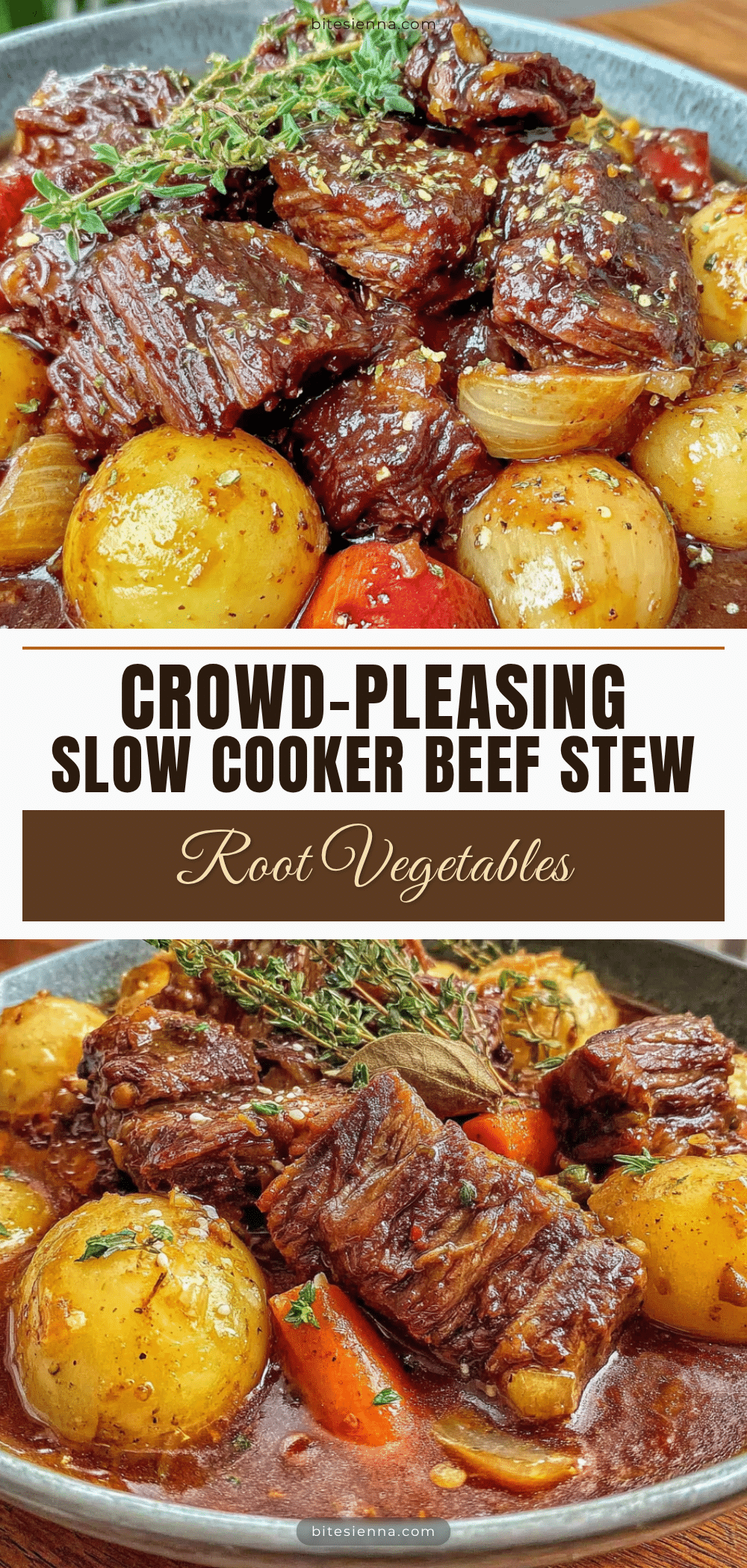
Perfect Slow Cooker Beef Stew with Root Vegetables
A rich, hearty beef stew with tender root vegetables, slow-cooked to perfection. This comforting dish features deeply seared beef, a velvety broth, and earthy sweetness from carrots, parsnips, and potatoes.
- Prep Time: 20 minutes
- Cook Time: 8 hours (on LOW) or 4-5 hours (on HIGH)
- Total Time: 8 hours 20 minutes (on LOW) or 4 hours 20 minutes (on HIGH)
- Yield: 8 servings 1x
- Category: Main Course
- Cuisine: American
Ingredients
- 2 1/2 pounds beef chuck, cut into 2-inch cubes
- 3 tablespoons all-purpose flour
- 2 tablespoons olive oil, divided
- 1 large yellow onion, diced (about 2 cups)
- 4 cloves garlic, minced
- 2 tablespoons tomato paste
- 1 cup dry red wine (Cabernet or Merlot recommended)
- 3 cups low-sodium beef broth
- 2 bay leaves
- 1 teaspoon dried thyme
- 1 teaspoon dried rosemary
- Salt and black pepper to taste
- 4 large carrots, peeled and cut into 2-inch chunks
- 3 parsnips, peeled and cut into 2-inch chunks
- 1 1/2 pounds Yukon Gold potatoes, cut into 2-inch chunks
- 2 celery stalks, cut into 1-inch pieces
- 1 cup frozen peas
- Fresh parsley, chopped (for garnish)
- Crusty bread for serving
Instructions
- Pat the beef cubes dry with paper towels. Season generously with salt and pepper, then toss with the flour until evenly coated. Let sit for 5 minutes.
- Heat 1 tablespoon olive oil in a large skillet over medium-high heat. Working in batches, sear the beef cubes for 3-4 minutes per side until deeply browned. Transfer to a 6-quart slow cooker.
- Reduce heat to medium and add the remaining 1 tablespoon olive oil. Sauté the diced onion for 5-6 minutes until softened and golden. Add the minced garlic and cook for 30 seconds until fragrant.
- Stir in the tomato paste and cook for 1-2 minutes. Pour in the red wine and scrape up browned bits from the pan. Let simmer for 2-3 minutes until reduced by half.
- Pour the wine mixture over the beef in the slow cooker. Add beef broth, bay leaves, thyme, and rosemary. Stir gently. Add carrots, parsnips, potatoes, and celery on top without stirring.
- Cover and cook on LOW for 8 hours or on HIGH for 4-5 hours. About 30 minutes before serving, remove bay leaves and stir in frozen peas. Let warm through.
- Serve ladled into bowls, garnished with fresh parsley, with crusty bread on the side.
Notes
For best results, do not skip searing the beef. Cut vegetables uniformly for even cooking. Add peas at the end to avoid mushiness. Season in layers for depth. Let stew rest 30 minutes before serving for enhanced flavor.
Nutrition
- Serving Size: 1 serving (about 1.5
- Calories: 425
- Sugar: 8
- Sodium: 680
- Fat: 18
- Saturated Fat: 6
- Carbohydrates: 32
- Fiber: 6
- Protein: 35
Keywords: slow cooker beef stew, root vegetables, comfort food, beef stew recipe, easy dinner, winter meal