“Why not just toss in frozen mango and pineapple instead of fresh?” my gym buddy asked one Saturday morning, looking at the pile of fruit I was meticulously prepping. I started to explain why that wouldn’t work—the texture, the water content, the flavor differences—then stopped. Honestly, she was onto something. The frozen chunks gave the smoothie a creamier, more refreshing vibe that I hadn’t expected. It was one of those rare moments when the student’s instinct nudged me off my high horse, and I’m glad it did.
That day, while I was planning to teach her the “perfect” way to make a Healthy Tropical Mango Pineapple Protein Smoothie, I ended up learning something new. The quick blender combo of frozen tropical fruits, a scoop of protein, and a splash of coconut water turned out surprisingly delicious and hassle-free. I mean, who wants to fuss with peeling and slicing early on a weekend? Not me, especially when the smoothie tastes just as amazing.
Maybe you’ve been there—face-to-face with a recipe you thought you needed to do by the book, only to find a shortcut that works better. This smoothie stayed with me because it’s the kind of easy, nutritious treat that fits both busy mornings and post-workout fuel. Plus, it feels like a mini getaway in a glass. So, let me tell you how this simple mix of mango, pineapple, and protein shook up my routine and could brighten yours too.
Why You’ll Love This Recipe
Having made this Healthy Tropical Mango Pineapple Protein Smoothie countless times, I can vouch for its unbeatable combo of taste and convenience. I’m not just throwing ingredients together here—this is a smoothie that’s been tested through early mornings, rushed afternoons, and even a few lazy Sundays. Here’s why it’s a keeper:
- Quick & Easy: Ready in under 5 minutes, perfect for busy mornings or when you need a fast, nutritious pick-me-up.
- Simple Ingredients: No need for specialty stores—mango, pineapple, protein powder, and coconut water are pantry-friendly staples for most.
- Perfect for Weight Loss: Packed with protein and fiber to keep you full, this smoothie supports your health goals without sacrificing flavor.
- Crowd-Pleaser: Family, friends, or coworkers will ask for seconds—the tropical flavors appeal to all ages.
- Unbelievably Delicious: The natural sweetness of mango and pineapple blended with creamy protein creates a texture and taste that feels indulgent but is guilt-free.
This isn’t just another smoothie recipe—you’re getting a balanced, thoughtfully crafted drink that’s as satisfying as it is nourishing. I’ve tweaked it to hit the right note of sweetness without added sugars, and the scoop of protein powder gives it that sustaining power. Honestly, it’s the kind of recipe that makes you close your eyes and savor the moment. Whether you want a breakfast boost or a post-exercise refreshment, this tropical blend always delivers.
What Ingredients You Will Need
This Healthy Tropical Mango Pineapple Protein Smoothie uses simple, wholesome ingredients to deliver bold flavor and satisfying texture without the fuss. Most are pantry staples or easily found at your local grocery store, and you can swap a few items to suit your taste or dietary needs.
- Frozen Mango Chunks (1 cup / 150g): Using frozen mango keeps the smoothie chilled and thick. I prefer organic frozen mango from Trader Joe’s for the best flavor and texture.
- Frozen Pineapple Chunks (1 cup / 150g): Like mango, frozen pineapple adds natural sweetness and a refreshing zing. Fresh works, but frozen is better for that creamy texture.
- Vanilla Protein Powder (1 scoop / about 30g): Choose a high-quality plant-based or whey protein powder depending on your preference. I like Orgain Organic Plant-Based Protein because it blends smoothly and isn’t chalky.
- Coconut Water (1 cup / 240ml): This hydrates and adds a subtle tropical flavor. If you don’t have coconut water, plain water or almond milk can substitute.
- Greek Yogurt (1/2 cup / 120g, optional): Adds creaminess and extra protein. Use dairy-free coconut yogurt if you’re avoiding dairy.
- Fresh Lime Juice (1 tablespoon): Brightens the flavor with a citrusy kick and balances the sweetness.
- Chia Seeds (1 tablespoon, optional): For an extra fiber and omega-3 boost—great if you want your smoothie to be more filling.
- Honey or Maple Syrup (1 teaspoon, optional): Only if you want a touch more sweetness. Usually, the fruit is enough.
Seasonal note: In summer, swapping frozen mango with fresh ripe mango can make the smoothie even more vibrant. For a lower-carb twist, use unsweetened almond milk instead of coconut water and skip the honey.
Equipment Needed
- High-Speed Blender: A blender like a Vitamix or Ninja is ideal to get that smooth, creamy texture without chunks. I’ve tried cheaper blenders, but they sometimes leave bits of frozen fruit.
- Measuring Cups and Spoons: To get the ingredient ratios right, especially for protein powder and liquids.
- Knife and Cutting Board: If you’re using fresh fruit instead of frozen, you’ll need these to prep the mango and pineapple.
- Glass or Travel Cup: For serving or taking your smoothie on the go.
If you don’t have a high-speed blender, pulse your ingredients in a regular blender and blend longer. Freezing fruit chunks slightly smaller helps too. I’ve found a good, budget-friendly blender can last years if you clean it immediately after use.
Preparation Method
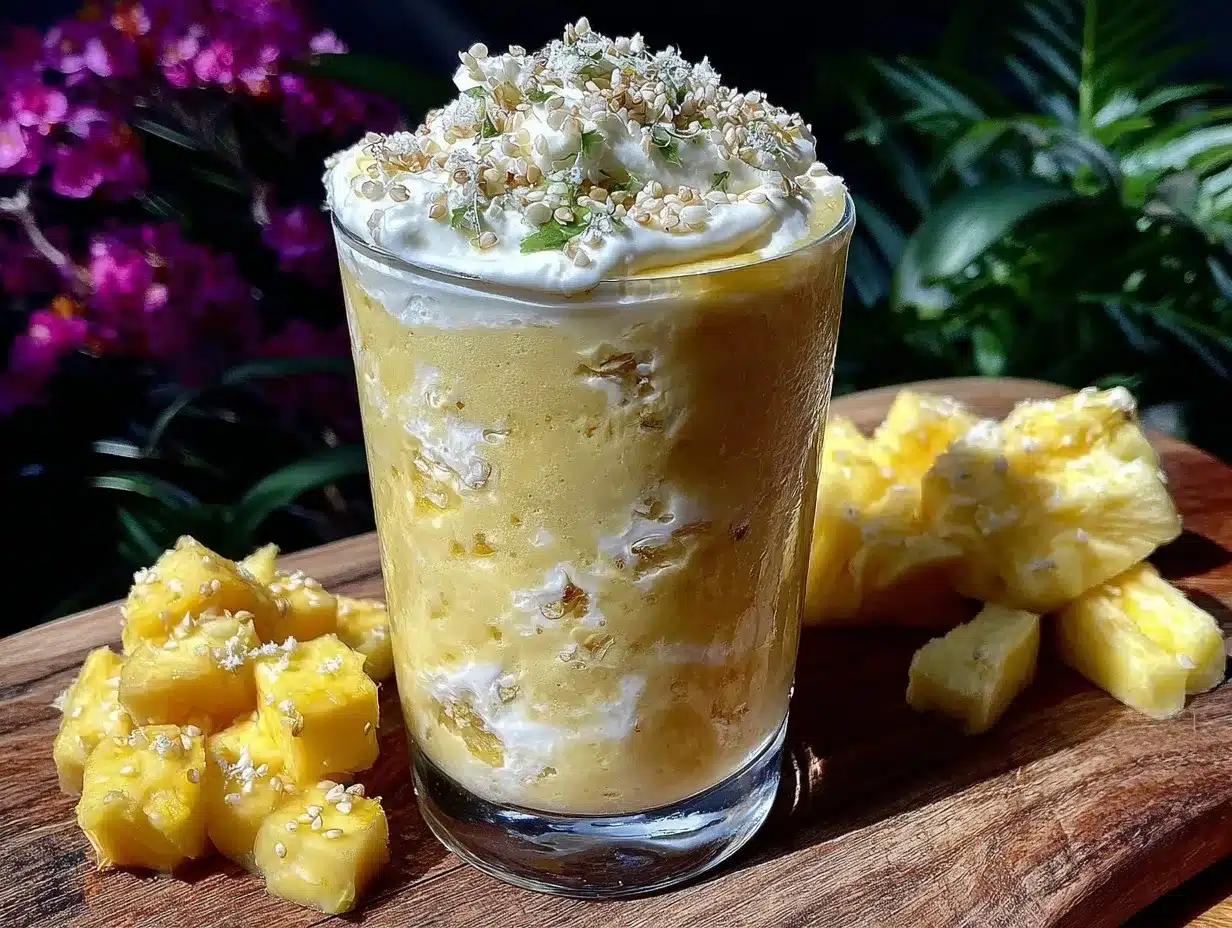
- Measure your ingredients: Gather 1 cup (150g) each of frozen mango and pineapple chunks, 1 scoop (30g) of vanilla protein powder, 1 cup (240ml) coconut water, and 1/2 cup (120g) Greek yogurt if using. Having everything ready prevents over-blending or texture mishaps.
- Add frozen fruit to the blender first: This helps the blades break down the hardest bits first. Use a high-speed blender if possible for a silky finish.
- Pour in the coconut water: This liquid base hydrates the mix and helps it blend smoothly. You want a consistency thick enough to sip but not so thick it’s hard to blend.
- Add the protein powder and Greek yogurt: These add body and nutrition. If you notice clumping, pause the blender and stir gently before blending again.
- Squeeze in fresh lime juice: This cuts through the sweetness and adds a fresh note. I like to zest a tiny bit of lime peel for extra aroma (optional).
- Add chia seeds and sweetener if desired: Chia seeds will thicken the smoothie slightly after sitting. Honey or maple syrup can be added last for taste.
- Blend on high for about 45 seconds to 1 minute: The smoothie should be creamy and smooth. Stop and scrape down the sides if needed to blend evenly.
- Taste and adjust: If it’s too thick, add a splash more coconut water. If not sweet enough, add a tiny bit more honey. Remember, you can always add but can’t take away.
- Pour into your favorite glass or travel cup: I sometimes garnish with a small pineapple wedge or mint leaf for a tropical vibe.
Pro tip: If you’re making this ahead, blend without chia seeds, then stir them in before drinking so they don’t gel too much overnight.
Cooking Tips & Techniques
Making a great Healthy Tropical Mango Pineapple Protein Smoothie is mostly about balance and texture. Here are a few things I’ve learned that might save you some trial and error:
- Frozen fruit matters: Using frozen mango and pineapple chunks keeps the smoothie refreshingly cold and thick without needing ice, which can water down flavor.
- Protein powder quality counts: Some powders get chalky or gritty. I recommend vanilla-flavored powders with smooth blends. If you’re new to protein powders, try a small amount first so you can get used to the taste.
- Don’t skimp on the liquid: Too little coconut water and you’ll get a too-thick puree that’s hard to drink. Too much and it’s watery. Start with 1 cup and add more if needed.
- Blend in intervals: Pulse for a few seconds, then blend fully—this prevents the motor from overheating and helps blend more evenly.
- Watch your sweeteners: The fruit is naturally sweet, so add honey or maple syrup sparingly. Sometimes a bit of lime juice is enough to brighten flavors.
Once, I tried blending fresh mango with frozen pineapple and ended up with a lumpy smoothie. Lesson learned: stick to all frozen or all fresh for the smoothest texture. Also, I find that adding the protein powder last keeps it from sticking to the blades.
Variations & Adaptations
If you want to mix things up or tailor this smoothie to your preferences, here are some ideas I’ve tried or recommend:
- Green Tropical Smoothie: Add a handful of fresh spinach or kale for a nutritious green twist. The tropical fruit masks the bitterness perfectly.
- Dairy-Free Version: Swap Greek yogurt with coconut yogurt or skip it altogether. Use almond milk instead of coconut water for a creamier texture.
- Extra Creamy: Add half an avocado for richness and healthy fats. This makes the smoothie more filling and silky.
- Spicy Kick: A tiny pinch of cayenne or ginger powder adds warmth and complexity without overpowering the tropical flavors.
- Seasonal Swap: In fall or winter, substitute mango with frozen peaches or berries for a different fruit profile.
Personally, I once tried adding a spoonful of natural peanut butter for a tropical peanut smoothie—unexpectedly delicious and a great post-workout recovery drink.
Serving & Storage Suggestions
This smoothie is best enjoyed immediately, when it’s cold and creamy. Serve it in a tall glass with a reusable straw for that tropical vibe. If you want to make it a meal, pair it with a handful of nuts or a slice of whole-grain toast.
For storage, you can keep the blended smoothie in an airtight container in the fridge for up to 24 hours. Stir well before drinking as some settling may occur, especially if you added chia seeds. Avoid freezing the blended smoothie; frozen fruit works best before blending.
If you need to prep ingredients ahead, portion out the frozen fruit and protein powder in freezer-safe bags for quick blending later. Just add coconut water and other liquids fresh.
Over time, the flavors mellow, and the texture thickens if chia seeds are added. This can be nice if you prefer a spoonable smoothie bowl consistency.
Nutritional Information & Benefits
This Healthy Tropical Mango Pineapple Protein Smoothie packs a nutritional punch in every glass. Here’s what you can expect per serving (approximate):
| Calories | 250-300 kcal |
|---|---|
| Protein | 20-25g |
| Carbohydrates | 30-35g |
| Fiber | 5g |
| Fat | 2-5g (depends on yogurt/avocado) |
The mango and pineapple provide vitamins C and A, antioxidants that support immunity and skin health. Protein powder fuels muscle recovery and keeps hunger at bay. Coconut water is a natural electrolyte source, great for hydration. The optional chia seeds add omega-3 fatty acids and additional fiber.
It’s naturally gluten-free and can be made vegan with the right protein and yogurt swaps. Just watch out for specific allergens in protein powders if you have sensitivities.
From a wellness perspective, this smoothie makes for a balanced, nutrient-dense choice that feels indulgent but supports your weight loss or fitness goals without cutting corners.
Conclusion
All in all, the Healthy Tropical Mango Pineapple Protein Smoothie is a recipe worth making over and over. It’s simple, fast, and packed with flavor and nutrition—exactly what you want from a go-to smoothie. Feel free to tweak it based on what you have or what you love; that’s part of the fun.
I keep coming back to this recipe because it reminds me of that morning when I learned to listen to a different voice in the kitchen—and the smoothie turned out better for it. If you try it, I’d love to hear what tweaks you make or how it fits into your day. Sharing your experience helps build a community of real cooks figuring it out together.
Here’s to healthy, tasty sips that make life a little brighter and easier—cheers!
FAQs
Can I use fresh mango and pineapple instead of frozen?
Yes, but your smoothie will be less thick and chilled. Add a few ice cubes if you want it colder and thicker.
What type of protein powder works best in this smoothie?
Vanilla-flavored plant-based or whey protein powders blend well. Choose one with a smooth texture to avoid grit.
Can I make this smoothie ahead of time?
You can prep ingredients in advance but blend fresh for best flavor and texture. If blended ahead, store in the fridge and stir before drinking.
Is this recipe suitable for weight loss?
Definitely! It’s high in protein and fiber, low in added sugars, and keeps you full longer, which helps control appetite.
How can I make this smoothie creamier?
Add Greek yogurt, half an avocado, or a splash of almond milk for extra creaminess without changing the flavor too much.
Pin This Recipe!
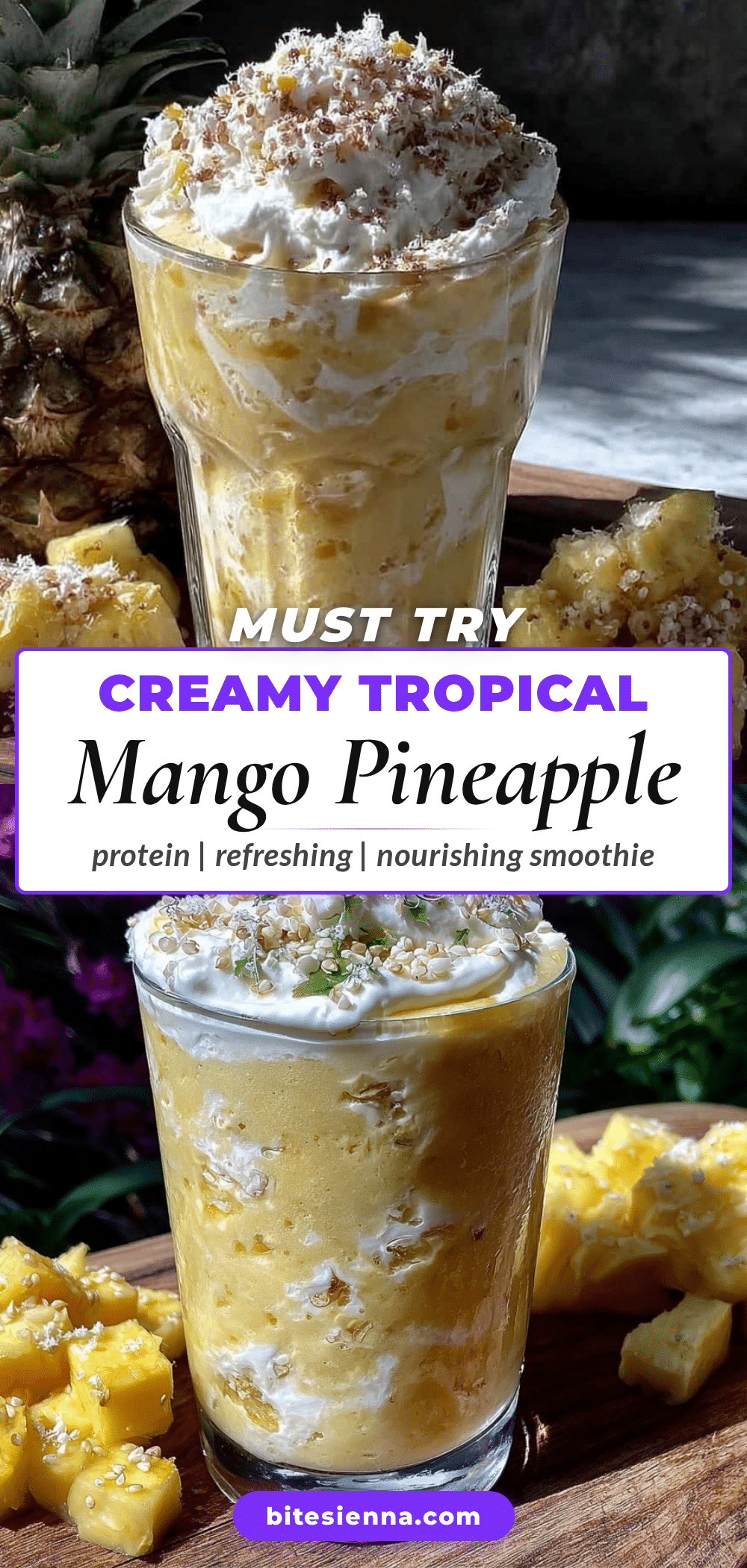
Healthy Tropical Mango Pineapple Protein Smoothie
A quick and easy tropical smoothie packed with protein and fiber, perfect for weight loss and post-workout fuel. Made with frozen mango and pineapple, protein powder, and coconut water for a creamy, refreshing treat.
- Prep Time: 5 minutes
- Cook Time: 0 minutes
- Total Time: 5 minutes
- Yield: 1 serving 1x
- Category: Beverage
- Cuisine: Tropical
Ingredients
- 1 cup (150g) frozen mango chunks
- 1 cup (150g) frozen pineapple chunks
- 1 scoop (about 30g) vanilla protein powder (plant-based or whey)
- 1 cup (240ml) coconut water
- 1/2 cup (120g) Greek yogurt (optional, use dairy-free coconut yogurt for dairy-free)
- 1 tablespoon fresh lime juice
- 1 tablespoon chia seeds (optional)
- 1 teaspoon honey or maple syrup (optional)
Instructions
- Measure your ingredients: 1 cup frozen mango, 1 cup frozen pineapple, 1 scoop vanilla protein powder, 1 cup coconut water, and 1/2 cup Greek yogurt if using.
- Add frozen mango and pineapple chunks to the blender first.
- Pour in the coconut water to hydrate the mix.
- Add the protein powder and Greek yogurt.
- Squeeze in fresh lime juice.
- Add chia seeds and sweetener if desired.
- Blend on high for about 45 seconds to 1 minute until creamy and smooth, scraping down sides if needed.
- Taste and adjust consistency or sweetness by adding more coconut water or honey as needed.
- Pour into a glass or travel cup and garnish with a pineapple wedge or mint leaf if desired.
Notes
Use frozen fruit for a creamier, chilled smoothie. If making ahead, blend without chia seeds and stir them in before drinking to avoid gel formation. Adjust liquid amount for desired thickness. Use vanilla protein powder with smooth texture to avoid grit. Fresh fruit can be used but add ice cubes for thickness.
Nutrition
- Serving Size: 1 glass (about 12-16
- Calories: 275
- Sugar: 25
- Sodium: 150
- Fat: 3.5
- Saturated Fat: 0.5
- Carbohydrates: 32.5
- Fiber: 5
- Protein: 22.5
Keywords: mango smoothie, pineapple smoothie, protein smoothie, tropical smoothie, weight loss smoothie, healthy smoothie, post-workout smoothie