This was supposed to be a simple pan-seared salmon with a creamy dill sauce. I had the dill, the heavy cream, the whole plan laid out in my head. But when I reached into the fridge, the cream was sour, the dill was a sad, wilted mess, and I was already running late for dinner. I stood there, staring at the open fridge door, and honestly, I almost just ordered takeout. But the salmon was already thawed, and the asparagus I’d bought looked too good to waste. So I grabbed a lemon, some butter, and decided to just wing it. What came out of that pan was nothing like the plan — and better. It was simpler, brighter, and somehow exactly what I needed.
You know that feeling when a recipe just clicks? When the flavors come together without any fuss, and you realize you’ve stumbled onto something you’ll make for years? That’s this one-pan lemon butter salmon. I mean, I was just trying to salvage a meal, and I ended up creating my new favorite weeknight dinner. The butter gets all nutty and brown, the lemon juice cuts through the richness, and the asparagus soaks up every last drop of that glorious pan sauce. It’s the kind of meal that feels fancy but takes almost no effort.
Maybe you’ve been there — standing in your kitchen, ingredients scattered, and nothing going according to plan. Let me tell you, this recipe is proof that sometimes the best dishes come from those chaotic moments. I’ve made it at least a dozen times since that first accidental batch, and it never gets old. It’s the recipe that taught me to stop panicking when things go wrong in the kitchen and just cook with what I have.
Why You’ll Love This Recipe
This one-pan lemon butter salmon isn’t just another salmon recipe. It’s the one you’ll actually want to make on a Tuesday night when you’re tired and hungry and don’t want to deal with a sink full of dishes. I’ve tested it more times than I care to admit, tweaking the butter-to-lemon ratio and the cooking time until it was just right. Trust me when I say this version is the sweet spot.
- Quick & Easy: From start to finish, this meal comes together in under 30 minutes. That’s faster than delivery, and way more satisfying. Perfect for those nights when you need dinner on the table, stat.
- Simple Ingredients: You probably already have butter, lemons, garlic, and salt in your kitchen right now. No fancy grocery trips, no obscure ingredients you’ll use once and forget about.
- Perfect for Busy Weeknights: This is the kind of dinner that makes you feel like you’ve got your life together, even when you don’t. Great for impressing guests without stress, or just treating yourself to something special.
- Crowd-Pleaser: My picky-eater nephew actually asked for seconds the first time I made this. That’s a win in my book. Kids and adults alike go crazy for that buttery lemon sauce.
- Unbelievably Delicious: The texture is next-level — crispy-edged salmon with a tender, flaky center, and asparagus that’s perfectly tender-crisp. The flavor combo is pure comfort food, reimagined.
What makes this recipe different from the rest? It’s the technique. By cooking the asparagus first and then adding the salmon, everything finishes at the same time. No overcooked fish, no soggy vegetables. Just a perfectly balanced meal from one single pan. It’s comfort food made simple — healthier, faster, but with the same soul-soothing satisfaction that makes you close your eyes after the first bite.
What Ingredients You Will Need
This recipe uses simple, wholesome ingredients to deliver bold flavor and satisfying texture without the fuss. Most of these are pantry staples, which is exactly what you want in a last-minute dinner. Here’s what you’ll need:
- Salmon Fillets (4 fillets, about 6 ounces each) — Look for fillets that are similar in thickness so they cook evenly. I prefer wild-caught salmon when I can find it, but farm-raised works great too. Pat them dry with paper towels before cooking for that perfect golden crust.
- Asparagus (1 bunch, about 1 pound) — Choose spears that are bright green with firm tips. Thicker spears hold up better to pan-cooking, but thin ones work too — just reduce the cooking time. Trim off the woody ends by snapping them where they naturally break.
- Unsalted Butter (4 tablespoons) — I recommend Kerrygold or any European-style butter for the richest flavor. The butter is the star here, so use good quality. If you only have salted butter, reduce the added salt.
- Fresh Lemon (1 large lemon) — You’ll need both the juice and the zest. Roll the lemon on the counter before juicing to get the most out of it. Avoid bottled lemon juice — it just doesn’t have the same brightness.
- Garlic (4 cloves, minced) — Fresh garlic is non-negotiable here. Pre-minced garlic from a jar can taste bitter when cooked in butter. Take the extra minute to mince fresh cloves.
- Olive Oil (2 tablespoons) — Use a good extra virgin olive oil for cooking the asparagus. It adds a subtle fruitiness that complements the lemon.
- Salt and Black Pepper (to taste) — I use fine sea salt for even seasoning. Freshly cracked black pepper makes a difference here — don’t use pre-ground.
- Red Pepper Flakes (optional, 1/4 teaspoon) — Adds a tiny bit of heat that plays beautifully with the lemon butter. Totally optional, but I never skip it.
- Fresh Parsley (for garnish, optional) — A sprinkle of fresh parsley adds color and a fresh, herbaceous note. Flat-leaf parsley is best, but curly works too.
For substitutions, you can swap the asparagus with green beans, broccoli florets, or even zucchini slices. Use ghee instead of butter for a dairy-free option, though the flavor will be slightly different. If you don’t have fresh lemon, a splash of white wine vinegar can work in a pinch, but honestly, fresh lemon is worth the trip to the store.
Equipment Needed
One of the best things about this recipe is how little equipment it requires. You don’t need a fancy kitchen to pull this off — just a few basics.
- Large Skillet or Frying Pan (12-inch) — A heavy-bottomed skillet works best for even heat distribution. Cast iron is my personal favorite because it holds heat well and gives the salmon a gorgeous crust. A stainless steel pan works great too. Avoid non-stick if you want those crispy edges — the salmon won’t brown as well.
- Fish Spatula — This thin, slotted spatula is perfect for flipping delicate salmon fillets without breaking them. If you don’t have one, a regular spatula works, just be gentle. I learned this the hard way after destroying a beautiful fillet with a regular spatula.
- Cutting Board and Sharp Knife — For trimming the asparagus and mincing the garlic. A sharp knife makes prep feel effortless.
- Microplane or Zester — For zesting the lemon. A box grater works too, but a microplane gives you that fine, fluffy zest that melts right into the butter.
- Measuring Spoons — For accurate seasoning. I keep mine on a magnetic strip on the fridge so I can grab them quickly.
- Tongs — For turning the asparagus and moving the salmon around. They give you way more control than a spatula for vegetables.
If you don’t have a 12-inch skillet, you can use a smaller one and cook in batches. Just keep the cooked salmon warm on a plate while you finish the rest. Budget-friendly tip: a good cast iron skillet from a thrift store works just as well as a fancy new one.
Preparation Method
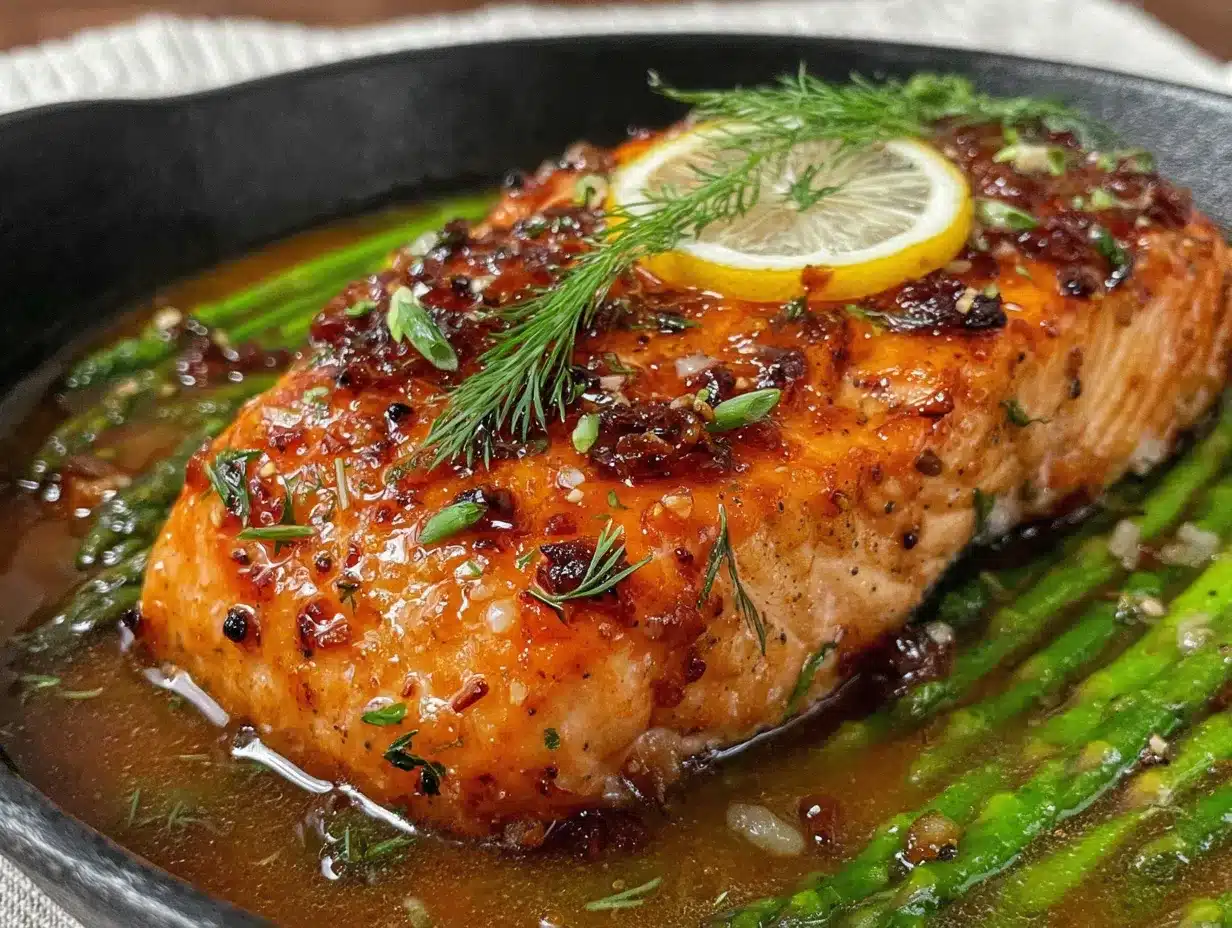
Let me walk you through this step by step. I’ve made this so many times that I’ve got it down to a rhythm, and I’ll share all the little tricks I’ve picked up along the way.
- Prep Your Ingredients (5 minutes): Take the salmon out of the fridge and let it sit at room temperature for about 10 minutes. This helps it cook more evenly. Pat the fillets dry with paper towels — this is crucial for getting that golden crust. Season both sides generously with salt and pepper. Trim the woody ends off the asparagus (about an inch from the bottom). Mince the garlic and zest the lemon. Cut the lemon in half for juicing later.
- Heat the Pan (2 minutes): Place your skillet over medium-high heat and add 1 tablespoon of olive oil. Wait until the oil shimmers and moves easily around the pan — that’s your signal that it’s hot enough. If you see smoke, the pan is too hot, so reduce the heat slightly.
- Cook the Asparagus (3-4 minutes): Add the asparagus to the hot pan in a single layer. Season with a pinch of salt. Cook for 2-3 minutes, turning occasionally with tongs, until the spears are bright green and have some char marks. You want them tender-crisp — they should still have a slight bite. Transfer the asparagus to a plate and set aside.
- Sear the Salmon (4-5 minutes): Reduce the heat to medium. Add 2 tablespoons of butter to the pan. Once it melts and starts to foam, place the salmon fillets skin-side down (if they have skin) or presentation-side down. Don’t crowd the pan — leave space between each fillet. Let them cook undisturbed for 3-4 minutes. You’ll see the edges turning opaque and golden. The salmon should release easily from the pan when it’s ready to flip. If it sticks, give it another minute.
- Flip and Finish Cooking (3-4 minutes): Carefully flip the salmon using your fish spatula. Add the remaining 2 tablespoons of butter, the minced garlic, and the lemon zest to the pan. As the butter melts, tilt the pan slightly and spoon the bubbling butter over the salmon. This bastes the fish and infuses it with flavor. Cook for another 3-4 minutes, depending on thickness. The salmon is done when it flakes easily with a fork and the internal temperature reaches 125°F for medium or 135°F for well done.
- Add the Asparagus and Lemon Juice (1 minute): Return the cooked asparagus to the pan. Squeeze the juice of half the lemon over everything. Toss the asparagus gently in the pan sauce to coat. If you’re using red pepper flakes, sprinkle them in now.
- Serve Immediately: Transfer the salmon and asparagus to plates. Spoon any remaining pan sauce over the top. Garnish with fresh parsley and lemon wedges from the remaining lemon half. Serve hot.
One thing I’ve learned the hard way — don’t walk away from the pan once the butter goes in. Butter burns fast, and you want it nutty and golden, not black and bitter. Keep an eye on it and adjust the heat if needed.
Cooking Tips & Techniques
After making this recipe more times than I can count, I’ve picked up a few tricks that make a real difference. Here’s what I wish someone had told me the first time.
Pat the salmon dry. This is the most important step for getting that beautiful golden crust. Moisture is the enemy of browning. Use paper towels and really get in there. I once skipped this step because I was in a hurry, and the salmon turned out pale and steamed instead of seared. Never again.
Don’t move the salmon too early. When you first put the salmon in the pan, resist the urge to poke at it or check it constantly. Let it sit and develop that crust. You’ll know it’s ready to flip when it releases easily from the pan. If you try to force it, the skin will tear and you’ll lose all those crispy bits.
Control your heat. Medium-high to start, then medium once the salmon goes in. If the pan is too hot, the butter will burn before the salmon is cooked through. Too low, and the salmon will steam instead of sear. I keep my burner at a solid medium and adjust as needed. Listen to the sizzle — it should be active but not aggressive.
Baste like a pro. When you add the butter and garlic, tilt the pan toward you so the butter pools at the edge. Use a spoon to scoop up the butter and pour it over the salmon. This keeps the top of the fish cooking while the bottom sears. It’s a restaurant technique that’s surprisingly easy at home.
Multitask smartly. While the salmon is cooking, use that time to set the table, pour drinks, or make a simple side salad. The actual hands-on time is only about 15 minutes, so everything else can wait. I’ve learned to do the prep work first so I’m not scrambling while the butter’s in the pan.
Variations & Adaptations
This recipe is incredibly flexible, and I’ve tried several variations over the years. Here are some of my favorites:
Lemon Herb Salmon: Add a teaspoon of dried thyme or oregano along with the garlic. Fresh dill is also amazing — stir in a tablespoon right before serving. I tried this with rosemary once and it was a bit overpowering, so stick with milder herbs.
Spicy Cajun Version: Swap the red pepper flakes for a teaspoon of Cajun seasoning. Rub it on the salmon before searing for a bold, smoky kick. My husband loves this version — he says it tastes like something from a New Orleans restaurant.
Dairy-Free Adaptation: Use ghee or a high-quality vegan butter instead of regular butter. The flavor will be slightly different, but still delicious. I’ve used coconut oil in a pinch, and while it works, the coconut flavor competes with the lemon.
Different Vegetables: No asparagus? No problem. Try broccoli florets, green beans, or sliced zucchini. Just adjust the cooking time based on the vegetable. Broccoli needs a minute or two more, while zucchini cooks faster. I’ve even used cherry tomatoes — they burst and create a lovely sauce.
Oven-Baked Version: If you prefer not to use the stovetop, you can bake everything on a sheet pan at 400°F for 12-15 minutes. Toss the asparagus with olive oil and seasonings, place the salmon on top, and bake. The texture won’t be quite as crispy, but it’s even easier.
Garlic Butter Shrimp: Swap the salmon for large shrimp. They cook even faster — just 2-3 minutes per side. The lemon butter sauce is incredible with shrimp, and it makes for a lighter meal.
Serving & Storage Suggestions
This salmon is best served immediately, straight from the pan to the plate. The contrast between the crispy exterior and tender interior is at its peak right after cooking. But I’ve also learned a few things about serving and storing leftovers.
Serving Temperature: Serve the salmon hot, but let it rest for about a minute after cooking. This allows the juices to redistribute. I like to plate the asparagus first, then place the salmon on top, and spoon the pan sauce over everything.
Complementary Sides: This dish is a complete meal on its own, but it pairs beautifully with rice, quinoa, or crusty bread to soak up the sauce. A simple green salad with a vinaigrette adds freshness. For a low-carb option, serve with cauliflower rice or extra vegetables.
Beverage Pairings: A crisp white wine like Sauvignon Blanc or Pinot Grigio is perfect with the lemon butter. For non-alcoholic options, sparkling water with lemon or a light iced tea works wonderfully.
Storage Instructions: Store leftovers in an airtight container in the refrigerator for up to 2 days. The salmon will lose its crispy texture, but the flavor remains delicious. I don’t recommend freezing this dish — the texture of both the salmon and asparagus suffers too much.
Reheating Tips: The best way to reheat is in a skillet over medium-low heat with a splash of water or lemon juice. Cover the pan to trap steam, which helps prevent the fish from drying out. Microwave reheating works in a pinch, but it tends to overcook the salmon. I’ve found that reheating gently for about 3-4 minutes in a covered skillet gives the best results.
Flavor Development: Interestingly, the lemon butter sauce gets even more flavorful overnight. The garlic and lemon meld together beautifully. I’ve been known to make extra sauce just to have it on hand for drizzling over vegetables or rice the next day.
Nutritional Information & Benefits
This one-pan meal isn’t just delicious — it’s packed with nutrients that make you feel good about what you’re eating. Here’s a breakdown of what you’re getting in each serving (based on 4 servings):
| Nutrient | Amount per Serving |
|---|---|
| Calories | 385 |
| Protein | 35g |
| Fat | 24g |
| Saturated Fat | 10g |
| Carbohydrates | 8g |
| Fiber | 3g |
| Sugar | 3g |
| Sodium | 380mg |
Health Benefits: Salmon is rich in omega-3 fatty acids, which support heart and brain health. Asparagus is packed with fiber, folate, and vitamins A, C, and K. The lemon provides a nice dose of vitamin C, and the garlic offers immune-boosting properties. This meal is naturally gluten-free and low-carb, making it suitable for a variety of dietary needs.
Dietary Considerations: This recipe is gluten-free, low-carb, and keto-friendly. For a dairy-free version, use ghee or vegan butter. It’s also relatively low in sodium compared to many restaurant meals, especially if you control the salt yourself. The only potential allergen is dairy from the butter, which is easily substituted.
I love that this meal feels indulgent but is actually really good for you. It’s the kind of dinner that fuels your body and satisfies your taste buds at the same time. No guilt, just deliciousness.
Conclusion
This one-pan lemon butter salmon with asparagus is proof that the best recipes often come from the most unexpected moments. What started as a failed attempt at something else turned into my go-to weeknight dinner, and I have a feeling it’ll become yours too. It’s quick enough for a busy Tuesday, fancy enough for a dinner party, and simple enough that you don’t need to be a chef to pull it off.
I love how this recipe lets the ingredients shine — the rich, buttery salmon, the bright pop of lemon, the tender-crisp asparagus. It’s honest food that doesn’t try to be anything other than what it is: delicious, satisfying, and made with love. Whether you’re cooking for yourself, your family, or guests, this dish delivers every single time.
Now I want to hear from you! Have you tried this recipe? Did you add your own twist? Drop a comment below and let me know how it turned out. And if you loved it, share it with a friend who needs a quick dinner win. Happy cooking, friends!
Frequently Asked Questions
Can I use frozen salmon for this recipe?
Yes, but make sure it’s fully thawed and patted dry before cooking. Frozen salmon releases a lot of water, which will prevent browning. Thaw it in the refrigerator overnight or in a bowl of cold water for about 30 minutes.
How do I know when the salmon is cooked through?
The salmon is done when it flakes easily with a fork and the internal temperature reaches 125°F for medium or 135°F for well done. The flesh should be opaque and slightly translucent in the center for medium. If you don’t have a thermometer, look for the white protein (albumin) to start appearing on the surface.
Can I make this recipe with other types of fish?
Absolutely! This lemon butter sauce works beautifully with trout, cod, halibut, or even tilapia. Just adjust the cooking time based on the thickness of the fish. Thinner fillets will cook faster, so keep an eye on them.
What if I don’t have a lemon?
You can substitute with lime or even a splash of white wine vinegar. The flavor will be different, but still delicious. If using vinegar, start with a tablespoon and taste before adding more — it’s more acidic than lemon juice.
Can I double this recipe?
Yes, but you’ll need to cook in batches to avoid overcrowding the pan. Overcrowding lowers the pan temperature and causes the salmon to steam instead of sear. Cook the asparagus and salmon in two batches, then combine everything at the end.
Pin This Recipe!
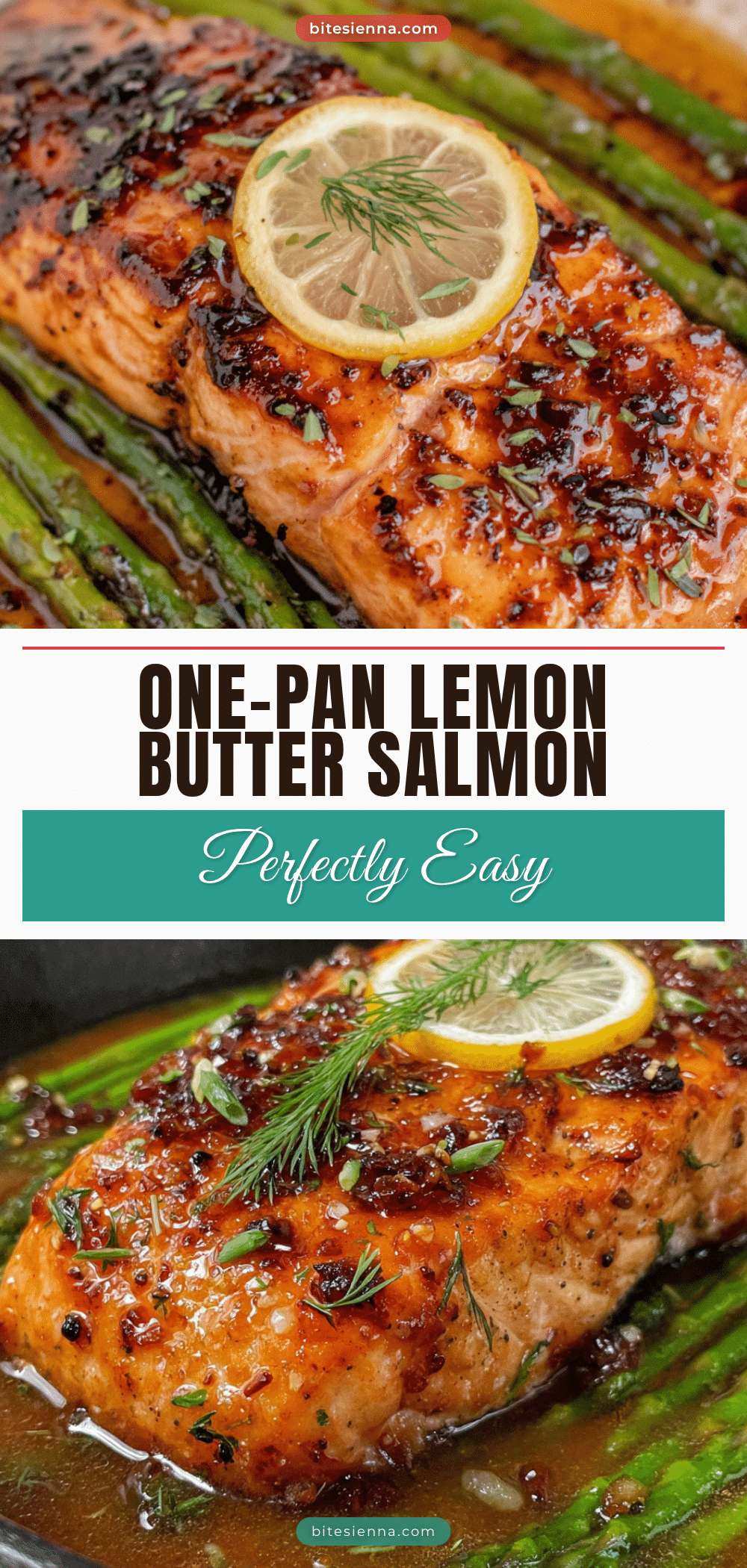
Easy One-Pan Lemon Butter Salmon with Asparagus
A quick and delicious one-pan meal featuring crispy-edged salmon and tender-crisp asparagus in a nutty lemon butter sauce. Perfect for busy weeknights, this recipe comes together in under 30 minutes with simple ingredients.
- Prep Time: 10 minutes
- Cook Time: 15 minutes
- Total Time: 25 minutes
- Yield: 4 servings 1x
- Category: Main Course
- Cuisine: American
Ingredients
- 4 salmon fillets (about 6 ounces each)
- 1 bunch asparagus (about 1 pound), trimmed
- 4 tablespoons unsalted butter
- 1 large lemon (juiced and zested)
- 4 cloves garlic, minced
- 2 tablespoons olive oil
- Salt and black pepper to taste
- 1/4 teaspoon red pepper flakes (optional)
- Fresh parsley for garnish (optional)
Instructions
- Prep your ingredients: Take salmon out of fridge and let sit at room temperature for 10 minutes. Pat fillets dry with paper towels and season both sides with salt and pepper. Trim woody ends off asparagus. Mince garlic and zest lemon. Cut lemon in half.
- Heat a large skillet over medium-high heat and add 1 tablespoon olive oil. Wait until oil shimmers.
- Add asparagus to hot pan in a single layer. Season with salt. Cook for 2-3 minutes, turning occasionally, until bright green and charred. Transfer to a plate and set aside.
- Reduce heat to medium. Add 2 tablespoons butter to pan. Once melted and foaming, place salmon fillets skin-side down (or presentation-side down). Cook undisturbed for 3-4 minutes until edges turn opaque and golden.
- Flip salmon carefully. Add remaining 2 tablespoons butter, minced garlic, and lemon zest. Tilt pan and spoon bubbling butter over salmon. Cook for another 3-4 minutes until salmon flakes easily with a fork (internal temp 125°F for medium).
- Return asparagus to pan. Squeeze juice of half a lemon over everything. Add red pepper flakes if using. Toss asparagus in pan sauce.
- Serve immediately, spooning pan sauce over salmon and asparagus. Garnish with fresh parsley and lemon wedges from remaining lemon half.
Notes
Pat salmon dry for best crust. Don’t move salmon too early; let it develop a crust. Control heat to avoid burning butter. Baste salmon with butter for even cooking. For dairy-free, use ghee or vegan butter. Leftovers keep in fridge up to 2 days; reheat gently in a covered skillet.
Nutrition
- Serving Size: 1 salmon fillet with
- Calories: 385
- Sugar: 3
- Sodium: 380
- Fat: 24
- Saturated Fat: 10
- Carbohydrates: 8
- Fiber: 3
- Protein: 35
Keywords: one-pan salmon, lemon butter salmon, asparagus salmon, quick weeknight dinner, healthy salmon recipe, gluten-free salmon, low-carb salmon