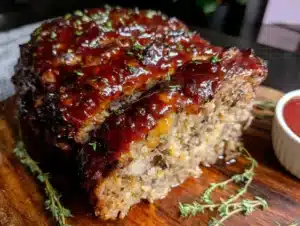
My brother-in-law Mark had refused to eat meatloaf for thirty-seven years. A solid three and a half decades of polite head shakes and “I’m good, thanks” whenever it appeared on a dinner table. Then last February, I caught him scraping the last bits of brown sugar glaze off his plate with a finger. He didn’t even realize I was watching from the kitchen doorway.
Honestly, I get where he was coming from. Most meatloaf I’d encountered before developing this version was either a dry, flavorless brick or a greasy, sad patty swimming in ketchup. It had a reputation problem, you know? The kind of dish people associate with bland cafeteria lunches or their aunt’s questionable cooking experiments from the 1970s. I mean, I’d been burned before too. So when I started working on this recipe, I had a specific goal: make something so undeniably good that even the skeptics would have to admit defeat.
It took about six tries to get it right. The first one was too dense. The second fell apart completely. The third had a good flavor but the glaze was too runny. But that fourth version—the one with the perfect ratio of ground beef to breadcrumbs, the secret splash of Worcestershire, and that caramelized brown sugar glaze—that was the one that made Mark forget his lifelong stance. The kitchen smelled like Sunday dinners from my childhood, warm and savory with a hint of sweetness that made your mouth water before you even saw the pan. There’s something about that moment when the glaze bubbles and darkens in the oven, creating that sticky, almost candied crust. It’s the kind of recipe that makes you understand why some dishes become classics in the first place. Maybe you’ve been there—dismissing a food for years only to have one perfect version change everything.
Why You’ll Love This Recipe
This isn’t just another meatloaf recipe. After testing this dozens of times—and I mean really testing, not just throwing ingredients together—I can confidently say this version hits every single note. It’s the kind of meal that makes you slow down and actually taste your food.
- Incredibly Moist: The combination of milk-soaked breadcrumbs and the right fat content in the meat creates a texture that stays tender even the next day. No dry crumbles here.
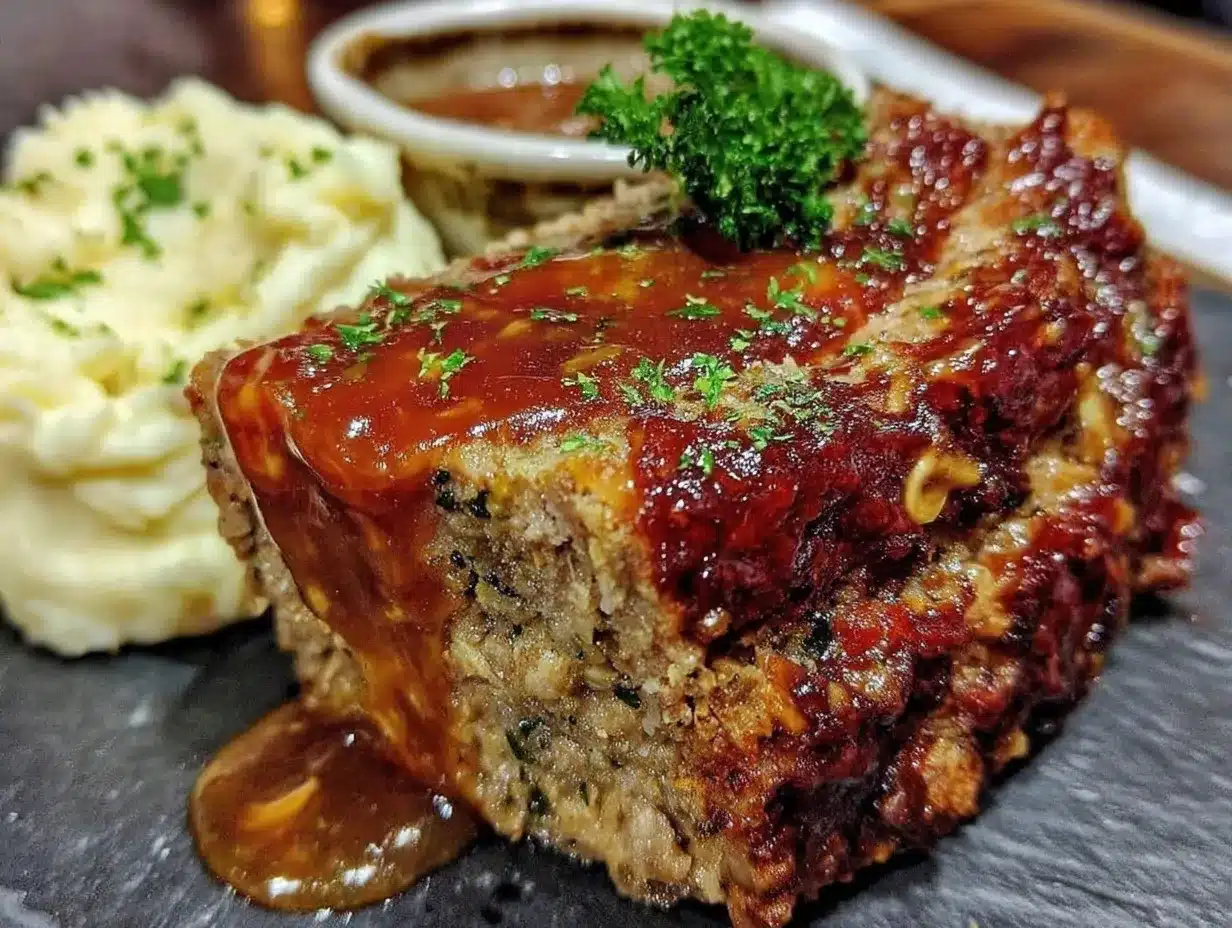
- That Brown Sugar Glaze: This isn’t your average ketchup smear. The brown sugar caramelizes into a sticky, sweet-tangy crust that contrasts perfectly with the savory meat. It’s honestly the star of the show.
- Simple Pantry Ingredients: You probably have most of these in your kitchen right now. No fancy trips to specialty stores or weird ingredients you’ll never use again.
- Budget-Friendly: Ground beef, breadcrumbs, eggs, and a few seasonings. This is real food that doesn’t break the bank, feeding a crowd for under fifteen dollars.
- Perfect for Meal Prep: It slices beautifully, reheats like a dream, and makes incredible sandwiches the next day. Cold meatloaf on white bread with a little mayo? Don’t even get me started.
- Crowd-Pleaser: I’ve served this to picky kids, meatloaf-haters, and foodie friends. The pan comes back empty every single time.
What makes this version different is the technique. Instead of just mixing everything together and hoping for the best, we’re using a few specific tricks that professional chefs rely on. The panade—that mixture of milk and breadcrumbs—keeps everything tender. The gentle mixing method prevents the meat from getting tough. And that glaze? It gets brushed on in stages, building up that beautiful caramelized layer that makes every bite interesting. This recipe isn’t just good—it’s the kind that makes you close your eyes after the first bite. It’s comfort food reimagined: familiar but better, simple but unforgettable.
What Ingredients You Will Need
This recipe uses straightforward, wholesome ingredients to deliver big flavor without any fuss. Most are pantry staples, and I’ve included notes on substitutions where they work well.
For the Meatloaf
- Ground beef (80/20): 2 pounds. The 80/20 ratio is important here—enough fat to keep things moist without being greasy. I prefer ground chuck for the best flavor.
- Breadcrumbs: 1 cup, plain or Italian-style. Panko works great too, giving a slightly lighter texture. If you’re gluten-free, use certified GF breadcrumbs or crushed pork rinds.
- Whole milk: ½ cup. This soaks into the breadcrumbs to create a panade, which is the secret to tender meatloaf. Any milk works, including oat or almond milk.
- Large eggs: 2, lightly beaten. They bind everything together. For an egg-free version, try 2 tablespoons of ground flaxseed mixed with 6 tablespoons of water.
- Yellow onion: 1 medium, finely diced. Grate it if you want the onion flavor without the texture—I do this when cooking for texture-sensitive eaters.
- Garlic: 3 cloves, minced. Fresh makes a difference here. Don’t use the jarred stuff for this recipe.
- Worcestershire sauce: 2 tablespoons. This adds that deep umami flavor. I use Lea & Perrins because it’s the classic for a reason.
- Ketchup: ¼ cup (for the meat mixture). Adds moisture and a hint of sweetness.
- Dijon mustard: 1 tablespoon. Cuts through the richness beautifully.
- Dried thyme: 1 teaspoon. Earthy and warm. Fresh thyme works too—use 1 tablespoon.
- Salt: 1½ teaspoons. Don’t skimp—meatloaf needs proper seasoning.
- Black pepper: ½ teaspoon, freshly ground.
- Fresh parsley: 2 tablespoons, chopped (optional but nice for color).
For the Brown Sugar Glaze
- Ketchup: ½ cup. This forms the base of the glaze.
- Brown sugar: ¼ cup, packed. Light or dark both work—dark gives a deeper molasses flavor.
- Apple cider vinegar: 1 tablespoon. Balances the sweetness with acidity.
- Worcestershire sauce: 1 teaspoon. Adds complexity.
- Garlic powder: ½ teaspoon. Not fresh garlic here—powder dissolves better into the glaze.
I recommend using a good-quality ketchup for the glaze. Heinz is my go-to because it has the right balance of sweet and tangy. For the brown sugar, make sure it’s packed firmly into the measuring cup—this ensures the glaze has that thick, syrupy consistency that caramelizes so beautifully in the oven.
Equipment Needed
You don’t need a fancy kitchen to make this recipe work. Here’s what you’ll actually use:
- Large mixing bowl: Any big bowl works. I use a ceramic one because it doesn’t slide around on the counter.
- Loaf pan (9×5-inch): This gives the classic meatloaf shape. If you don’t have one, shape the meatloaf free-form on a lined baking sheet—it actually gives you more caramelized edges, which I personally prefer.
- Baking sheet: Place the loaf pan on one to catch any drips and make cleanup easier.
- Small bowl: For mixing the glaze ingredients together.
- Pastry brush: For applying the glaze. A silicone one works best and doesn’t shed bristles.
- Meat thermometer: This is non-negotiable for perfectly cooked meatloaf. An instant-read thermometer costs about ten dollars and saves you from dry, overcooked meat.
- Chef’s knife and cutting board: For dicing the onion and mincing the garlic.
- Measuring cups and spoons: Standard set for accuracy.
If you’re using a free-form method, line your baking sheet with parchment paper or aluminum foil for the easiest cleanup ever. I learned this the hard way after scrubbing a baked-on glaze disaster for twenty minutes. Trust me on this one.
Preparation Method
- Preheat your oven to 350°F (175°C). Position the rack in the center of the oven. While it’s heating, line a baking sheet with foil or parchment and place your loaf pan on top.
- Make the panade: In your large mixing bowl, combine the breadcrumbs and milk. Stir them together and let it sit for 5 minutes. The breadcrumbs will absorb the milk and turn into a thick, pasty mixture. This is your panade, and it’s the secret to tender meatloaf. Don’t skip this step—it’s not the same if you just throw dry breadcrumbs in.
- Add the aromatics: To the panade, add the beaten eggs, diced onion, minced garlic, Worcestershire sauce, ketchup, Dijon mustard, dried thyme, salt, pepper, and parsley if using. Stir everything together until well combined. The mixture should look like a thick, chunky paste at this point.
- Add the beef: Add the ground beef to the bowl. Here’s the important part—use your hands to gently mix everything together. I mean gently. Squeeze the mixture through your fingers, turning it over carefully until just combined. Overmixing is the number one cause of tough, dense meatloaf. You want everything incorporated but not beaten into submission. Stop as soon as you don’t see any more streaks of raw beef.
- Shape and place: Transfer the meat mixture to your loaf pan. Press it in gently—don’t pack it down hard. Shape it into an even loaf, mounding it slightly in the center. If you’re going free-form, shape it into a loaf shape directly on the lined baking sheet, about 2 inches thick.
- Make the glaze: In a small bowl, whisk together the ketchup, packed brown sugar, apple cider vinegar, Worcestershire sauce, and garlic powder. Stir until the sugar is mostly dissolved. It should look like a thick, dark red sauce with a sweet-tangy smell.
- First glaze application: Brush about half of the glaze over the top and sides of the meatloaf. Reserve the rest for later. Don’t pour it all on at once—layering is what creates that beautiful caramelized crust.
- Bake for 45 minutes: Place the pan in the oven and bake for 45 minutes. At this point, the meatloaf should be starting to brown and the glaze should be bubbling.
- Second glaze application: Remove the meatloaf from the oven and brush on the remaining glaze. Return it to the oven for another 15-20 minutes.
- Check temperature: The meatloaf is done when an instant-read thermometer inserted into the center reads 160°F (71°C). This is the safe internal temperature for ground beef. The glaze should be dark, sticky, and caramelized.
- Rest before slicing: This is crucial. Let the meatloaf rest in the pan for 10-15 minutes before slicing. During this time, the juices redistribute throughout the meat. If you cut into it immediately, it will fall apart and the juices will run out onto the cutting board. I know it’s hard to wait, but it makes a huge difference.
- Slice and serve: Use a sharp knife to cut even slices, about 1-inch thick. The glaze should be sticky and the interior moist and tender. Spoon any extra glaze from the pan over the slices.
A quick note on timing: if your meatloaf is thicker or you’re using a different pan shape, the cooking time may vary. Always rely on the meat thermometer, not the clock. I’ve had meatloaves that looked done on the outside but were still raw in the center—the thermometer never lies.
Cooking Tips & Techniques
After making this recipe about fifteen times (not exaggerating), here’s what I’ve learned the hard way so you don’t have to:
Don’t overmix the meat. I cannot stress this enough. The more you work the ground beef, the more the proteins tighten up, and the tougher your meatloaf gets. Mix until just combined, then stop. If you see streaks of breadcrumb mixture, that’s okay. Really. It will all come together in the oven.
Let the panade sit. Those five minutes where the breadcrumbs soak up the milk aren’t optional. If you skip this, the breadcrumbs will absorb moisture from the meat instead, leaving you with a drier meatloaf. I’ve made this mistake exactly once and the difference was noticeable.
Use a meat thermometer. I know I keep saying this, but it’s because I’ve ruined so many meatloaves by guessing. The difference between 155°F and 165°F is the difference between juicy and dry. Pull it at 160°F and let it rest—the temperature will continue to rise a few degrees as it sits.
Line your pan. Run two strips of parchment paper crosswise in your loaf pan before adding the meat. The overhang creates “handles” that let you lift the entire meatloaf out cleanly after it rests. This changed my life. No more struggling to get the first slice out without breaking it.
Don’t skip the rest. That ten-minute rest isn’t just for show. It allows the juices to settle back into the meat fibers. Slice too soon and you’ll be eating crumbled meatloaf with a puddle on the plate. Patience, my friend.
Make extra glaze. The recipe above gives you enough for two applications, but I always double the glaze ingredients. Extra glaze brushed on before serving or used as a dipping sauce is never a bad thing. Just warm it up in a small saucepan or microwave.
Variations & Adaptations
One of the best things about meatloaf is how flexible it is. Here are some variations I’ve tried and loved:
Turkey Meatloaf: Swap the ground beef for ground turkey (93/7 works best). Add 2 tablespoons of olive oil to the mixture since turkey is leaner and needs the extra moisture. The cooking time stays about the same, but check the temperature at 50 minutes—ground turkey is safe at 165°F.
Cheese-Stuffed Meatloaf: Flatten the meat mixture into a rectangle on a piece of parchment. Sprinkle 1 cup of shredded cheddar or mozzarella in the center, then use the parchment to roll it up like a log. Pinch the seams closed and bake as directed. The melted cheese center is absolutely ridiculous in the best way.
Spicy Kick: Add 1-2 tablespoons of sriracha or your favorite hot sauce to the meat mixture, and mix ½ teaspoon of cayenne pepper into the glaze. The sweet-spicy combination is addictive. I once brought this version to a Super Bowl party and it disappeared in fifteen minutes.
Vegetable-Packed: Finely grate 1 carrot and 1 zucchini, squeeze out the excess moisture with a clean kitchen towel, and add them to the meat mixture. This adds moisture and nutrients without changing the flavor much. My kids have never noticed, and I consider that a parenting win.
Gluten-Free: Use gluten-free breadcrumbs or crushed gluten-free crackers. I’ve used crushed pork rinds too, which adds a subtle savory flavor and keeps the texture tender. Just make sure all your condiments are gluten-free certified.
BBQ Glaze Version: Replace the brown sugar glaze with your favorite barbecue sauce mixed with 2 tablespoons of honey. Brush it on the same way, layering halfway through baking. This gives a smokier, more Southern-style flavor profile.
Serving & Storage Suggestions
Serving: Slice the meatloaf into 1-inch thick pieces and serve warm. The classic pairing is mashed potatoes—the creamy texture and the savory meatloaf with that sweet glaze are a match made in heaven. I also love it with roasted green beans or a simple side salad with vinaigrette to cut through the richness. For a truly nostalgic meal, serve it with buttered egg noodles and steamed peas.
Leftovers: This might be controversial, but I actually prefer meatloaf the next day. The flavors meld together overnight, and the glaze soaks into the edges slightly. Cold meatloaf sandwiches on soft white bread with a smear of mayo and some crispy lettuce? That’s peak comfort food right there.
Storage: Store leftover meatloaf in an airtight container in the refrigerator for up to 4 days. You can also wrap individual slices tightly in plastic wrap and then foil, then place them in a freezer bag. Frozen meatloaf slices keep for up to 3 months.
Reheating: For best results, reheat slices in a 300°F oven for 10-15 minutes, or until warmed through. The microwave works in a pinch (about 1 minute per slice), but the texture won’t be as good. If reheating from frozen, thaw in the refrigerator overnight first, then reheat in the oven. I’ve also pan-fried cold slices in a little butter until crispy on both sides—highly recommended.
The glaze will get stickier and more concentrated as it sits, which is part of the charm. If you’re meal-prepping, consider making the meatloaf a day ahead and reheating it—the flavor actually improves.
Nutritional Information & Benefits
Here’s the approximate nutritional breakdown per serving (based on 8 servings, using 80/20 ground beef):
| Nutrient | Amount Per Serving |
|---|---|
| Calories | 385 |
| Protein | 28g |
| Fat | 22g |
| Saturated Fat | 9g |
| Carbohydrates | 18g |
| Fiber | 1g |
| Sugar | 12g |
| Sodium | 780mg |
While this isn’t exactly health food, ground beef is an excellent source of iron, zinc, and B vitamins, particularly B12. The onions and garlic provide antioxidants and anti-inflammatory compounds. If you’re watching your sodium, you can reduce the salt to 1 teaspoon and use low-sodium ketchup. For a lower-fat version, try ground sirloin (90/10) and add an extra tablespoon of milk to the panade for moisture.
This recipe contains gluten (from breadcrumbs), dairy (milk), and eggs. For allergen-friendly versions, see the variations section above. From a wellness perspective, I believe in balance—this is a hearty, satisfying meal that nourishes both body and soul. Sometimes that’s exactly what you need.
Conclusion
This classic meatloaf with brown sugar glaze has become my go-to for Sunday dinners, busy weeknights, and everything in between. It’s the recipe I turn to when I need something reliable, comforting, and guaranteed to please. The combination of tender, flavorful meat with that sticky-sweet caramelized glaze is honestly unbeatable.
I hope you give this recipe a try, whether you’re a lifelong meatloaf lover or a skeptic like my brother-in-law Mark. Feel free to make it your own—swap in different seasonings, try the cheese-stuffed version, or experiment with the glaze. That’s the beauty of a good recipe: it gives you a solid foundation to build on.
I’d love to hear how yours turns out! Drop a comment below and let me know if you made any changes, or tag me in your photos on social media. And if you’re looking for more comforting classics, check out my creamy mashed potatoes and homemade gravy recipes—they’re the perfect companions for this meatloaf. Happy cooking, friends!
Frequently Asked Questions
Can I make this meatloaf ahead of time?
Absolutely. You can assemble the meatloaf up to 24 hours in advance, cover it tightly with plastic wrap, and keep it in the refrigerator. When you’re ready to bake, let it sit at room temperature for 20 minutes while the oven preheats, then proceed with the recipe as written. You may need to add 5-10 minutes to the baking time since it’s starting from cold.
Why did my meatloaf fall apart?
This usually happens for one of three reasons: not enough binder (eggs or breadcrumbs), not letting it rest before slicing, or overmixing which breaks down the fat too much. Make sure you’re using the full amount of eggs and breadcrumbs, and always let it rest for 10-15 minutes after baking. If it’s still crumbly, try adding an extra egg next time.
Can I use ground pork or a meat mix?
Yes! A combination of ground beef and ground pork (50/50) makes an incredibly flavorful and tender meatloaf. You can also use all ground pork, though it will be richer and softer in texture. If using a mix, keep the total weight at 2 pounds and adjust the salt slightly since pork is naturally more savory.
How do I prevent the glaze from burning?
The brown sugar in the glaze can burn if it’s exposed to high heat for too long. To prevent this, make sure you’re applying the glaze in layers rather than all at once. If you notice the glaze getting too dark before the meatloaf is cooked through, tent a piece of aluminum foil loosely over the top for the last 15 minutes of baking.
Can I cook this in an air fryer or slow cooker?
For the air fryer, shape the meatloaf to fit your basket and cook at 350°F for 30-35 minutes, applying the glaze in two stages. For a slow cooker, shape the meatloaf to fit your crockpot, apply all the glaze at once, and cook on low for 4-5 hours or high for 2-3 hours. Note that the glaze won’t caramelize as much in a slow cooker, but it will still be delicious.
Pin This Recipe!
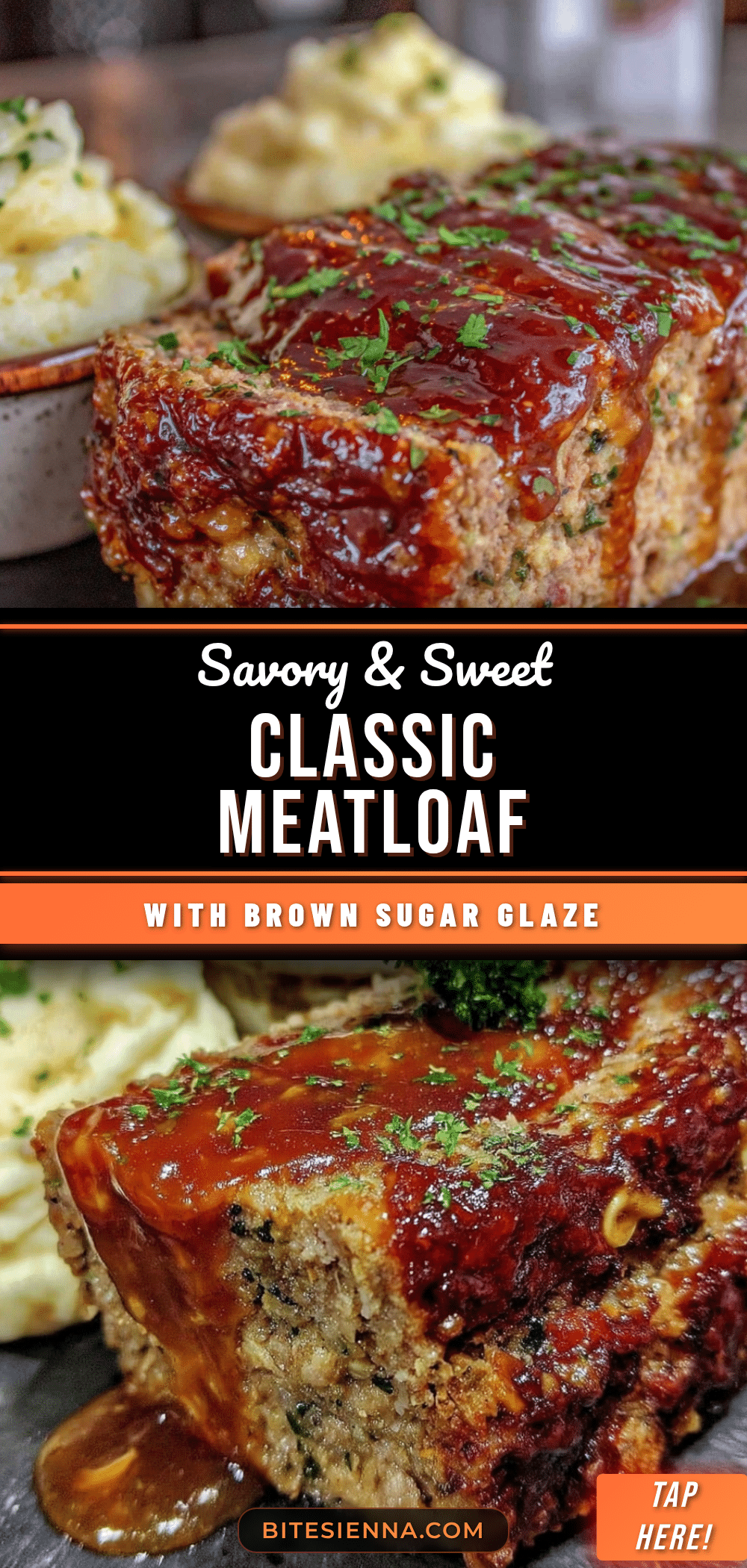
Classic Meatloaf with Brown Sugar Glaze: Easy Comfort Food
This classic meatloaf with brown sugar glaze is incredibly moist, tender, and topped with a sticky-sweet caramelized crust. It’s the perfect comfort food that even skeptics will love.
- Prep Time: 20 minutes
- Cook Time: 60 minutes
- Total Time: 1 hour 20 minutes
- Yield: 8 servings 1x
- Category: Main Course
- Cuisine: American
Ingredients
- 2 pounds ground beef (80/20)
- 1 cup breadcrumbs (plain or Italian-style)
- ½ cup whole milk
- 2 large eggs, lightly beaten
- 1 medium yellow onion, finely diced
- 3 cloves garlic, minced
- 2 tablespoons Worcestershire sauce
- ¼ cup ketchup
- 1 tablespoon Dijon mustard
- 1 teaspoon dried thyme
- 1½ teaspoons salt
- ½ teaspoon black pepper, freshly ground
- 2 tablespoons fresh parsley, chopped (optional)
- ½ cup ketchup (for glaze)
- ¼ cup brown sugar, packed
- 1 tablespoon apple cider vinegar
- 1 teaspoon Worcestershire sauce (for glaze)
- ½ teaspoon garlic powder
Instructions
- Preheat your oven to 350°F (175°C). Position the rack in the center of the oven. Line a baking sheet with foil or parchment and place a 9×5-inch loaf pan on top.
- Make the panade: In a large mixing bowl, combine the breadcrumbs and milk. Stir together and let sit for 5 minutes until the breadcrumbs absorb the milk and form a thick paste.
- Add the aromatics: To the panade, add the beaten eggs, diced onion, minced garlic, 2 tablespoons Worcestershire sauce, ¼ cup ketchup, Dijon mustard, dried thyme, salt, pepper, and parsley if using. Stir until well combined.
- Add the beef: Add the ground beef to the bowl. Using your hands, gently mix everything together until just combined. Do not overmix.
- Shape and place: Transfer the meat mixture to the loaf pan. Press it in gently, mounding slightly in the center. Alternatively, shape free-form on the lined baking sheet.
- Make the glaze: In a small bowl, whisk together ½ cup ketchup, packed brown sugar, apple cider vinegar, 1 teaspoon Worcestershire sauce, and garlic powder until the sugar is mostly dissolved.
- First glaze application: Brush about half of the glaze over the top and sides of the meatloaf. Reserve the rest.
- Bake for 45 minutes: Place the pan in the oven and bake for 45 minutes until the meatloaf is starting to brown and the glaze is bubbling.
- Second glaze application: Remove the meatloaf from the oven and brush on the remaining glaze. Return to the oven for another 15-20 minutes.
- Check temperature: The meatloaf is done when an instant-read thermometer inserted into the center reads 160°F (71°C).
- Rest before slicing: Let the meatloaf rest in the pan for 10-15 minutes before slicing.
- Slice and serve: Use a sharp knife to cut even slices, about 1-inch thick. Spoon any extra glaze from the pan over the slices.
Notes
Don’t overmix the meat. Let the panade sit for 5 minutes. Use a meat thermometer for perfect doneness. Line the pan with parchment paper for easy removal. Let the meatloaf rest before slicing. Make extra glaze for serving.
Nutrition
- Serving Size: 1 slice (1-inch thic
- Calories: 385
- Sugar: 12
- Sodium: 780
- Fat: 22
- Saturated Fat: 9
- Carbohydrates: 18
- Fiber: 1
- Protein: 28
Keywords: meatloaf, brown sugar glaze, comfort food, ground beef, easy dinner, classic meatloaf