I was wrestling with a too-heavy bag of winter squash at the farmers market, trying to decide if my arms could handle the walk home, when the woman next to me—the one with the calm hands and the basket full of sage—just laughed. She didn’t say much at first. She just reached over, picked up the smallest butternut she could find, and said, “This one. Roast it with some of this.” She handed me a sprig of sage like it was a secret. I almost dropped the squash. Honestly, I was so focused on picking the biggest one (because bigger must be better, right?) that I hadn’t even thought about the flavor. I bought the small squash, the sage, and a promise to myself to actually listen next time. That conversation, as brief as it was, changed how I approach soup season entirely. This cozy roasted butternut squash soup with sage is the direct result of that market encounter. It’s not just a recipe; it’s a reminder that the best dishes come from a shared moment, not a rigid plan. I’ve tweaked the roasting time and added a touch of maple syrup, but the soul of it—the quiet confidence of the woman and the earthy punch of the sage—is exactly what she handed me. Maybe you’ve been there, standing in a grocery aisle, overwhelmed by choice, and a stranger’s simple advice made everything click. That’s this soup. It’s simple, it’s honest, and it’s the kind of thing you’ll want to make for everyone you know.
Why You’ll Love This Recipe
Let me tell you why this particular bowl of soup has become my secret weapon for every fall gathering and cozy dinner party. I’ve tested this recipe more times than I can count, tweaking the roast time and the herb ratio until it was absolutely perfect. This isn’t just another squash soup—it’s the one that gets the “can I have the recipe?” text before the night is over.
- Perfect for Hosting: This soup is a showstopper that you can make entirely ahead of time. When your guests arrive, you’re not stuck in the kitchen. You’re sitting at the table, wine in hand, looking like a culinary genius.
- Simple Ingredients: No trips to a specialty store. You probably have most of this in your pantry right now. The magic happens in the oven, not in a frantic search for obscure spices.
- Crowd-Pleaser: I’ve served this to everyone from my picky-eating nephew to my in-laws who “don’t really like soup.” It vanishes every single time. The creamy texture and savory-sweet balance are just unbeatable.
- Unbelievably Delicious: The roasting process is the real hero here. It caramelizes the natural sugars in the squash, creating a depth of flavor that you just can’t get from boiling. The sage adds this warm, almost peppery note that ties everything together.
- Stress-Free for Gatherings: You can double or triple this recipe without a second thought. It scales beautifully, making it ideal for potlucks, Thanksgiving starters, or a cozy night in with friends.
This isn’t just a good soup. It’s the kind of soup that makes people close their eyes after the first spoonful. It’s comfort food that feels elegant, healthy without being boring, and simple enough for a Tuesday night but impressive enough for a holiday table. Trust me, your guests will thank you.
What Ingredients You Will Need
This recipe relies on a handful of humble ingredients that, when treated right, create something truly spectacular. The key is quality and the right preparation. Here is everything you need to make this cozy roasted butternut squash soup with sage sing.
- 1 large butternut squash (about 3 pounds / 1.4 kg), peeled, seeded, and cut into 1-inch cubes — Look for a squash that feels heavy for its size with a matte, not shiny, skin. A shiny skin can mean it was picked too early. I prefer to buy pre-cut cubes from the store when I’m in a hurry, but cutting your own ensures even roasting.
- 2 tablespoons olive oil, divided — Use a good quality extra virgin olive oil for roasting. It adds a fruity note that pairs beautifully with the squash. You will use some for the squash and a little for the aromatics.
- 1 medium yellow onion, chopped — A yellow onion gives the best savory base. It sweetens as it cooks, blending seamlessly into the background.
- 3 cloves garlic, minced — Fresh garlic is non-negotiable here. The jarred stuff just won’t give you the same punch. Add it towards the end of cooking the onions to avoid burning it.
- 4 cups (960 ml) vegetable broth or chicken broth — I usually use a low-sodium vegetable broth to keep control over the salt level. If you use chicken broth, the soup will have a slightly richer, more savory profile. Both work wonderfully.
- 1/2 cup (120 ml) full-fat coconut milk or heavy cream — This is where the creaminess comes from. Coconut milk adds a subtle sweetness and makes the soup dairy-free. Heavy cream gives a richer, more traditional texture. I’ve used both, and honestly, I love them equally for different reasons.
- 2 tablespoons fresh sage leaves, chopped, plus more for garnish — Fresh sage is a must. Dried sage can be overpowering and dusty. The fresh leaves have a bright, almost lemony undertone that mellows into pure comfort when roasted.
- 1 tablespoon maple syrup (optional, but recommended) — This is my little secret. It enhances the natural sweetness of the roasted squash without making the soup taste sugary. Add it if your squash isn’t super sweet.
- 1/2 teaspoon ground nutmeg — A pinch of nutmeg adds warmth and complexity. It’s the spice that whispers “fall” without shouting.
- Salt and freshly ground black pepper, to taste — Don’t be shy with the salt. It’s what brings all the flavors into focus. I use kosher salt for its clean taste.
- Optional toppings: toasted pumpkin seeds, a drizzle of coconut milk or cream, crispy sage leaves, crusty bread — These add texture and visual appeal, which is key when you’re serving a crowd.
Equipment Needed
You don’t need a professional kitchen to make this soup, but having the right tools makes the process smoother and more enjoyable. Here’s what you’ll need to gather.
- Large baking sheet or roasting pan — A rimmed baking sheet is perfect. Make sure it’s big enough to hold the squash in a single layer. Crowding the pan will steam the squash instead of roasting it, and we want those caramelized edges.
- Chef’s knife and cutting board — A sharp chef’s knife is your best friend when tackling a butternut squash. A dull knife is a danger to your fingers. A sturdy cutting board that won’t slip is equally important.
- Vegetable peeler — A good peeler makes quick work of the squash’s tough skin. I prefer a Y-shaped peeler for better control.
- Large soup pot or Dutch oven — A heavy-bottomed pot, like a Dutch oven, distributes heat evenly and is great for sautéing the aromatics. I use my 5.5-quart Le Creuset for this, but any large pot will do.
- Immersion blender or regular blender — An immersion blender is my go-to for soup. It allows you to blend directly in the pot, which means less cleanup. If you use a regular blender, work in batches and be careful with the hot liquid. Let it cool slightly first to avoid a volcano situation.
- Measuring cups and spoons — Accuracy matters for the broth and coconut milk. Eyeballing it can lead to a soup that’s too thin or too thick.
- Wooden spoon or spatula — For stirring the aromatics and scraping up any browned bits from the bottom of the pot. Those bits are pure flavor.
Preparation Method

Alright, let’s get cooking. This recipe is straightforward, but paying attention to a few key steps makes all the difference. I’ve learned these through a few burnt batches and some overly watery soups, so trust me on this.
- Preheat your oven to 400°F (200°C). Getting the oven nice and hot is crucial for that caramelization. While it’s heating, line your baking sheet with parchment paper for easy cleanup.
- Prepare the squash. If you haven’t bought pre-cut cubes, here’s the easiest way: Cut off the top and bottom of the squash so it sits flat. Use your vegetable peeler to remove the skin. Cut the squash in half lengthwise and scoop out the seeds with a spoon. Then, cut the flesh into uniform 1-inch cubes. Uniformity is key—if some pieces are smaller, they’ll burn before the larger ones are tender.
- Roast the squash. Toss the cubed squash with 1 tablespoon of olive oil, a generous pinch of salt, and a few cracks of black pepper. Spread the cubes in a single, even layer on your prepared baking sheet. Don’t crowd them! Roast for 25-30 minutes, flipping halfway through, until the squash is fork-tender and the edges are golden brown and slightly caramelized. This is where the magic happens. The smell in your kitchen will be incredible.
- Sauté the aromatics. While the squash roasts, heat the remaining 1 tablespoon of olive oil in your large soup pot over medium heat. Add the chopped onion and cook, stirring occasionally, for 5-7 minutes, until softened and translucent. Add the minced garlic and cook for another minute until fragrant. Be careful not to let the garlic burn, or it will turn bitter.
- Bloom the spices. Add the chopped fresh sage and ground nutmeg to the pot. Stir for about 30 seconds until the sage is fragrant and bright green. This step wakes up the flavors and infuses the oil.
- Combine and simmer. Add the roasted squash cubes to the pot along with the vegetable broth. Stir everything together, scraping up any browned bits from the bottom of the pot. Bring the soup to a gentle boil, then reduce the heat to low, cover, and let it simmer for 10 minutes. This allows all the flavors to meld together.
- Blend until smooth. Remove the pot from the heat. Use your immersion blender to puree the soup until it is completely smooth and velvety. If you’re using a regular blender, let the soup cool for a few minutes, then carefully blend in batches, filling the blender no more than halfway. Hold the lid down with a towel to prevent any hot soup from escaping.
- Finish with creaminess. Stir in the coconut milk (or heavy cream) and the maple syrup, if using. Taste and adjust the seasoning with more salt, pepper, or a pinch of nutmeg. If the soup is too thick for your liking, add a splash more broth or water until it reaches your desired consistency.
- Serve and garnish. Ladle the soup into bowls. Drizzle with a little extra coconut milk or cream, and top with crispy sage leaves and toasted pumpkin seeds for a beautiful presentation. A side of crusty bread for dipping is never a bad idea.
Cooking Tips & Techniques
I’ve made this soup more times than I can count, and I’ve definitely made my share of mistakes. Here are the lessons I’ve learned so you can skip the frustration and get straight to the good part.
- Don’t skip the roasting. I know it’s tempting to just boil the squash to save time. Don’t do it. Roasting concentrates the flavor and creates a sweetness that you simply cannot achieve with boiling. The caramelized edges are the secret to the soup’s depth.
- Use fresh sage. Dried sage can be dusty and overpowering. Fresh sage has a bright, peppery flavor that mellows beautifully. If you only have dried, use half the amount and add it with the broth to let it rehydrate.
- Season in layers. Add salt at every stage—when roasting the squash, when sautéing the onions, and at the end. This builds a more complex flavor profile. Underseasoned soup is the most common mistake I see.
- Blend with caution. Hot soup expands in a blender. If you’re using a countertop blender, always let the soup cool for a few minutes first, and never fill the blender more than halfway. Hold the lid down firmly with a towel.
- Make it ahead. This soup actually tastes better the next day. The flavors have time to meld and deepen. Make it a day before your party, store it in the fridge, and reheat gently on the stove. Your future self will thank you.
- Adjust the consistency. Some people like a thick, hearty soup. Others prefer it thinner. The amount of broth is a guideline. Add more to thin it out, or let it simmer a bit longer to thicken it.
Variations & Adaptations
This recipe is a fantastic base, and it’s incredibly easy to adapt to different tastes, dietary needs, or what you have on hand. Here are a few of my favorite variations.
- Vegan & Dairy-Free: This version is already vegan if you use coconut milk and vegetable broth. The coconut milk adds a lovely richness without any dairy. It’s my go-to for potlucks where I’m not sure about everyone’s dietary restrictions.
- Spicy Kick: Add a pinch of red pepper flakes or a small chopped jalapeño when you sauté the onions. The heat cuts through the sweetness of the squash beautifully. I did this once on a whim and it was a huge hit.
- Apple & Squash: Add one peeled and chopped apple (like a Honeycrisp or Fuji) to the roasting pan with the squash. It adds a bright, fruity sweetness that pairs wonderfully with the sage. This is my favorite fall variation.
- Roasted Garlic: Instead of mincing the garlic, roast a whole head of garlic alongside the squash. Squeeze the soft, caramelized cloves into the pot before blending. It adds a mellow, nutty sweetness that is absolutely divine.
- Herb Swap: If you don’t have sage, try using fresh thyme or rosemary. Use about 1 tablespoon of fresh thyme leaves or 1 teaspoon of chopped fresh rosemary. Each herb brings a different character to the soup.
- Coconut Curry: Stir in 1 tablespoon of red curry paste with the garlic and sage. Finish with a squeeze of lime juice. It transforms the soup into a warming, aromatic curry that’s perfect for a cold night.
Serving & Storage Suggestions
This soup is a star on its own, but a few thoughtful accompaniments can turn it into a full meal. Here’s how to serve it and keep it for later.
Serving: Serve this soup hot, but not boiling. I like to ladle it into warmed bowls for a cozy feel. For a dinner party, I’ll set up a little topping bar with bowls of toasted pumpkin seeds, crispy sage leaves, a swirl of cream, and some crusty bread. It lets guests customize their bowl and looks beautiful on the table. Pair it with a simple kale and apple salad for a complete fall meal. A glass of dry Riesling or a light-bodied Pinot Noir is my personal favorite drink pairing.
Storage: Leftover soup can be stored in an airtight container in the refrigerator for up to 5 days. The flavors actually get better after a day or two. To reheat, warm it gently on the stovetop over medium-low heat, stirring occasionally. You can also microwave it in a bowl, but be sure to stir halfway through for even heating. If the soup thickens too much in the fridge, just add a splash of broth or water when you reheat it.
Freezing: This soup freezes beautifully. Let it cool completely, then transfer it to freezer-safe containers or zip-top bags. Leave a little headspace for expansion. It will keep for up to 3 months. Thaw it overnight in the refrigerator before reheating. I often make a double batch just to stock my freezer for busy weeks.
Nutritional Information & Benefits
This soup isn’t just delicious; it’s packed with good-for-you ingredients that make you feel as good as you taste. Here’s a quick look at what’s in a serving.
Estimated Nutritional Values (per serving, based on 6 servings):
- Calories: ~220
- Fat: 12g
- Carbohydrates: 28g
- Fiber: 6g
- Sugar: 10g
- Protein: 4g
- Vitamin A: Over 400% of your daily value!
- Vitamin C: 40% of your daily value
Health Benefits: Butternut squash is a powerhouse of vitamin A, which is fantastic for your immune system and eye health. It’s also rich in fiber, which aids digestion and keeps you feeling full and satisfied. The sage is not just for flavor; it has anti-inflammatory properties and is a good source of vitamin K. Using coconut milk provides healthy fats that help your body absorb the fat-soluble vitamins from the squash. This soup is naturally gluten-free and can be made vegan, making it a wonderful option for a variety of dietary needs.
Conclusion
So there you have it—my cozy roasted butternut squash soup with sage. It’s the recipe I turn to when I want to impress without stress, when I need a warm hug in a bowl, or when I just want to make my kitchen smell like autumn. It’s born from a simple conversation at a market, and it’s become a staple in my home. I hope it becomes one in yours, too.
Don’t be afraid to make it your own. Tweak the spices, swap the toppings, or double the batch for a crowd. The best recipes are the ones that adapt to you. I’d love to hear how it turns out! Leave a comment below and let me know what variations you tried, or tag me in your photos on social media. Your feedback and creativity are what keep this little blog going. Now go on, get that squash roasting. You’ve got this.
Frequently Asked Questions
Can I use frozen butternut squash for this soup?
You can, but I don’t recommend it. Frozen squash has a much higher water content, which means it will steam rather than roast. You’ll miss out on the caramelized flavor that makes this soup so special. If you’re in a pinch, thaw the frozen squash, pat it very dry, and roast it at a higher temperature (425°F) to encourage browning.
How can I make this soup thicker or thinner?
To thicken the soup, let it simmer uncovered for an extra 10-15 minutes after blending to allow some of the liquid to evaporate. You can also add a peeled and diced potato when you add the broth; the starch will naturally thicken the soup. To thin it out, simply stir in more broth or water until it reaches your desired consistency.
Can I make this soup in a slow cooker?
Yes, with a small adjustment. Roast the squash in the oven first (this step is non-negotiable for flavor). Then, transfer the roasted squash and all other ingredients except the coconut milk to your slow cooker. Cook on low for 3-4 hours. Blend, then stir in the coconut milk at the end. It’s a great hands-off method for a busy day.
What is the best way to peel a butternut squash?
The safest and easiest method is to use a sharp vegetable peeler. First, cut off the top and bottom of the squash so it sits flat. Then, run the peeler down the sides, removing the skin in strips. If the squash is very hard, you can microwave it whole for 2-3 minutes to soften the skin slightly. Always use a sharp chef’s knife to cut the squash in half.
Can I leave out the coconut milk or cream?
Absolutely. The soup will still be delicious and creamy from the blended squash itself. It will just be a little less rich and velvety. If you omit the coconut milk, you might want to add an extra tablespoon of olive oil or a splash of broth to maintain a nice texture. The flavor will still be wonderful.
Pin This Recipe!
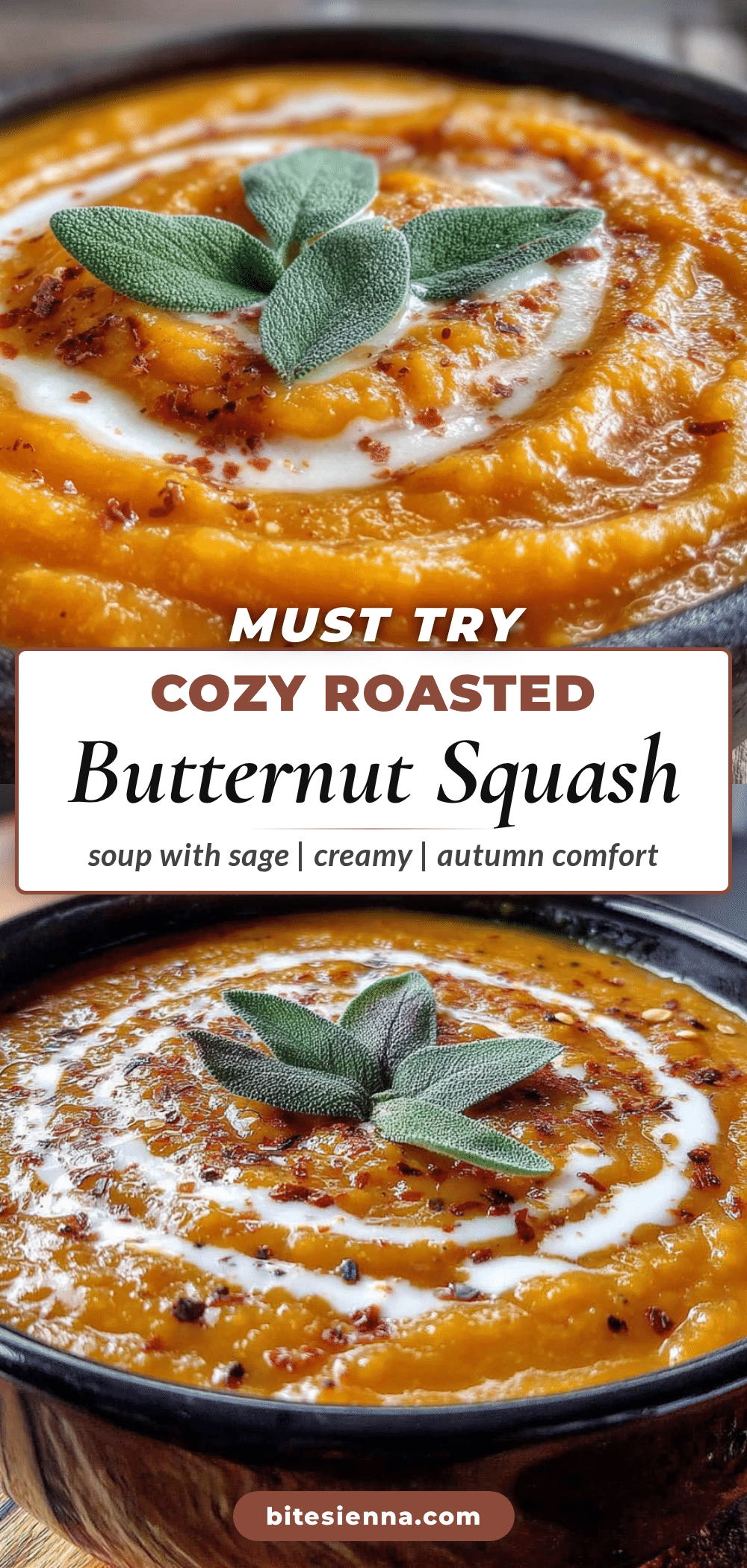
Cozy Roasted Butternut Squash Soup with Sage

This cozy roasted butternut squash soup with sage is a comforting, elegant dish born from a simple market encounter. Roasting the squash caramelizes its natural sugars, creating a deep, savory-sweet flavor that pairs perfectly with fresh sage and a touch of maple syrup.
- Prep Time: 15 minutes
- Cook Time: 40 minutes
- Total Time: 55 minutes
- Yield: 6 servings 1x
- Category: Soup
- Cuisine: American
Ingredients
- 1 large butternut squash (about 3 pounds / 1.4 kg), peeled, seeded, and cut into 1-inch cubes
- 2 tablespoons olive oil, divided
- 1 medium yellow onion, chopped
- 3 cloves garlic, minced
- 4 cups (960 ml) vegetable broth or chicken broth
- 1/2 cup (120 ml) full-fat coconut milk or heavy cream
- 2 tablespoons fresh sage leaves, chopped, plus more for garnish
- 1 tablespoon maple syrup (optional, but recommended)
- 1/2 teaspoon ground nutmeg
- Salt and freshly ground black pepper, to taste
- Optional toppings: toasted pumpkin seeds, a drizzle of coconut milk or cream, crispy sage leaves, crusty bread
Instructions
- Preheat your oven to 400°F (200°C). Line a baking sheet with parchment paper.
- Prepare the squash: Cut off the top and bottom, peel with a vegetable peeler, cut in half lengthwise, scoop out seeds, and cut into uniform 1-inch cubes.
- Toss the cubed squash with 1 tablespoon olive oil, a generous pinch of salt, and a few cracks of black pepper. Spread in a single layer on the prepared baking sheet. Roast for 25-30 minutes, flipping halfway, until fork-tender and edges are golden brown.
- While the squash roasts, heat the remaining 1 tablespoon olive oil in a large soup pot over medium heat. Add the chopped onion and cook for 5-7 minutes until softened and translucent. Add the minced garlic and cook for 1 minute until fragrant.
- Add the chopped fresh sage and ground nutmeg to the pot. Stir for about 30 seconds until fragrant.
- Add the roasted squash cubes and vegetable broth to the pot. Stir, scraping up any browned bits. Bring to a gentle boil, then reduce heat to low, cover, and simmer for 10 minutes.
- Remove the pot from heat. Use an immersion blender to puree the soup until smooth. (If using a regular blender, let cool slightly, then blend in batches, filling no more than halfway.)
- Stir in the coconut milk (or heavy cream) and maple syrup (if using). Taste and adjust seasoning with more salt, pepper, or nutmeg. Add more broth or water if needed to reach desired consistency.
- Ladle into bowls. Garnish with a drizzle of extra coconut milk or cream, crispy sage leaves, and toasted pumpkin seeds. Serve with crusty bread.
Notes
Don’t skip roasting the squash—it’s key for flavor. Use fresh sage for best results. Season in layers. For a thicker soup, simmer uncovered after blending. This soup tastes even better the next day. Freezes well for up to 3 months.
Nutrition
- Serving Size: 1 serving (about 1.5
- Calories: 220
- Sugar: 10
- Sodium: 480
- Fat: 12
- Saturated Fat: 4
- Carbohydrates: 28
- Fiber: 6
- Protein: 4
Keywords: butternut squash soup, roasted butternut squash, sage, fall soup, cozy soup, vegetarian, gluten-free, vegan option