I was standing in the frozen foods aisle last November, staring at a tower of turkey roasters, when the smell hit me. It wasn’t coming from anywhere real—just a phantom scent, sharp and buttery with a whisper of rosemary, and suddenly I was seven years old, wedged between my aunt and the kitchen counter in her too-warm apartment. She was basting a turkey breast with a brush she’d had since the 80s, the bristles stained and frayed, and I was watching her like she was performing magic. She wasn’t a fancy cook—honestly, she used margarine half the time—but that bird came out of the oven golden and glistening, and the smell clung to her dish towels for days. She passed away a few years back, and I haven’t been able to walk past a poultry display without that same phantom scent flooding my senses. So last month, I finally caved. I bought a turkey breast, grabbed some fresh herbs, and spent an afternoon trying to chase that memory down with butter and patience. This is what I ended up with—a recipe that doesn’t just taste good, but feels like a hug from someone you miss. Maybe you’ve got a similar food memory tucked away. If you do, this one’s for you.
Why You’ll Love This Recipe
Let me tell you—this isn’t just another turkey breast recipe. I’ve tested this thing six times, tweaking the butter ratio and roasting time until my family started asking if we could have “that turkey again” for no special occasion at all. That’s when I knew I’d cracked it. Here’s what makes it stand out:
- Budget-Friendly: A bone-in turkey breast costs way less than a whole bird or a pre-seasoned roast. You’re feeding a crowd without breaking the bank.
- Simple Ingredients: Butter, garlic, herbs, salt, pepper—stuff you probably already have. No weird grocery store treasure hunts.
- Perfect for Family Meals: It’s big enough for Sunday dinner but small enough that leftovers don’t haunt you for a week. Picky eaters? My kids fought over the crispy skin.
- Foolproof Technique: The herb butter locks in moisture, so even if you accidentally leave it in the oven a few extra minutes (ask me how I know), it stays juicy.
- Leftovers That Shine: This turkey reheats beautifully. Sandwiches, soups, salads—you’ll actually look forward to day two.
I’m not a chef, just a home cook who’s burned enough dinners to learn a thing or two. This recipe comes from real trial and error—the kind where you forget to set a timer and the smoke alarm becomes your dinner bell. But this version? It’s been stress-tested by a distracted mom with a toddler underfoot, and it still came out perfect. That’s the kind of recipe you can trust.
What Ingredients You Will Need
This recipe uses simple, honest ingredients to build big flavor without a lot of fuss. Most of these are pantry staples, which is exactly what you want when feeding a family on a sensible budget. Here’s what you’ll need:
- Bone-in, skin-on turkey breast (5-7 pounds) — I prefer the bone-in for flavor and moisture. The bone acts like a heat sink, keeping the meat from drying out. If you can only find a boneless roast, reduce cooking time by about 15 minutes per pound.
- Unsalted butter (1/2 cup, softened) — I use Kerrygold when I can splurge, but store-brand works fine. Soften it on the counter for an hour—microwaving makes it too soft and you lose that creamy texture.
- Fresh garlic (4 cloves, minced) — Don’t use the jarred stuff here. Fresh garlic makes a real difference in the butter, and it’s cheap. I buy the big bag from Costco and keep it in my pantry.
- Fresh rosemary (2 tablespoons, chopped) — If you’ve got a bush in your yard, even better. Dried rosemary works in a pinch (use 1 tablespoon), but fresh gives that aromatic punch that makes the house smell amazing.
- Fresh thyme (1 tablespoon, leaves stripped) — Same deal—fresh is best. I’ve used dried thyme in a hurry and it’s fine, but the flavor is more subtle.
- Fresh sage (1 tablespoon, chopped) — This is optional but worth it. Sage has this earthy, slightly peppery note that pairs beautifully with poultry. If you skip it, add an extra teaspoon of rosemary.
- Salt (1 tablespoon, kosher) — I use Diamond Crystal. If you’re using table salt, cut back to 2 teaspoons—it’s denser and you’ll oversalt.
- Black pepper (1 teaspoon, freshly ground) — Pre-ground is okay, but fresh cracked pepper has more punch. I keep a cheap pepper mill on my counter.
- Olive oil (1 tablespoon) — Just a little drizzle on the skin after the butter goes on. It helps the skin crisp up without burning the butter.
- Chicken or turkey broth (1 cup) — Pour this into the bottom of the roasting pan. It keeps the drippings from scorching and makes a killer base for gravy. I use low-sodium to control the salt.
- Optional: 1 lemon, halved — Tuck this into the cavity if you’ve got one. It adds a bright note that cuts through the richness.
Ingredient Tip: Look for a turkey breast that’s uniform in thickness—it cooks more evenly. If one end is much thinner, tuck it under itself or shield it with foil halfway through roasting. I learned this the hard way when one side came out dry and the other was perfect. Not my finest moment.
Equipment Needed
You don’t need a fancy kitchen for this recipe. Here’s what you’ll actually use:
- Roasting pan with a rack — The rack lifts the turkey so air circulates underneath. No rack? No problem. Roll up a few balls of foil and set the turkey on those. I’ve done it, and it works.
- Instant-read thermometer — This is non-negotiable. Turkey dries out fast, and guessing doneness by color is a gamble. I use a $12 digital probe thermometer from Amazon—best money I ever spent.
- Small mixing bowl — For the herb butter. Any bowl works.
- Chef’s knife and cutting board — For chopping herbs and garlic. A sharp knife makes the job faster and safer.
- Basting brush (optional) — I use a silicone one because it’s easy to clean. A spoon works too—just drizzle the butter over the skin.
- Aluminum foil — For tenting the turkey if the skin browns too fast. You’ll probably need this.
- Measuring spoons — For the salt and pepper. Eyeballing it is risky with salt.
Budget Tip: If you don’t own a roasting pan, a disposable aluminum one from the grocery store costs about $3. It’s flimsy, so double it up or set it on a sturdy baking sheet. I’ve used this trick for years, and it works just fine.
Preparation Method
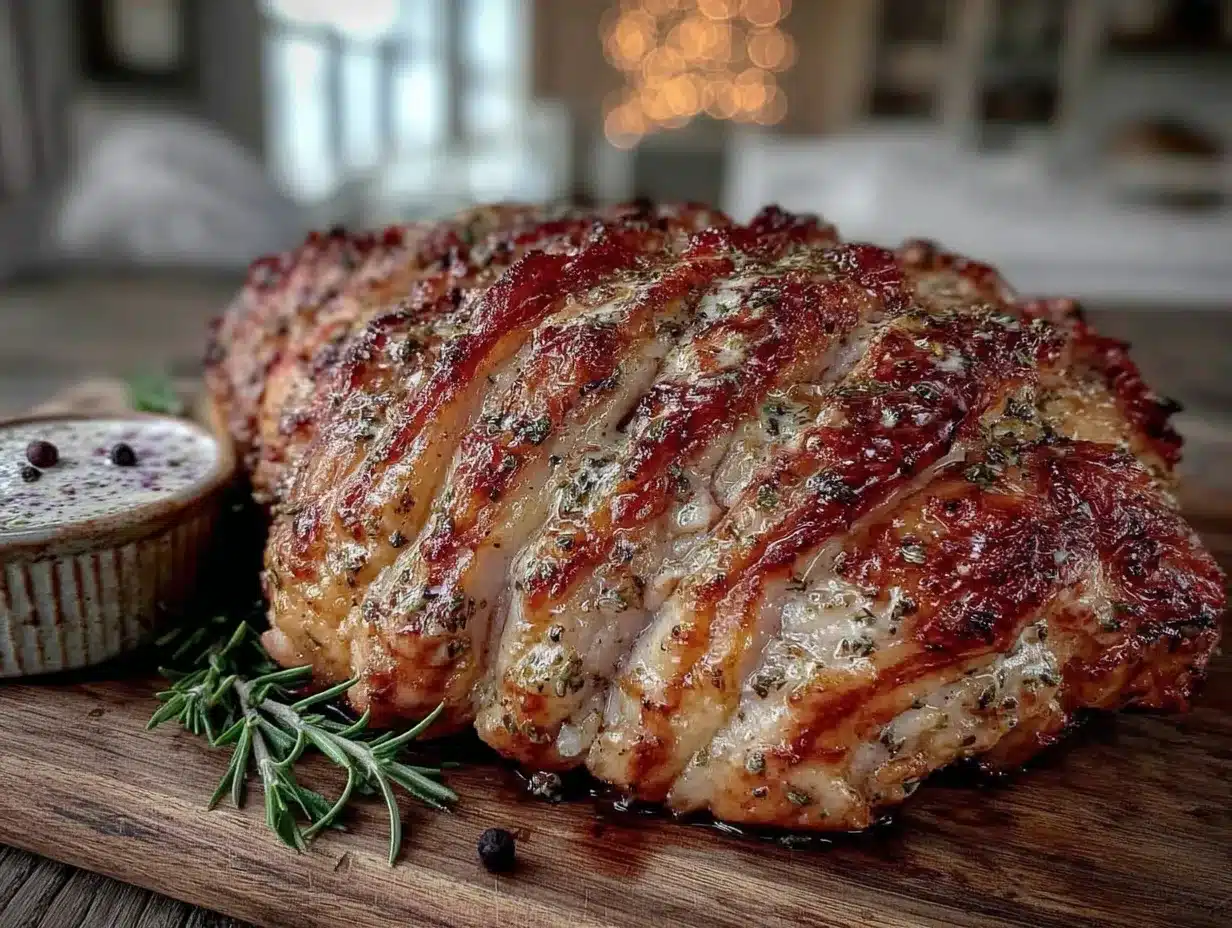
Alright, let’s get cooking. Take your time with these steps—rushing is the enemy of a juicy turkey. Here’s how I do it:
- Take the turkey out of the fridge 45 minutes before cooking. This is called tempering, and it’s important. A cold bird hits the hot oven and the outside cooks way faster than the inside, leaving you with dry edges and a raw center. Set it on a rimmed baking sheet to catch any drips. I usually do this while I’m prepping the herb butter.
- Preheat your oven to 425°F (218°C). That high heat at the start gives you crispy skin. After 20 minutes, you’ll drop it to 350°F (177°C) for the rest of the cook. Don’t skip this step—low-and-slow from the start makes for sad, flabby skin.
- Make the herb butter. In a small bowl, combine the softened butter, minced garlic, chopped rosemary, thyme, sage (if using), salt, and pepper. Mash it together with a fork until everything is evenly distributed. Taste a tiny bit—it should be boldly seasoned. The butter will mellow as it roasts.
- Pat the turkey breast completely dry with paper towels. This is crucial. Moisture is the enemy of crispy skin. Get into all the crevices and really blot it dry. I use about four paper towels and don’t feel bad about it.
- Loosen the skin. Gently slide your fingers under the skin of the turkey breast, starting at the neck end and working your way down. Be careful not to tear it—you want to create a pocket between the skin and the meat. This is where the magic happens.
- Apply the herb butter. Take about two-thirds of the butter mixture and spread it directly onto the meat under the skin. Use your fingers to distribute it evenly. Then spread the remaining butter all over the outside of the skin. Don’t forget the sides and underneath. Drizzle the olive oil over the top and rub it in—it helps with browning.
- Place the turkey in the roasting pan. Set it breast-side up on the rack. Pour the broth into the bottom of the pan (not over the turkey—you’ll wash off the butter). Tuck the lemon halves into the cavity if you’re using them.
- Roast at 425°F (218°C) for 20 minutes. This initial blast of heat sets the skin. Don’t open the oven door during this time—let that heat do its work.
- Reduce the oven temperature to 350°F (177°C) and continue roasting. Total roasting time will be about 13-15 minutes per pound. For a 6-pound breast, that’s roughly 1 hour and 20 minutes to 1 hour and 30 minutes. Start checking temperature at the 1-hour mark.
- Baste once, halfway through. After about 40 minutes at 350°F, open the oven and spoon the pan juices over the turkey. This adds flavor and moisture. Don’t baste more than once—every time you open the oven, heat escapes and extends cooking time.
- Check for doneness. Insert your instant-read thermometer into the thickest part of the breast, avoiding the bone. You’re looking for 160°F (71°C). The temperature will rise another 5 degrees while it rests, bringing it to the safe 165°F (74°C).
- Let it rest. Transfer the turkey to a cutting board and tent it loosely with foil. Let it rest for at least 20 minutes. I know it’s hard to wait, but this step is non-negotiable. The juices need time to redistribute, or they’ll run out onto the cutting board and you’ll have dry meat.
- Carve and serve. Slice against the grain into even pieces. Spoon some of the pan juices over the top if you want extra moisture. Watch it disappear.
Sensory Cue: When the turkey is done, the skin should be deep golden brown and crispy to the touch. The aroma will be intoxicating—buttery, herbal, with a hint of roasted garlic. If you stick a knife into the thickest part, the juices should run clear, not pink.
Cooking Tips & Techniques
I’ve made enough mistakes with turkey to fill a cookbook. Here’s what I’ve learned the hard way so you don’t have to:
- Don’t skip the resting period. I once carved a turkey breast straight out of the oven because I was hungry and impatient. The juices flooded the cutting board, and the meat was dry and sad. Twenty minutes of patience saves the whole dish.
- Watch the skin color. If the skin is browning too fast (usually after the first 30 minutes at 350°F), tent the turkey loosely with foil. I’ve had ovens that run hot turn a beautiful golden bird into a burnt mess in ten minutes flat. Better safe than sorry.
- Use a thermometer, not a timer. Ovens vary wildly. My neighbor’s oven runs 25 degrees hot, and she wonders why her turkey dries out. A $12 thermometer takes the guesswork out. Stick it in the thickest part and wait for 160°F.
- Let the butter soften naturally. I’ve microwaved butter to soften it in a hurry, and it always ends up half-melted and greasy. The herb butter doesn’t spread as well, and you lose that creamy texture. Give it an hour on the counter—it’s worth it.
- Don’t overcrowd the pan. If you’re roasting vegetables alongside the turkey, keep them in a separate pan. Crowding the roasting pan traps steam and prevents the skin from crisping. I learned this when my carrots came out soggy and the turkey skin was flabby. Not a good look.
- Save the drippings for gravy. After the turkey rests, pour the pan juices into a fat separator (or a glass measuring cup and skim off the fat). Use the defatted juices as the base for a quick gravy with flour or cornstarch. It’s liquid gold.
My Biggest Failure: I once forgot to loosen the skin before applying the butter. I just slathered it on top, thinking it would soak through. It didn’t. The skin was tasty, but the meat underneath was bland and dry. That was the day I learned the “under the skin” trick. Now I never skip it.
Variations & Adaptations
One of the best things about this recipe is how flexible it is. Here are some ways to make it your own:
- Herb Swap: Don’t have rosemary? Use tarragon or marjoram instead. Not a fan of sage? Leave it out and double up on thyme. The butter base is forgiving—use what you’ve got. I’ve made it with dried Italian seasoning in a pinch, and it was still delicious.
- Citrus Twist: Add the zest of one lemon or orange to the herb butter. It brightens the flavor and cuts through the richness. I tried this on a whim last Thanksgiving, and my sister-in-law asked for the recipe.
- Spicy Kick: Add 1/2 teaspoon of red pepper flakes or a pinch of cayenne to the butter. It doesn’t make the turkey spicy—just adds a subtle warmth that complements the herbs. My husband loves this version.
- Garlic Lovers: Roast a whole head of garlic alongside the turkey, then squeeze the soft cloves into the herb butter. It’s extra work, but the flavor is incredible. I do this when I’m cooking for company.
- Dietary Adaptations: Use ghee or dairy-free butter for a lactose-free option. The technique stays the same. I’ve tested this with Earth Balance, and it works perfectly—just watch the salt content since some vegan butters are salted.
- Different Cooking Methods: You can adapt this for an air fryer (cook at 375°F for about 30-40 minutes for a smaller breast) or a slow cooker (cook on low for 4-5 hours, but you’ll miss the crispy skin—broil for 5 minutes at the end to crisp it up).
Personal Favorite: I once made this with a mix of fresh dill and parsley because that’s what was in my garden. It was surprisingly good—light and fresh, perfect for a spring dinner. Don’t be afraid to experiment.
Serving & Storage Suggestions
This turkey breast is a star on its own, but here’s how to make it shine even brighter:
- Serving Temperature: Serve the turkey warm, not piping hot. Let it rest, then slice and arrange on a platter. A drizzle of the pan juices over the slices keeps everything moist.
- What to Serve With It: Mashed potatoes are a no-brainer—the gravy is a must. Roasted root vegetables (carrots, parsnips, sweet potatoes) complement the herb flavors. A simple green salad with a vinaigrette cuts the richness. For bread, try crusty sourdough or dinner rolls to soak up the juices.
- Beverage Pairings: A crisp white wine like Sauvignon Blanc or a light Pinot Noir works beautifully. For non-alcoholic options, sparkling water with lemon or a tart apple cider are great choices.
- Storing Leftovers: Let the turkey cool completely, then store it in an airtight container in the fridge for up to 4 days. Slice it before storing—it’s easier to grab for sandwiches and salads.
- Freezing: Freeze sliced turkey in a single layer on a baking sheet, then transfer to a freezer bag. It keeps for up to 3 months. Thaw in the fridge overnight before reheating.
- Reheating: The best way to reheat is in a low oven (300°F) with a splash of broth to add moisture. Cover with foil to prevent drying. Microwave works in a pinch, but the texture suffers. For sandwiches, I like it cold or lightly pan-fried in butter.
- Flavor Development: Honestly, the leftovers are sometimes better than the first meal. The flavors meld overnight, and the meat absorbs more of that herb butter goodness. Day-two turkey sandwiches are a thing of beauty.
Nutritional Information & Benefits
This recipe is a solid choice for a balanced family meal. Here’s a rough breakdown per 6-ounce serving (without gravy):
- Calories: ~320
- Protein: 38g
- Fat: 18g (mostly from butter)
- Carbohydrates: 1g
- Sodium: ~480mg (varies with salt amount)
Health Benefits: Turkey breast is a lean source of high-quality protein, which is great for muscle health and keeping you full. It’s also rich in B vitamins (especially B6 and B12), selenium, and zinc—nutrients that support energy and immune function. The herbs (rosemary, thyme, sage) are packed with antioxidants and anti-inflammatory compounds. Garlic is known for its immune-boosting properties. So while this isn’t a “diet” recipe, it’s a wholesome choice for a family dinner.
Dietary Considerations: This recipe is naturally gluten-free and low-carb. For a lower-sodium version, use unsalted butter and reduce the added salt. For a lower-fat option, you can reduce the butter to 1/4 cup, but the meat won’t be as moist—consider brining the turkey first to compensate. If you’re watching calories, skip the skin (I know, it’s the best part, but the meat underneath is still delicious).
Personal Take: I’m not a nutritionist, just a mom who tries to feed her family well. This recipe feels like a win—protein-packed, flavorful, and made with real ingredients. It’s not about being perfect; it’s about putting something good on the table that everyone will actually eat.
Conclusion
This herb butter roasted turkey breast has become a staple in my kitchen, and I think it’ll become one in yours too. It’s the kind of recipe that feels special enough for holidays but simple enough for a regular Sunday dinner. The crispy skin, the juicy meat, the way the herbs fill your kitchen with that nostalgic aroma—it’s everything I was chasing that day in the frozen foods aisle.
What I love most is how forgiving it is. You don’t need to be a pro to pull this off. Just follow the steps, trust your thermometer, and don’t skip the resting period. And feel free to make it your own—swap the herbs, add some citrus, or crank up the spice. That’s the beauty of cooking: you get to write your own story with every dish.
I’d love to hear how it turns out for you. Drop a comment below and let me know—did your family love it? Did you try a variation? Got any questions? I’m here for all of it. And if you snap a photo, tag me—I want to see your golden, crispy masterpiece. Happy cooking, friend. You’ve got this.
Frequently Asked Questions
Can I use a frozen turkey breast?
Yes, but you need to thaw it completely in the fridge first. A frozen turkey breast takes about 24 hours per 4-5 pounds to thaw. Never cook it from frozen—the outside will overcook before the inside is done. I made this mistake once with a smaller breast, and it was a disaster. Plan ahead.
How do I know when the turkey is done without a thermometer?
Honestly, I really recommend using a thermometer. But if you’re in a pinch, pierce the thickest part of the breast with a knife—the juices should run clear, not pink. The meat should feel firm but not hard, and the skin should be deep golden brown. That said, guessing is risky. A thermometer is cheap insurance.
Can I make this recipe with a whole turkey?
You can, but the cooking time will be much longer (about 13-15 minutes per pound for a whole bird). The herb butter technique works the same—just loosen the skin over the breast and thighs. Be aware that dark meat needs to reach 175°F-180°F for best texture, while white meat is done at 160°F. It’s a balancing act.
What if my turkey breast is boneless?
Boneless breasts cook faster—about 12-14 minutes per pound. They also dry out more easily, so be extra careful with your thermometer. I’d recommend basting twice instead of once and checking temperature at the 45-minute mark. The bone really does help with moisture and flavor, so bone-in is my preference.
Can I prep the herb butter ahead of time?
Absolutely. You can make the herb butter up to 3 days in advance and keep it in the fridge. Just let it soften at room temperature for 20 minutes before using—cold butter is hard to spread under the skin. You can also freeze the butter for up to 3 months. Thaw it in the fridge overnight before using.
Pin This Recipe!
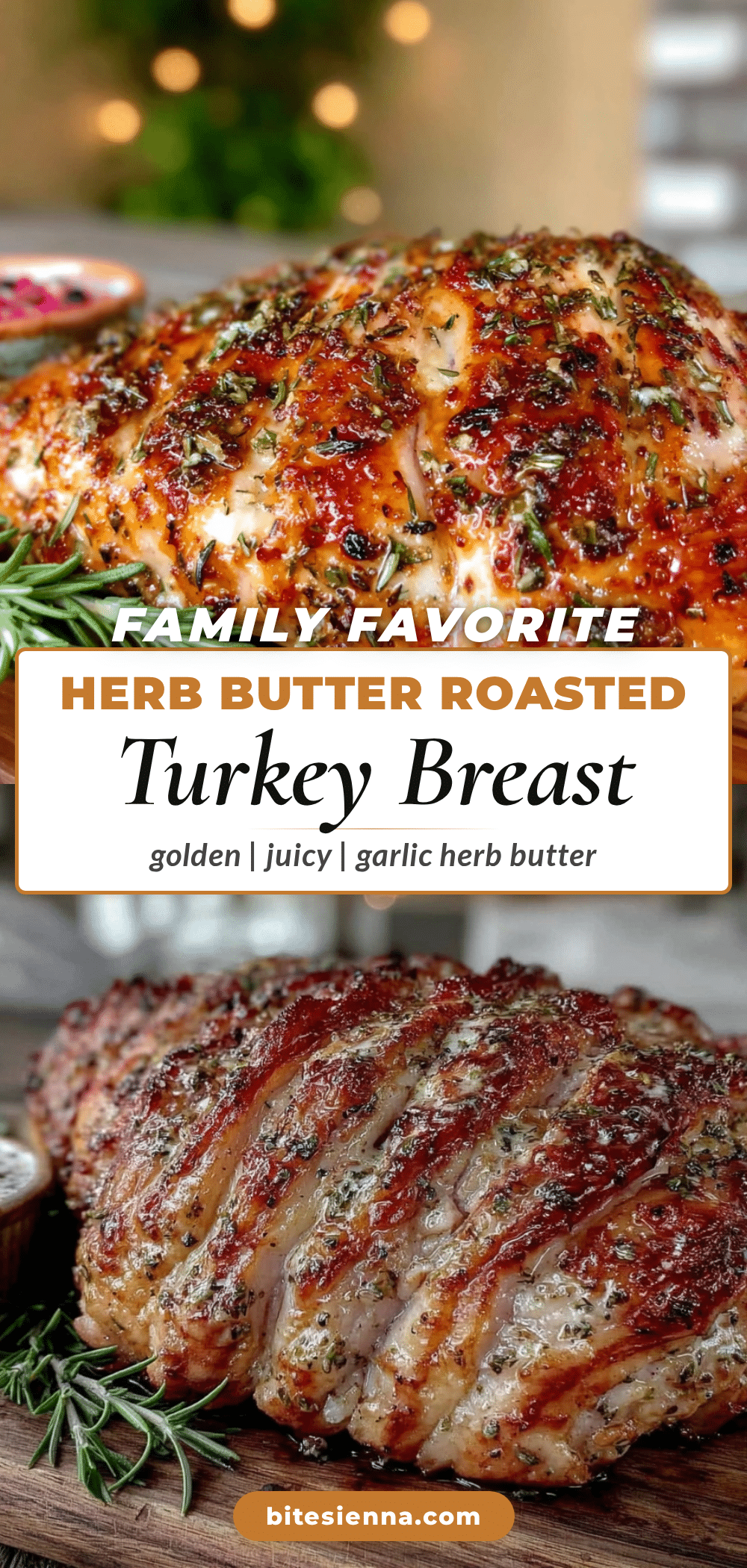
Easy Herb Butter Roasted Turkey Breast Recipe
A juicy, golden-brown turkey breast coated in herb butter, perfect for family dinners or holidays. This foolproof recipe delivers crispy skin and tender meat every time.
- Prep Time: 15 minutes
- Cook Time: 1 hour 30 minutes
- Total Time: 1 hour 45 minutes
- Yield: 6 servings
- Category: Main Course
- Cuisine: American
Ingredients
- Bone-in, skin-on turkey breast (5-7 pounds)
- Unsalted butter (1/2 cup, softened)
- Fresh garlic (4 cloves, minced)
- Fresh rosemary (2 tablespoons, chopped)
- Fresh thyme (1 tablespoon, leaves stripped)
- Fresh sage (1 tablespoon, chopped)
- Salt (1 tablespoon, kosher)
- Black pepper (1 teaspoon, freshly ground)
- Olive oil (1 tablespoon)
- Chicken or turkey broth (1 cup)
- Optional: 1 lemon, halved
Instructions
- Take the turkey out of the fridge 45 minutes before cooking to temper.
- Preheat your oven to 425°F (218°C).
- Make the herb butter: In a small bowl, combine softened butter, minced garlic, chopped rosemary, thyme, sage (if using), salt, and pepper. Mash together with a fork until evenly distributed.
- Pat the turkey breast completely dry with paper towels.
- Loosen the skin: Gently slide your fingers under the skin of the turkey breast, starting at the neck end, to create a pocket.
- Apply the herb butter: Spread about two-thirds of the butter mixture directly onto the meat under the skin. Spread the remaining butter all over the outside of the skin. Drizzle olive oil over the top and rub it in.
- Place the turkey in the roasting pan breast-side up on the rack. Pour broth into the bottom of the pan (not over the turkey). Tuck lemon halves into the cavity if using.
- Roast at 425°F (218°C) for 20 minutes. Do not open the oven door.
- Reduce oven temperature to 350°F (177°C) and continue roasting. Total roasting time: about 13-15 minutes per pound. Start checking temperature at the 1-hour mark.
- Baste once, halfway through: After about 40 minutes at 350°F, spoon pan juices over the turkey.
- Check for doneness: Insert an instant-read thermometer into the thickest part of the breast, avoiding the bone. Target temperature: 160°F (71°C).
- Let it rest: Transfer turkey to a cutting board, tent loosely with foil, and rest for at least 20 minutes.
- Carve and serve: Slice against the grain into even pieces. Spoon pan juices over the top if desired.
Notes
Don’t skip the resting period—it ensures juicy meat. Use a thermometer for accuracy. If skin browns too fast, tent with foil. Let butter soften naturally for best texture.
Nutrition
- Serving Size: 6 ounces
- Calories: 320
- Sodium: 480
- Fat: 18
- Saturated Fat: 10
- Carbohydrates: 1
- Protein: 38
Keywords: herb butter roasted turkey breast, easy turkey breast recipe, juicy turkey breast, roasted turkey breast, turkey breast with herb butter