My sister swore she hated cornbread dressing for thirty-seven years. Thirty-seven years! Every Thanksgiving, she’d push the stuffing around her plate, take a polite bite for appearances, and then quietly load up on mashed potatoes. I figured it was just one of those things—some people love it, some people don’t. Then last November, I made this version on a random Tuesday, just because I had leftover cornbread and a brand-new bottle of brown butter I’d been dying to try. I didn’t even tell her I was making it.
I found her standing at the stove around 6 PM, fork in hand, eating straight from the baking dish. She didn’t even look embarrassed when I caught her—just mumbled something about “needing to taste-test it for you” while taking another bite. Honestly, I almost dropped the bag of groceries I was holding. That was the moment I knew this recipe was different. It wasn’t about tricking anyone or hiding ingredients. It was about making something so genuinely good that even the skeptics couldn’t resist. Maybe you’ve known someone like that—the one who’s already decided they don’t like a dish before it even hits the table.
This Lighter Brown Butter Sage Cornbread Dressing changed my sister’s mind, and it might just change yours too. It’s got all the rich, savory, herb-packed flavor you expect from a classic dressing, but it’s made with a few smarter swaps that keep it from feeling heavy. The brown butter adds this nutty, almost caramelized depth that makes every bite sing, while the fresh sage brings that unmistakable Thanksgiving aroma straight into your kitchen. I keep making it because it proves you don’t have to choose between delicious and wholesome—you can have both, right there in one baking dish.
Why You’ll Love This Recipe
Let me tell you why this dressing has earned a permanent spot in my recipe rotation. I’ve tested it six times—yes, six—to get the texture just right, and I’ve got the notes to prove it. Here’s what makes it stand out:
- Quick & Easy: Comes together in about 45 minutes, with only 15 minutes of active prep. Perfect for busy holiday mornings or a cozy weeknight side dish that feels special.
- Simple Ingredients: You probably already have most of these in your pantry. No hunting down obscure spices or specialty items—just good, honest ingredients.
- Perfect for Thanksgiving or Any Gathering: This dressing holds its own at the holiday table, but don’t wait for November. It’s fantastic alongside roasted chicken, pork chops, or even a simple Sunday roast.
- Crowd-Pleaser: My sister isn’t the only convert. I’ve brought this to three different gatherings, and every single time, someone asks for the recipe. Kids love it, adults love it—it’s universal.
- Unbelievably Delicious: The brown butter and sage combo is pure magic. The nuttiness of the butter pairs perfectly with the earthy, slightly peppery sage, and the cornbread soaks up all that savory goodness without turning mushy.
What makes this recipe different from the rest? It’s the technique. Browning the butter adds a depth of flavor you just can’t get with regular melted butter, and swapping in low-sodium broth and reducing the oil keeps it lighter without sacrificing taste. This isn’t just another dressing recipe—it’s the one I’ve perfected through trial and error, the one that makes people close their eyes after the first bite. It’s comfort food reimagined: lighter, faster, but with the same soul-soothing satisfaction that makes you feel like everything’s right in the world.
What Ingredients You Will Need
This recipe uses simple, wholesome ingredients to deliver bold flavor and satisfying texture without the fuss. Most of these are pantry staples, and the few fresh items are easy to find at any grocery store.
For the Cornbread Base
- 6 cups crumbled day-old cornbread (about one 9×13 pan, homemade or store-bought)—stale cornbread holds up better and won’t turn to mush
- 1/2 cup unsalted butter (Kerrygold is my go-to for its rich flavor)—this gets browned, so quality matters
- 1 large yellow onion, diced (about 1 1/2 cups)—adds sweetness and savory depth
- 3 celery stalks, diced (about 1 cup)—essential for that classic dressing texture
- 3 cloves garlic, minced—fresh garlic, not the jarred stuff, trust me
- 2 tablespoons fresh sage, chopped (or 1 tablespoon dried)—sage is the star here, so don’t skimp
- 1 tablespoon fresh thyme leaves (or 1 teaspoon dried)—adds an earthy, lemony note
- 1 1/2 cups low-sodium chicken or vegetable broth—low-sodium lets you control the salt level
- 2 large eggs, lightly beaten—helps bind everything together
- 1/2 teaspoon salt (plus more to taste)
- 1/4 teaspoon black pepper
- Optional: 1/4 cup chopped fresh parsley—for a pop of color and freshness at the end
Ingredient Notes & Substitutions
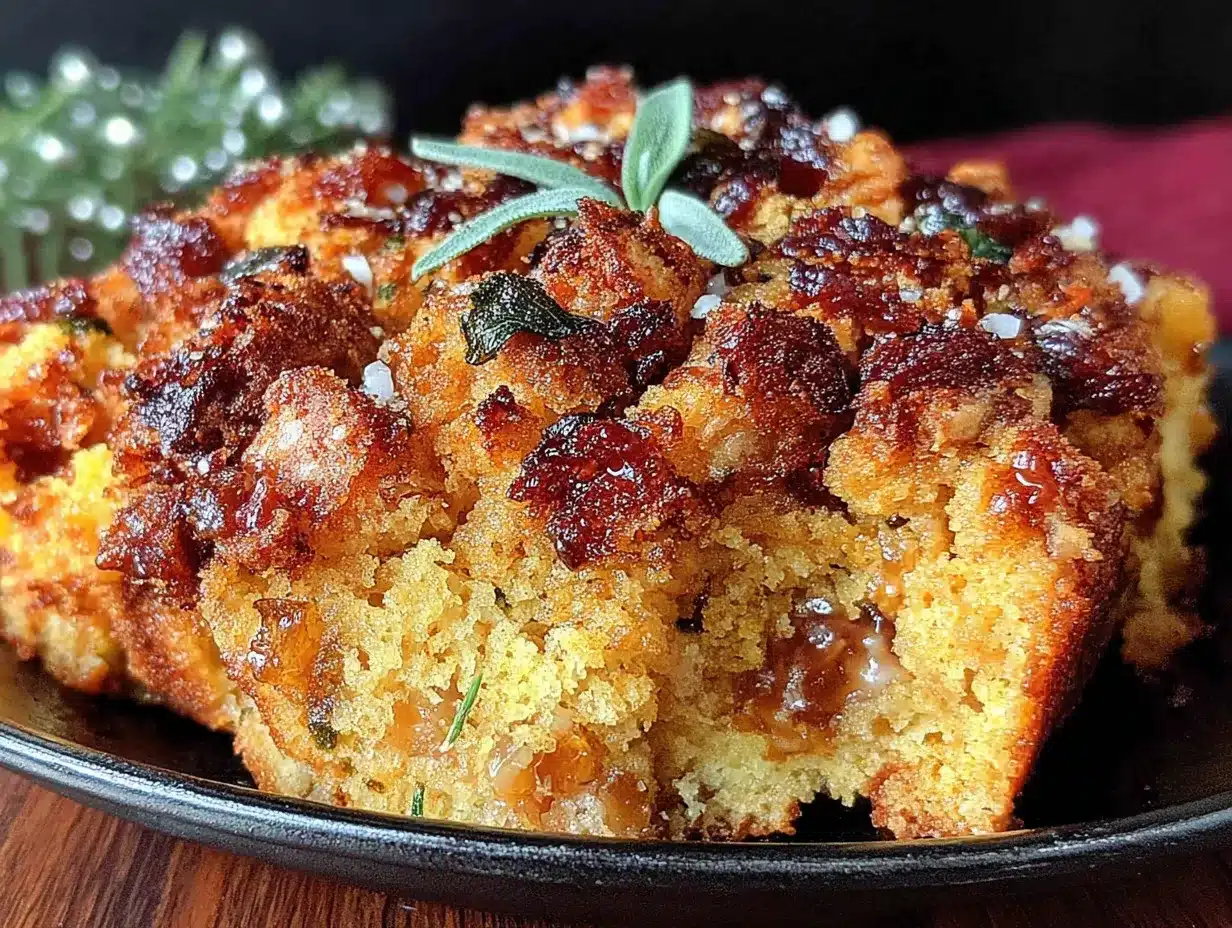
For the cornbread, I recommend using a slightly sweet, Southern-style cornbread—not the cakey, sugar-heavy kind. If you’re in a pinch, store-bought cornbread works fine; just let it sit out overnight to dry out a bit. For a gluten-free version, use gluten-free cornbread and check your broth label. You can swap the butter with a high-quality vegan butter for dairy-free needs, though the brown butter flavor will be slightly different. If fresh sage isn’t available, dried sage works—just use half the amount since dried herbs are more concentrated. I’ve also made this with turkey broth when I had leftover stock, and it was fantastic.
Equipment Needed
- 9×13-inch baking dish (or a 3-quart casserole dish)—glass or ceramic works best for even heating
- Large skillet (preferably stainless steel or cast iron)—for browning the butter and sautéing the vegetables
- Large mixing bowl—for combining all the ingredients
- Whisk—for beating the eggs
- Chef’s knife and cutting board—for dicing the onion, celery, and herbs
- Wooden spoon or silicone spatula—for stirring the dressing mixture
- Measuring cups and spoons
If you don’t have a 9×13 dish, you can use two 8×8 square pans or even a cast-iron skillet. Just adjust the baking time slightly—smaller pans may cook faster, so start checking at 25 minutes. I’ve used my grandmother’s old Pyrex dish for years, and it’s never let me down. For the skillet, a light-colored pan helps you see the butter browning more clearly, but any heavy-bottomed pan works.
Preparation Method
Preheat your oven to 375°F (190°C). Grease your 9×13 baking dish lightly with butter or nonstick spray.
- Brown the butter: Place the 1/2 cup unsalted butter in a large skillet over medium heat. Let it melt completely, then continue cooking, swirling the pan occasionally. You’ll see it foam up, then subside, and tiny brown specks will start forming at the bottom. This takes about 5-7 minutes. The moment it smells nutty and turns a golden amber color, remove it from the heat immediately—burnt butter is bitter and ruins the dish. Pour the browned butter into a heatproof bowl, leaving the brown bits in the skillet (those are flavor gold).
- Sauté the vegetables: Return the skillet to medium heat with 2 tablespoons of the browned butter (reserve the rest). Add the diced onion and celery, and cook for 5-6 minutes until softened and translucent. Stir occasionally so they don’t burn. Add the minced garlic and cook for another minute until fragrant—your kitchen will smell incredible right about now.
- Combine the base: In your large mixing bowl, add the 6 cups crumbled cornbread. Pour the sautéed vegetables over the top, then add the chopped sage, thyme, salt, and pepper. Toss gently with a wooden spoon to distribute everything evenly. Don’t overmix—you want some texture, not a paste.
- Add the liquid ingredients: In a separate small bowl, whisk together the beaten eggs and 1 1/2 cups low-sodium broth. Pour this mixture over the cornbread mixture, then drizzle in the remaining browned butter. Fold everything together gently until the cornbread is evenly moistened but not soggy. If it looks dry, add an extra tablespoon or two of broth—cornbread varies in absorbency.
- Transfer to baking dish: Spoon the dressing into your prepared baking dish and spread it into an even layer. Don’t press it down too firmly—you want some air pockets for that perfect texture.
- Bake: Place the dish in the preheated oven and bake for 30-35 minutes, until the top is golden brown and slightly crispy around the edges. The center should be set but still moist—a toothpick inserted should come out with a few crumbs, not wet batter. If you want extra crispy edges, broil for the last 2 minutes, but watch it closely so it doesn’t burn.
- Rest and serve: Let the dressing rest for 5-10 minutes before serving. This allows it to set properly and makes it easier to scoop out clean portions. Sprinkle with fresh parsley if using, and serve warm.
Cooking Tips & Techniques
I’ve made this dressing more times than I can count, and I’ve learned a few things the hard way. First, day-old cornbread isn’t just a suggestion—it’s essential. Fresh cornbread will turn into a gluey mess because it’s too moist. If you forgot to plan ahead, cut your cornbread into cubes and spread them on a baking sheet in a 300°F oven for 10-15 minutes to dry them out. I once skipped this step and ended up with a dressing that was more like cornbread pudding—delicious, but not what I was going for.
Second, watch that brown butter like a hawk. I can’t tell you how many times I’ve gotten distracted and ended up with burnt butter. The transition from perfect to burnt happens in about 30 seconds. Keep the heat at medium, not high, and trust your nose—the nutty aroma is your cue to pull it off the stove. If you see black specks instead of golden brown ones, start over. It’s worth it.
For timing, I like to prep the vegetables and crumble the cornbread while the butter browns. This way, everything comes together in about 15 minutes of active work. If you’re making this for a big holiday meal, assemble the dressing up to step 5, cover it, and refrigerate overnight. Just add 10 minutes to the baking time if starting from cold. Consistency tip: use a light hand when mixing. Overmixing breaks down the cornbread too much and results in a dense, heavy dressing.
Variations & Adaptations
This recipe is wonderfully flexible. Here are a few ways I’ve adapted it over the years:
- Vegetarian Version: Use vegetable broth instead of chicken broth, and add 1 cup of sautéed mushrooms for extra umami. The mushrooms mimic the savory depth you’d get from meat-based stock.
- Gluten-Free: Substitute gluten-free cornbread and double-check that your broth is certified gluten-free. I’ve tested this with a store-bought gluten-free cornbread mix, and it worked beautifully—just make sure it’s not too sweet.
- Add Some Protein: Fold in 1 cup of cooked, crumbled turkey sausage or leftover shredded turkey for a heartier dish. This turns it into a full meal—great for using up holiday leftovers.
- Herb Swap: Not a fan of sage? Try rosemary or tarragon instead. Rosemary gives it a piney, aromatic quality, while tarragon adds a subtle licorice note that pairs surprisingly well with cornbread.
- Spicy Kick: Add 1/2 teaspoon of red pepper flakes or a diced jalapeño (seeds removed) when sautéing the vegetables. The heat balances beautifully with the nutty brown butter.
I once made a version with dried cranberries and chopped pecans for a friend who couldn’t have dairy, and it was a hit. The sweetness of the cranberries played off the savory sage in a way I didn’t expect. Don’t be afraid to experiment—this dressing is forgiving.
Serving & Storage Suggestions
Serve this dressing warm, straight from the oven, with a generous spoonful alongside your main dish. It pairs beautifully with roasted turkey, herb-crusted chicken, or even a simple pan-seared pork chop. For a holiday table, I love to garnish it with a few extra fried sage leaves—just drop fresh sage leaves into hot oil for 10 seconds until crisp. It adds a gorgeous visual touch and a little extra crunch.
For storage, let the dressing cool completely, then cover the dish tightly with foil or transfer to an airtight container. It keeps in the refrigerator for up to 4 days. The flavors actually deepen overnight, so leftovers are often even better the next day. To reheat, place individual portions in a 350°F oven for 10-15 minutes, or microwave for 1-2 minutes. If it seems dry, drizzle a tablespoon of broth over the top before reheating.
You can also freeze this dressing for up to 3 months. Wrap the cooled dish tightly in plastic wrap, then foil, and freeze. Thaw overnight in the refrigerator before reheating. I’ve done this for last-minute holiday prep, and it’s a lifesaver. Just know that the texture will be slightly softer after freezing, but the flavor remains spot-on.
Nutritional Information & Benefits
Per serving (about 1 cup): approximately 280 calories, 12g fat, 35g carbohydrates, 3g fiber, 8g protein. These values are estimates and will vary based on your specific ingredients.
This dressing is lighter than traditional versions because it uses less butter and lower-sodium broth without sacrificing flavor. The brown butter technique allows you to use less fat while still getting that rich, indulgent taste—it’s a smart swap that pays off. Cornbread provides complex carbohydrates for steady energy, while celery and onion add fiber and antioxidants. Sage is known for its anti-inflammatory properties and adds a distinct flavor that makes this dish feel special. If you’re watching your sodium, using low-sodium broth and controlling the added salt keeps this recipe heart-friendly. It’s also easily adaptable for various dietary needs, as noted in the variations section.
Conclusion
This Lighter Brown Butter Sage Cornbread Dressing is proof that you don’t need a ton of butter or heavy cream to make something unforgettable. It’s got the soul of a classic holiday dish but with a lighter touch that leaves you feeling satisfied, not weighed down. Whether you’re converting a skeptic (like my sister) or just looking for a reliable dressing that delivers every single time, this recipe is worth your kitchen time.
I’d love to hear how it turns out for you. Did you try a variation? Did your family fight over the last scoop? Drop a comment below and tell me about it—and don’t forget to share this recipe with someone who needs a little convincing. Happy cooking, friends. You’ve got this.
Frequently Asked Questions
Can I make this dressing ahead of time?
Absolutely! Assemble the dressing up to the point of baking, cover it, and refrigerate for up to 24 hours. When you’re ready to bake, add about 10 minutes to the cooking time since you’re starting from cold.
Can I use dried herbs instead of fresh?
Yes, but use about half the amount. Dried herbs are more concentrated, so 1 tablespoon of fresh sage becomes 1 1/2 teaspoons dried. I recommend fresh sage for the best flavor, but dried works in a pinch.
Why is my dressing too dry or too wet?
Dry dressing usually means you need more broth—add it a tablespoon at a time until the cornbread looks moist but not swimming. Wet dressing often comes from fresh cornbread or adding too much liquid. Let it bake a few extra minutes to evaporate excess moisture.
Can I make this dairy-free?
Yes! Use a high-quality vegan butter for browning, and choose a vegetable broth. The flavor will be slightly different, but still delicious. I’ve tested it with a plant-based butter, and it worked well.
How do I get crispy edges on my dressing?
Spread the dressing in a thinner layer in your baking dish, and don’t cover it while baking. For extra crispiness, broil for 2-3 minutes at the end, keeping a close eye so it doesn’t burn.
Pin This Recipe!

Lighter Brown Butter Sage Cornbread Dressing

This lighter cornbread dressing has all the rich, savory, herb-packed flavor you expect from a classic, but with smarter swaps that keep it from feeling heavy. The brown butter adds a nutty, caramelized depth while fresh sage brings that unmistakable Thanksgiving aroma.
- Prep Time: 15 minutes
- Cook Time: 30 minutes
- Total Time: 45 minutes
- Yield: 8 servings 1x
- Category: Side Dish
- Cuisine: American
Ingredients
- 6 cups crumbled day-old cornbread (about one 9x13 pan, homemade or store-bought)
- 1/2 cup unsalted butter (Kerrygold recommended)
- 1 large yellow onion, diced (about 1 1/2 cups)
- 3 celery stalks, diced (about 1 cup)
- 3 cloves garlic, minced
- 2 tablespoons fresh sage, chopped (or 1 tablespoon dried)
- 1 tablespoon fresh thyme leaves (or 1 teaspoon dried)
- 1 1/2 cups low-sodium chicken or vegetable broth
- 2 large eggs, lightly beaten
- 1/2 teaspoon salt (plus more to taste)
- 1/4 teaspoon black pepper
- Optional: 1/4 cup chopped fresh parsley
Instructions
- Preheat your oven to 375°F (190°C). Grease your 9×13 baking dish lightly with butter or nonstick spray.
- Brown the butter: Place the 1/2 cup unsalted butter in a large skillet over medium heat. Let it melt completely, then continue cooking, swirling the pan occasionally. You’ll see it foam up, then subside, and tiny brown specks will start forming at the bottom. This takes about 5-7 minutes. The moment it smells nutty and turns a golden amber color, remove it from the heat immediately. Pour the browned butter into a heatproof bowl, leaving the brown bits in the skillet.
- Sauté the vegetables: Return the skillet to medium heat with 2 tablespoons of the browned butter (reserve the rest). Add the diced onion and celery, and cook for 5-6 minutes until softened and translucent. Add the minced garlic and cook for another minute until fragrant.
- Combine the base: In your large mixing bowl, add the 6 cups crumbled cornbread. Pour the sautéed vegetables over the top, then add the chopped sage, thyme, salt, and pepper. Toss gently with a wooden spoon to distribute everything evenly.
- Add the liquid ingredients: In a separate small bowl, whisk together the beaten eggs and 1 1/2 cups low-sodium broth. Pour this mixture over the cornbread mixture, then drizzle in the remaining browned butter. Fold everything together gently until the cornbread is evenly moistened but not soggy. If it looks dry, add an extra tablespoon or two of broth.
- Transfer to baking dish: Spoon the dressing into your prepared baking dish and spread it into an even layer. Don’t press it down too firmly.
- Bake: Place the dish in the preheated oven and bake for 30-35 minutes, until the top is golden brown and slightly crispy around the edges. The center should be set but still moist. If you want extra crispy edges, broil for the last 2 minutes, but watch it closely.
- Rest and serve: Let the dressing rest for 5-10 minutes before serving. Sprinkle with fresh parsley if using, and serve warm.
Notes
Day-old cornbread is essential to prevent a mushy texture. If using fresh cornbread, cut into cubes and dry in a 300°F oven for 10-15 minutes. Watch the brown butter carefully—it can go from perfect to burnt in about 30 seconds. For make-ahead, assemble up to step 5, cover, and refrigerate overnight; add 10 minutes to baking time. Leftovers keep for up to 4 days in the refrigerator or can be frozen for up to 3 months.
Nutrition
- Serving Size: 1 cup
- Calories: 280
- Sugar: 5
- Sodium: 450
- Fat: 12
- Saturated Fat: 6
- Carbohydrates: 35
- Fiber: 3
- Protein: 8
Keywords: cornbread dressing, brown butter sage dressing, lighter dressing, Thanksgiving dressing, holiday side dish, cornbread stuffing