My brother-in-law Mark asked why I couldn’t just brown the butter right in the pot with the potatoes. I started to explain why that wouldn’t work — something about temperature control, about the milk solids burning, about how you’re supposed to do it separately in a light-colored pan so you can see the color change. Then I stopped. I honestly had no good reason other than “that’s how I’ve always done it.” So I let him try his way on a random Tuesday night, fully prepared to say “I told you so” when we ended up with scorched butter and sad potatoes.
Well, the joke was on me. Those were the best mashed potatoes I’d made in years. The butter browned perfectly in the pot after I drained the potatoes — the residual heat and starchy surface created this nutty, almost toffee-like flavor that infused right back into the spuds as I mashed them. I stood there with my wooden spoon in hand, genuinely humbled. Mark just shrugged and said, “Less dishes, right?” He wasn’t wrong.
These Perfect Brown Butter Sage Mashed Potatoes have become my go-to ever since that night. They’re the kind of side dish that makes people close their eyes at the table — you know that feeling when something tastes so good you forget you’re at a regular dinner and not a fancy restaurant? That’s these potatoes. The sage gets crispy in that foamy butter, and the whole thing comes together in one pot. One pot, I tell you. Maybe you’ve been there — standing over a stove, convinced your way is the only way, only to learn something from someone who doesn’t even cook much. That Tuesday night changed how I make mashed potatoes forever.
Why You’ll Love This Recipe
I’ve tested this recipe at least a dozen times since Mark’s kitchen revelation, and I can tell you with confidence — it works every single time. These aren’t just mashed potatoes. They’re the mashed potatoes that’ll get requested for every holiday, every potluck, every random Tuesday you decide to make something special.
- One-Pot Wonder : Brown the butter right in the same pot you boil the potatoes. Less cleanup, more flavor. This isn’t just convenient — it actually makes the potatoes taste better because the browned butter clings to the starchy potato surface.
- Restaurant-Quality at Home : The combination of nutty browned butter and aromatic sage creates a flavor profile that feels fancy without any complicated techniques. Your guests will think you spent hours on these.
- Simple Ingredients : Potatoes, butter, sage, cream, salt, and pepper. That’s it. No fancy grocery runs or obscure ingredients you’ll use once and forget about.
- Crowd-Pleaser : I’ve served these to picky eaters, to my health-conscious sister, to my dad who “doesn’t really like mashed potatoes” — and every single person went back for seconds.
- Make-Ahead Friendly : These reheat beautifully, which is a lifesaver for holiday cooking when you’re juggling a dozen things at once.
What makes this recipe different from all the other mashed potato recipes out there? It’s the technique. Most recipes have you brown the butter separately, then pour it over the finished potatoes. But browning the butter in the same pot — after you’ve drained the potatoes but before you mash them — allows those browned milk solids to really integrate into the potatoes. The result is a deeper, more even nutty flavor in every single bite. Plus, the sage leaves get perfectly crispy in that foamy butter, adding texture and pops of herbaceous flavor. This isn’t just another version of mashed potatoes. It’s the best version, and I’m not exaggerating when I say that.
What Ingredients You Will Need
This recipe uses simple, wholesome ingredients that work together to create something truly special. Most of these are probably already in your kitchen, which makes this perfect for last-minute dinner plans or holiday prep.
- Russet Potatoes (3 pounds, peeled and quartered) — Russets are my go-to for mashed potatoes because they’re high in starch and low in moisture, which means they soak up butter and cream like a dream. Yukon Golds work too if that’s what you have, but the texture will be a bit denser. I’ve tried red potatoes once — don’t do it. They stay too waxy.
- Unsalted Butter (1 cup, or 2 sticks, cut into pieces) — Please use unsalted here. You want to control the salt level yourself, and salted butter can burn more easily because of the milk solids content. I prefer Kerrygold for the rich flavor, but any good-quality unsalted butter works. The butter does double duty here — half gets browned with the sage, and the rest gets mashed in for creaminess.
- Fresh Sage Leaves (12-15 leaves) — Fresh is non-negotiable for this recipe. Dried sage will just burn and turn bitter. Look for leaves that are vibrant green and not wilted. You’ll fry these right in the butter until they’re crispy — they add such a lovely texture and flavor.
- Heavy Cream (½ cup, warmed) — Warm your cream before adding it to the potatoes. Cold cream will make your potatoes seize up and turn gluey. I just microwave it for 30 seconds while the potatoes are draining. Half-and-half works in a pinch, but the potatoes won’t be as rich.
- Whole Milk (¼ cup, warmed) — This thins the potatoes out just enough without making them soupy. You can use 2% if that’s what you have, but don’t go lower than that. The fat content matters here for texture.
- Kosher Salt (2 teaspoons, plus more for the water) — I use Diamond Crystal kosher salt. If you’re using Morton’s, use about half as much because it’s denser. Salt the water generously — this is your chance to season the potatoes from the inside out.
- Black Pepper (1 teaspoon, freshly ground) — Freshly ground pepper makes a noticeable difference here. The pre-ground stuff just doesn’t have the same aromatic quality.
- Garlic (3 cloves, smashed) — This is optional but I highly recommend it. Toss the smashed cloves in with the potatoes while they boil. They soften and get sweet, then you mash them right in with everything else. It adds a subtle background note that complements the sage beautifully.
Equipment Needed
You don’t need much for this recipe, which is part of its beauty. Here’s what you’ll need:
- Large Pot (6-8 quart) — You need enough room for the potatoes to boil without crowding. I use my trusty 8-quart Le Creuset Dutch oven, but any heavy-bottomed pot works. The heavy bottom helps prevent scorching when you brown the butter later.
- Potato Masher or Ricer — I prefer a ricer for the smoothest, fluffiest potatoes, but a good old-fashioned masher works perfectly too. I actually use my masher more often because I like a slightly rustic texture. Avoid using a hand mixer or food processor — they’ll make your potatoes gluey.
- Colander — For draining the potatoes. Nothing fancy needed here.
- Wooden Spoon or Silicone Spatula — For stirring and mashing. Wooden spoons are great because they don’t scratch your pots.
- Measuring Cups and Spoons — For accuracy, though I’ll be honest, I eyeball the cream and milk these days. Start with the measurements I’ve given, then adjust to your preference.
- Chef’s Knife and Cutting Board — For peeling and quartering the potatoes. A sharp knife makes this job so much easier.
One tip I learned the hard way — if you’re using a ricer, make sure your potatoes are cut small enough to fit in the chamber. I once spent twenty minutes cutting boiled potatoes in half because I was too impatient to quarter them before cooking. Learn from my mistakes, friends.
Preparation Method
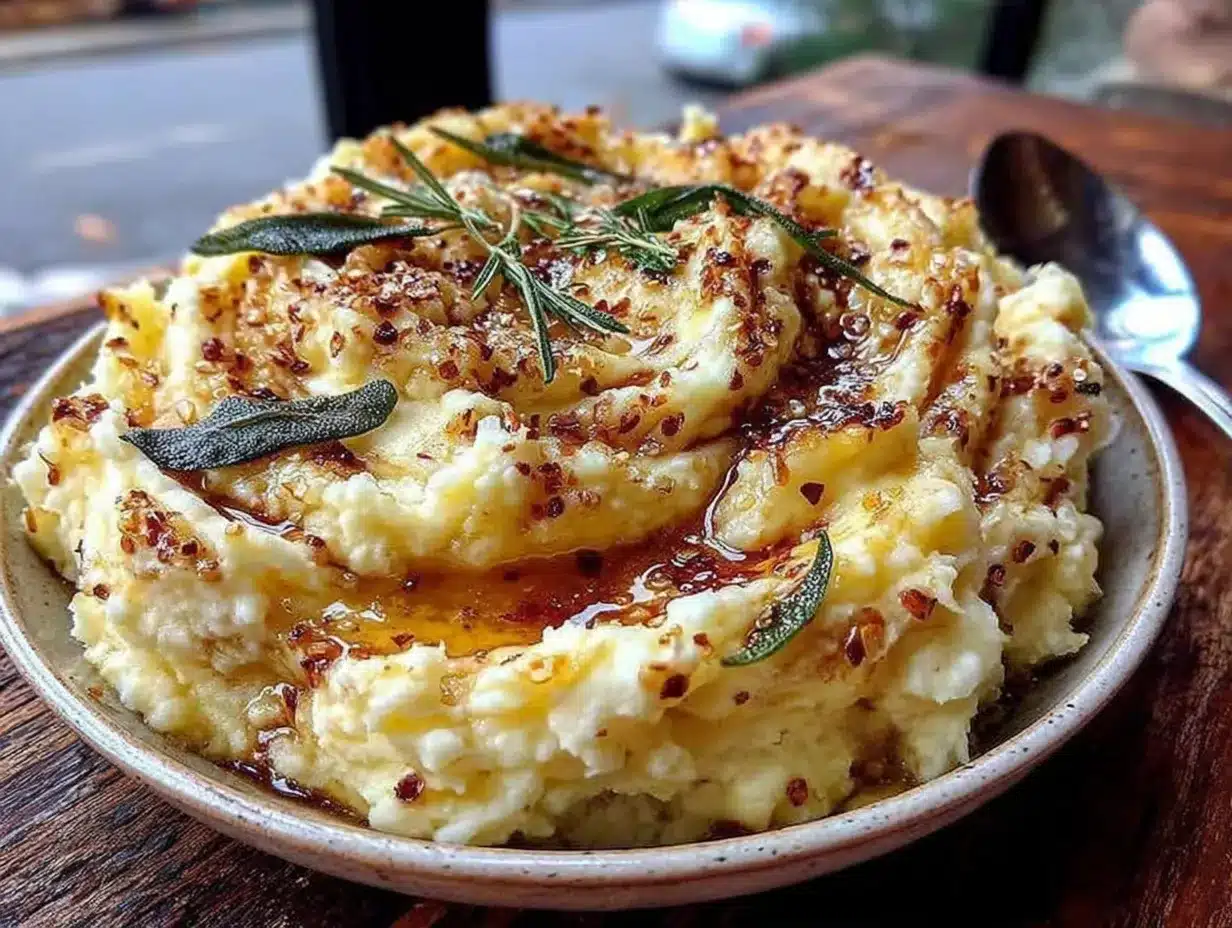
Let me walk you through this step by step. Trust the process, especially the part where you think you’re ruining the butter. You’re not. You’re making magic.
- Prep the Potatoes (5 minutes) — Peel 3 pounds of russet potatoes and cut them into uniform quarters. Uniformity matters here — if your pieces are different sizes, some will be overcooked while others are still hard in the middle. Rinse the cut potatoes under cold water to remove excess starch. This helps prevent them from getting gummy later.
- Boil the Potatoes (20-25 minutes) — Place the potatoes in your large pot and cover them with cold water by about an inch. Add a generous tablespoon of kosher salt to the water — I mean really generous, the water should taste like the sea. Bring to a boil over high heat, then reduce to a simmer. Cook until a knife slides into the thickest piece with absolutely no resistance, about 20-25 minutes. Don’t undercook them — undercooked potatoes make lumpy mashed potatoes, and nobody wants that.
- Drain and Return to Pot (2 minutes) — Drain the potatoes in a colander. Here’s the key moment — return the empty pot to the stove over medium heat for about 30 seconds to evaporate any remaining water. Then add the drained potatoes back to the pot. Let them sit in the hot pot for about a minute, shaking occasionally. This dries them out, which means they’ll absorb more butter and cream later.
- Brown the Butter and Sage (3-4 minutes) — Add ½ cup (1 stick) of the butter to the pot with the potatoes. Yes, right in there with the potatoes. Turn the heat to medium and let the butter melt. Once it’s melted, add the fresh sage leaves. Stir constantly as the butter foams and sizzles. You’ll see the milk solids start to turn golden brown at the bottom of the pot — this is what you’re looking for. The butter will smell nutty and amazing, and the sage leaves will get crispy. This whole process takes about 3-4 minutes. Don’t walk away — browned butter can turn burnt butter in seconds.
- Mash the Potatoes (3-4 minutes) — Remove the pot from heat. Use your potato masher to mash the potatoes right in the pot with the browned butter and crispy sage. Mash until the butter is incorporated and there are no large lumps. If you’re using a ricer, transfer the potatoes to the ricer and rice them into a large bowl, then pour the browned butter and sage over the top and stir gently.
- Add the Remaining Butter and Dairy (2 minutes) — Add the remaining ½ cup of butter pieces to the mashed potatoes. Pour in the warmed heavy cream and warmed whole milk. Add 2 teaspoons of kosher salt and 1 teaspoon of freshly ground black pepper. Mash and stir until everything is combined and the potatoes are smooth and creamy. Taste and adjust seasoning — you might want more salt or pepper depending on your preference.
- Finish and Serve (1 minute) — If you want extra crispy sage for garnish, reserve a few fried sage leaves from the pot before you start mashing. Place them on top of the finished potatoes for a beautiful presentation. Serve immediately while hot.
A few things I’ve learned through trial and error — if your potatoes seem too thick, add a splash more warm milk. If they seem too thin, let them sit for a minute off the heat; they’ll thicken as they cool. And whatever you do, don’t over-mash. Stop as soon as everything is combined. Overworking potatoes releases too much starch and turns them into wallpaper paste. Trust me, I’ve been there.
Cooking Tips & Techniques
I’ve made these Perfect Brown Butter Sage Mashed Potatoes more times than I can count, and I’ve definitely made every mistake in the book. Let me save you from my failures.
Don’t Skip Drying the Potatoes — This is the step I used to rush through, and my potatoes were always a bit watery. After draining, let those potatoes sit in the hot pot for a full minute. You’ll see steam rising off them — that’s excess moisture leaving. Dry potatoes absorb butter and cream so much better. It’s a small step that makes a huge difference.
Watch the Butter Like a Hawk — Browned butter goes from perfect to burnt in about 15 seconds. I learned this the hard way when I got distracted by my phone ringing. The butter was smoking and the milk solids were black. I had to start over. Keep your eyes on that pot, and the moment the butter turns a warm amber color and smells nutty, pull it off the heat. The residual heat will continue cooking it slightly, so err on the side of pulling it early.
Warm Your Dairy — This isn’t just a suggestion, it’s a rule. Cold cream or milk will shock the hot potatoes and make them seize up. You’ll end up with gluey, dense potatoes instead of fluffy, creamy ones. I microwave my cream and milk together in a glass measuring cup for about 45 seconds while the potatoes are draining. It’s that simple.
Use a Ricer for Company — If you’re making these for a holiday or dinner party, bust out the ricer. It gives you the silkiest, smoothest texture possible. For everyday dinners, my trusty masher is just fine. The rustic texture actually feels more homey and comforting.
Salt Strategically — Don’t rely only on the salt you add at the end. Salting the boiling water seasons the potatoes from the inside out. I use about a tablespoon of kosher salt per gallon of water. The water should taste noticeably salty — that’s how you know you’ve used enough.
Variations & Adaptations
One of the best things about this recipe is how adaptable it is. Here are some variations I’ve tried and loved:
Garlic Lover’s Version — Add 6-8 cloves of peeled garlic to the pot with the potatoes while they boil. The garlic softens and sweetens as it cooks, then you mash it right in with everything else. The garlic flavor is subtle and sweet, not sharp at all. This is honestly my favorite variation — I add garlic almost every time now.
Dairy-Free Adaptation — Use a good quality vegan butter for browning (I like Miyoko’s, it browns beautifully) and substitute the cream and milk with full-fat oat milk or unsweetened cashew milk. The texture won’t be quite as rich, but it’s still delicious. I made this version for my lactose-intolerant sister-in-law and she went back for thirds.
Herb Mix-Up — Don’t limit yourself to just sage. Try adding a sprig of fresh rosemary or a few sprigs of fresh thyme to the butter as it browns. The rosemary adds an earthy, piney note that pairs beautifully with the nutty butter. Just remember to remove the woody stems before mashing.
Cheesy Brown Butter Mashed Potatoes — Stir in ½ cup of grated Parmesan cheese right at the end, after you’ve added the dairy. The salty, umami flavor of the Parmesan takes these to another level. I tried this on a whim one Thanksgiving and it was the first dish to disappear.
Make It Spicy — Add a pinch of red pepper flakes to the butter as it browns. The heat is subtle but present, and it cuts through the richness beautifully. My neighbor actually suggested this, and I was skeptical, but it works surprisingly well.
Serving & Storage Suggestions
These potatoes are best served hot, right after you’ve finished mashing them. The butter is still glossy and the sage is perfectly crispy. I like to transfer them to a warm serving bowl and top with a few reserved crispy sage leaves and a crack of fresh black pepper. They look beautiful on a holiday table alongside roasted turkey, glazed ham, or a simple roast chicken.
For a complete meal, I love serving these with honey glazed carrots and a green salad. The sweetness of the carrots balances the savory, nutty potatoes perfectly. If you’re planning a holiday menu, these also pair beautifully with garlic herb roast chicken — the herbs in both dishes complement each other without competing.
Storing Leftovers — Store leftover mashed potatoes in an airtight container in the refrigerator for up to 4 days. The flavor actually deepens overnight as the browned butter continues to infuse into the potatoes. I sometimes make these a day ahead on purpose.
Reheating — The best way to reheat is on the stovetop over low heat, with a splash of milk or cream stirred in to loosen them up. Add the liquid a tablespoon at a time until the potatoes are creamy again. You can also reheat them in the microwave in 30-second bursts, stirring between each, but the texture won’t be quite as good. I don’t recommend freezing these — the texture gets grainy and watery when thawed.
Making Ahead — If you’re prepping for a holiday meal, you can make these up to 2 days in advance. Reheat them gently on the stovetop with a splash of warm milk, and they’ll taste just as good as fresh. Just don’t add the crispy sage garnish until right before serving, or it’ll get soggy.
Nutritional Information & Benefits
Let’s be honest — these are indulgent mashed potatoes. They’re made with a full cup of butter and half a cup of heavy cream. That’s not diet food, and I’m not going to pretend otherwise. But they’re made with real, whole ingredients, and there’s something to be said for that.
Here’s the estimated nutrition per serving (based on 8 servings):
- Calories: 420
- Fat: 28g
- Saturated Fat: 17g
- Carbohydrates: 38g
- Fiber: 3g
- Protein: 6g
- Sodium: 580mg
Potatoes themselves are actually quite nutritious — they’re a good source of vitamin C, potassium, and vitamin B6. The skin contains most of the fiber, but since we’re peeling these, you’ll miss out on that. The sage in this recipe isn’t just for flavor — sage has anti-inflammatory properties and is rich in antioxidants. So there’s that.
If you’re watching your intake, you can reduce the butter to ¾ cup and use half-and-half instead of heavy cream. The potatoes won’t be as rich, but they’ll still be delicious. I’ve made this lighter version for weeknight dinners and it works fine.
Conclusion
These Perfect Brown Butter Sage Mashed Potatoes have become my signature side dish, and they started with a simple suggestion from someone who didn’t know any better. That’s the thing about cooking, isn’t it? Sometimes the best recipes come from breaking the rules you thought were set in stone. I’ve made these for Thanksgiving, Christmas, Easter, and countless regular dinners, and they never fail to impress.
The combination of nutty browned butter, crispy sage, and creamy potatoes is honestly unbeatable. It’s simple enough for a Tuesday night but fancy enough for a holiday table. I hope you’ll try making them your way — add more garlic, swap in different herbs, make them dairy-free if you need to. The base technique is what matters, and once you’ve got that down, the possibilities are endless.
I’d love to hear how these turn out for you! Drop a comment below and let me know if you tried any variations, or if you have a tip of your own for making them even better. And if you’re looking for another side dish to round out your meal, don’t miss my creamy garlic parmesan green beans — they’re the perfect companion to these potatoes. Happy cooking, friends!
Frequently Asked Questions
Can I use salted butter for this recipe?
You can, but I recommend unsalted so you can control the salt level yourself. Salted butter can also burn slightly faster because of the added milk solids. If you only have salted butter, reduce the added salt by about half.
Why did my browned butter turn bitter?
Browned butter turns bitter when it’s cooked too long. The milk solids go from golden brown to burnt very quickly. Pull the butter off the heat as soon as it turns a warm amber color and smells nutty. The residual heat will continue cooking it slightly.
Can I make these potatoes vegan?
Yes! Use a good quality vegan butter for browning (Miyoko’s works great) and substitute the cream and milk with full-fat oat milk or unsweetened cashew milk. The texture won’t be quite as rich, but they’re still delicious.
How do I prevent my mashed potatoes from being gluey?
Don’t over-mash them, and don’t use a food processor or hand mixer. Overworking the potatoes releases too much starch, which makes them gluey. Use a potato masher or ricer, and stop as soon as everything is combined. Also, make sure your potatoes are fully cooked before mashing.
Can I use dried sage instead of fresh?
I really don’t recommend it. Dried sage will burn and turn bitter in the hot butter. Fresh sage leaves crisp up beautifully and add a lovely texture. If fresh sage isn’t available, you can skip the sage altogether and just make brown butter mashed potatoes — they’re still amazing.
Pin This Recipe!
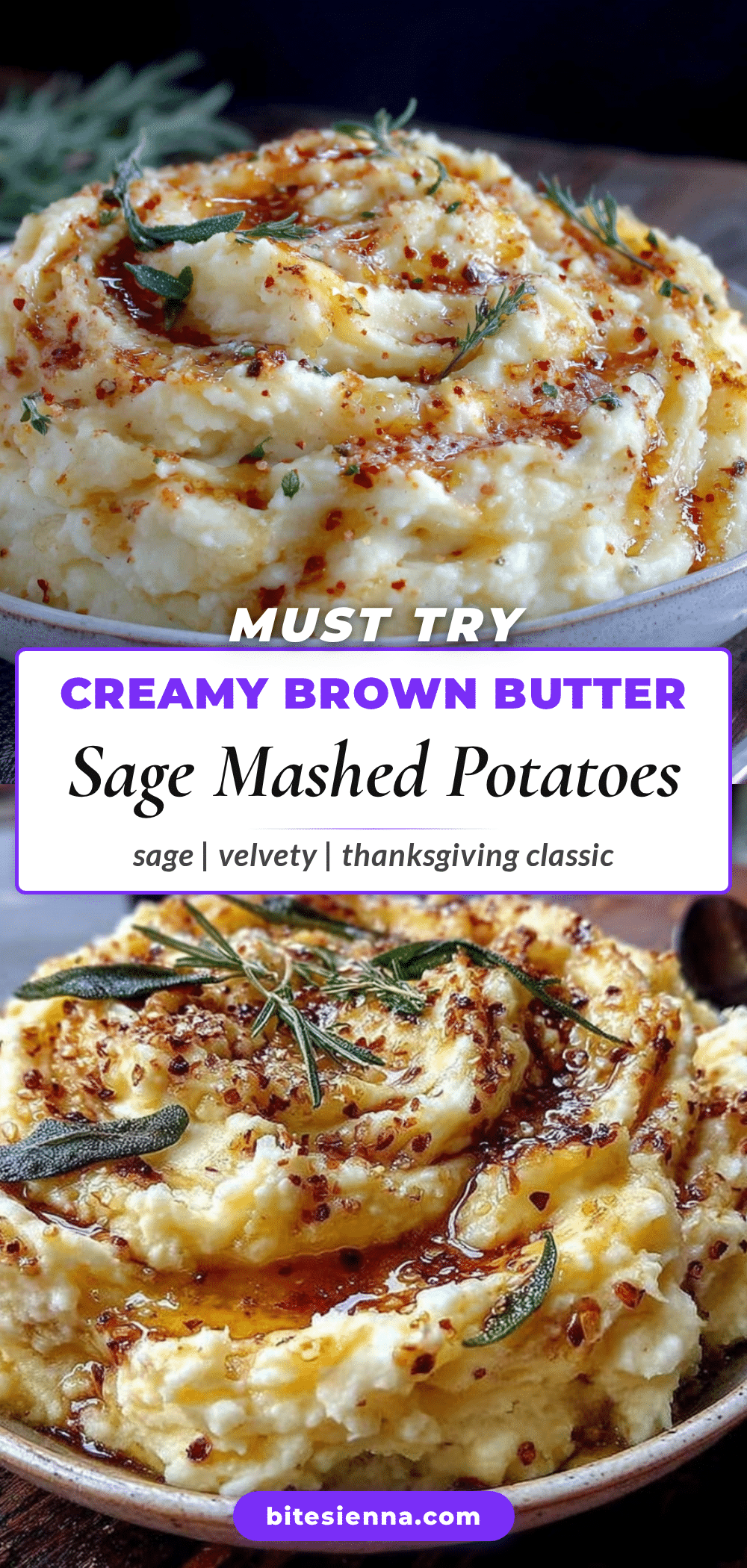
Perfect Brown Butter Sage Mashed Potatoes

These one-pot mashed potatoes feature nutty browned butter and crispy sage for a restaurant-quality side dish that’s simple enough for a Tuesday night but fancy enough for a holiday table.
- Prep Time: 15 minutes
- Cook Time: 30 minutes
- Total Time: 45 minutes
- Yield: 8 servings 1x
- Category: Side Dish
- Cuisine: American
Ingredients
- 3 pounds Russet potatoes, peeled and quartered
- 1 cup (2 sticks) unsalted butter, cut into pieces
- 12–15 fresh sage leaves
- ½ cup heavy cream, warmed
- ¼ cup whole milk, warmed
- 2 teaspoons kosher salt, plus more for water
- 1 teaspoon freshly ground black pepper
- 3 cloves garlic, smashed (optional)
Instructions
- Prep the Potatoes: Peel 3 pounds of russet potatoes and cut them into uniform quarters. Rinse under cold water to remove excess starch.
- Boil the Potatoes: Place potatoes in a large pot and cover with cold water by about an inch. Add a generous tablespoon of kosher salt. Bring to a boil, then reduce to a simmer. Cook until a knife slides into the thickest piece with no resistance, about 20-25 minutes.
- Drain and Return to Pot: Drain potatoes in a colander. Return the empty pot to the stove over medium heat for 30 seconds to evaporate remaining water. Add potatoes back to the pot and let sit for about a minute, shaking occasionally, to dry them out.
- Brown the Butter and Sage: Add ½ cup (1 stick) of the butter to the pot with the potatoes. Turn heat to medium and let butter melt. Add fresh sage leaves. Stir constantly as butter foams and sizzles until milk solids turn golden brown and butter smells nutty, about 3-4 minutes. Do not walk away.
- Mash the Potatoes: Remove pot from heat. Use a potato masher to mash potatoes right in the pot with the browned butter and crispy sage until incorporated and no large lumps remain. If using a ricer, rice potatoes into a bowl, then pour browned butter and sage over top and stir gently.
- Add Remaining Butter and Dairy: Add remaining ½ cup butter pieces, warmed heavy cream, warmed whole milk, 2 teaspoons kosher salt, and 1 teaspoon black pepper. Mash and stir until smooth and creamy. Taste and adjust seasoning.
- Finish and Serve: Reserve a few fried sage leaves for garnish if desired. Transfer to a warm serving bowl, top with reserved sage leaves and a crack of black pepper. Serve immediately.
Notes
Don’t skip drying the potatoes after draining; it helps them absorb butter and cream better. Watch the butter carefully as it browns—it can go from perfect to burnt in seconds. Warm your dairy before adding to prevent gluey potatoes. For a smoother texture, use a ricer for company; a masher is fine for everyday. Salt the boiling water generously to season potatoes from the inside out.
Nutrition
- Serving Size: 1 serving
- Calories: 420
- Sugar: 2
- Sodium: 580
- Fat: 28
- Saturated Fat: 17
- Carbohydrates: 38
- Fiber: 3
- Protein: 6
Keywords: brown butter mashed potatoes, sage mashed potatoes, one-pot mashed potatoes, holiday side dish, creamy mashed potatoes