The oven timer had been screaming for five minutes, but I was still staring at a cutting board like it owed me money. This was supposed to be a sophisticated butternut squash risotto, the kind of dish that looks impressive in magazines and tastes even better when you pretend you didn’t burn your hands on the stockpot. Instead, I had a pot of water boiling over onto the stovetop and a knife that had slipped, nicking my thumb just enough to make me swear under my breath. Honestly, let me tell you, the kitchen was looking less like a culinary studio and more like a crime scene.
I grabbed the wrong bowl, one that was still warm from the microwave, and dropped a chunk of raw squash into the boiling water instead of the sauté pan. Panic set in, you know that feeling when you realize you’ve ruined dinner before it even started? I tried to fish it out, but it shattered into chunks. There was no going back to the risotto plan. The sauce was a mess, the timer was still yelling, and my thumb was throbbing. I was already planning my apology text to my date who was supposed to arrive in twenty minutes.
What came out was nothing like the plan — and better. In a moment of sheer desperation, I dumped a box of penne into the same salty water, stirred in some heavy cream I had left out, and threw in a handful of sage leaves that were starting to wilt in the fridge. I didn’t measure anything. I just tossed it all together with a knob of butter and some parmesan rind. It was messy, it was chaotic, and it was the most comforting thing I had ever eaten.
That night, we ate straight from the pot on the counter, sitting on the floor because the table was covered in flour. We didn’t talk about the failed risotto. We just talked about how the pasta held the sauce perfectly and how the squash melted into the cream like it was meant to be there. It wasn’t fancy. It wasn’t planned. But it was real.
This Quick Fall Harvest Pasta with Butternut Squash stayed with me because it taught me that dinner doesn’t have to be perfect to be good. It’s about the warmth, the ease, and the fact that you can throw it together in under thirty minutes. Maybe you’ve been there, standing in your kitchen, realizing your big plan has fallen apart? This recipe is for those nights. It’s for when you want comfort without the commitment. It’s quick, it’s creamy, and it tastes like autumn in every bite. I keep making it because it reminds me that sometimes the best meals are the ones you didn’t plan to make.
Why You’ll Love This Recipe
There is something deeply satisfying about a pasta dish that comes together faster than you can set the table. I’ve tested this recipe countless times, tweaking the ratio of squash to sauce until it hit that sweet spot where every noodle is coated but not drowning. It’s not just another vegetable pasta; it’s a masterclass in efficiency without sacrificing flavor.
Here is why this dish deserves a permanent spot in your weekly rotation:
- Quick & Easy: This comes together in under 30 minutes, which is perfect for those busy weeknights when you’re hungry but tired. You don’t need to spend hours prepping or monitoring a slow cooker.
- Simple Ingredients: No fancy grocery trips needed. You likely already have pasta, butter, cream, and some squash in your kitchen. It uses pantry staples and basic produce.
- Perfect for Autumn: Great for cozy dinners, date nights in, or even a light lunch. The flavors of sage and butternut squash scream fall, making it feel seasonal and special.
- Crowd-Pleaser: Always gets rave reviews from kids and adults alike. The creamy texture masks the vegetables for picky eaters, while the roasted flavor delights foodies.
- Unbelievably Delicious: The texture and flavor combo is next-level comfort food. The squash breaks down slightly to thicken the sauce, creating a velvety mouthfeel that cheese alone can’t achieve.
What makes this recipe different from the rest is the technique. Most people boil the squash and end up with mushy, watery pasta water. I roast the squash cubes briefly or sauté them until they caramelize, which adds a depth of flavor that raw boiled squash just can’t match. It’s a small step, but it changes everything.
This isn’t just good; it’s the kind of meal that makes you close your eyes after the first bite. It’s comfort food reimagined—healthier, faster, but with the same soul-soothing satisfaction. It’s perfect for impressing guests without stress, or turning a simple meal into something memorable. You’ll find yourself making it again and again, not because you have to, but because you want to.
What Ingredients You Will Need
This recipe uses simple, wholesome ingredients to deliver bold flavor and satisfying texture without the fuss. The beauty of this dish lies in its minimalism. You don’t need a pantry full of exotic spices or hard-to-find items. Everything works together to create a harmonious blend of savory, sweet, and creamy notes.
Here is what you will need to gather:
- Butternut Squash: One medium squash, peeled and cut into 1/2-inch cubes. This is the star of the show. I recommend looking for squash that feels heavy for its size and has a matte finish. Avoid those with soft spots or cracks. Fresh is best, but frozen cubed squash works in a pinch if you thaw and pat it dry first.
- Pasta: 12 ounces of penne or rigatoni. These shapes hold the creamy sauce well. You can use whole wheat or gluten-free pasta if needed, but standard semolina pasta gives the best texture. Look for brands like Barilla or De Cecco for reliable quality.
- Butter: 3 tablespoons of unsalted butter. This adds richness and helps emulsify the sauce. I prefer European-style butter for its higher fat content, which makes the sauce silkier.
- Heavy Cream: 1 cup of heavy cream. This creates the luxurious base. If you want a lighter version, you can use half-and-half, but the sauce will be thinner. Don’t skimp on the fat here; it carries the flavor.
- Sage Leaves: 10-12 fresh sage leaves. Sage is the classic partner for squash. It adds an earthy, pine-like aroma that cuts through the richness of the cream. If you can’t find fresh, use 1 teaspoon of dried sage, but fresh is much better.
- Garlic: 3 cloves, minced. Garlic adds a necessary pungent bite to balance the sweetness of the squash. Make sure it’s fresh; old garlic can taste bitter.
- Parmesan Cheese: 1/2 cup, freshly grated. Freshly grated melts better and tastes sharper. Pre-grated cheese often contains anti-caking agents that prevent smooth melting. Look for brands like Polly-O or buy a wedge and grate it yourself.
- Olive Oil: 1 tablespoon for sautéing. Use a good quality extra virgin olive oil for the best flavor.
- Salt and Pepper: To taste. Use kosher salt for better control. Freshly cracked black pepper adds a nice heat.
For seasonal variations, you can swap butternut squash for pumpkin or sweet potato in the winter months. In the spring, try adding peas or asparagus. The base recipe remains the same, allowing you to adapt to what is fresh and available.
Equipment Needed
You don’t need a fancy kitchen to make this dish, but having the right tools makes the process smoother. Here is what you will need:
- Large Skillet or Sauté Pan: A 12-inch skillet is ideal. It gives the squash enough room to brown rather than steam. If you don’t have a large one, use two smaller pans.
- Pasta Pot: A large pot for boiling the pasta. Make sure it holds at least 4-5 quarts of water.
- Sharp Knife and Cutting Board: Essential for prepping the squash. A chef’s knife works best for the initial cutting.
- Measuring Cups and Spoons: For accuracy, especially with the cream and cheese.
- Wooden Spoon or Silicone Spatula: For stirring the sauce without scratching your pan.
If you don’t have a large skillet, you can use a Dutch oven. Just make sure it has a lid if you want to steam the squash slightly after sautéing. For budget-friendly options, a basic stainless steel skillet works just as well as non-stick, though you may need to watch the heat more closely to prevent sticking. Keep your knives sharp; a dull knife is dangerous and makes prep harder.
Preparation Method

Getting this Quick Fall Harvest Pasta with Butternut Squash ready is straightforward, but attention to detail ensures the best results. Follow these steps carefully.
- Prep the Squash (5 minutes): Peel the butternut squash and remove the seeds. Cut it into uniform 1/2-inch cubes. Uniformity is key so they cook evenly. If some pieces are larger, they will remain hard while others turn to mush. Set aside.
- Boil the Pasta (15 minutes): Bring a large pot of salted water to a rolling boil. Add the penne and cook according to package directions until al dente. Reserve 1 cup of pasta water before draining. This starchy water is liquid gold for thickening the sauce. Drain the pasta and set aside.
- Sauté the Squash (10 minutes): While the pasta cooks, heat olive oil in a large skillet over medium-high heat. Add the squash cubes in a single layer. Do not overcrowd the pan. Cook for 5-7 minutes, stirring occasionally, until the squash is tender and lightly browned. If the pan is too small, do this in two batches.
- Add Aromatics (2 minutes): Reduce heat to medium. Add the butter to the pan with the squash. Once melted, add the minced garlic and sage leaves. Sauté for 1-2 minutes until the garlic is fragrant and the sage is crispy. Be careful not to burn the garlic, or it will turn bitter.
- Create the Sauce (3 minutes): Pour in the heavy cream. Stir gently to combine with the squash and butter. Let it simmer for 2-3 minutes until it thickens slightly. If it looks too thick, add a splash of the reserved pasta water. The sauce should coat the back of a spoon.
- Combine and Finish (2 minutes): Add the drained pasta to the skillet. Toss everything together until the pasta is evenly coated. Remove from heat. Stir in the grated parmesan cheese. The residual heat will melt the cheese perfectly. Season with salt and pepper to taste. Serve immediately.
The key here is timing. You want the pasta to be ready just as the sauce is finished. If the pasta sits too long, it will clump up. Keep it warm in the colander if needed, but try to time it so they meet at the same moment.
Cooking Tips & Techniques
Mastering this recipe comes down to a few simple techniques that separate good home cooking from great home cooking. I learned these the hard way, often through burnt garlic and broken emulsions.
First, don’t skip the pasta water. The starchy water helps bind the fat and water-based sauce together. Without it, your sauce might separate or feel greasy. Add it gradually, a splash at a time, until you reach the desired consistency.
Second, brown the squash. If you just boil the squash, it lacks flavor. Sautéing or roasting it caramelizes the natural sugars, adding depth. If you are short on time, you can microwave the cubes for 2 minutes first to soften them, then sauté quickly.
Third, control the heat. When adding cream to a hot pan, turn the heat down to low or medium-low. High heat can cause the cream to split or curdle. Gentle simmering is your friend here.
Finally, taste as you go. Squash sweetness varies. Taste the sauce before adding salt. If the squash is very sweet, you might need a pinch more salt to balance it. If it’s bland, add a squeeze of lemon juice to brighten it up. These small adjustments make a big difference.
Variations & Adaptations
One of the best things about this recipe is how adaptable it is. You can tweak it to fit your dietary needs or taste preferences without losing the core flavor.
- Vegan Option: Swap butter for olive oil or vegan butter. Use coconut cream or cashew cream instead of heavy cream. Nutritional yeast can replace parmesan for a cheesy, nutty flavor.
- Gluten-Free: Use your favorite gluten-free pasta. Rice-based or corn-based penne works well. Just be careful not to overcook them, as they can get mushy faster.
- Spicy Kick: Add a pinch of red pepper flakes when sautéing the garlic. The heat contrasts nicely with the sweet squash and creamy sauce.
- Protein Boost: Add cooked chicken sausage, pancetta, or crispy tofu cubes. Sauté the protein first, remove it, then cook the squash in the same pan to pick up those flavors.
- Seasonal Swap: In spring, add fresh peas or asparagus. In winter, try roasted carrots or sweet potatoes. The base sauce works with almost any root vegetable.
I once tried this with sweet potatoes and it was delicious, though slightly sweeter. I also added chickpeas for a protein-packed lunch version. The possibilities are endless. Don’t be afraid to experiment with what you have on hand.
Serving & Storage Suggestions
This dish is best served immediately while the pasta is hot and the sauce is creamy. Garnish with extra fresh sage leaves and a sprinkle of parmesan. It pairs wonderfully with a simple green salad dressed with vinaigrette to cut the richness. A glass of Pinot Noir or a crisp Chardonnay complements the autumn flavors perfectly.
For storage, let the leftovers cool to room temperature. Store in an airtight container in the refrigerator for up to 3 days. The pasta will absorb some of the sauce, so it may look dry. To reheat, add a splash of milk or pasta water and warm gently on the stove or in the microwave. Stir frequently to restore the creamy texture.
You can also freeze this dish, though the texture of the squash may soften slightly upon thawing. Freeze in portion-sized containers for easy reheating. The flavors actually meld together nicely over time, making it a great make-ahead meal.
Nutritional Information & Benefits
This Quick Fall Harvest Pasta with Butternut Squash is not only tasty but also nutritious. Butternut squash is rich in Vitamin A, fiber, and antioxidants, supporting eye health and immune function. The whole wheat pasta (if used) adds additional fiber and complex carbohydrates for sustained energy.
Each serving contains approximately 450 calories, with a balance of carbs, fats, and proteins. It is naturally gluten-free if you choose GF pasta. For those watching dairy intake, the vegan variations offer a lighter option. The sage adds anti-inflammatory properties, making this dish good for your body as well as your soul. I love that I can enjoy a comforting meal without feeling guilty.
Conclusion
This recipe is worth trying because it delivers maximum comfort with minimum effort. It captures the essence of fall in a bowl, offering warmth and satisfaction in every bite. I encourage you to customize it with your favorite additions, whether that’s extra spice, protein, or different vegetables.
I love this recipe because it reminds me that cooking can be simple and joyful, even when things go wrong. It’s a testament to the power of humble ingredients coming together. So, grab your pasta, chop some squash, and give it a try. Let me know in the comments how it turns out for you. Share your variations and tips. Happy cooking, and enjoy every creamy bite!
Frequently Asked Questions
Can I use fresh pasta instead of dried?
Yes, fresh pasta works well, but reduce the cooking time significantly. Fresh pasta cooks in 2-3 minutes, so keep a close eye on it to avoid mushiness.
How do I prevent the squash from getting mushy?
Cut the cubes uniformly and sauté them on medium-high heat. Do not overcrowd the pan, which steams the squash instead of browning it. Cook until tender but still holding its shape.
Can I make this ahead of time?
You can prep the squash and sauce ahead of time, but cook the pasta fresh. Reheat the sauce and toss with freshly cooked pasta for the best texture.
What cheese can I use if I don’t have parmesan?
Pecorino Romano is a great substitute, offering a sharper flavor. Grated asiago or even nutritional yeast for a vegan option also work well.
Is this recipe freezer-friendly?
Yes, but the pasta texture may change. It’s best to freeze the sauce and squash separately, then add freshly cooked pasta when reheating.
Pin This Recipe!
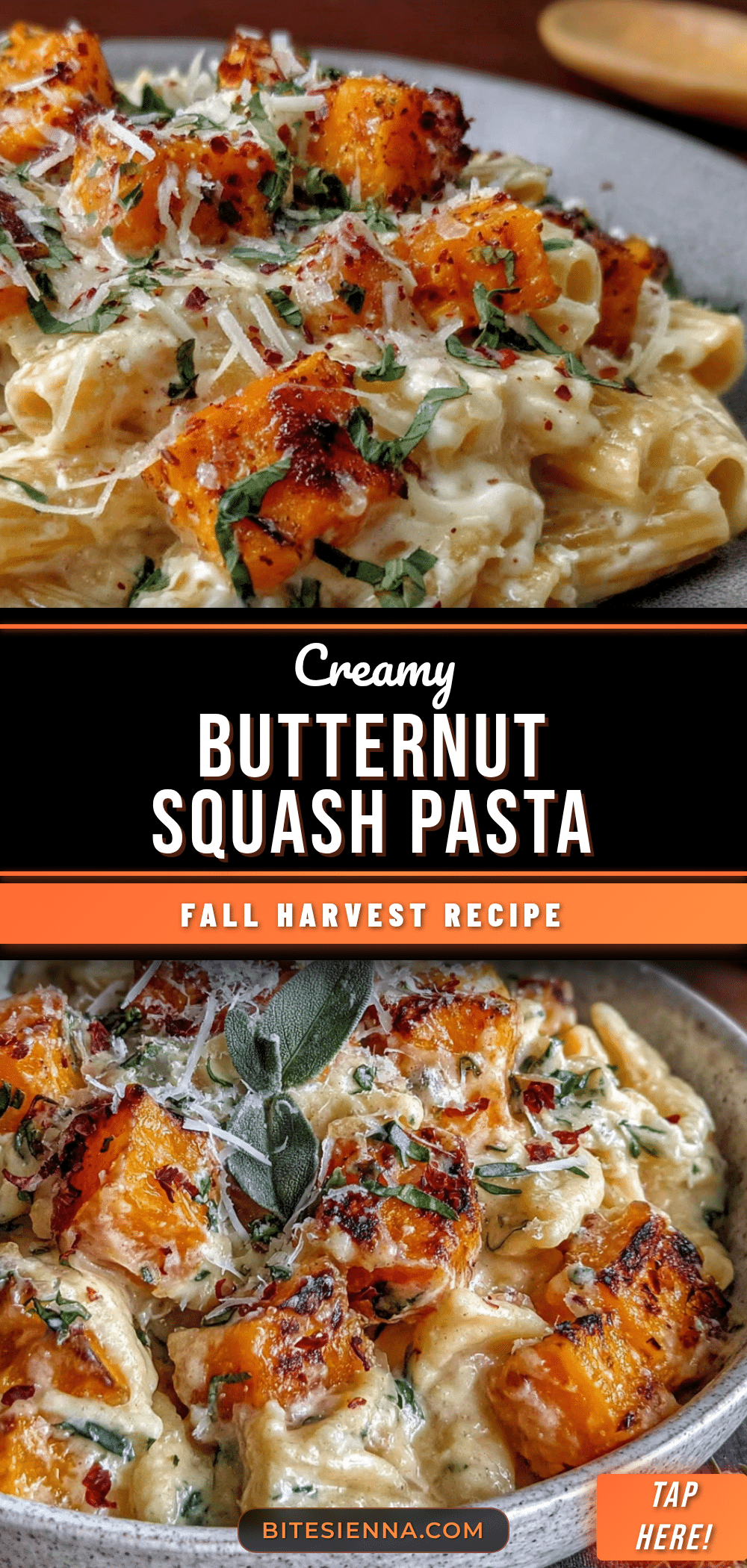
Quick Fall Harvest Pasta with Butternut Squash

A comforting, creamy pasta dish featuring caramelized butternut squash, sage, and parmesan cheese that comes together in under 30 minutes.
- Prep Time: 5 minutes
- Cook Time: 25 minutes
- Total Time: 30 minutes
- Yield: 4 servings 1x
- Category: Main Course
- Cuisine: American
Ingredients
- 1 medium butternut squash, peeled and cut into 1/2-inch cubes
- 12 ounces penne or rigatoni pasta
- 3 tablespoons unsalted butter
- 1 cup heavy cream
- 10–12 fresh sage leaves
- 3 cloves garlic, minced
- 1/2 cup freshly grated parmesan cheese
- 1 tablespoon extra virgin olive oil
- Salt and freshly cracked black pepper to taste
- Reserved pasta water as needed
Instructions
- Peel the butternut squash, remove seeds, and cut into uniform 1/2-inch cubes.
- Bring a large pot of salted water to a rolling boil. Add pasta and cook until al dente. Reserve 1 cup of pasta water before draining.
- While pasta cooks, heat olive oil in a large skillet over medium-high heat. Add squash cubes in a single layer and sauté for 5-7 minutes until tender and lightly browned.
- Reduce heat to medium. Add butter to the pan. Once melted, add minced garlic and sage leaves. Sauté for 1-2 minutes until garlic is fragrant and sage is crispy.
- Pour in heavy cream. Stir gently and simmer for 2-3 minutes until the sauce thickens slightly. Add a splash of reserved pasta water if too thick.
- Add the drained pasta to the skillet. Toss to coat evenly. Remove from heat and stir in parmesan cheese. Season with salt and pepper to taste. Serve immediately.
Notes
Do not skip reserving pasta water; the starch helps emulsify the sauce. Ensure squash cubes are uniform in size for even cooking. If using frozen squash, thaw and pat dry first. For a lighter version, half-and-half can be used, though the sauce will be thinner.
Nutrition
- Serving Size: 1 plate
- Calories: 450
- Sugar: 8
- Sodium: 400
- Fat: 22
- Saturated Fat: 12
- Carbohydrates: 50
- Fiber: 5
- Protein: 12
Keywords: butternut squash pasta, fall recipes, quick dinner, creamy pasta, sage pasta, comfort food, easy weeknight meal