It was 10:47 PM on a random Wednesday, and I had a craving for mashed potatoes so bad it was almost embarrassing. I mean, who gets hit with a potato craving at nearly eleven o’clock at night? Me, apparently. I’d had a long day—one of those where dinner was a sad desk salad eaten over the sink—and my brain had decided that what I really needed was a bowl of creamy, buttery comfort. The problem? I didn’t have the energy for the whole peeling, boiling, mashing, and seasoning production line that regular mashed potatoes demand. But I had potatoes. And I had butter. And then a weird little thought arrived, like a lightbulb flickering on in a dark room: what if I browned the butter first? What if I skipped the whole “boil and drain” routine and just went for speed? Honestly, it was a tired-person idea, the kind you only have when you’re too worn out to overthink things.
So I grabbed a bag of Yukon Golds—the ones sitting in the back of the pantry—and I didn’t even peel them. I just scrubbed them clean, chopped them into chunks, and tossed them into a pot of salted water. While they boiled, I melted a stick of butter in a small pan and let it sizzle until it turned nutty and golden, tossing in a handful of fresh sage leaves that I’d bought for a recipe last week and forgotten about. The whole kitchen started smelling like a fancy restaurant, which felt absurd for a Wednesday night in my sweatpants. I mashed the potatoes with a fork—no ricer, no food mill, just a fork and some elbow grease—and stirred in that brown butter and sage until everything came together in this gloriously fragrant, slightly speckled mash. Maybe you’ve been there, standing in your kitchen at a ridiculous hour, making something that feels both desperate and brilliant at the same time.
That first bite was a revelation. The nutty, toasty flavor of the brown butter mixed with the earthy sage and the creamy potatoes was something I hadn’t expected from such a quick, thrown-together dish. I ate a whole bowl standing at the counter, and I knew then that this recipe was going to become a regular in my weeknight rotation. It’s the kind of side dish that feels special enough for a holiday table but comes together so fast you can make it on a Tuesday after work. And honestly, that’s why I keep making it—because sometimes the best recipes come from a late-night craving and a willingness to break the rules.
Why You’ll Love This Recipe
Let me tell you why these Quick Brown Butter Sage Mashed Potatoes have earned a permanent spot in my kitchen. I’ve tested this recipe more times than I can count, tweaking the butter-to-potato ratio and the sage quantity until it was just right. It’s one of those rare dishes that checks every box for a busy home cook.
- Quick & Easy: From start to finish, these mashed potatoes are ready in about 20 minutes. No peeling, no fussing, no complicated techniques. You can have them on the table faster than you can order takeout.
- Simple Ingredients: You probably already have potatoes, butter, and salt in your kitchen. The fresh sage is the one special ingredient, but it’s available at most grocery stores year-round and keeps for over a week in the fridge.
- Perfect for Weeknights: This is the side dish that makes a simple weeknight dinner feel like a special occasion. Pair it with roasted chicken, pan-seared steak, or even a simple omelet for a satisfying meal.
- Crowd-Pleaser: I’ve served these at Thanksgiving, Sunday dinners, and casual get-togethers, and they always get rave reviews. Even picky eaters and kids go back for seconds.
- Unbelievably Delicious: The magic is in the brown butter and sage. That nutty, toasty flavor elevates simple mashed potatoes into something truly memorable. You won’t believe something this good can be this easy.
What makes this recipe different from the rest is the technique. By browning the butter and crisping the sage, you’re adding layers of flavor without any extra effort. And by leaving the skins on the potatoes, you save time and add a little rustic texture. This isn’t just another mashed potato recipe—it’s your new go-to for when you want comfort food that’s fast, flavorful, and foolproof. Honestly, it’s the kind of dish that makes you close your eyes after the first bite and forget about the long day you just had.
What Ingredients You Will Need
This recipe uses simple, wholesome ingredients to deliver bold flavor and satisfying texture without the fuss. Most of these are pantry staples, and the fresh sage is the only ingredient you might need to pick up at the store.
- Yukon Gold potatoes, 2 pounds (about 900g), scrubbed clean and cut into 1-inch chunks (I prefer Yukon Golds for their buttery flavor and creamy texture; they mash beautifully without being gluey)
- Unsalted butter, 6 tablespoons (85g), cut into pieces (I recommend Kerrygold or Plugrà for their rich flavor and high fat content, which browns beautifully)
- Fresh sage leaves, 12-15 leaves (about 1/4 cup loosely packed) (look for leaves that are bright green and fragrant, without any brown spots)
- Kosher salt, 1 teaspoon (5g), plus more for the cooking water (I use Diamond Crystal; if using Morton’s, use about half the amount)
- Black pepper, 1/4 teaspoon (1g), freshly ground (freshly ground pepper makes a difference here)
- Whole milk or heavy cream, 1/4 cup (60ml), warmed (whole milk works great for a lighter texture; heavy cream makes them extra luxurious)
For the best results, use Yukon Gold potatoes. Their naturally buttery flavor and waxy texture mean you don’t need to add as much fat to get creamy results. If you only have Russet potatoes, they’ll work too—just peel them first, as the skins can be tough. For a dairy-free version, substitute the butter with a high-quality vegan butter (I like Miyoko’s) and use unsweetened oat milk or cashew milk instead of dairy. The brown butter flavor won’t be exactly the same, but it’ll still be delicious.
When it comes to the sage, fresh is non-negotiable. Dried sage won’t give you the same aromatic, slightly peppery flavor, and it won’t crisp up in the butter. If you can’t find fresh sage, you could substitute with fresh thyme or rosemary for a different but equally delicious flavor profile. Just remember that rosemary is stronger, so use about half the amount.
Equipment Needed
You don’t need a lot of fancy equipment to make these mashed potatoes, which is part of their appeal. Here’s what you’ll need:
- Large pot (4-5 quart capacity) for boiling the potatoes
- Small skillet or saucepan for browning the butter (a light-colored pan helps you see the color change)
- Colander for draining the potatoes
- Potato masher or fork (I prefer a simple potato masher for the best texture; a fork works in a pinch)
- Measuring cups and spoons
- Chef’s knife and cutting board
If you don’t have a potato masher, you can use a large fork or even a sturdy whisk. A ricer or food mill would give you an ultra-smooth texture, but honestly, I like the slightly rustic texture you get from mashing by hand. It feels more like real food, you know? For the butter browning, a small stainless steel or enameled cast iron skillet works best because you can see the color change clearly. Avoid non-stick pans for this step, as the dark color makes it harder to judge when the butter is perfectly browned.
Preparation Method
Let’s get cooking! This recipe comes together in about 20 minutes, and I’ll walk you through each step so you get perfect results every time.
- Prepare the potatoes: Scrub the Yukon Gold potatoes thoroughly under cold running water. Cut them into 1-inch chunks—no need to peel them, just make sure the pieces are roughly the same size so they cook evenly. Place the potato chunks in a large pot and cover with cold water by about 2 inches. Add 1 tablespoon of kosher salt to the water. This seasons the potatoes from the inside out, which makes a big difference in flavor.
- Boil the potatoes: Bring the pot to a boil over high heat. Once boiling, reduce the heat to medium-high and cook for 10-12 minutes, until the potatoes are fork-tender. You should be able to easily pierce a chunk with a fork, and the potato should start to fall apart slightly. Don’t overcook them, or they’ll become waterlogged and gluey. While the potatoes boil, get your butter ready.
- Brown the butter: While the potatoes are cooking, place the butter pieces in a small skillet or saucepan over medium heat. Let the butter melt completely, then continue cooking, swirling the pan occasionally. The butter will start to foam and sizzle—this is normal. After about 3-4 minutes, the foam will subside and you’ll see small brown specks forming at the bottom of the pan. The butter will smell nutty and toasty. This is the moment you’ve been waiting for! Immediately add the fresh sage leaves to the pan—they’ll sizzle and crisp up in about 30 seconds. Remove the pan from the heat and set aside. Be careful not to burn the butter; it can go from perfectly browned to burnt very quickly.
- Drain the potatoes: Once the potatoes are tender, drain them in a colander. Let them sit in the colander for about 1 minute to steam off excess moisture. This is an important step—too much water in the potatoes will make your mash watery instead of creamy.
- Mash the potatoes: Return the drained potatoes to the pot (off the heat). Use a potato masher or fork to mash them until they’re mostly smooth, with a few small lumps for texture. Don’t over-mash, or the potatoes can become gluey. You want them creamy but with a little bit of rustic character.
- Add the brown butter and sage: Pour the brown butter and sage leaves over the mashed potatoes. Add the warmed milk or cream, the 1 teaspoon of kosher salt, and the black pepper. Stir gently with a wooden spoon or spatula until everything is combined. Taste and adjust seasoning—you might want a little more salt or pepper, depending on your preference.
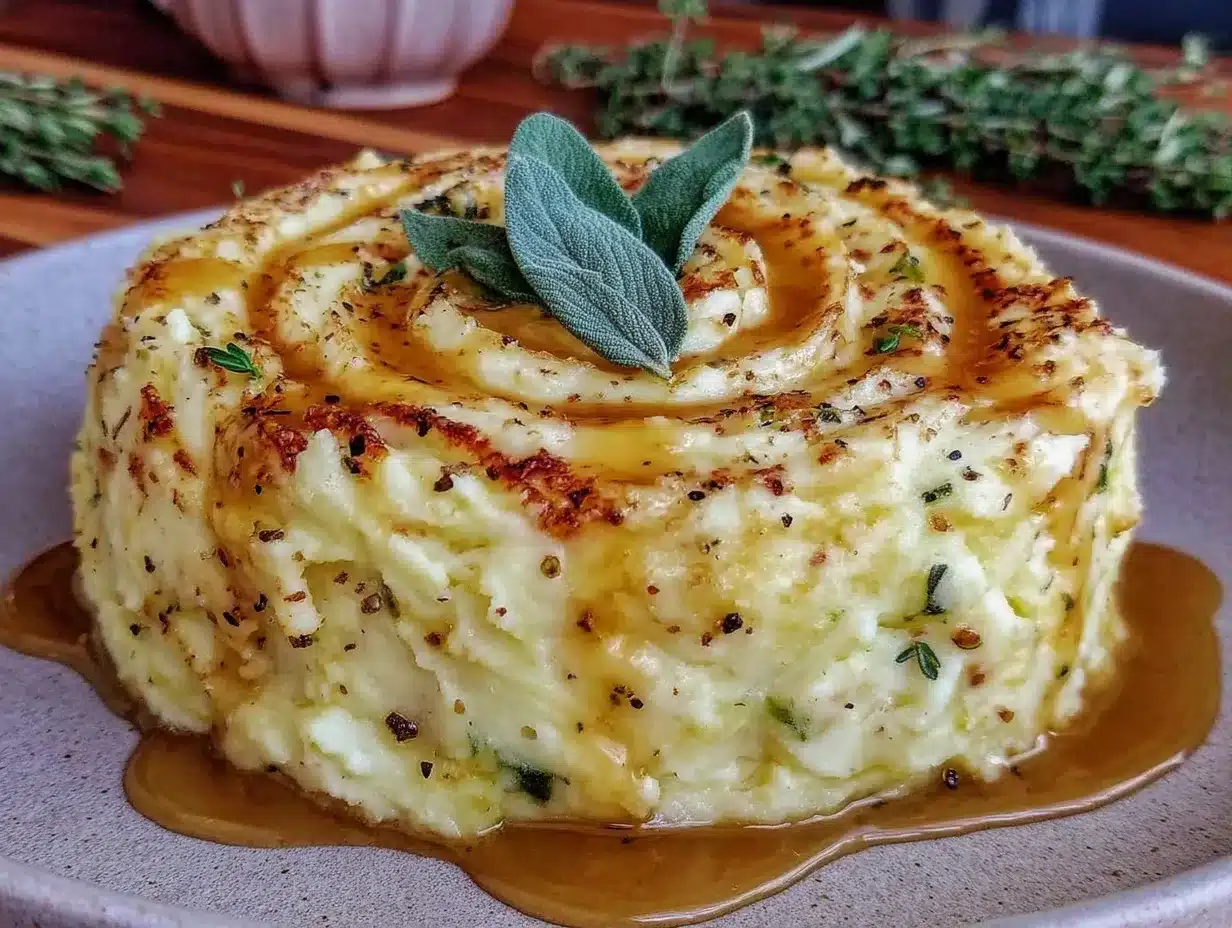
- Serve immediately: Transfer the mashed potatoes to a serving bowl. Garnish with the crispy sage leaves from the butter (if they haven’t already been mixed in) and an extra drizzle of brown butter if you reserved any. Serve hot.
A few notes from my kitchen: If you’re making these ahead of time, you can keep them warm in a covered slow cooker on the “warm” setting for up to 2 hours. Just stir in a splash of warm milk before serving to loosen them up. And if you want extra-creamy potatoes, use a ricer instead of a masher—but honestly, I think the rustic texture is part of the charm here.
Cooking Tips & Techniques
Over the many times I’ve made these mashed potatoes, I’ve learned a few things the hard way. Here are my best tips for getting perfect results every time.
Don’t skip salting the water. This is the single most important tip for flavorful mashed potatoes. Potatoes absorb seasoned water as they cook, so salting the water seasons them from the inside out. If you add salt only at the end, the potatoes will taste flat no matter how much butter you add. I use about 1 tablespoon of kosher salt per gallon of water.
Watch the butter like a hawk. Brown butter can go from perfect to burnt in about 30 seconds. Once you see the milk solids turn golden brown and smell that nutty aroma, immediately add the sage leaves and remove the pan from heat. The sage leaves will cool the butter slightly and stop the cooking process. If you’re nervous, you can also pour the brown butter into a heatproof bowl to stop it from cooking further.
Warm your milk or cream. Cold liquid can shock the potatoes and make them seize up, resulting in a gluey texture. Warm the milk or cream in the microwave for about 30 seconds before adding it to the potatoes. This small step makes a noticeable difference in the final texture.
Don’t overwork the potatoes. I learned this one the hard way—I once made a batch that turned into wallpaper paste because I mashed them too enthusiastically. Use a gentle hand and stop mashing as soon as the potatoes are mostly smooth. If you’re using a ricer or food mill, even better, as these tools give you smooth results without overworking the starch.
Multitask like a pro. Start the potatoes boiling first, then begin browning the butter when the potatoes are about halfway done. This way, everything finishes at the same time. If the butter finishes before the potatoes are drained, just leave it in the pan—it will stay warm for a few minutes.
Variations & Adaptations
One of the best things about this recipe is how easy it is to adapt. Here are some variations I’ve tried and loved.
Garlic Lover’s Version: Add 3-4 peeled garlic cloves to the pot with the potatoes during the last 5 minutes of boiling. Mash them right along with the potatoes. The garlic adds a mellow, sweet flavor that pairs beautifully with the brown butter and sage. I’ve also tried roasting the garlic first and mashing it in—it’s even better but takes more time.
Make It Vegan: Use a high-quality vegan butter (I like Miyoko’s or Country Crock Plant Butter) and unsweetened oat milk or cashew milk. The brown butter flavor won’t be exactly the same, but it’s still delicious. I’ve made this version for vegan friends and they always ask for the recipe.
Herb Swap: If you don’t have sage, try fresh thyme or rosemary instead. Use about 1 tablespoon of fresh thyme leaves or 1 teaspoon of finely chopped fresh rosemary. Both herbs work beautifully with brown butter. I’ve even used a mix of sage and thyme for a more complex flavor.
Cheesy Upgrade: Stir in 1/2 cup of freshly grated Parmesan cheese or crumbled goat cheese after mashing the potatoes. The salty, tangy cheese adds another layer of flavor. Just be sure to taste before adding extra salt, as cheese can be salty.
Spicy Twist: Add a pinch of red pepper flakes or a drizzle of hot honey over the finished potatoes. The heat contrasts beautifully with the richness of the brown butter. I tried this on a whim one night and it was surprisingly good.
Feel free to experiment and make this recipe your own. That’s the beauty of cooking, right? You can tweak and adjust until it’s exactly what you’re craving.
Serving & Storage Suggestions
These Quick Brown Butter Sage Mashed Potatoes are incredibly versatile. Here’s how to serve and store them for the best results.
Serving: Serve these mashed potatoes hot, straight from the pot. Spoon them into a warmed serving bowl and garnish with the crispy sage leaves (if you reserved any) and a drizzle of extra brown butter. They’re the perfect side dish for roasted chicken, pan-seared steak, pork chops, meatloaf, or even a simple roasted vegetable platter. For a special touch, serve them alongside a honey glazed carrots recipe for a complete holiday-worthy meal.
Storage: Store leftover mashed potatoes in an airtight container in the refrigerator for up to 4 days. The flavors actually meld and deepen overnight, so leftovers can be even better the next day. I’ve been known to eat cold mashed potatoes straight from the fridge as a midnight snack—no judgment here.
Reheating: The best way to reheat these potatoes is on the stovetop over medium-low heat, stirring frequently and adding a splash of warm milk or cream to loosen them up. You can also reheat them in the microwave in 30-second bursts, stirring between each burst. If they seem dry, add a little butter or warm milk. Avoid reheating at high heat, as this can make the potatoes gluey.
Freezing: These mashed potatoes freeze surprisingly well. Let them cool completely, then transfer to a freezer-safe container or resealable bag. They’ll keep for up to 3 months. To thaw, place the container in the refrigerator overnight. Reheat gently on the stovetop, adding a splash of warm milk to restore the creamy texture. I like to make a double batch and freeze half for busy weeknights.
One last tip: if you’re making these for a holiday dinner, you can prep the potatoes up to the mashing step a few hours ahead. Just keep them covered in the pot at room temperature. When you’re ready to serve, reheat them gently with the brown butter and milk, and they’ll taste freshly made.
Nutritional Information & Benefits
While these mashed potatoes are definitely a comfort food, they also offer some nutritional benefits. Here’s an approximate breakdown per serving (based on 6 servings):
- Calories: 280
- Total Fat: 14g
- Saturated Fat: 9g
- Cholesterol: 40mg
- Sodium: 420mg
- Total Carbohydrates: 34g
- Dietary Fiber: 3g
- Sugars: 2g
- Protein: 5g
Yukon Gold potatoes are a good source of vitamin C, potassium, and vitamin B6. The skins contain most of the fiber, so leaving them on is a smart nutritional choice. Potatoes also contain resistant starch, which acts as a prebiotic and supports gut health. The butter and milk add calcium and vitamin A, while the sage is rich in antioxidants and has anti-inflammatory properties.
For those watching their intake, this recipe is naturally gluten-free and can be made vegetarian or vegan with simple substitutions. To reduce the fat content, you can use less butter (try 4 tablespoons instead of 6) and low-fat milk. The brown butter flavor is so strong that you won’t miss the extra fat. And if you’re following a low-carb diet, you can substitute cauliflower for half the potatoes—just steam the cauliflower and mash it with the potatoes for a lighter version.
Conclusion
These Quick Brown Butter Sage Mashed Potatoes have become a staple in my kitchen, and I think they’ll become one in yours too. They’re proof that you don’t need hours in the kitchen or a long list of fancy ingredients to create something truly special. With just a few simple ingredients and about 20 minutes, you can have a side dish that tastes like it came from a fancy restaurant.
I love this recipe because it’s forgiving and adaptable. You can make it your own by adding garlic, cheese, or different herbs. You can serve it with a weeknight roast chicken or a holiday turkey. And you can make it ahead, freeze it, or eat the leftovers cold from the fridge at midnight—no judgment here, remember?
So go ahead and give these mashed potatoes a try. I promise they’ll become a regular in your rotation. And when you make them, I’d love to hear how they turned out. Leave a comment below and let me know if you made any variations or if they became a hit at your dinner table. Happy cooking, friends!
Frequently Asked Questions
Can I use salted butter instead of unsalted?
Yes, you can use salted butter, but reduce the added salt in the recipe to 1/2 teaspoon. Taste before adding more salt at the end, as salted butter can vary in saltiness between brands.
Can I make these potatoes ahead of time?
Absolutely! You can make them up to 2 days ahead. Store them in an airtight container in the refrigerator. Reheat gently on the stovetop with a splash of warm milk, stirring frequently until heated through.
What if I can’t find fresh sage?
If fresh sage isn’t available, you can substitute with fresh thyme or rosemary. Use about 1 tablespoon of fresh thyme leaves or 1 teaspoon of finely chopped fresh rosemary. Dried sage won’t work well for this recipe because it won’t crisp up in the butter.
Can I use a different type of potato?
Yes, Russet potatoes work well, but I recommend peeling them first since their skins can be tough. Red potatoes can also be used and don’t need peeling, but they’ll have a slightly different texture—a bit more waxy and less fluffy than Yukon Golds.
How do I prevent my mashed potatoes from becoming gluey?
To avoid gluey mashed potatoes, don’t overwork them. Mash just until they’re mostly smooth with a few small lumps. Also, make sure you drain the potatoes well and let them steam dry for a minute before mashing. Using a ricer instead of a masher can also help prevent a gluey texture.
Pin This Recipe!
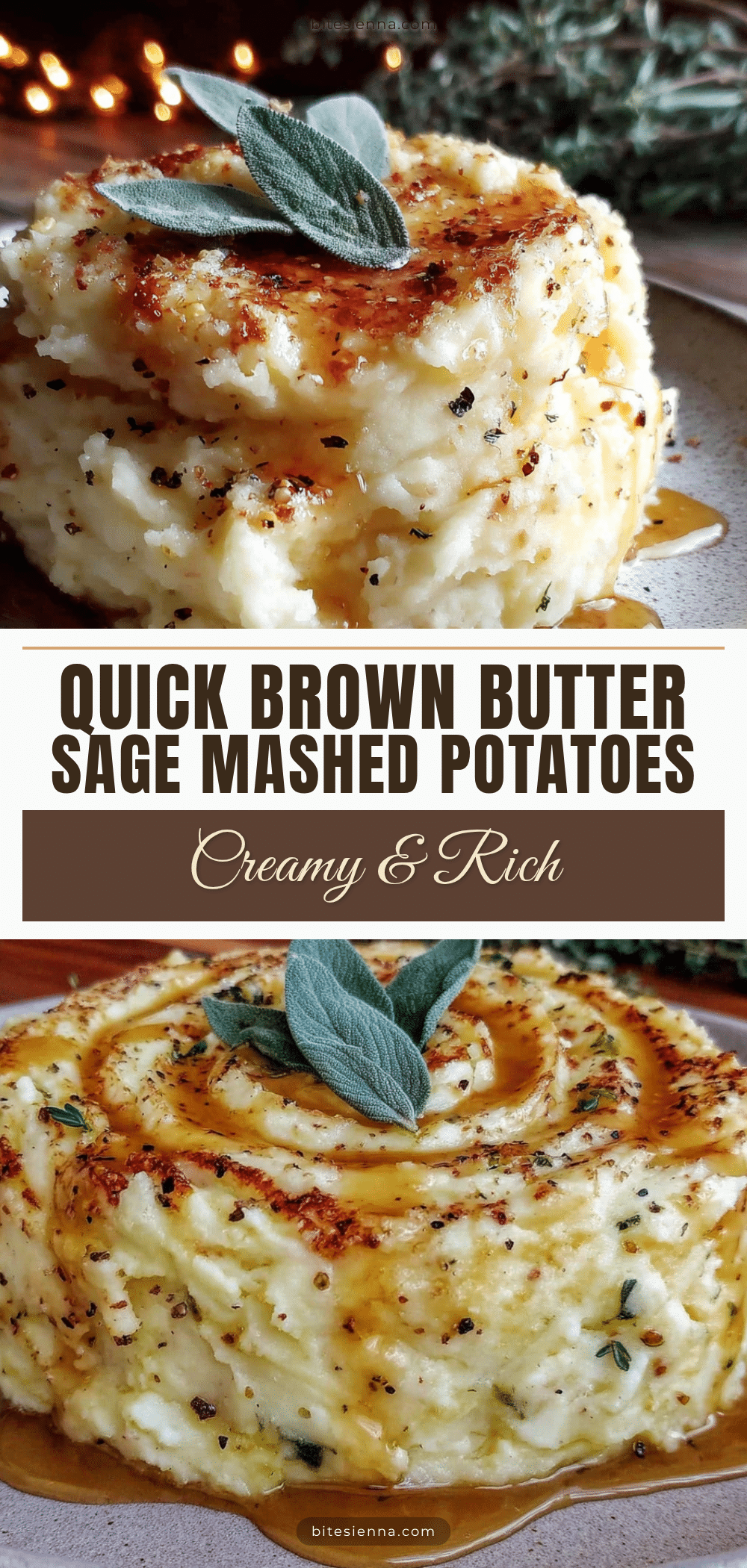
Quick Brown Butter Sage Mashed Potatoes: Easy 20-Minute Side

These quick and easy mashed potatoes are ready in about 20 minutes, featuring nutty brown butter and crispy sage for a restaurant-quality side dish that’s perfect for weeknights or holidays.
- Prep Time: 5 minutes
- Cook Time: 15 minutes
- Total Time: 20 minutes
- Yield: 6 servings 1x
- Category: Side Dish
- Cuisine: American
Ingredients
- 2 pounds (about 900g) Yukon Gold potatoes, scrubbed and cut into 1-inch chunks
- 6 tablespoons (85g) unsalted butter, cut into pieces
- 12–15 fresh sage leaves (about 1/4 cup loosely packed)
- 1 teaspoon (5g) kosher salt, plus more for cooking water
- 1/4 teaspoon (1g) freshly ground black pepper
- 1/4 cup (60ml) whole milk or heavy cream, warmed
Instructions
- Scrub the Yukon Gold potatoes thoroughly and cut into 1-inch chunks. Place in a large pot, cover with cold water by 2 inches, and add 1 tablespoon kosher salt.
- Bring to a boil over high heat, then reduce to medium-high and cook for 10-12 minutes until fork-tender.
- While potatoes boil, melt butter in a small skillet over medium heat. Cook, swirling occasionally, until butter foams and turns golden brown with a nutty aroma (about 3-4 minutes). Immediately add sage leaves and cook for 30 seconds until crisp. Remove from heat.
- Drain potatoes in a colander and let steam for 1 minute.
- Return potatoes to the pot (off heat) and mash with a potato masher or fork until mostly smooth with a few lumps.
- Pour brown butter and sage over potatoes. Add warmed milk or cream, 1 teaspoon salt, and pepper. Stir gently to combine. Adjust seasoning to taste.
- Serve immediately, garnished with crispy sage leaves and extra brown butter if desired.
Notes
For best results, use Yukon Gold potatoes and fresh sage. Don’t over-mash to avoid gluey texture. Warm milk or cream before adding. Brown butter can burn quickly, so watch carefully. Leftovers can be stored in the refrigerator for up to 4 days or frozen for up to 3 months.
Nutrition
- Serving Size: 1 serving (about 1 c
- Calories: 280
- Sugar: 2
- Sodium: 420
- Fat: 14
- Saturated Fat: 9
- Carbohydrates: 34
- Fiber: 3
- Protein: 5
Keywords: mashed potatoes, brown butter, sage, quick side dish, easy recipe, Yukon Gold, comfort food