Marta watched me fumbling with a bag of gluten-free flour in the community garden kitchen, and she didn’t say anything at first. Then she just pointed at the sweet potatoes piled high on the counter. “Those,” she said, with a slight accent I couldn’t quite place. “Those don’t need anything else.” She was right, of course. It was late October, and the garden had given us more sweet potatoes than we knew what to do with. I was trying to make a traditional casserole for the potluck that evening, but my gluten-free flour blend was clumping and nothing felt right. Marta, who had been tending the herb garden all morning, just laughed and started peeling potatoes without asking. That afternoon, she taught me something I hadn’t expected—that the best gluten-free cooking doesn’t start with a substitute. It starts with trusting the ingredients themselves.
I’d been gluten-free for about three years at that point, and honestly, I was tired of casseroles that tasted like cardboard and sadness. Holiday meals had become this minefield of “can I eat this?” and “did someone use regular flour?” You know that feeling when you’re at a family dinner and you’re not sure if the gravy is safe? I’d been there too many times. But that day in the garden kitchen, Marta showed me that a sweet potato casserole doesn’t need flour to be rich, creamy, and absolutely unforgettable. She used a little cornstarch, some butter, and a whole lot of patience. I watched her mash the potatoes by hand, not with a mixer, and she explained that the texture stays better that way. I made a mess with the peels, dropped a potato on the floor, and we both laughed about it. That casserole became the most popular dish at the potluck, and I’ve been making my version of it ever since.
What I love about this gluten-free sweet potato casserole is that it doesn’t feel like a compromise. It feels like exactly what a holiday casserole should be—sweet, savory, creamy, and topped with a crunchy pecan crumble that makes everyone ask for seconds. The secret is letting the sweet potatoes shine on their own terms. No weird flours, no complicated substitutions. Just good ingredients treated with care. Marta moved away the following spring, but I think about her every time I make this dish. She taught me that cooking gluten-free isn’t about restriction—it’s about discovering new ways to make food that tastes like home. And this recipe? It tastes like home to me.
Why You’ll Love This Recipe
I’ve tested this recipe more times than I can count, and I’ve shared it with friends who don’t even eat gluten-free. They couldn’t tell the difference. That’s the kind of recipe this is—one that brings people together instead of making them feel like they’re missing out. Let me tell you why this one’s a keeper.
- Naturally Gluten-Free: No weird flours or tricky substitutes. This casserole uses simple, whole ingredients that are already gluten-free. No one will guess it’s special.
- Perfect for Holidays: Thanksgiving, Christmas, Easter—this dish fits right in. It’s rich enough for a feast but simple enough for a Sunday dinner.
- Make-Ahead Friendly: You can prep this the day before and just pop it in the oven when you’re ready. Less stress, more time with people you love.
- Crowd-Pleasing Flavor: The creamy sweet potato base with that crunchy pecan topping? It’s the kind of combination that makes people close their eyes after the first bite. I’ve seen it happen.
- Simple Ingredients: You probably have most of these in your pantry right now. No special trips to fancy grocery stores.
What makes this recipe different from the dozens of other sweet potato casseroles out there? It’s the texture. Most versions use too much sugar or rely on marshmallows to cover up bland potatoes. This one lets the natural sweetness of the potatoes do the work, with just a touch of maple syrup and warm spices to enhance it. The pecan crumble adds this incredible crunch that contrasts perfectly with the creamy filling. I tested it with different sweeteners, different fats, different cooking methods—and this version won every single time. It’s the one I bring to every potluck, the one my family requests for Thanksgiving, the one that makes people say, “Wait, this is gluten-free?”
Honestly, this recipe became my go-to because it solves a real problem. Holiday meals are stressful enough without worrying about dietary restrictions. This casserole is so good that no one feels deprived. It’s comfort food that works for everyone—celiacs, gluten-sensitive folks, and people who just want a really good sweet potato casserole. That’s the kind of magic I want to share with you.
What Ingredients You Will Need
This recipe uses simple, wholesome ingredients that come together to create something truly special. The beauty of it is that you don’t need anything fancy—just good ingredients treated with care. Here’s what you’ll need:
For the Sweet Potato Filling
- 3 pounds sweet potatoes (about 4-5 medium), peeled and cubed. Look for firm, smooth-skinned potatoes without soft spots. I prefer Garnet or Jewel varieties for their natural sweetness and creamy texture.
- 1/4 cup unsalted butter, melted. Use dairy-free butter if needed—I’ve tested this with Miyoko’s brand and it works beautifully.
- 1/4 cup maple syrup (pure, not pancake syrup). This adds a subtle sweetness that complements the potatoes perfectly.
- 2 large eggs, lightly beaten. They help bind the filling and give it a custard-like texture. For a vegan version, try flax eggs (2 tablespoons ground flaxseed mixed with 6 tablespoons water).
- 1/3 cup milk (any kind works—dairy, almond, oat, or coconut). I often use full-fat coconut milk for extra creaminess.
- 1 teaspoon vanilla extract—pure, not imitation. It rounds out the flavors beautifully.
- 1 teaspoon ground cinnamon
- 1/2 teaspoon ground nutmeg (freshly grated if you have it)
- 1/4 teaspoon ground ginger
- 1/2 teaspoon salt—don’t skip this! It balances the sweetness.
For the Pecan Crumble Topping
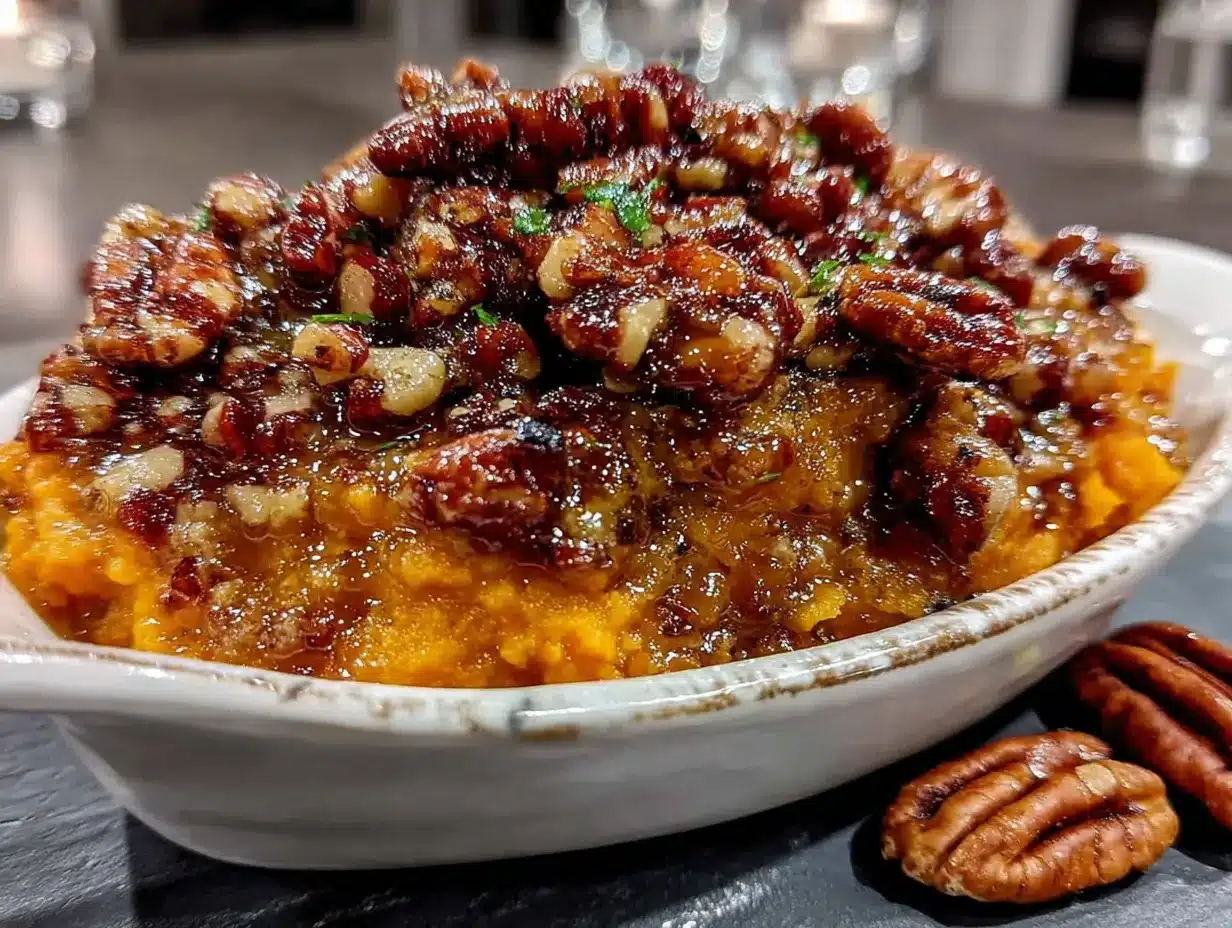
- 1 cup pecans, chopped. I recommend toasting them lightly first for extra flavor. Just spread them on a baking sheet and bake at 350°F for 5-7 minutes.
- 1/2 cup gluten-free rolled oats (certified gluten-free if needed). Quick oats work too, but rolled oats give better texture.
- 1/3 cup brown sugar, packed (light or dark—dark gives more molasses flavor)
- 1/4 cup gluten-free all-purpose flour (I like King Arthur Measure for Measure or Bob’s Red Mill 1-to-1)
- 1 teaspoon cinnamon
- 1/4 cup cold unsalted butter, cut into small cubes. Cold butter is key for a crumbly topping.
- Pinch of salt
Ingredient Tips from My Kitchen: When choosing sweet potatoes, go for ones that feel heavy for their size—that means they’re fresh and full of moisture. I’ve found that organic sweet potatoes often have better flavor, but conventional works just fine. For the pecans, buy raw and toast them yourself. Pre-toasted nuts can be stale and lose their crunch. And please, use real maple syrup. The artificial stuff has a weird aftertaste that really stands out in a simple recipe like this.
If you’re dairy-free, I’ve had great results with vegan butter in both the filling and the topping. For a nut-free version, swap the pecans for sunflower seeds or pumpkin seeds—just toast them first. And if you don’t have gluten-free oats, you can use all gluten-free flour in the topping, or try crushed gluten-free pretzels for a salty-sweet twist.
Equipment Needed
You don’t need a fancy kitchen to make this casserole. Here’s what you’ll need:
- Large pot for boiling the sweet potatoes (at least 6 quarts)
- Colander for draining
- 9×13-inch baking dish (or similar 3-quart dish). Glass or ceramic works best for even heating.
- Potato masher or hand mixer. I prefer a masher for a chunkier texture, but a mixer makes it silky smooth.
- Mixing bowls—one large for the filling, one medium for the topping
- Measuring cups and spoons
- Chef’s knife and cutting board
- Vegetable peeler
- Pastry cutter or two forks for cutting butter into the topping (your hands work too!)
My Two Cents on Equipment: I’ve made this in a metal baking dish, and it worked fine, but the edges browned a bit faster. Glass or ceramic gives you more control. If you don’t have a pastry cutter, just use your fingertips to work the butter into the dry ingredients—it’s actually more fun. And honestly, you can skip the hand mixer entirely. A good old-fashioned potato masher gives you a more rustic texture that I personally love. Just make sure your pot is big enough—sweet potatoes foam up when they boil, and you don’t want a starchy mess on your stove.
Preparation Method
- Preheat your oven to 375°F (190°C). Lightly grease your 9×13-inch baking dish with butter or cooking spray. Set it aside while you prep the filling.
- Cook the sweet potatoes: Place the peeled and cubed sweet potatoes in a large pot and cover them with cold water by about 2 inches. Add a generous pinch of salt. Bring to a boil over high heat, then reduce to a simmer. Cook for 15-20 minutes, until the potatoes are fork-tender—you should be able to pierce them easily with a knife. Don’t overcook them or they’ll get waterlogged. Drain well in a colander and let them steam dry for a few minutes. This step matters—excess water makes the filling runny.
- Mash the potatoes: Return the drained potatoes to the pot or transfer them to a large mixing bowl. Mash them with a potato masher until smooth, or use a hand mixer for a silkier texture. I like to leave a few small chunks for texture, but that’s your call. Let them cool for about 5 minutes before adding the other ingredients—you don’t want to scramble the eggs.
- Make the filling: To the mashed sweet potatoes, add the melted butter, maple syrup, beaten eggs, milk, vanilla, cinnamon, nutmeg, ginger, and salt. Stir until everything is well combined. Taste the filling and adjust the sweetness or spices to your liking. I sometimes add an extra pinch of cinnamon if I’m feeling generous. Pour the mixture into your prepared baking dish and spread it evenly with a spatula.
- Make the pecan crumble: In a medium bowl, combine the chopped pecans, gluten-free oats, brown sugar, gluten-free flour, cinnamon, and salt. Stir to distribute everything evenly. Add the cold butter cubes and use a pastry cutter, two forks, or your fingertips to work the butter into the dry mixture. You’re looking for a crumbly texture with pea-sized pieces of butter throughout. It should hold together when you squeeze it, then break apart easily. Don’t overwork it—you want those little butter pockets for a flaky topping.
- Assemble the casserole: Sprinkle the pecan crumble evenly over the sweet potato filling. Don’t press it down—let it sit loosely on top so it gets nice and crispy. At this point, you can cover the dish and refrigerate it for up to 24 hours if you’re making it ahead. Just add 10-15 minutes to the baking time if starting from cold.
- Bake: Place the casserole in the preheated oven and bake for 30-35 minutes, until the filling is set around the edges and slightly jiggly in the center (it will firm up as it cools). The topping should be golden brown and fragrant. If the topping is browning too quickly, tent the dish loosely with foil for the last 10 minutes.
- Cool and serve: Let the casserole rest for at least 10 minutes before serving. This allows the filling to set properly so you get clean slices. Serve warm, and watch it disappear.
A Note on Timing: The first time I made this, I was rushing and didn’t let the potatoes steam dry after draining. The filling turned out a little soupy, and the topping sank into it. Lesson learned. Give those potatoes time to dry out—it makes a real difference. Also, if you’re making this for a big meal, it’s totally fine to prep it the night before. Just assemble everything, cover it, and pop it in the fridge. Take it out about 30 minutes before baking to take the chill off.
Cooking Tips & Techniques
After making this casserole probably thirty times, I’ve picked up a few tricks that make a real difference. Let me share them with you so you can skip the trial and error.
The Secret to Creamy Potatoes: Boil your sweet potatoes whole with the skin on, then peel them after cooking. This prevents them from absorbing too much water, which can make the filling thin. I learned this the hard way after a few watery casseroles. If you’re short on time, cubing them before boiling works fine—just be sure to drain them really well and let them steam dry for a few minutes. Another trick: after draining, return the potatoes to the pot over low heat for a minute or two, stirring gently, to evaporate any remaining moisture.
Don’t Overmix the Topping: When you’re making the pecan crumble, work the butter in until it looks like coarse meal with some pea-sized bits remaining. If you overmix, the butter melts into the flour and you lose that crumbly texture. I’ve done this more times than I’d like to admit. Cold butter is non-negotiable here—if it gets warm, pop the bowl in the fridge for 10 minutes before using.
Temperature Matters: Let your eggs and milk come to room temperature before mixing them into the sweet potatoes. Cold ingredients can seize the butter and make the filling grainy. I usually set them out when I start boiling the potatoes, and by the time I’m ready to mix, they’re perfect. Also, don’t bake the casserole straight from the fridge if you can help it. Let it sit on the counter for 20-30 minutes first so it bakes evenly.
Multitasking Like a Pro: While the sweet potatoes are boiling, toast your pecans and measure out your dry ingredients for the topping. By the time the potatoes are done, you’ll have everything ready to go. I also like to grease my baking dish while the potatoes cook—it saves time and keeps the workflow smooth.
My Biggest Failure: The first time I made this for Thanksgiving, I forgot to add the eggs. The filling never set, and we ended up eating sweet potato soup with pecan crumble on top. It was delicious, honestly, but not what I was going for. So don’t forget the eggs. Write it on your hand if you have to.
Variations & Adaptations
One of the things I love about this recipe is how flexible it is. Here are some ways to make it your own:
Vegan Version: Replace the butter with vegan butter (I like Miyoko’s or Earth Balance). Use flax eggs instead of regular eggs—2 tablespoons ground flaxseed mixed with 6 tablespoons water, let it sit for 5 minutes until gel-like. Use your favorite plant-based milk. The texture will be slightly less custard-like, but still delicious.
Lower Sugar Option: Cut the maple syrup in half or replace it with a sugar-free maple alternative. You can also reduce the brown sugar in the topping to 2 tablespoons. The sweet potatoes are naturally sweet, so you won’t miss it much. I’ve made it this way for friends watching their sugar intake, and they loved it.
Savory Twist: Skip the maple syrup and brown sugar, add an extra teaspoon of salt, some black pepper, and a pinch of cayenne. Top with the pecan crumble but reduce the sugar in it to 1 tablespoon. This version is amazing alongside roasted chicken or pork. I made it for a dinner party once, and people couldn’t stop talking about it.
Different Nuts: No pecans? Use walnuts, almonds, or even hazelnuts. For a nut-free version, try sunflower seeds or pumpkin seeds. Toast them first for the best flavor. I’ve also used crushed gluten-free pretzels mixed with oats for a salty-sweet topping that’s absolutely addictive.
Spice It Up: Add a pinch of cardamom or allspice to the filling for a warming twist. A little orange zest in the filling brightens everything up. I sometimes add a tablespoon of bourbon or dark rum for a grown-up version—just reduce the milk by the same amount.
Serving & Storage Suggestions
Serving: This casserole is best served warm, straight from the oven. Let it rest for 10 minutes after baking so the filling sets—this makes it easier to scoop or slice. I like to garnish it with a sprinkle of fresh thyme or a dusting of cinnamon for a pretty presentation. It’s perfect alongside roasted turkey, glazed ham, or even a simple roast chicken. For a vegetarian meal, serve it with a hearty green salad and some crusty gluten-free bread.
What to Drink: A crisp white wine like Sauvignon Blanc or a dry Riesling pairs beautifully with the sweetness. For non-alcoholic options, try sparkling apple cider or a warm chai latte. If you’re serving this for brunch, a cup of strong coffee is all you need.
Storage: Leftovers keep well in an airtight container in the refrigerator for up to 5 days. The topping will soften over time, but it’s still delicious. To reheat, pop individual portions in the microwave for 1-2 minutes, or reheat the whole casserole in a 350°F oven for 15-20 minutes. I actually love the leftovers cold, straight from the fridge—the flavors meld together overnight and it gets even better.
Freezing: This casserole freezes beautifully. Assemble it completely but don’t bake it. Cover tightly with plastic wrap and foil, and freeze for up to 3 months. To bake from frozen, remove the plastic wrap, cover with foil, and bake at 350°F for about 60 minutes, removing the foil for the last 15 minutes. You can also freeze baked leftovers in individual portions for quick meals later.
Flavor Development: Here’s something I’ve noticed—this casserole actually tastes better the next day. The spices meld with the sweet potatoes, and the flavors become more rounded. So if you can, make it a day ahead. Your future self will thank you.
Nutritional Information & Benefits
Here’s the nutritional breakdown for one serving (about 1/8 of the casserole):
| Nutrient | Amount |
|---|---|
| Calories | 320 |
| Total Fat | 18g |
| Saturated Fat | 7g |
| Cholesterol | 55mg |
| Sodium | 220mg |
| Total Carbohydrates | 38g |
| Dietary Fiber | 5g |
| Sugars | 16g |
| Protein | 5g |
| Vitamin A | 380% DV |
| Vitamin C | 15% DV |
| Calcium | 8% DV |
| Iron | 10% DV |
Sweet potatoes are packed with beta-carotene, which your body converts to vitamin A—great for eye health and immune function. They’re also a good source of fiber, which supports digestion and helps keep you full. Pecans provide healthy fats and antioxidants, while the oats add more fiber and a touch of protein. This dish is naturally gluten-free, and with the substitutions I mentioned, it can easily be made vegan and dairy-free. It’s comfort food that actually does your body some good.
Dietary Notes: This recipe contains eggs, dairy, and tree nuts (pecans). For egg-free, use flax eggs. For dairy-free, use vegan butter and plant-based milk. For nut-free, swap pecans for sunflower seeds. Always check your labels if you’re cooking for someone with celiac disease—some oats and spices can be contaminated with gluten.
Conclusion
This gluten-free sweet potato casserole has become a staple in my kitchen, and I hope it becomes one in yours too. It’s the kind of dish that proves gluten-free cooking doesn’t have to be complicated or disappointing. With simple ingredients and a little bit of care, you can create something that brings people together and makes them feel cared for. That’s what food should do, don’t you think?
I’d love to hear how this recipe turns out for you. Did you try any of the variations? Did you add your own twist? Drop a comment below and let me know—I read every single one. And if you share a photo on Pinterest or Instagram, tag me so I can see your beautiful creation. This recipe is meant to be shared, adapted, and made your own. So go ahead, make a mess in your kitchen, and enjoy every bite.
Happy cooking, friend. You’ve got this.
Frequently Asked Questions
Can I use canned sweet potatoes instead of fresh?
You can, but the texture won’t be as good. Canned sweet potatoes are often mushy and can make the filling watery. If you’re in a pinch, drain them really well and pat them dry with paper towels before mashing. But fresh sweet potatoes really do make a difference here.
How do I make this recipe nut-free?
Swap the pecans for toasted sunflower seeds or pumpkin seeds. You can also use crushed gluten-free pretzels mixed with oats for a salty-sweet crunch. Just skip the nuts entirely and double the oats if you prefer.
Can I make this casserole ahead of time?
Absolutely! Assemble the casserole completely (without baking), cover it, and refrigerate for up to 24 hours. When you’re ready to bake, add about 10-15 minutes to the baking time since you’re starting from cold. You can also freeze it unbaked for up to 3 months.
Why is my topping not crunchy?
This usually happens if the butter was too warm when you mixed it in, or if the topping got pressed down into the filling. Make sure your butter is cold, and sprinkle the topping loosely over the filling without pressing. Also, check your oven temperature—a hot oven helps the topping crisp up.
Can I use a different sweetener instead of maple syrup?
Honey works well, but it’s not vegan. You can also use agave nectar or coconut sugar dissolved in a little warm water. Brown sugar mixed with a tablespoon of water can work in a pinch. Just note that different sweeteners will change the flavor slightly, so adjust to your taste.
Pin This Recipe!
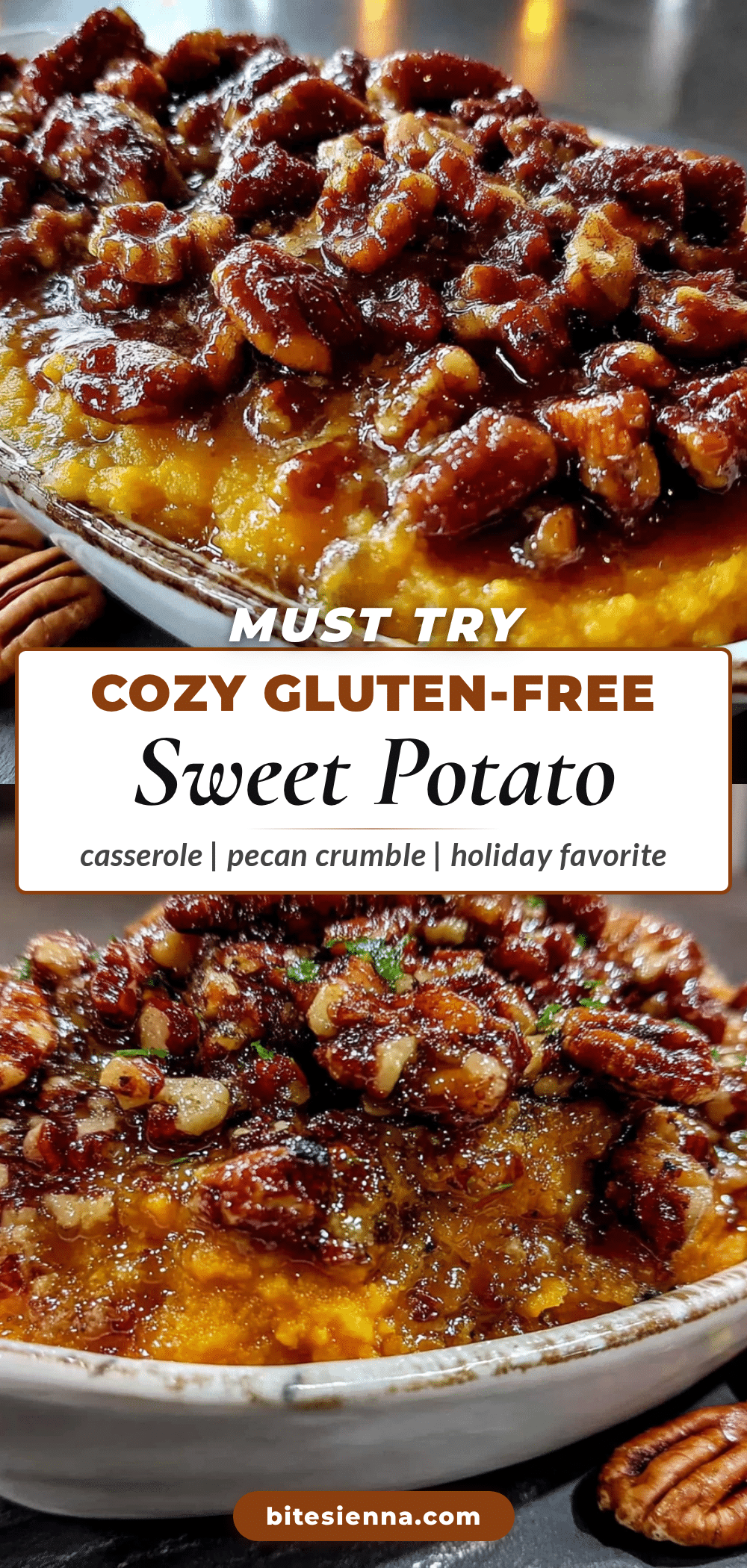
Best Easy Gluten-Free Sweet Potato Casserole with Pecan Crumble

A rich, creamy sweet potato casserole topped with a crunchy pecan crumble that’s naturally gluten-free. Perfect for holidays and family gatherings, this dish proves that gluten-free cooking can be absolutely delicious.
- Prep Time: 20 minutes
- Cook Time: 35 minutes
- Total Time: 55 minutes
- Yield: 8 servings 1x
- Category: Side Dish
- Cuisine: American
Ingredients
- 3 pounds sweet potatoes (about 4–5 medium), peeled and cubed
- 1/4 cup unsalted butter, melted
- 1/4 cup pure maple syrup
- 2 large eggs, lightly beaten
- 1/3 cup milk (any kind)
- 1 teaspoon vanilla extract
- 1 teaspoon ground cinnamon
- 1/2 teaspoon ground nutmeg
- 1/4 teaspoon ground ginger
- 1/2 teaspoon salt
- 1 cup pecans, chopped
- 1/2 cup gluten-free rolled oats
- 1/3 cup brown sugar, packed
- 1/4 cup gluten-free all-purpose flour
- 1 teaspoon cinnamon
- 1/4 cup cold unsalted butter, cut into small cubes
- Pinch of salt
Instructions
- Preheat your oven to 375°F (190°C). Lightly grease a 9×13-inch baking dish with butter or cooking spray.
- Place the peeled and cubed sweet potatoes in a large pot and cover with cold water by about 2 inches. Add a generous pinch of salt. Bring to a boil over high heat, then reduce to a simmer. Cook for 15-20 minutes until fork-tender. Drain well and let steam dry for a few minutes.
- Return the drained potatoes to the pot or transfer to a large mixing bowl. Mash with a potato masher until smooth, or use a hand mixer for a silkier texture. Let cool for about 5 minutes.
- To the mashed sweet potatoes, add the melted butter, maple syrup, beaten eggs, milk, vanilla, cinnamon, nutmeg, ginger, and salt. Stir until well combined. Pour into the prepared baking dish and spread evenly.
- In a medium bowl, combine the chopped pecans, gluten-free oats, brown sugar, gluten-free flour, cinnamon, and salt. Add the cold butter cubes and use a pastry cutter, two forks, or your fingertips to work the butter into the dry mixture until crumbly with pea-sized pieces of butter.
- Sprinkle the pecan crumble evenly over the sweet potato filling. Do not press down.
- Bake for 30-35 minutes, until the filling is set around the edges and slightly jiggly in the center. The topping should be golden brown. If browning too quickly, tent loosely with foil for the last 10 minutes.
- Let the casserole rest for at least 10 minutes before serving. Serve warm.
Notes
Let the potatoes steam dry after draining to avoid a watery filling. Cold butter is essential for a crumbly topping. The casserole can be assembled a day ahead and refrigerated; add 10-15 minutes to baking time if starting from cold. For a vegan version, use vegan butter, flax eggs, and plant-based milk. For nut-free, substitute pecans with sunflower seeds or pumpkin seeds.
Nutrition
- Serving Size: 1/8 of casserole
- Calories: 320
- Sugar: 16
- Sodium: 220
- Fat: 18
- Saturated Fat: 7
- Carbohydrates: 38
- Fiber: 5
- Protein: 5
Keywords: gluten-free sweet potato casserole, pecan crumble, holiday side dish, gluten-free Thanksgiving, sweet potato casserole