My sister had refused to eat squash soup for over a decade. Ten years. She claimed it was “baby food for adults” and would rather eat a plain salad. Then last October, she showed up at my door unannounced on a rainy Tuesday, looking like she’d had the kind of day that makes you question your life choices. I was halfway through making this coconut honeynut squash soup, and honestly, I didn’t even offer her any. I just handed her a bowl and went back to stirring.
She took one sip. Then another. Then she looked at me with this expression I can only describe as betrayal — like I’d been holding out on her for a decade. “Wait,” she said, scraping the bowl with her spoon. “This is squash soup?” I just nodded, trying not to smile. The thing is, I understood her skepticism. I used to think squash soup was thin and sad and tasted like someone boiled a pumpkin in water and called it dinner. But this version? It’s different. It’s creamy without being heavy, sweet without being cloying, and that coconut milk gives it this velvety richness that makes you forget you’re eating something healthy.
That rainy afternoon turned into a whole evening of us sitting on my kitchen floor — because my chairs were covered in laundry — eating soup straight from the pot and talking about nothing important. Maybe you’ve been there, where a simple bowl of soup becomes the backdrop for a moment you didn’t know you needed. That’s what this recipe is for me now. It’s not just dinner. It’s the thing I make when someone needs a hug in a bowl, including myself.
Why You’ll Love This Recipe
Let me tell you why this coconut honeynut squash soup has become my most-requested fall recipe. I’ve tested this at least seven times to get the balance right — too much coconut and it tastes like dessert, too little and you lose that silky texture. This version hits the sweet spot.
- Quick & Easy : Comes together in under 45 minutes, most of which is hands-off roasting time. Perfect for those evenings when you want something cozy but don’t have hours to spend in the kitchen.
- Simple Ingredients : You probably already have onions, garlic, and broth in your pantry. The only “special” ingredient is the honeynut squash, which is showing up at more grocery stores these days.
- Perfect for Cozy Nights : This is the soup you want when the weather turns cold, when you’re curled up on the couch with a blanket, or when you need something that feels like a warm hug.
- Crowd-Pleaser : My squash-hating sister is proof. Even picky eaters tend to love this one because the coconut mellows everything out.
- Unbelievably Delicious : The combination of roasted honeynut squash with creamy coconut milk and warm spices creates this depth of flavor that tastes like you spent hours on it. You didn’t. But no one needs to know that.
What makes this recipe different from other squash soups is the roasting technique. I roast the squash with a touch of coconut oil and maple syrup before blending, which caramelizes the natural sugars and adds layers of flavor you just can’t get from boiling. Plus, I add a pinch of cayenne at the end — not enough to make it spicy, but enough to wake up all the other flavors. It’s comfort food reimagined: healthier, faster, but with the same soul-soothing satisfaction.
What Ingredients You Will Need
This recipe uses simple, wholesome ingredients that work together to create something truly special. Most of these are pantry staples or easy to find at any grocery store.
- Honeynut squash (2 medium, about 2 pounds total) — These little guys are sweeter and creamier than butternut squash, with thinner skin that’s easier to cut. Look for ones that feel heavy for their size. If you can’t find honeynut, butternut squash works perfectly as a substitute.
- Coconut oil (2 tablespoons, melted) — Use virgin coconut oil for the best flavor. It adds a subtle tropical note that complements the squash beautifully.
- Maple syrup (1 tablespoon, plus more for drizzling) — Pure maple syrup, not pancake syrup. The real stuff makes a difference here. Grade A dark amber is my preference.
- Yellow onion (1 large, diced) — Sweet onions like Vidalia work great too. The onion provides the savory base that balances the sweetness.
- Garlic cloves (4 cloves, minced) — Fresh garlic is non-negotiable here. The pre-minced stuff in jars won’t give you the same punch.
- Fresh ginger (1 tablespoon, grated) — This is my secret weapon. Ginger adds warmth and a little zing that cuts through the richness. I recommend peeling it with a spoon — it’s easier than a peeler.
- Vegetable broth (3 cups) — Use low-sodium so you can control the salt. I prefer Swanson’s or Kitchen Basics for consistent flavor, but homemade is always best if you have it.
- Full-fat coconut milk (1 can, 13.5 ounces) — Don’t use light coconut milk here. The fat is what makes this soup velvety and satisfying. Shake the can well before opening.
- Ground cumin (1 teaspoon) — Adds an earthy warmth that pairs beautifully with the squash.
- Ground coriander (½ teaspoon) — Bright and slightly citrusy. It’s subtle but you’d miss it if it were gone.
- Cayenne pepper (⅛ teaspoon, or to taste) — Just a pinch. You want warmth, not heat.
- Salt and black pepper (to taste) — I use kosher salt and freshly ground black pepper.
- Optional toppings : Toasted pumpkin seeds, a drizzle of coconut cream, fresh thyme, or a swirl of chili oil for heat lovers.
For the best texture, make sure your squash is fully roasted until fork-tender. Under-roasted squash will leave your soup with a slightly grainy texture instead of that silky smoothness we’re after.
Equipment Needed
You don’t need a fancy kitchen to make this soup. Here’s what you’ll need:
- Baking sheet (rimmed) — For roasting the squash. A half-sheet pan works perfectly.
- Parchment paper or silicone baking mat — Makes cleanup so much easier. Trust me on this one.
- Large pot or Dutch oven — I use my 5.5-quart Le Creuset, but any heavy-bottomed pot works. The key is even heat distribution.
- Immersion blender — This is my preferred method because it’s less cleanup. If you don’t have one, a regular blender works fine. Just be careful with hot liquids.
- Chef’s knife and cutting board — A sharp knife makes cutting honeynut squash much safer. Dull knives are more dangerous than sharp ones.
- Wooden spoon or spatula — For stirring the aromatics.
- Measuring cups and spoons — For accuracy, though I’ll be honest, I eyeball the spices most of the time.
If you’re using a regular blender, let the soup cool for a few minutes before blending, and only fill the pitcher halfway. Hot liquid expands and can blow the lid off — a lesson I learned the hard way. My kitchen ceiling still has a faint orange stain from that incident.
Preparation Method

Let me walk you through this step by step. I’ve made this soup enough times to know where things can go wrong, so I’ll point those out along the way.
- Preheat your oven to 400°F (200°C). Line a baking sheet with parchment paper for easy cleanup.
- Prepare the squash. Cut each honeynut squash in half lengthwise. Scoop out the seeds and stringy bits with a spoon. You can save the seeds to roast later if you’re feeling ambitious — they make a great topping. Place the squash halves cut-side up on the baking sheet.
- Season the squash. Brush the cut sides with 1 tablespoon of melted coconut oil. Drizzle with the maple syrup and sprinkle with a pinch of salt. Flip the squash halves cut-side down onto the baking sheet. This helps them caramelize better. Roast for 25-30 minutes, until the flesh is fork-tender and the edges are starting to brown.
- While the squash roasts, start the aromatics. In your large pot, heat the remaining 1 tablespoon of coconut oil over medium heat. Add the diced onion and cook for 5-7 minutes, stirring occasionally, until translucent and starting to brown at the edges. Don’t rush this step — caramelized onions add so much flavor.
- Add the garlic and ginger. Toss in the minced garlic and grated ginger. Cook for another minute until fragrant. Your kitchen should smell amazing at this point. If it smells burnt, your heat was too high — turn it down next time.
- Toast the spices. Add the cumin, coriander, and a pinch of cayenne. Stir constantly for about 30 seconds until the spices are fragrant. This step wakes up the flavors in a way that adding them later just can’t match.
- Add the broth. Pour in the vegetable broth and bring to a simmer. Let it bubble gently while the squash finishes roasting.
- Add the roasted squash. When the squash is done, let it cool for a few minutes until you can handle it. Scoop the flesh out of the skins using a spoon. It should come out easily. Add the squash flesh to the pot with the broth mixture. Stir to combine.
- Simmer everything together. Let the soup simmer for 10 minutes to allow all the flavors to meld. This is a good time to taste and adjust seasoning.
- Blend until smooth. Remove the pot from heat. Use an immersion blender directly in the pot to puree the soup until completely smooth. If using a regular blender, work in batches and hold the lid down with a towel. Be careful — hot soup can be dangerous.
- Add the coconut milk. Pour in the full-fat coconut milk and stir until fully incorporated. The soup will turn a beautiful pale orange color. Taste and adjust salt, pepper, and cayenne as needed.
- Serve and garnish. Ladle the soup into bowls. Drizzle with a little extra coconut milk or cream, sprinkle with toasted pumpkin seeds, and add a few fresh thyme leaves if you have them. The contrast of creamy soup with crunchy toppings is everything.
Cooking Tips & Techniques
After making this soup more times than I can count, I’ve picked up a few tricks that make a real difference.
Don’t skip the roasting step. I know it’s tempting to just boil the squash to save time, but roasting concentrates the sugars and adds a caramelized depth that boiling can’t replicate. Trust the process. Your patience will be rewarded.
Cut the squash safely. Honeynut squash has thinner skin than butternut, but it’s still tough. Microwave the whole squash for 2 minutes to soften it slightly before cutting. This makes slicing through it so much easier and safer. I learned this after a close call with a knife that slipped — no injuries, but it scared me straight.
Toast your spices. That 30 seconds you spend toasting cumin and coriander in hot oil transforms them from dusty to aromatic. It’s a tiny step with huge payoff. Don’t skip it.
Watch your heat with coconut milk. Add the coconut milk after you’ve removed the pot from heat, or at least turned it down to low. High heat can cause coconut milk to separate and curdle, leaving you with a grainy texture instead of silky smooth.
Season gradually. Add salt a little at a time and taste as you go. Different broths have different sodium levels, and you can always add more salt but you can’t take it out. I’ve ruined batches by being too heavy-handed with the salt shaker.
Make it ahead. This soup actually tastes better the next day. The flavors continue to develop and meld overnight. Make it a day ahead if you can — your future self will thank you.
Variations & Adaptations
One of the things I love about this soup is how flexible it is. Here are some ways to make it your own:
Dairy-Free and Vegan — This recipe is already both! Just make sure your vegetable broth is vegan-friendly and you’re good to go. The coconut milk provides all the creaminess you need.
Spicy Version — If you like heat, double the cayenne and add a chopped jalapeño (seeds removed unless you want more heat) when you sauté the onions. You can also swirl in some chili oil at the end for extra kick and a beautiful presentation.
Different Squash Options — Can’t find honeynut? Butternut squash is the obvious substitute. Buttercup or kabocha squash work beautifully too. Each will give slightly different sweetness and texture, but all are delicious. I’ve even used acorn squash in a pinch — just add an extra tablespoon of maple syrup since acorn is less sweet.
Protein Boost — Stir in a cup of cooked white beans or chickpeas before blending for extra protein and fiber. You won’t taste them, but they make the soup more filling. I do this when I want the soup to be a complete meal.
Herb Variations — Swap the thyme for sage or rosemary. Sage and squash are a classic combination for good reason. Add a few fresh sage leaves to the roasting pan with the squash for an extra layer of flavor.
Curried Coconut Squash Soup — Add 2 teaspoons of curry powder when you toast the spices for a completely different flavor profile. Top with fresh cilantro and a squeeze of lime. This version is my go-to when I want something with a little more complexity.
Serving & Storage Suggestions
This soup is incredibly versatile when it comes to serving. Here’s how to make the most of it:
Serving Temperature — Serve piping hot for maximum comfort. I like to warm my bowls in the oven at low heat for a few minutes before serving — it keeps the soup hot longer, especially on cold days.
Presentation — Ladle the soup into bowls and finish with a swirl of coconut cream, a sprinkle of toasted pumpkin seeds, and a few fresh thyme leaves. The green against the orange is gorgeous. A drizzle of good olive oil also works beautifully.
What to Serve With It — This soup pairs perfectly with crusty bread for dipping. A grilled cheese sandwich is my favorite accompaniment — the crispy bread and melted cheese are the perfect contrast to the smooth soup. A simple green salad with a tangy vinaigrette also works well to cut through the richness.
Storage — Store leftovers in an airtight container in the refrigerator for up to 5 days. The flavors actually improve after a day or two. I often make a double batch on Sunday and eat it throughout the week.
Freezing — This soup freezes beautifully. Let it cool completely, then transfer to freezer-safe containers or zip-top bags. Leave some room for expansion. It will keep for up to 3 months. Thaw overnight in the refrigerator before reheating.
Reheating — Reheat gently on the stovetop over medium-low heat, stirring occasionally. You can also microwave individual portions. If the soup has thickened after storage, thin it with a splash of broth or water until it reaches your desired consistency.
Nutritional Information & Benefits
This soup isn’t just delicious — it’s packed with good-for-you ingredients. Here’s a rough breakdown per serving (based on 6 servings):
| Nutrient | Amount Per Serving |
|---|---|
| Calories | 245 |
| Total Fat | 16g |
| Saturated Fat | 12g |
| Carbohydrates | 24g |
| Fiber | 4g |
| Sugar | 10g |
| Protein | 4g |
| Vitamin A | 180% DV |
| Vitamin C | 25% DV |
| Potassium | 15% DV |
Honeynut squash is a nutritional powerhouse. It’s loaded with vitamin A for eye health and immune function, plus fiber for digestive health. Coconut milk provides healthy medium-chain triglycerides (MCTs) that can support brain function. Ginger and garlic add anti-inflammatory benefits. This is comfort food that actually nourishes you — the best kind of cooking, if you ask me.
This soup is naturally gluten-free, dairy-free, and vegan. If you’re watching your sodium, use low-sodium broth and go easy on the added salt.
Conclusion
This coconut honeynut squash soup has become my fall season anchor recipe. It’s the thing I make when the weather turns cold, when I need comfort, or when I want to show someone I care without saying it out loud. The combination of sweet roasted squash, creamy coconut milk, and warm spices creates something that feels both indulgent and wholesome — a rare balance in the recipe world.
I hope you’ll make this soup and make it your own. Maybe you’ll add more spice, or swap in a different squash, or serve it with your favorite crusty bread. That’s the beauty of a good recipe — it gives you a foundation and trusts you to build on it. If you try it, I’d love to hear how it goes. Drop a comment below and let me know what you thought, or tag me in your photos if you share them online. There’s something special about knowing this soup is warming kitchens beyond my own.
Now go roast some squash. You deserve a cozy bowl of something good.
Frequently Asked Questions
Can I use butternut squash instead of honeynut?
Absolutely. Butternut squash is the most common substitute. Just note that butternut is slightly less sweet, so you might want to add an extra tablespoon of maple syrup. The cooking time will also be similar since they’re both dense squashes.
Is this soup spicy?
Not really. The cayenne adds warmth rather than heat. If you’re sensitive to spice, you can leave it out entirely. If you love heat, feel free to add more — I’ve made it with a full teaspoon of cayenne before and it was fantastic, though definitely spicy.
Can I make this in an Instant Pot?
Yes! Use the sauté function to cook the onions, garlic, and ginger. Add the cubed raw squash (no need to roast first), broth, and spices. Pressure cook on high for 10 minutes, then quick release. Blend and stir in the coconut milk. The flavor won’t be quite as deep as the roasted version, but it’s still delicious and much faster.
How do I get the soup super smooth without a blender?
If you don’t have an immersion or regular blender, you can use a food mill or a potato ricer. A fine-mesh strainer also works if you press the soup through with a spatula — though that takes some elbow grease. Alternatively, just leave it a little chunky. Rustic squash soup has its own charm.
Can I use light coconut milk to reduce calories?
You can, but I don’t recommend it. Light coconut milk has more water and less fat, which means your soup will be thinner and less creamy. If you’re watching calories, I’d suggest using full-fat coconut milk but serving smaller portions. The richness is part of what makes this soup so satisfying.
Pin This Recipe!
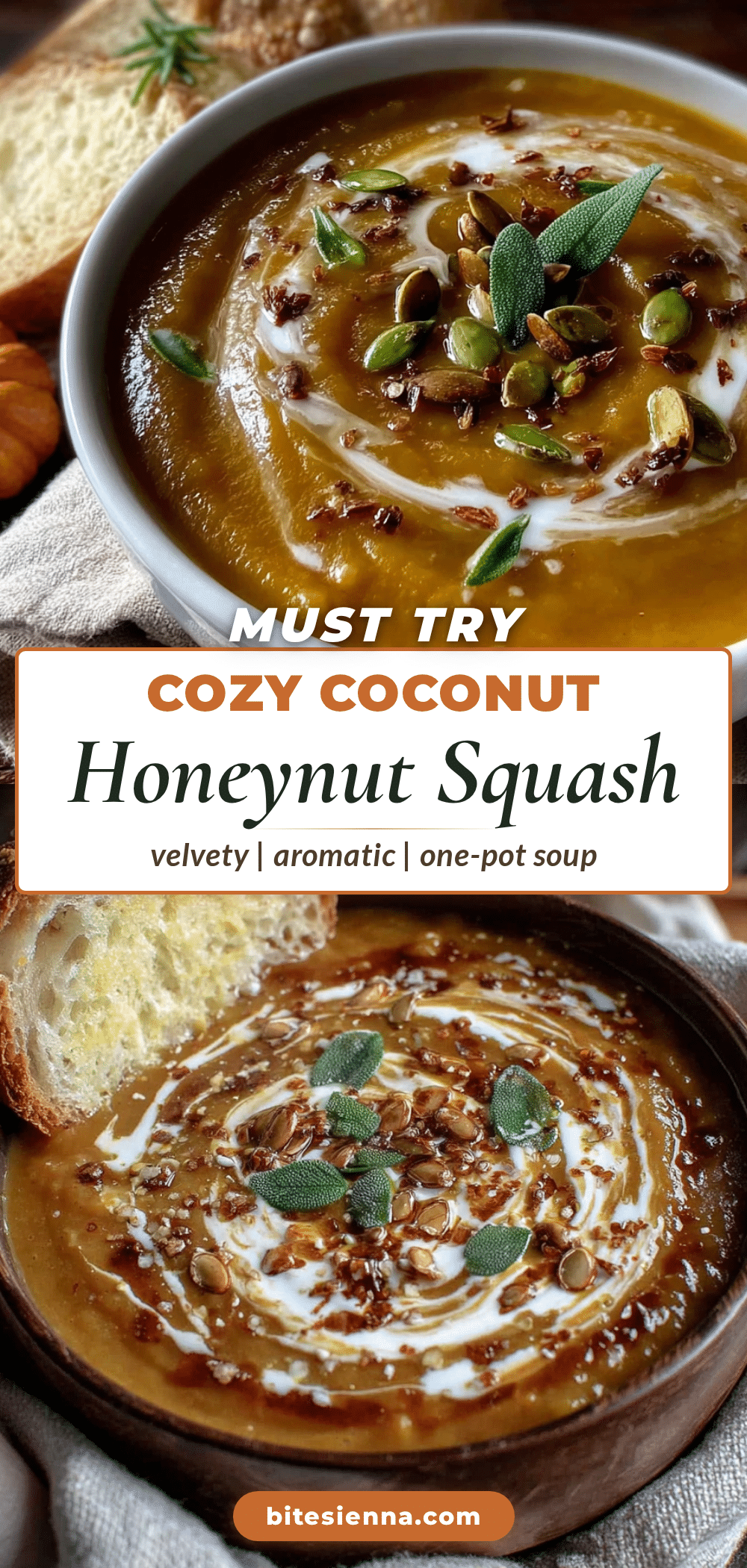
Cozy Coconut Honeynut Squash Soup – Easy Fall Recipe

This creamy coconut honeynut squash soup is the ultimate fall comfort food. Roasted squash, coconut milk, and warm spices create a velvety, nourishing bowl that even squash skeptics will love.
- Prep Time: 15 minutes
- Cook Time: 30 minutes
- Total Time: 45 minutes
- Yield: 6 servings 1x
- Category: Soup
- Cuisine: American
Ingredients
- 2 medium honeynut squash (about 2 pounds total)
- 2 tablespoons coconut oil, melted
- 1 tablespoon maple syrup, plus more for drizzling
- 1 large yellow onion, diced
- 4 garlic cloves, minced
- 1 tablespoon fresh ginger, grated
- 3 cups low-sodium vegetable broth
- 1 can (13.5 ounces) full-fat coconut milk
- 1 teaspoon ground cumin
- ½ teaspoon ground coriander
- ⅛ teaspoon cayenne pepper (or to taste)
- Salt and black pepper to taste
- Optional toppings: toasted pumpkin seeds, extra coconut cream, fresh thyme, chili oil
Instructions
- Preheat your oven to 400°F (200°C). Line a baking sheet with parchment paper.
- Cut each honeynut squash in half lengthwise. Scoop out the seeds and stringy bits. Place the squash halves cut-side up on the baking sheet.
- Brush the cut sides with 1 tablespoon of melted coconut oil. Drizzle with the maple syrup and sprinkle with a pinch of salt. Flip the squash halves cut-side down. Roast for 25-30 minutes, until fork-tender and edges are browning.
- While the squash roasts, heat the remaining 1 tablespoon of coconut oil in a large pot over medium heat. Add the diced onion and cook for 5-7 minutes until translucent and starting to brown.
- Add the minced garlic and grated ginger. Cook for 1 minute until fragrant.
- Add the cumin, coriander, and cayenne. Stir constantly for about 30 seconds until fragrant.
- Pour in the vegetable broth and bring to a simmer. Let it bubble gently while the squash finishes roasting.
- When the squash is done, let it cool slightly. Scoop the flesh out of the skins and add it to the pot with the broth mixture. Stir to combine.
- Let the soup simmer for 10 minutes to meld flavors. Taste and adjust seasoning.
- Remove the pot from heat. Use an immersion blender to puree the soup until completely smooth. (If using a regular blender, work in batches and hold the lid down with a towel.)
- Pour in the full-fat coconut milk and stir until fully incorporated. Taste and adjust salt, pepper, and cayenne as needed.
- Ladle the soup into bowls. Garnish with extra coconut milk, toasted pumpkin seeds, and fresh thyme if desired.
Notes
Don’t skip roasting the squash—it caramelizes the sugars and adds depth. For easier cutting, microwave the whole squash for 2 minutes to soften the skin. Add coconut milk after removing from heat to prevent curdling. This soup tastes even better the next day. Freezes well for up to 3 months.
Nutrition
- Serving Size: 1 bowl (about 1.5 cu
- Calories: 245
- Sugar: 10
- Sodium: 480
- Fat: 16
- Saturated Fat: 12
- Carbohydrates: 24
- Fiber: 4
- Protein: 4
Keywords: coconut honeynut squash soup, fall soup, vegan soup, gluten-free soup, creamy squash soup, easy fall recipe