My neighbor Mark wasn’t trying to impress anyone. I’d stopped by to borrow a ladder—a very mundane Tuesday errand—and the smell hit me before I even knocked. It was deep, warm, and almost impossibly rich, like the kitchen had been simmering a secret for hours. He just shrugged when I asked what it was. “Oh, just a stew I threw together,” he said, wiping his hands on an already-stained apron. He was completely nonchalant about something that had stopped me cold in my tracks. That casualness, that “it’s nothing” attitude, is the whole reason I begged him for the recipe. Honestly, I stood in his doorway for another twenty minutes just breathing it in. You know that feeling when a smell just wraps around you and makes everything feel okay? That was this stew. It’s become my go-to for those slow, cold evenings when all I want is a bowl of something that feels like a hug.
This isn’t a fancy, chef-driven dish. It’s the kind of meal that makes itself while you curl up on the couch. The beef gets fall-apart tender, the red wine creates a sauce that’s almost silky, and the root vegetables soak up all that savory goodness until they’re sweet and soft. The first time I made it, I burned my tongue because I couldn’t wait for it to cool. I mean, that’s the kind of effect this has. Let me tell you, it’s the perfect recipe for a rough day or a snowy Sunday—or honestly, any day you need a little comfort. I keep coming back to it because it’s forgiving, it fills the house with the best aroma, and it tastes even better the next day. Maybe you’ve been there, standing in your own kitchen, wondering what to make that will feel like a warm blanket. This is it.
Why You’ll Love This Recipe
I’ve tested this stew more times than I can count, tweaking the wine, the vegetables, and the cooking time until it was just right. It’s family-approved (my picky nephew asked for seconds, which never happens), and it’s become my secret weapon for impressing guests without any stress. Here’s why it stands out:
- Quick & Easy: The prep takes about 20 minutes, and then your oven does the heavy lifting. It’s perfect for busy weeknights or lazy weekends.
- Simple Ingredients: No fancy grocery trips needed. You likely have most of these pantry staples already—beef, wine, carrots, potatoes, and a few herbs.
- Perfect for Cozy Evenings: This is the ultimate cold-weather comfort food. It’s great for Sunday dinners, holiday gatherings, or a quiet night in.
- Crowd-Pleaser: It gets rave reviews from kids and adults alike. The rich, savory flavor is universally loved.
- Unbelievably Delicious: The texture of the tender beef and the silky sauce is next-level comfort food. It’s the kind of meal that makes you close your eyes after the first bite.
What makes this recipe different from the rest? It’s the technique of searing the beef in batches and deglazing the pan with the red wine. This creates a deeply flavorful base that you just can’t get from shortcuts. It’s comfort food reimagined—richer, heartier, but with the same soul-soothing satisfaction. Perfect for impressing guests without stress, or turning a simple meal into something memorable.
What Ingredients You Will Need
This recipe uses simple, wholesome ingredients to deliver bold flavor and satisfying texture without the fuss. Most are pantry staples, and you can easily swap things based on what you have on hand.
- 2 pounds beef chuck, cut into 1.5-inch cubes (I prefer chuck for its marbling; it gets incredibly tender. Look for pieces with some fat for best flavor.)
- 1 tablespoon olive oil (for searing; avocado oil works too)
- 1 large onion, diced (yellow or sweet onion is best)
- 3 cloves garlic, minced (fresh is key here; don’t use the jarred stuff)
- 2 tablespoons tomato paste (adds depth and richness; I recommend the double-concentrated tube for convenience)
- 1 cup dry red wine (a good drinking wine, like a Cabernet Sauvignon or Merlot. Don’t use cooking wine—it’s too salty.)
- 4 cups beef broth (low-sodium is best so you can control the salt; I like Kitchen Basics or homemade)
- 2 tablespoons Worcestershire sauce (adds umami; Lea & Perrins is my go-to)
- 1 teaspoon dried thyme (or 2 teaspoons fresh thyme leaves)
- 2 bay leaves (remove before serving)
- 3 large carrots, peeled and cut into 1-inch chunks (adds sweetness as they cook)
- 3 parsnips, peeled and cut into 1-inch chunks (their slightly peppery flavor is perfect here; if you can’t find them, use extra carrots)
- 1.5 pounds Yukon Gold potatoes, cut into 1-inch chunks (they hold their shape well; Russets will get too mushy)
- 1 cup frozen peas (added at the end for a pop of color and sweetness)
- Salt and black pepper, to taste
- 2 tablespoons all-purpose flour (for a thicker stew; optional, but I like the texture)
- Fresh parsley, chopped (for garnish)
Substitution Guidance: Use a gluten-free flour blend or cornstarch slurry instead of all-purpose flour for a gluten-free version. Swap the beef broth with mushroom broth for a deeper umami flavor. If you don’t have red wine, you can use an extra cup of beef broth mixed with 2 tablespoons of balsamic vinegar.
Equipment Needed
You don’t need a lot of fancy equipment for this stew, which is part of its charm. Here’s what you’ll need:
- Large Dutch oven or heavy-bottomed pot (I use a 6-quart Le Creuset, but any heavy pot with a lid works. A cheap enameled cast iron from a discount store will work just as well.)
- Sharp chef’s knife (for cutting the beef and vegetables; a good knife makes prep so much faster)
- Cutting board (wood or plastic)
- Wooden spoon or spatula (for stirring and scraping up the browned bits)
- Measuring cups and spoons
- Tongs (for flipping the beef while searing)
If you don’t have a Dutch oven, you can use a large soup pot and transfer everything to a baking dish to braise in the oven. I’ve done it that way before, and it works fine—just make sure the dish has a tight-fitting lid. My first Dutch oven was a hand-me-down from my grandmother, and it had a chip in the lid. It still made the best stews. Don’t stress about having the perfect tools.
Preparation Method
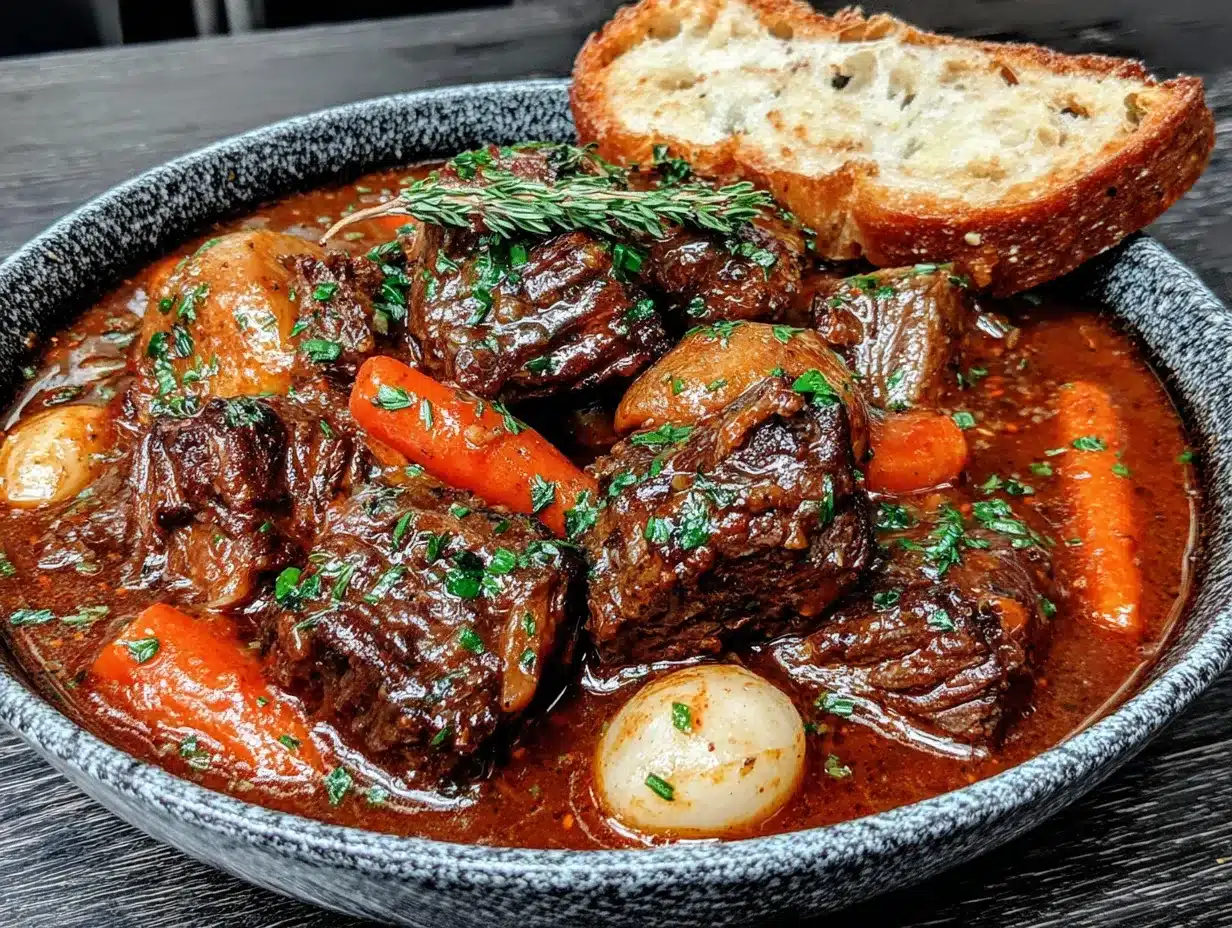
This stew takes about 2.5 to 3 hours total, but most of that is hands-off oven time. Here’s how to make it:
- Preheat your oven to 325°F (160°C). This low-and-slow temperature is key for tender beef. While the oven heats, pat the beef cubes dry with paper towels. This is a non-negotiable step—dry beef sears better. Season them generously with salt and pepper.
- Heat the olive oil in your Dutch oven over medium-high heat. Once the oil is shimmering (but not smoking), add the beef in a single layer. Work in batches if needed; overcrowding the pot will steam the meat instead of searing it. I usually do two batches. Sear for 3-4 minutes per side, until a deep brown crust forms. Use your tongs to flip them. Don’t rush this step—it’s where all the flavor starts.
- Remove the seared beef to a plate and set aside. The bottom of the pot should have some browned bits (that’s flavor gold). Reduce the heat to medium and add the diced onion. Cook for 5-7 minutes, stirring occasionally, until the onion is soft and translucent. Scrape up those browned bits with your wooden spoon as the onion releases its moisture. If the onion starts to stick, add a splash of the beef broth.
- Add the minced garlic and tomato paste. Stir constantly for about 1 minute, until the tomato paste darkens to a rust color and smells fragrant. This cooks out the raw flavor. Your kitchen will smell incredible at this point—I mean, honestly, it’s hard not to just stand there and breathe it in.
- Pour in the red wine. Use your wooden spoon to scrape up every last bit of the fond (those browned bits) from the bottom of the pot. Let the wine bubble and reduce for about 2-3 minutes. It will smell a bit sharp at first, but that alcohol will cook off and leave behind a deep, fruity richness.
- Return the beef to the pot. Add the beef broth, Worcestershire sauce, dried thyme, and bay leaves. Stir everything together. Bring the liquid to a gentle simmer (you should see small bubbles breaking the surface, not a rolling boil).
- Cover the Dutch oven with its lid and transfer it to the preheated oven. Let it braise for 1.5 hours. This is where the magic happens. The beef will start to become tender, and the broth will deepen in flavor. If you’re home, you’ll notice the smell changing from boozy and savory to something almost sweet and caramelized.
- After 1.5 hours, carefully remove the pot from the oven. Add the carrots, parsnips, and potatoes. Stir them into the broth. If the stew looks a bit thin, this is the time to sprinkle in the 2 tablespoons of all-purpose flour and stir well. It will thicken as it continues to cook. Return the pot to the oven, covered, for another 45 minutes to 1 hour. The vegetables should be fork-tender, and the beef should shred easily with a fork.
- Remove the pot from the oven and discard the bay leaves. Stir in the frozen peas. They don’t need to cook, just warm through—about 2 minutes. Taste the stew and adjust the salt and pepper. I always find it needs a good pinch of salt at this stage, as the potatoes absorb a lot. Let the stew rest for 10-15 minutes before serving. This allows the flavors to meld and the sauce to thicken slightly.
- Ladle into bowls and garnish with fresh parsley. Serve with crusty bread for dipping. That first spoonful—warm, rich, and full of tender beef and sweet carrots—is pure comfort. I always burn my tongue a little because I can’t wait.
Troubleshooting Tip: If your stew is too thin after cooking, remove the lid and simmer it on the stovetop for 10-15 minutes. If it’s too thick, add a splash of beef broth or water until it reaches your desired consistency. The flour I add at the vegetable stage usually does the trick, but every batch is a little different.
Cooking Tips & Techniques
Over the years, I’ve made this stew at least twenty times, and I’ve learned a few things the hard way. Here are my best tips:
- Sear in batches, not all at once. I learned this after my first attempt, where the beef turned gray and tough instead of brown and flavorful. Crowding the pot lowers the temperature and steams the meat. Give each piece some space.
- Don’t skip the wine reduction. Letting the wine bubble for a few minutes after deglazing the pan concentrates its flavor and cooks off the harsh alcohol. If you skip this, the stew can taste a little boozy and sharp.
- Use a good-quality red wine. I once used a cheap bottle that had been sitting in my pantry for months. The stew turned out sour and thin. You don’t need an expensive bottle, but if you wouldn’t drink it, don’t cook with it. A $10 Cabernet Sauvignon works perfectly.
- Let it rest before serving. This is a tip I picked up from a chef friend. Letting the stew sit for 10-15 minutes after it comes out of the oven allows the sauce to settle and the flavors to come together. It’s a small step that makes a big difference.
- Make it a day ahead. Honestly, this stew is even better the next day. The flavors meld overnight, and the texture gets even more luscious. I often make it on a Saturday and serve it on Sunday for an easy, stress-free meal.
One of my biggest failures? I once forgot to add the Worcestershire sauce. The stew was fine, but it lacked that deep, savory umami note. It was a good reminder that every ingredient plays a role. Now, I set out all my ingredients before I start cooking—a little mise en place goes a long way.
Variations & Adaptations
This stew is incredibly adaptable. Here are a few ways to make it your own:
- Herb Swap: Replace the dried thyme with fresh rosemary or a sprig of fresh sage. Rosemary adds a lovely piney note that pairs beautifully with the red wine.
- Vegetable Variations: Swap the parsnips for celery root or turnips. Add a cup of mushrooms (cremini or shiitake) with the onions for an extra earthy flavor. In the summer, I’ve added zucchini and bell peppers, but they get very soft, so add them in the last 20 minutes.
- Dietary Adaptations: For a gluten-free version, skip the flour or use a 1:1 gluten-free flour blend. For a lower-carb option, replace the potatoes with cauliflower florets and add them in the last 30 minutes of cooking.
- Slow Cooker Method: After searing the beef and cooking the onions, transfer everything to a slow cooker. Cook on low for 7-8 hours or on high for 4-5 hours. Add the vegetables in the last 2 hours of cooking so they don’t turn to mush.
- Spicy Twist: Add a pinch of red pepper flakes with the garlic for a subtle heat. It’s not traditional, but I tried it one cold night when I wanted a little kick, and it was surprisingly good.
My personal favorite variation is swapping half the potatoes for sweet potatoes. They add a touch of sweetness that balances the savory wine and beef. I did this on a whim one fall, and now it’s my go-to version.
Serving & Storage Suggestions
This stew is best served warm, straight from the pot, on a cold day. Ladle it into deep bowls and top with a sprinkle of fresh parsley. I like to serve it with a side of crusty bread (a good sourdough or a baguette) for sopping up every last drop of the sauce. A simple green salad with a lemon vinaigrette is a nice contrast to the richness of the stew.
For a cozy dinner party, I’ll serve the stew in a large, rustic bowl at the center of the table with a basket of warm bread. It’s a meal that feels both special and effortless. I’ve also paired it with a glass of the same red wine I used in the cooking—a full-bodied Cabernet Sauvignon is perfect.
Storage: Let the stew cool completely before transferring it to an airtight container. It will keep in the refrigerator for up to 4 days. The flavors actually improve over time, so don’t be surprised if it tastes even better on day two.
Freezing: This stew freezes beautifully. Portion it into freezer-safe bags or containers, leaving a little space for expansion. It will keep for up to 3 months. Thaw overnight in the refrigerator before reheating.
Reheating: Reheat the stew gently on the stovetop over medium-low heat, stirring occasionally. If it seems too thick, add a splash of beef broth or water. You can also reheat individual portions in the microwave, but the stovetop gives a better texture. I find the stew is at its best within the first two days, but it’s still delicious after that.
Nutritional Information & Benefits
This stew is a hearty, nutrient-dense meal. Here’s an approximate breakdown per serving (based on 6 servings):
- Calories: ~450
- Protein: 35g
- Fat: 15g
- Carbohydrates: 35g
- Fiber: 7g
- Iron: 25% of the Daily Value
- Vitamin A: 120% of the Daily Value (from the carrots)
Health Benefits: The beef provides high-quality protein and iron, which is essential for energy. The carrots and parsnips are packed with vitamin A and fiber, supporting eye health and digestion. The red wine, in moderation, contains antioxidants like resveratrol. The potatoes offer potassium and vitamin C. This meal is naturally gluten-free (if you skip the flour) and can easily be made dairy-free. It’s a balanced, satisfying dish that fuels your body and warms your soul.
Dietary Considerations: This recipe contains gluten (if using flour) and alcohol (from the wine, though most cooks off). It is dairy-free and nut-free. For a lower-sodium version, use low-sodium beef broth and skip the added salt until the end.
From my perspective, this stew is a perfect example of how comfort food can be both nourishing and indulgent. It’s a meal that makes you feel good from the inside out.
Conclusion
This Cozy Red Wine Beef Stew with Root Vegetables is more than just a recipe—it’s an experience. It’s the smell that greets you when you walk in the door, the warmth that spreads through you with every bite, and the feeling of having made something truly special with simple ingredients. I love it because it’s forgiving, adaptable, and always delivers. Whether you’re cooking for a crowd or just for yourself on a quiet evening, this stew is worth every minute of simmering time.
Don’t be afraid to make it your own. Swap in your favorite vegetables, adjust the herbs, or add a little extra wine if you’re feeling bold. The best recipes are the ones that evolve with you. I’d love to hear how it turns out for you—drop a comment below and let me know your favorite variation. And if you share it on social media, tag me so I can see your cozy creation! Happy cooking, and stay warm out there.
Frequently Asked Questions
Can I make this stew in a slow cooker?
Absolutely. After searing the beef and cooking the onions on the stovetop, transfer everything to a slow cooker. Cook on low for 7-8 hours or on high for 4-5 hours. Add the root vegetables in the last 2 hours so they don’t get too soft.
What’s the best cut of beef for stew?
Beef chuck is my top choice. It has enough marbling to become tender and flavorful during the long braise. You can also use brisket or round, but chuck is the most reliable for fall-apart results.
Can I skip the red wine?
Yes, you can. Replace the red wine with an extra cup of beef broth and add 2 tablespoons of balsamic vinegar or red wine vinegar for acidity. The flavor will be slightly different but still delicious.
How do I thicken the stew if it’s too thin?
If the stew is too thin after cooking, remove the lid and simmer it on the stovetop for 10-15 minutes to reduce the liquid. You can also mix 1 tablespoon of cornstarch with 2 tablespoons of cold water and stir it in, then simmer for a few minutes until thickened.
Can I freeze leftover stew?
Yes, this stew freezes beautifully. Let it cool completely, then portion it into freezer-safe containers or bags. It will keep for up to 3 months. Thaw overnight in the fridge and reheat gently on the stovetop or in the microwave.
Pin This Recipe!
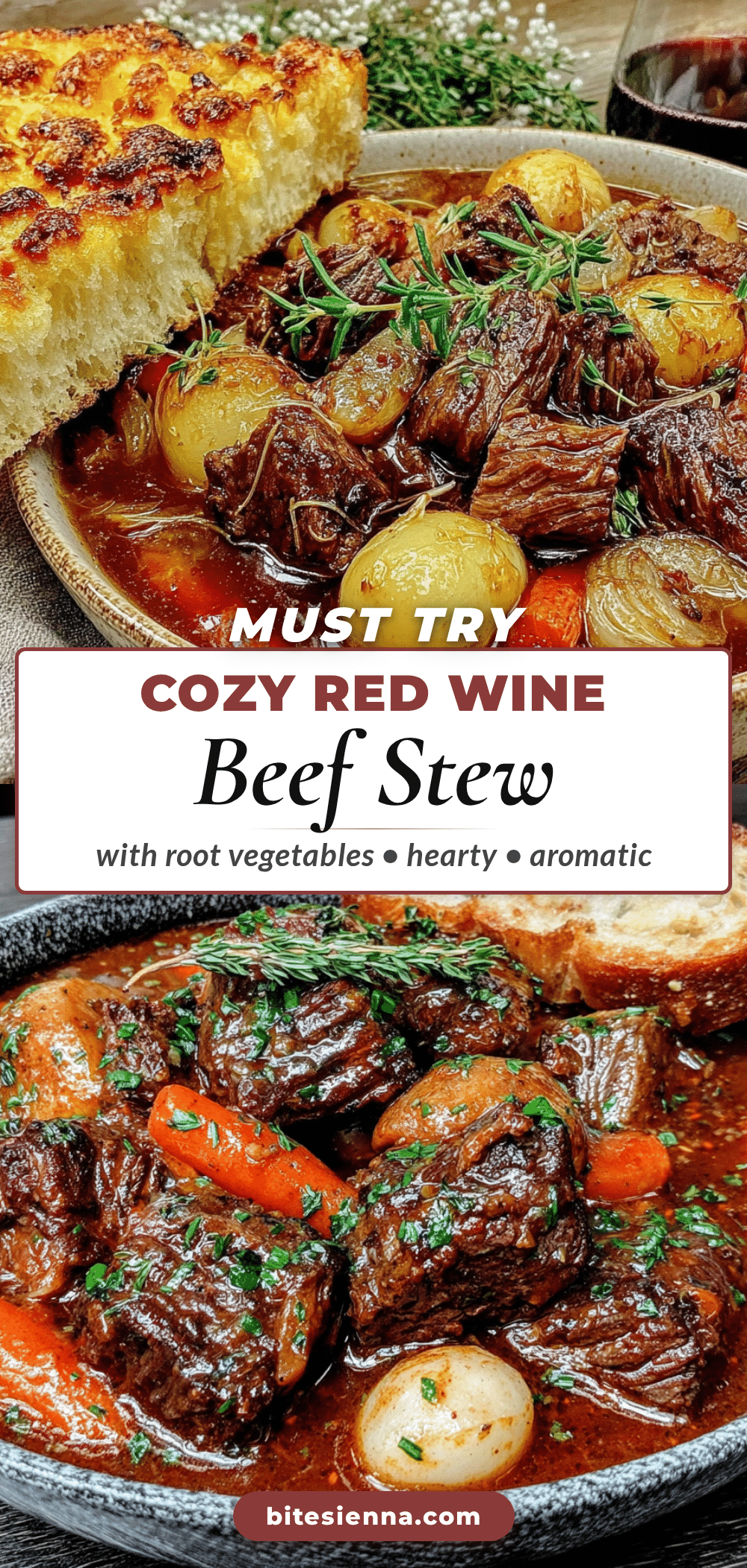
Cozy Red Wine Beef Stew with Root Vegetables
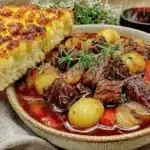
This isn’t a fancy, chef-driven dish. It’s the kind of meal that makes itself while you curl up on the couch. The beef gets fall-apart tender, the red wine creates a sauce that’s almost silky, and the root vegetables soak up all that savory goodness until they’re sweet and soft.
- Prep Time: 20 minutes
- Cook Time: 2 hours 30 minutes
- Total Time: 2 hours 50 minutes
- Yield: 6 servings 1x
- Category: Main Course
- Cuisine: American
Ingredients
- 2 pounds beef chuck, cut into 1.5-inch cubes
- 1 tablespoon olive oil
- 1 large onion, diced
- 3 cloves garlic, minced
- 2 tablespoons tomato paste
- 1 cup dry red wine (e.g., Cabernet Sauvignon or Merlot)
- 4 cups low-sodium beef broth
- 2 tablespoons Worcestershire sauce
- 1 teaspoon dried thyme (or 2 teaspoons fresh thyme leaves)
- 2 bay leaves
- 3 large carrots, peeled and cut into 1-inch chunks
- 3 parsnips, peeled and cut into 1-inch chunks
- 1.5 pounds Yukon Gold potatoes, cut into 1-inch chunks
- 1 cup frozen peas
- Salt and black pepper, to taste
- 2 tablespoons all-purpose flour (optional, for thickening)
- Fresh parsley, chopped (for garnish)
Instructions
- Preheat your oven to 325°F (160°C). Pat the beef cubes dry with paper towels and season generously with salt and pepper.
- Heat the olive oil in a large Dutch oven over medium-high heat. Once shimmering, add the beef in a single layer (work in batches if needed). Sear for 3-4 minutes per side until a deep brown crust forms. Remove the seared beef to a plate and set aside.
- Reduce the heat to medium and add the diced onion. Cook for 5-7 minutes, stirring occasionally, until soft and translucent. Scrape up any browned bits from the bottom of the pot.
- Add the minced garlic and tomato paste. Stir constantly for about 1 minute until the tomato paste darkens and becomes fragrant.
- Pour in the red wine and scrape up all the browned bits from the bottom of the pot. Let the wine bubble and reduce for 2-3 minutes.
- Return the beef to the pot. Add the beef broth, Worcestershire sauce, dried thyme, and bay leaves. Stir to combine and bring to a gentle simmer.
- Cover the Dutch oven with its lid and transfer to the preheated oven. Braise for 1.5 hours.
- Carefully remove the pot from the oven. Add the carrots, parsnips, and potatoes. Stir in the flour if using for thickening. Return to the oven, covered, for another 45 minutes to 1 hour, until vegetables are fork-tender and beef shreds easily.
- Remove from the oven and discard the bay leaves. Stir in the frozen peas and let warm through for about 2 minutes. Season with salt and pepper to taste. Let rest for 10-15 minutes before serving.
- Ladle into bowls and garnish with fresh parsley. Serve with crusty bread.
Notes
For a gluten-free version, skip the flour or use a 1:1 gluten-free flour blend. For a lower-carb option, replace potatoes with cauliflower florets added in the last 30 minutes. The stew tastes even better the next day. If the stew is too thin after cooking, simmer uncovered on the stovetop for 10-15 minutes. If too thick, add a splash of beef broth.
Nutrition
- Serving Size: 1 bowl (about 1.5 cu
- Calories: 450
- Sugar: 8
- Sodium: 600
- Fat: 15
- Saturated Fat: 5
- Carbohydrates: 35
- Fiber: 7
- Protein: 35
Keywords: beef stew, red wine stew, root vegetables, comfort food, winter recipe, braised beef, easy stew