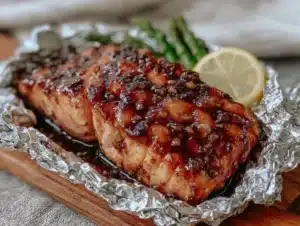
My brother-in-law Mark claimed he hated salmon for fifteen years. Fifteen years. He’d make a face at holiday dinners, push the platter away, mutter something about “that fishy taste” and reach for the ham instead. Then last spring, I made these honey garlic salmon foil packets for a backyard dinner, mostly because they’re fast and I didn’t want to deal with a grill. I set a packet in front of him without saying what it was. He ate the whole thing. Then he asked for seconds. Then he asked me for the recipe. I didn’t even have to say “I told you so” — the look on his face said it all.
The thing is, I get the skepticism. Salmon can be tricky. It’s expensive enough that messing it up feels like a real loss, and there’s nothing worse than dry, overcooked fish that tastes more like the pan than the ocean. But this method? It’s almost foolproof. The foil traps all the steam and the sweet-savory glaze, so the fish stays tender and flaky every single time. Honestly, the hardest part is waiting the twenty minutes it takes to cook.
Maybe you’ve been there — staring at the salmon fillets in the grocery store, wanting to make something healthy and impressive but also needing dinner on the table before everyone gets hangry. I’ve definitely grabbed those fillets more times than I can count on a Tuesday night, wondering if I’d regret it. This recipe became my go-to for exactly those nights. It’s the kind of meal that makes you look like you tried really hard when really, you just threw some ingredients in foil and let the oven do the work. And honestly? That’s my favorite kind of cooking.
Why You’ll Love This Recipe
Let me tell you why this honey garlic salmon has basically become a weekly staple in my kitchen. It checks all the boxes for a busy weeknight, and then some.
- Quick & Easy: From start to finish, we’re talking 20 minutes. That’s less time than it takes to order takeout and have it delivered. The active prep time is maybe five minutes — chop some garlic, whisk the sauce, and portion the veggies.
- Simple Ingredients: You probably have everything in your pantry right now. Honey, soy sauce, garlic, maybe some sriracha if you like heat. No trips to a specialty store required.
- Perfect for Busy Weeknights: This is the definition of a weeknight hero. Minimal cleanup (the foil does the work), fast cooking, and it feels like a real meal, not a sad microwave dinner.
- Crowd-Pleaser: If it converted my salmon-hating brother-in-law, it’ll win over your picky eaters too. The sweet glaze balances the rich fish perfectly.
- Unbelievably Delicious: The salmon comes out so tender it practically melts, and the sauce reduces into this sticky, glossy coating that’s absolutely addictive. I’ve caught myself licking the foil. No shame.
What makes this recipe different from all the other salmon recipes out there? It’s the foil packet method. Instead of baking the fish directly on a sheet pan where it can dry out, the foil traps steam and creates a little self-basting environment. The honey garlic sauce stays concentrated around the fish instead of spreading out and burning. Every bite is perfectly glazed, perfectly cooked, and perfectly seasoned. I’ve tested this method at least a dozen times — different oven temperatures, different fish thicknesses, different add-ins — and it works consistently every single time.
This isn’t just good salmon. It’s the kind of dinner that makes you close your eyes after the first bite and forget you were tired at all.
What Ingredients You Will Need
This recipe uses simple, wholesome ingredients to deliver bold flavor and satisfying texture without the fuss. Most of these are pantry staples, which makes this perfect for those nights when you didn’t plan ahead.
For the Salmon
- 4 salmon fillets (6 oz / 170g each) — Look for fillets that are roughly the same thickness so they cook evenly. I prefer center-cut fillets from wild-caught salmon when I can find them, but farm-raised works beautifully too and tends to be more forgiving.
- Salt and black pepper — To season the fish. Don’t skip this — it makes a difference.
- 1 tablespoon olive oil — Helps the seasoning stick and adds a little richness.
For the Honey Garlic Sauce
- 1/4 cup (85g) honey — Use a good-quality honey for the best flavor. If your honey is crystallized, warm it gently before using.
- 3 tablespoons low-sodium soy sauce — Regular soy sauce works too, but the sauce will be saltier. Tamari or coconut aminos are great gluten-free swaps.
- 4 cloves garlic, minced — Fresh garlic is non-negotiable here. The pre-minced stuff in a jar just doesn’t have the same punch.
- 1 tablespoon rice vinegar — Adds a subtle tang that balances the sweetness. Apple cider vinegar works in a pinch.
- 1 teaspoon sesame oil — For that nutty, toasty flavor. Optional but highly recommended.
- 1/2 teaspoon red pepper flakes (optional) — For a little heat. I add this about half the time, depending on my mood.
For the Vegetables (Optional but Recommended)
- 2 cups broccoli florets — They steam perfectly in the packet alongside the salmon. Green beans, snap peas, or asparagus work great too.
- 1 medium carrot, julienned or thinly sliced — Adds color and a little sweetness.
- 1/2 red bell pepper, thinly sliced — For crunch and color.
For Garnish
- Sesame seeds — Toasted white or black seeds add a nice visual touch.
- Chopped green onions — Fresh and bright, they cut through the richness.
- Fresh cilantro or parsley — Optional, but I love the freshness.
I recommend using San-J Tamari if you’re going gluten-free — it has a cleaner flavor than some other brands I’ve tried. And for the honey, local honey is always my first choice, but any pure honey will do. Just avoid the stuff that’s labeled “honey flavored syrup” — it’s not the same and won’t give you that thick, glossy glaze.
Equipment Needed
One of the best things about this recipe is how little equipment you need. Here’s what you’ll need:
- Aluminum foil — Heavy-duty foil works best. You’ll need four large sheets, about 12×18 inches each. If you only have regular foil, double up the sheets to prevent tearing.
- Baking sheet — To hold the foil packets. Any rimmed baking sheet will work. I use a standard half-sheet pan.
- Small bowl — For whisking the sauce together.
- Chef’s knife and cutting board — For mincing garlic and prepping vegetables.
- Measuring spoons and cups — For accuracy, especially with the honey (it’s sticky stuff).
- Tongs — Optional, but helpful for handling the hot packets after cooking.
If you don’t have a baking sheet, you can place the foil packets directly on the oven rack — just make sure they’re sealed tightly so the juices don’t leak. And if you’re out of foil? You can use parchment paper folded into packets, but foil holds the heat better and creates a tighter seal. I learned that the hard way when my parchment packet burst open and salmon juice dripped all over the oven floor. Not my finest moment.
Preparation Method
Alright, let’s get cooking. This comes together fast, so I recommend having everything prepped before you start. Trust me on this — once the oven is hot, you’ll move quickly.
- Preheat your oven to 400°F (200°C). While it’s heating, position a rack in the middle. This temperature is the sweet spot — hot enough to cook the salmon quickly but gentle enough that the fish stays moist.
- Make the honey garlic sauce. In a small bowl, whisk together the honey, soy sauce, minced garlic, rice vinegar, sesame oil, and red pepper flakes (if using). Set it aside. The sauce should be smooth and slightly runny. Give it a taste — it should be sweet, salty, and a little tangy. Adjust the honey or soy sauce to your preference.
- Prep the salmon. Pat the fillets dry with paper towels. This step is important — dry fish browns better and the sauce clings to it more effectively. Season both sides with salt and black pepper, then brush lightly with olive oil.
- Prep the vegetables. If you’re using vegetables, wash and chop them now. Keep the pieces relatively small and uniform so they cook at the same rate as the salmon. Broccoli florets should be bite-sized, carrots julienned or thinly sliced, bell peppers cut into thin strips.
- Assemble the foil packets. Tear off four large sheets of heavy-duty foil, each about 12-18 inches. Place a salmon fillet in the center of each sheet. Arrange the vegetables around the fish — not on top of it, but nestled alongside. Drizzle about 2 tablespoons of the honey garlic sauce over each fillet and the vegetables. Reserve a little sauce for serving if you’d like.
- Seal the packets. Fold the foil over the salmon and vegetables, then crimp the edges tightly to create a sealed packet. You want a tight seal so the steam doesn’t escape. Leave a little space inside for the steam to circulate — don’t wrap it too tight around the fish. Place the packets on the baking sheet.
- Bake for 12-15 minutes. The exact time depends on the thickness of your fillets. For fillets that are about 1 inch thick, 12 minutes will give you medium-rare (still slightly translucent in the center). For well-done, go to 15 minutes. I usually aim for 13 minutes — the fish flakes easily with a fork and is still incredibly moist.
- Rest before opening. This is crucial — let the packets rest on the counter for 2-3 minutes before opening. The residual heat continues cooking the fish gently, and the steam inside settles. Opening them immediately releases all that steam and can dry out the fish. I’ve definitely burned my fingers (and my tongue) rushing this step.
- Open carefully. Use tongs or a fork to open one end of the packet first, letting the steam escape away from your face. Then fold back the foil completely. The aroma that hits you is incredible — sweet, garlicky, savory.
- Garnish and serve. Sprinkle with sesame seeds, chopped green onions, and fresh herbs if you’re using them. Drizzle any remaining sauce over the top. Serve immediately, right from the foil packet or transfer to a plate.
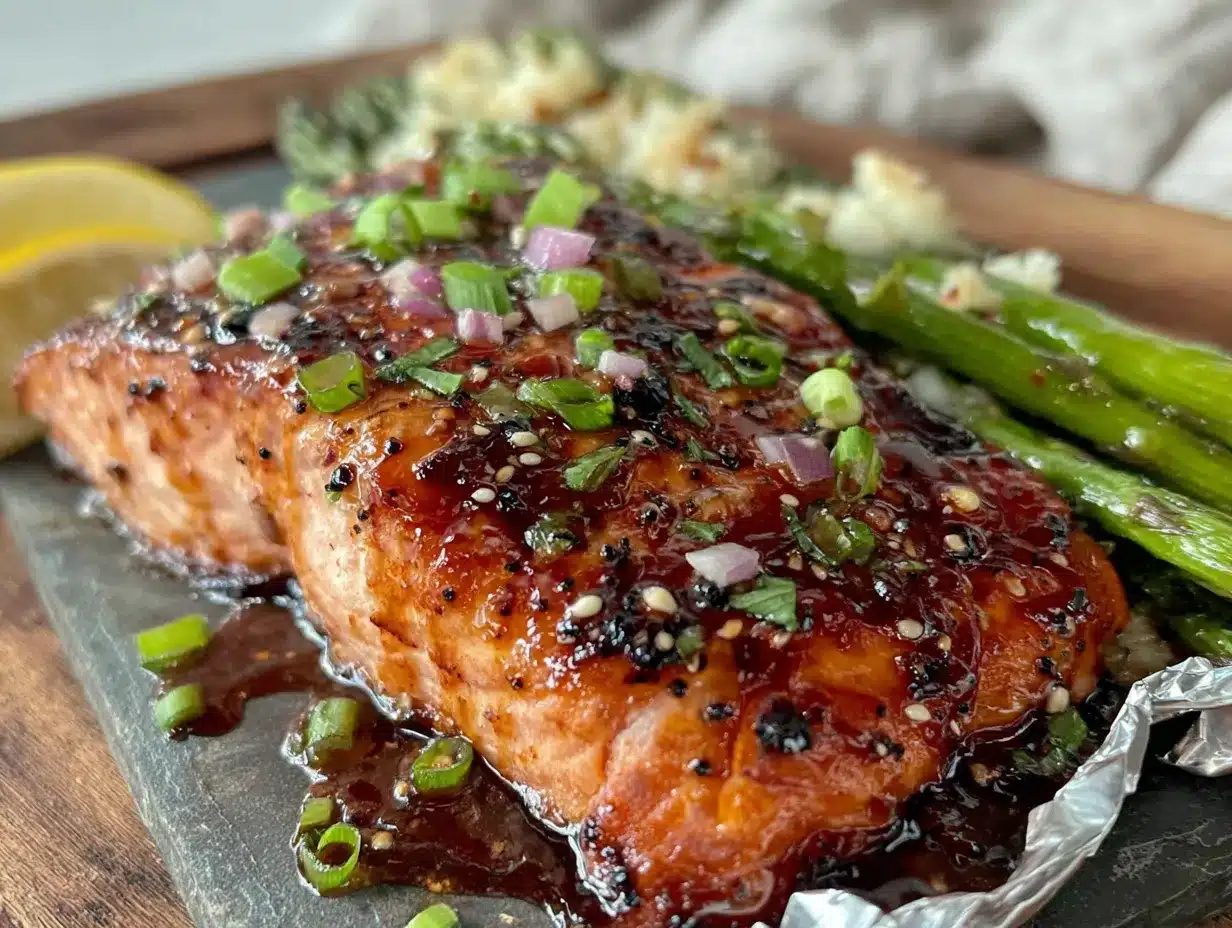
Visual cue: The salmon should be opaque throughout and flake easily when you press it with a fork. The glaze should be thick and sticky, coating the fish like a glossy lacquer. The vegetables should be tender-crisp — bright in color but easy to pierce with a fork.
Cooking Tips & Techniques
After making this recipe more times than I can count, I’ve picked up a few tricks that make a real difference. Here are the ones I wish someone had told me from the start.
Don’t overcrowd the packets. If you put too many vegetables in one packet, they’ll steam unevenly and the salmon won’t cook properly. Keep it to about half a cup of vegetables per fillet. If you want more veggies, make an extra packet.
Use heavy-duty foil. I know I mentioned this already, but it’s worth repeating. Regular foil tears easily when you’re crimping the edges, and a leaky packet means lost sauce and dry fish. Heavy-duty foil holds up better and creates a more reliable seal.
Watch the garlic. Fresh garlic can burn if it’s exposed to direct heat. Since the garlic is suspended in the sauce inside the packet, this isn’t usually an issue. But if you’re broiling the packets at the end for extra caramelization (which I sometimes do), keep a close eye on it — burnt garlic turns bitter fast.
Make extra sauce. I always double the sauce recipe and reserve half for serving. The sauce that cooks with the salmon gets diluted by the juices released from the fish and vegetables. Having extra sauce to drizzle on at the end takes this from good to restaurant-quality. Just don’t use the reserved sauce for basting if it touched raw fish.
My biggest failure: The first time I made this, I used frozen salmon that I hadn’t fully thawed. The outside cooked fine, but the center was still cold and raw-looking after 15 minutes. I ended up opening the packet and broiling it for another 5 minutes, which dried out the edges. Learn from my mistake — always thaw salmon completely in the refrigerator overnight before cooking. If you’re in a rush, use the cold water method (sealed bag, submerged in cold water for 30 minutes).
Timing strategy: While the salmon bakes, cook your rice or quinoa. The 20-minute total time means you can have everything ready at once. I start my rice first, then assemble the packets while it cooks, then pop everything in the oven. Dinner is ready in the time it takes to watch one episode of a show.
Variations & Adaptations
This recipe is endlessly adaptable, which is one of the reasons I keep coming back to it. Here are some of my favorite variations.
Spicy Honey Garlic Salmon: Add 1-2 teaspoons of sriracha or gochujang to the sauce for a spicy kick. The heat balances the sweetness beautifully. I make this version when I’m cooking just for myself — my husband prefers the milder original.
Low-Carb / Keto Version: Swap the honey for a sugar-free honey substitute or use monk fruit sweetener with a few drops of liquid stevia. The texture will be slightly different, but the flavor is still fantastic. Serve with cauliflower rice or zucchini noodles instead of regular rice.
Lemon Herb Variation: Replace the soy sauce and sesame oil with 3 tablespoons of melted butter, the juice of one lemon, and a teaspoon of dried dill or thyme. This version is lighter and brighter — perfect for spring or summer.
Teriyaki Twist: Use store-bought or homemade teriyaki sauce instead of the honey garlic mixture. Add a splash of mirin for extra depth. This is my go-to when I’m craving something savory-sweet but don’t want to measure out individual ingredients.
Sheet Pan Method: If you don’t have foil or prefer not to use it, you can make this on a parchment-lined sheet pan. Arrange the salmon and vegetables in a single layer, pour the sauce over everything, and bake at 400°F for 12-15 minutes. You’ll lose some of the steam-basting effect, so the fish might be slightly less moist, but it’s still delicious.
Air Fryer Adaptation: Place the sealed foil packets in the air fryer basket and cook at 375°F for 10-12 minutes. The circulating air cooks the fish evenly and the foil keeps it moist. I’ve tested this twice and it works beautifully — just make sure the packets fit without touching the heating element.
I once tried adding pineapple chunks to the packet for a sweet-tart twist. It was interesting — the pineapple released a lot of juice and made the sauce thinner, so the glaze wasn’t as sticky. If you try this, reduce the honey slightly and be prepared for a looser sauce. It’s not bad, just different.
Serving & Storage Suggestions
This honey garlic salmon is incredibly versatile when it comes to serving. Here’s how I like to do it.
Serving temperature: Serve the salmon hot, straight from the oven. The glaze is at its best when it’s warm and glossy. If you let it sit too long, the sauce thickens and becomes more like a sticky coating — still tasty, but not as elegant.
What to serve with it: Steamed jasmine rice or coconut rice is my first choice — it soaks up all that extra sauce. Quinoa or couscous works well too. For a low-carb option, try cauliflower rice or a simple green salad with a light vinaigrette. The salmon is rich enough that you don’t need a heavy side dish.
Presentation tip: Slide the salmon and vegetables out of the foil packet onto a plate, then spoon any accumulated juices over the top. Sprinkle with sesame seeds and green onions for a finished look. If you’re feeling fancy, add a wedge of lemon on the side.
Storage: Leftover salmon keeps in an airtight container in the refrigerator for up to 3 days. The texture won’t be quite as perfect as fresh — the fish firms up a bit — but the flavor is still wonderful. I often make extra on purpose so I can have it cold on a salad the next day.
Reheating: The best way to reheat is in a low oven (300°F) for about 5-7 minutes, loosely covered with foil. The microwave works in a pinch but can make the fish rubbery. If you’re in a hurry, flake the cold salmon into a pan with a splash of water and warm it gently over medium heat — it comes back to life surprisingly well.
Freezing: You can freeze the cooked salmon in an airtight container for up to 2 months. Thaw overnight in the refrigerator and reheat gently. The texture will be softer after freezing, so I recommend using it in salads or rice bowls rather than serving it as a standalone fillet.
One thing I’ve noticed — the flavors actually deepen after a day in the fridge. The garlic mellows out and the honey-soy combination becomes more complex. Cold salmon on a bed of greens with a squeeze of lemon is one of my favorite lunches after a busy weeknight dinner.
Nutritional Information & Benefits
This honey garlic salmon isn’t just delicious — it’s packed with nutrients that make you feel good about eating it.
| Nutrient | Per Serving (1 fillet with sauce, no sides) |
|---|---|
| Calories | ~380 kcal |
| Protein | 35g |
| Fat | 18g |
| Carbohydrates | 20g |
| Fiber | 1g |
| Sugar | 17g |
| Sodium | 680mg |
Salmon is one of the best sources of omega-3 fatty acids, which support heart health and brain function. It’s also rich in high-quality protein, B vitamins, and selenium. The honey provides quick energy, and the garlic adds antimicrobial properties. If you’re watching your sodium, use low-sodium soy sauce or reduce the amount slightly.
This recipe is naturally gluten-free if you use tamari or coconut aminos instead of regular soy sauce. It’s also dairy-free and nut-free, making it a safe option for many common food allergies. The only potential allergen is fish itself, so obviously skip this if you have a seafood allergy.
I personally love that this meal feels indulgent — that sticky, sweet glaze makes it feel like a treat — but it’s actually one of the healthier dinners in my rotation. It’s proof that eating well doesn’t have to mean eating boring food.
Conclusion
This quick honey garlic salmon in foil packets has become my weeknight secret weapon. It’s fast enough for a Tuesday when you’re exhausted, impressive enough for a Friday when you want to feel fancy, and forgiving enough that you don’t need to be a professional chef to pull it off. The foil does most of the work, the sauce does the rest, and you get to sit down to a dinner that tastes like you spent way more effort than you actually did.
I love this recipe because it proves that simple ingredients, treated well, can create something genuinely special. You don’t need a long ingredient list or complicated techniques. You just need good salmon, a handful of pantry staples, and twenty minutes. That’s it.
I’d love to hear how yours turns out. Did you try a variation? Serve it with something unexpected? Convert a salmon skeptic in your own life? Drop a comment below and let me know — I read every single one, and your tweaks might inspire someone else’s dinner tonight. And if you loved it, share this recipe with a friend who needs a quick dinner win. Happy cooking!
Frequently Asked Questions
Can I use frozen salmon directly in the foil packets?
I don’t recommend it. Frozen salmon releases a lot of water as it thaws, which will make the sauce watery and the fish unevenly cooked. Thaw it completely in the refrigerator first, or use the cold water method if you’re short on time. Trust me — it’s worth the extra step.
How do I know when the salmon is done?
The easiest test is the fork test. Insert a fork into the thickest part of the fillet and twist gently. If the fish flakes easily and is opaque all the way through, it’s done. For the most accurate results, use an instant-read thermometer — 145°F (63°C) is the safe internal temperature for salmon.
Can I make these foil packets on the grill?
Absolutely. Place the sealed packets on a preheated grill over medium-high heat (about 400°F) and cook for 12-15 minutes, flipping once halfway through. The smoky flavor from the grill adds another layer of deliciousness. Just make sure your foil is heavy-duty so it doesn’t tear on the grates.
What if I don’t have rice vinegar?
No problem. Apple cider vinegar or fresh lemon juice are both excellent substitutes. They provide the same acidity that balances the sweetness of the honey. White wine vinegar works too, but use a little less — it’s sharper than rice vinegar.
Can I prep the foil packets ahead of time?
Yes, and it’s a great time-saver. Assemble the packets up to 8 hours in advance and store them in the refrigerator. When you’re ready to cook, just pop them in the oven straight from the fridge — you might need to add 2-3 minutes to the cooking time. I do this all the time when I know I’ll have a busy evening.
Pin This Recipe!
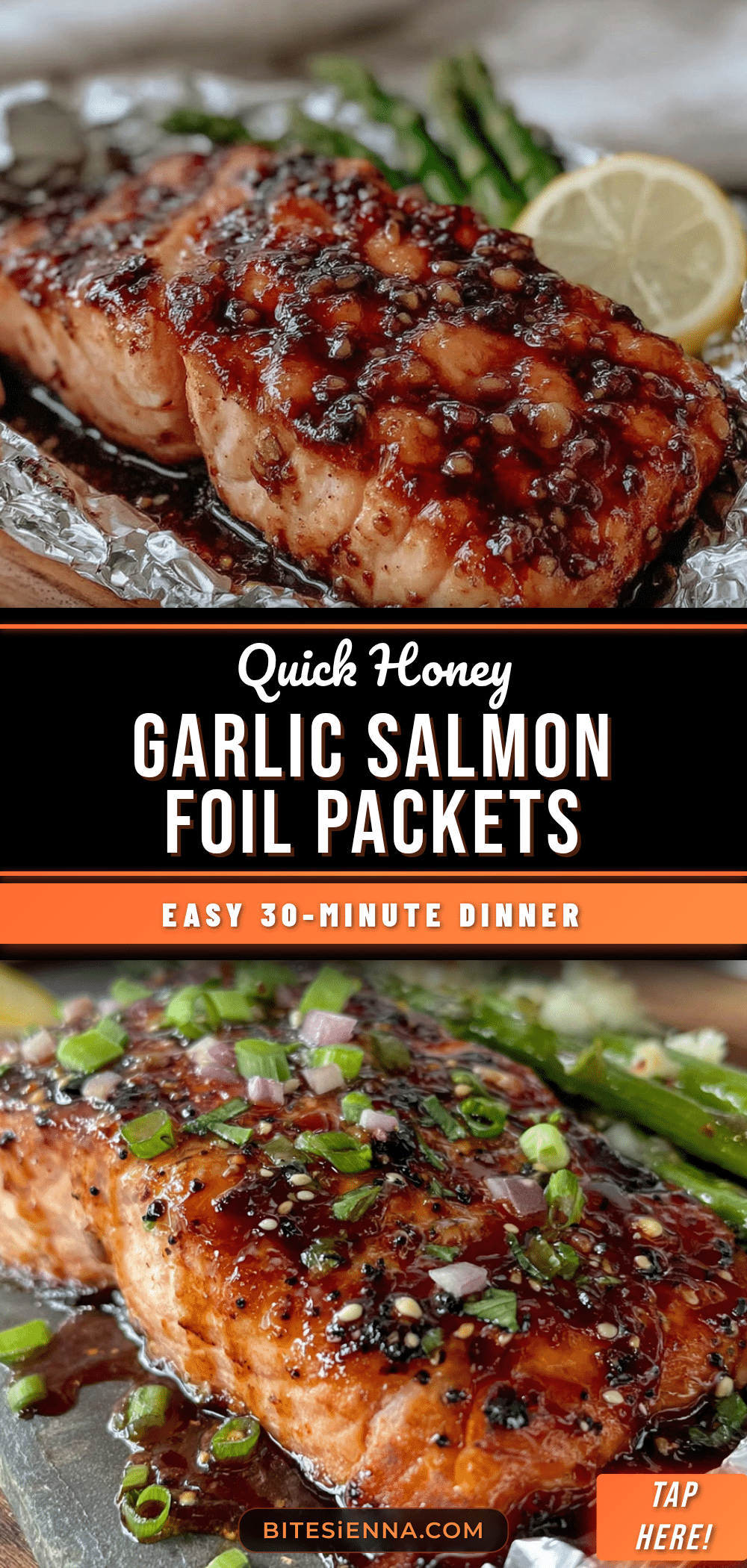
Quick Honey Garlic Salmon in Foil: 20-Minute Dinner
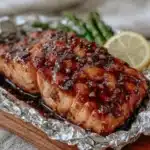
This honey garlic salmon in foil packets is a quick, foolproof weeknight dinner that converts even the biggest salmon skeptics. The foil traps steam and the sweet-savory glaze, resulting in tender, flaky fish every time.
- Prep Time: 5 minutes
- Cook Time: 15 minutes
- Total Time: 20 minutes
- Yield: 4 servings 1x
- Category: Main Course
- Cuisine: Asian-inspired
Ingredients
- 4 salmon fillets (6 oz / 170g each)
- Salt and black pepper to taste
- 1 tablespoon olive oil
- 1/4 cup (85g) honey
- 3 tablespoons low-sodium soy sauce
- 4 cloves garlic, minced
- 1 tablespoon rice vinegar
- 1 teaspoon sesame oil
- 1/2 teaspoon red pepper flakes (optional)
- 2 cups broccoli florets
- 1 medium carrot, julienned or thinly sliced
- 1/2 red bell pepper, thinly sliced
- Sesame seeds for garnish
- Chopped green onions for garnish
- Fresh cilantro or parsley for garnish (optional)
Instructions
- Preheat your oven to 400°F (200°C). Position a rack in the middle.
- In a small bowl, whisk together honey, soy sauce, minced garlic, rice vinegar, sesame oil, and red pepper flakes (if using). Set aside.
- Pat salmon fillets dry with paper towels. Season both sides with salt and black pepper, then brush lightly with olive oil.
- Wash and chop vegetables into small, uniform pieces.
- Tear off four large sheets of heavy-duty foil, each about 12×18 inches. Place a salmon fillet in the center of each sheet. Arrange vegetables around the fish. Drizzle about 2 tablespoons of the honey garlic sauce over each fillet and vegetables. Reserve some sauce for serving if desired.
- Fold foil over salmon and vegetables, crimp edges tightly to create a sealed packet, leaving a little space inside for steam circulation. Place packets on a baking sheet.
- Bake for 12-15 minutes, depending on thickness. For 1-inch thick fillets, 12 minutes gives medium-rare, 15 minutes for well-done.
- Let packets rest for 2-3 minutes before opening. Open carefully, letting steam escape away from your face.
- Garnish with sesame seeds, chopped green onions, and fresh herbs. Drizzle any remaining sauce over the top. Serve immediately.
Notes
Use heavy-duty foil to prevent tearing. Don’t overcrowd packets; keep vegetables to about half a cup per fillet. Make extra sauce for serving. Thaw salmon completely before cooking. For best results, let packets rest before opening.
Nutrition
- Serving Size: 1 fillet with sauce
- Calories: 380
- Sugar: 17
- Sodium: 680
- Fat: 18
- Saturated Fat: 3
- Carbohydrates: 20
- Fiber: 1
- Protein: 35
Keywords: honey garlic salmon, foil packet salmon, quick salmon dinner, weeknight salmon, healthy salmon recipe