This was supposed to be a simple Sunday night stew. I had the beef chuck all cubed up, the carrots peeled, the whole plan mapped out in my head for a low-and-slow braise that would fill the apartment with that deep, savory smell all afternoon. But somewhere between chopping the onions and realizing I’d forgotten to buy the red wine, the whole thing fell apart. I stood there staring into the fridge, honestly feeling a little defeated, when my hand landed on a bottle of apple cider left over from a fall party. And tucked behind the leftover takeout containers? A pack of bratwurst I’d bought on a whim. I almost laughed. It was nothing like the plan—and honestly, I was already bracing for a weird, sweet-sausage disaster.
I figured I had nothing to lose. I seared those brats in a hot skillet, threw in some sliced apples and onions, and poured in that cider. The moment the liquid hit the hot pan and that incredible smell of pork and apple and warm spice rose up, I knew something interesting was happening. It wasn’t the stew I’d planned, not even close. But after letting it simmer down for about twenty minutes, I took a bite, and let me tell you—I actually stopped chewing for a second. The savory juice from the bratwurst mixed with that slightly tangy, sweet cider reduction, and the apples had softened into these little pockets of tender flavor. It was cozy, it was ridiculously easy, and it was way better than my original idea ever would have been.
Maybe you’ve been there—staring at a half-baked plan and a fridge full of mismatched ingredients, wondering if you should just order pizza. I get it. But this skillet meal taught me that sometimes the best recipes come from the moments you stop trying so hard. It’s become my go-to for those nights when I want something that feels special but takes almost no effort. Honestly, I think I actually prefer it to that stew now.
Why You’ll Love This Recipe
Let’s face it—most weeknight dinners fall into one of two camps: boring but fast, or delicious but exhausting. This Cozy Apple Cider Braised Bratwurst Skillet breaks that rule completely. It’s the kind of meal that tastes like you spent hours fussing over it, but the whole thing comes together in a single skillet in about 30 minutes. That’s the kind of magic I can get behind on a busy Tuesday.
- Quick & Easy: From start to finish, this meal is on the table in about 30 minutes. No marinating, no complicated steps—just sear, simmer, and serve.
- Simple Ingredients: You probably already have the onions, apples, and cider in your kitchen. The bratwurst is the one thing you might need to grab, but it’s available in most grocery stores.
- Perfect for Cozy Nights: This is the ultimate dinner for crisp fall evenings, rainy spring days, or any time you want a warm, comforting meal without the heaviness of a traditional stew.
- Crowd-Pleaser: Even picky eaters love this one. The sweetness of the cider and apples balances the savory bratwurst perfectly, making it kid-friendly and adult-approved.
- Unbelievably Delicious: The texture here is what gets me every time. The bratwurst gets a nice sear on the outside, then stays juicy inside. The apples soften into a tender, almost saucy consistency, and the onions melt into the cider reduction. It’s pure comfort in a bowl.
What makes this recipe different from other bratwurst dishes is the technique. Instead of grilling or boiling the brats, you braise them in apple cider. This keeps them incredibly moist while infusing them with a subtle, sweet-tart flavor that cuts through the richness of the sausage. The cider reduces into a light, silky sauce that coats everything without being heavy. It’s comfort food reimagined—healthier, faster, and with the same soul-soothing satisfaction you crave after a long day.
What Ingredients You Will Need
This recipe uses simple, wholesome ingredients that come together to create a surprisingly complex flavor. The beauty of it is that most of these are pantry or fridge staples, especially during the fall and winter months.
- Bratwurst (4 links, about 1 pound) – Use your favorite brand. I personally prefer Johnsonville or a good quality brat from a local butcher. The key is to get raw bratwurst, not pre-cooked, as they will absorb more flavor during the braising process.
- Apple Cider (1 ½ cups) – Not apple juice. Cider has a richer, more complex flavor and a slight tang that makes the dish. Look for unfiltered cider if you can find it—it has more body and a deeper apple taste.
- Onion (1 large, thinly sliced) – Yellow or sweet onion works best here. They melt down beautifully in the cider and add a subtle sweetness to the sauce.
- Apple (1 large, such as Honeycrisp or Fuji, cored and sliced into ¼-inch thick wedges) – You want an apple that holds its shape during cooking but softens nicely. Honeycrisp is my go-to for its balance of sweet and tart.
- Chicken Broth (½ cup) – Low-sodium is best so you can control the salt level. This helps deglaze the pan and adds depth to the braising liquid.
- Butter (1 tablespoon, unsalted) – For searing the bratwurst. It adds a rich, nutty flavor that oil alone can’t match.
- Fresh Sage (4-5 leaves, roughly chopped) – This is the secret ingredient. Sage and apple are a classic pairing, and it brings an earthy, slightly peppery note that balances the sweetness of the cider. (adds a subtle, sophisticated flavor)
- Salt and Black Pepper (to taste) – Simple seasonings are all you need. The bratwurst and broth already bring plenty of flavor.
- Optional Garnish – Fresh thyme sprigs or chopped parsley for a pop of color and freshness at the end.
A note on the bratwurst: if you can’t find raw brats, you can use pre-cooked ones, but the texture will be slightly firmer and they won’t absorb the cider flavor as deeply. I also love using chicken or turkey bratwurst for a lighter option—they work beautifully with this same method. For a gluten-free version, just double-check that your bratwurst is gluten-free (most are, but some contain fillers).
Equipment Needed
You don’t need a lot of fancy gear for this one, which is part of the beauty. A single skillet does all the heavy lifting.
- Large Heavy-Bottomed Skillet (12-inch) – A cast-iron or stainless steel skillet is ideal for getting a good sear on the bratwurst. A non-stick skillet will work, but you won’t get quite as much browning. I use my trusty cast-iron pan for this—it holds heat evenly and gives the brats that beautiful golden crust.
- Tongs – For flipping the bratwurst without piercing them. Piercing the casing lets the juices escape, and we want to keep all that flavor inside.
- Sharp Knife and Cutting Board – For slicing the onion and apples. A sharp knife makes a world of difference when you’re trying to get even, thin slices.
- Measuring Cups and Spoons – For the cider and broth. I’m usually a “by eye” kind of cook, but for this recipe, the liquid ratio matters for the perfect reduction.
- Wooden Spoon or Spatula – For stirring and scraping up the browned bits from the bottom of the pan (that’s where so much flavor lives).
If you don’t have a cast-iron skillet, a heavy-bottomed stainless steel pan is a great alternative. Just be careful not to overcrowd the pan—if your skillet is smaller, cook the bratwurst in two batches to get a proper sear. Also, a quick tip: don’t wash your cast-iron with soap after this meal. The cider and apple residue can be a bit acidic, so give it a good rinse with hot water and a stiff brush, then dry it thoroughly on the stove to prevent rust.
Preparation Method
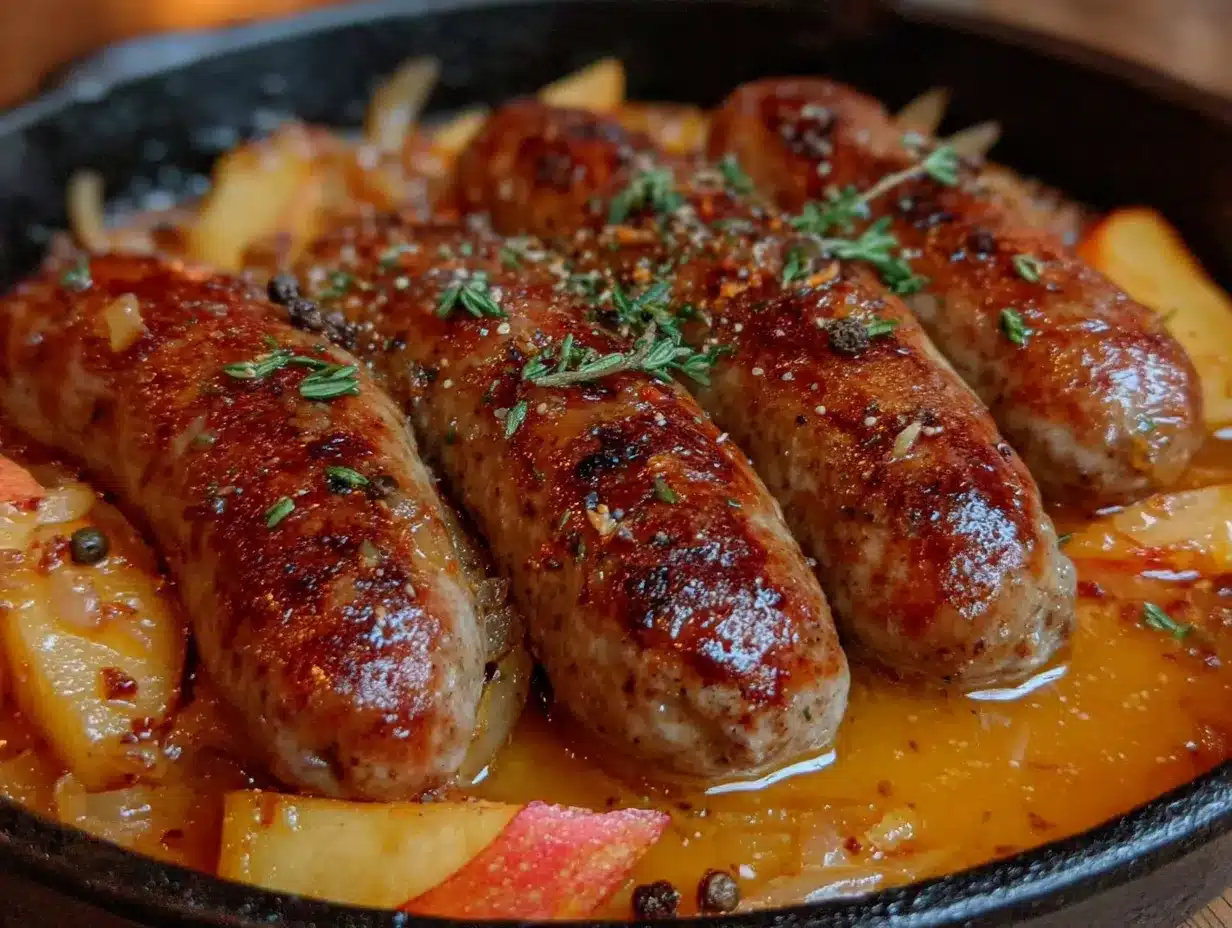
This is the part where the magic happens. It’s straightforward, but I’ve included all the little details that make the difference between a good dinner and a “can I have this again tomorrow?” dinner.
- Prep the Ingredients (5 minutes): Start by slicing your onion into thin half-moons. Core your apple and slice it into wedges about ¼-inch thick—you want them to soften but not fall apart. Roughly chop the fresh sage leaves. Having everything ready before you start cooking makes the process smooth and stress-free.
- Sear the Bratwurst (8-10 minutes): Place your skillet over medium-high heat and add the tablespoon of butter. Once it’s melted and sizzling (but not browning), carefully add the bratwurst links. Let them cook undisturbed for about 4 minutes, until the bottoms are deeply golden brown. Use your tongs to turn them and sear the other sides for another 3-4 minutes. You want a nice, even crust all around. Don’t rush this step—the sear is where the flavor foundation is built. The brats will not be cooked through at this point, and that’s perfectly fine.
- Sauté the Aromatics (3 minutes): Remove the seared bratwurst to a plate and set them aside. There should be some browned bits stuck to the bottom of the pan—that’s gold. Reduce the heat to medium and add the sliced onions. Cook them for about 2 minutes, stirring occasionally, until they start to soften and become translucent. If the pan looks too dry, add a tiny splash of the chicken broth to loosen things up.
- Build the Braising Liquid (1 minute): Add the sliced apples and chopped sage to the pan with the onions. Stir everything together for about 30 seconds, letting the apples get a little warmth. Then pour in the apple cider and chicken broth. Use your wooden spoon to scrape up all those browned bits from the bottom of the skillet—that’s where the deep, savory flavor lives.
- Braise the Bratwurst (15 minutes): Nestle the seared bratwurst back into the skillet, placing them in the liquid so they’re partially submerged. Bring the liquid to a gentle simmer—you should see small bubbles breaking the surface, but not a rolling boil. Reduce the heat to medium-low, cover the skillet with a lid, and let it simmer for 10 minutes. The steam will finish cooking the brats while the cider infuses them with flavor.
- Finish and Reduce (5-7 minutes): After 10 minutes, remove the lid and turn the heat back up to medium-high. Let the liquid simmer uncovered for another 5-7 minutes, until it reduces by about half and becomes slightly syrupy. You’ll notice the apples have softened and the onions have practically melted into the sauce. The bratwurst should be plump and cooked through—an instant-read thermometer inserted into the center should read 160°F (71°C).
- Rest and Serve (2 minutes): Remove the skillet from the heat and let it sit for 2 minutes. This allows the juices in the bratwurst to redistribute, keeping them extra juicy. Taste the sauce and add a pinch of salt and a crack of black pepper if needed. The sauce should be slightly sweet, savory, and beautifully balanced.
At this point, your kitchen will smell like a cozy autumn cabin. Seriously. The combination of seared pork, sweet apples, and fragrant sage is one of the most comforting aromas I know.
Cooking Tips & Techniques
I’ve made this skillet more times than I can count, and I’ve definitely learned a few things the hard way. Here’s what I wish I’d known from the start.
Don’t skip the sear. I know it’s tempting to just dump everything in the pan and let it simmer, but that initial browning is non-negotiable. The Maillard reaction—that browning that happens when meat hits a hot pan—creates hundreds of flavor compounds that make the final dish so much richer. If you skip this step, the sauce will taste flat and one-dimensional. Trust me, I learned this lesson on a particularly rushed Tuesday, and the difference was noticeable.
Watch your heat level during the braise. If you boil the cider too vigorously, it will reduce too quickly and can become overly sweet and thick. You want a gentle simmer—just a few lazy bubbles breaking the surface. This gives the bratwurst time to cook through gently and absorb the liquid without the sauce reducing to a sticky syrup before the meat is done.
Use a thermometer if you’re unsure. Bratwurst can be tricky because they look done on the outside but might still be undercooked in the center. An instant-read thermometer is your best friend here. Aim for 160°F (71°C) for pork bratwurst. If you’re using chicken or turkey brats, they need to reach 165°F (74°C). It’s a small tool that takes all the guesswork out of the equation.
Let the pan do the work. One mistake I made early on was constantly stirring and fussing with the bratwurst while they were braising. Leave them alone. Let the liquid bubble around them, and resist the urge to peek under the lid too often. Every time you lift that lid, you let steam escape, which slows down the cooking process. I promise, they’re fine in there.
Taste the sauce before serving. Different apple ciders have different levels of sweetness and acidity. Some are very sweet, while others have a more tart, tangy profile. Always taste the reduced sauce before you season it. You might need a pinch of salt to balance the sweetness, or even a tiny splash of apple cider vinegar if your cider was very sweet and the sauce feels a bit flat.
Variations & Adaptations
This recipe is wonderfully flexible, and I’ve tried several variations over the years. Here are a few of my favorites.
Dietary Adaptation – Chicken or Turkey Bratwurst: For a lighter version, swap the pork bratwurst for chicken or turkey bratwurst. They cook in the same amount of time, but you’ll want to be careful not to overcook them as they can dry out faster. Check for doneness at the 12-minute mark of the braise. They won’t have quite the same richness as pork, but they’re still incredibly flavorful with the cider and sage.
Seasonal Variation – Fall Harvest Skillet: In the peak of autumn, I love adding a handful of halved Brussels sprouts or cubed butternut squash to the skillet along with the onions and apples. The extra vegetables soak up the cider reduction beautifully and turn the dish into a complete one-pan meal. Just add them in step 3 and sauté for an extra minute before adding the liquid.
Flavor Twist – Spiced Cider Version: If you want to lean into the cozy vibes even more, add a cinnamon stick, two star anise pods, and a few whole cloves to the braising liquid. Let them simmer with the bratwurst, then remove them before serving. The warm spices complement the apple and sage beautifully and make the whole kitchen smell like a holiday market. I tried this one Christmas Eve, and it’s been a holiday tradition ever since.
Low-Carb Adaptation: For a low-carb or keto-friendly version, swap the apple for a firm, low-sugar pear like a Bosc, and use a sugar-free apple cider or simply increase the chicken broth to 1 ½ cups and add a splash of apple cider vinegar for the tang. The bratwurst is naturally low-carb, so this is an easy adjustment.
Different Cooking Method – Oven Braise: If you’d rather use the oven, sear the bratwurst in an oven-safe skillet on the stovetop, then add the remaining ingredients and transfer the skillet to a 350°F (175°C) oven. Braise uncovered for 20-25 minutes, until the brats are cooked through and the liquid has reduced slightly. This method is more hands-off and gives a slightly more even cook.
Serving & Storage Suggestions
This skillet is a meal in itself, but a few thoughtful sides can turn it into a full spread.
Serving Temperature and Presentation: Serve the bratwurst hot, straight from the skillet. Place one or two links on each plate and spoon the softened apples, onions, and that beautiful cider sauce over the top. I like to garnish with a few fresh thyme leaves or a sprinkle of chopped parsley for a pop of green. It’s rustic and beautiful—perfect for a cozy weeknight or a casual dinner with friends.
What to Serve With It: This dish is incredibly versatile. For a hearty meal, serve it over creamy mashed potatoes or soft polenta—they soak up that cider sauce like a dream. For a lighter option, pair it with a simple green salad dressed with a tangy vinaigrette to cut through the richness. Crusty bread is also a must for wiping up every last drop of the sauce from your plate. I’ve also served it alongside roasted Brussels sprouts or a simple side of steamed green beans.
Storage Instructions: Leftovers keep beautifully. Store the bratwurst and the apple-onion mixture in an airtight container in the refrigerator for up to 4 days. The flavors actually meld together overnight, making the leftovers even more delicious the next day.
Reheating Methods: The best way to reheat this is in a skillet over medium-low heat. Add a splash of chicken broth or water to loosen the sauce, cover the pan, and warm gently for about 5-7 minutes, until the bratwurst is heated through. You can also reheat individual portions in the microwave, but the texture of the apples and sauce won’t be quite as nice. I don’t recommend freezing this dish, as the texture of the apples and the bratwurst can become watery and grainy upon thawing.
How Flavors Develop: If you have the time, this is one of those rare weeknight meals that actually tastes better the next day. The bratwurst continues to absorb the cider and sage flavors as it sits, and the sauce thickens slightly. I’ve been known to make a double batch on Sunday just so I can have it for lunch on Monday. It’s that good.
Nutritional Information & Benefits
While this is definitely a comfort food dish, it has some surprising nutritional perks, especially when you consider the wholesome ingredients.
| Nutrient | Amount Per Serving (1 bratwurst with sauce) |
|---|---|
| Calories | 380-420 |
| Protein | 18-22g |
| Fat | 28-32g |
| Carbohydrates | 18-22g |
| Fiber | 2-3g |
| Sugar | 12-15g (naturally occurring from apples and cider) |
| Sodium | 700-900mg (varies by bratwurst brand) |
Health Benefits of Key Ingredients: Apples are a great source of fiber and vitamin C, and they contain antioxidants that support heart health. Apple cider, especially unfiltered varieties, contains polyphenols that may aid digestion and support immune function. Onions are rich in quercetin, a powerful anti-inflammatory compound. And while bratwurst is higher in fat, it also provides a good amount of protein and B vitamins, which are important for energy metabolism.
Dietary Considerations: This recipe is naturally gluten-free (as long as your bratwurst is gluten-free) and can be made dairy-free by using oil instead of butter for searing. It’s not low-carb due to the apples and cider, but it can be adapted as noted in the variations section. The main allergens to be aware of are pork (in the bratwurst) and dairy (in the butter).
Personal Wellness Perspective: I love that this dish feels indulgent but is built on real, whole ingredients. It’s the kind of meal that satisfies a craving for something rich and comforting without relying on processed sauces or excessive amounts of sugar. For me, that’s the sweet spot—eating well without feeling like I’m missing out.
Conclusion
This Cozy Apple Cider Braised Bratwurst Skillet is proof that the best meals don’t need to be complicated. It came from a moment of kitchen chaos, and it’s become one of my most trusted recipes. It’s quick enough for a busy weeknight, but the flavors are deep and satisfying enough to feel like a special occasion. The combination of juicy bratwurst, tender apples, sweet onions, and that silky cider sauce is something I genuinely crave.
I hope you give this one a try, and I hope you make it your own. Maybe you’ll add a pinch of cinnamon, or serve it over a bed of creamy polenta, or swap in chicken brats for a lighter version. That’s the beauty of a simple, well-built recipe—it leaves room for you to play. And if you do make it, I’d love to hear how it turned out. Drop a comment below and let me know if you discovered a new favorite twist, or if this skillet saved your dinner plans the way it saved mine.
Happy cooking, friends. Here’s to happy accidents and the meals that stick.
Frequently Asked Questions
Can I use apple juice instead of apple cider?
You can, but the flavor will be noticeably different. Apple juice is typically sweeter and thinner, with less of that tangy, complex flavor that cider brings. If you only have apple juice, add a tablespoon of apple cider vinegar to the braising liquid to help balance the sweetness and mimic some of that acidity.
Do I have to use fresh sage, or can I use dried?
Fresh sage is really best here—it has a more delicate, aromatic flavor that pairs perfectly with the apples and cider. If you only have dried sage, use about 1 teaspoon and add it when you sauté the onions so it has time to rehydrate and release its flavor. The result won’t be quite the same, but it will still be delicious.
Can I make this recipe in a slow cooker or Instant Pot?
Yes, with a few adjustments. For a slow cooker, sear the bratwurst and sauté the onions in a skillet first, then transfer everything to the slow cooker and cook on low for 4-5 hours. For an Instant Pot, use the sauté function to sear the brats and cook the onions, then add the remaining liquid, seal the lid, and cook on high pressure for 8 minutes with a quick release. In both cases, you may need to simmer the sauce on the stovetop afterward to thicken it up.
What if my bratwurst aren’t fully cooked after the braising time?
This can happen if your bratwurst were particularly thick or if your simmer was too low. Simply return the skillet to the stove, add a splash more broth or cider if the pan is dry, cover it again, and simmer for another 5-7 minutes. Check the internal temperature with a thermometer—you’re looking for 160°F (71°C) for pork brats.
Can I double this recipe for a crowd?
Absolutely. Just make sure you have a large enough skillet—a 14-inch pan or a large Dutch oven works well. You may need to sear the bratwurst in two batches to avoid overcrowding the pan, which would prevent proper browning. The braising time will remain roughly the same, though you might need an extra minute or two for the liquid to come to a simmer and reduce at the end.
Pin This Recipe!

Cozy Apple Cider Braised Bratwurst Skillet – Easy 30-Minute Dinner

A quick and easy one-skillet dinner featuring juicy bratwurst braised in apple cider with tender apples and onions. Ready in just 30 minutes, this cozy meal is perfect for busy weeknights and tastes like it simmered for hours.
- Prep Time: 5 minutes
- Cook Time: 25 minutes
- Total Time: 30 minutes
- Yield: 4 servings 1x
- Category: Main Course
- Cuisine: American
Ingredients
- 4 links bratwurst (about 1 pound)
- 1 ½ cups apple cider
- 1 large onion, thinly sliced
- 1 large apple (such as Honeycrisp or Fuji), cored and sliced into ¼-inch thick wedges
- ½ cup low-sodium chicken broth
- 1 tablespoon unsalted butter
- 4–5 fresh sage leaves, roughly chopped
- Salt and black pepper to taste
- Optional garnish: fresh thyme sprigs or chopped parsley
Instructions
- Prep the ingredients: Slice the onion into thin half-moons. Core the apple and slice into ¼-inch thick wedges. Roughly chop the fresh sage leaves.
- Sear the bratwurst: Place a large heavy-bottomed skillet over medium-high heat and add the butter. Once melted and sizzling, add the bratwurst links. Cook undisturbed for about 4 minutes until deeply golden brown on the bottom. Use tongs to turn and sear the other sides for another 3-4 minutes. Remove bratwurst to a plate and set aside.
- Sauté the aromatics: Reduce heat to medium. Add the sliced onions to the skillet and cook for about 2 minutes, stirring occasionally, until they start to soften and become translucent. If the pan looks dry, add a tiny splash of chicken broth.
- Build the braising liquid: Add the sliced apples and chopped sage to the pan. Stir for about 30 seconds. Pour in the apple cider and chicken broth. Use a wooden spoon to scrape up any browned bits from the bottom of the skillet.
- Braise the bratwurst: Return the seared bratwurst to the skillet, nestling them into the liquid so they are partially submerged. Bring to a gentle simmer (small bubbles breaking the surface). Reduce heat to medium-low, cover, and let simmer for 10 minutes.
- Finish and reduce: Remove the lid and increase heat to medium-high. Let the liquid simmer uncovered for 5-7 minutes until reduced by about half and slightly syrupy. The apples should be softened and the bratwurst cooked through (internal temperature of 160°F / 71°C for pork).
- Rest and serve: Remove from heat and let rest for 2 minutes. Taste the sauce and season with salt and pepper if needed. Serve hot, spooning the apples, onions, and sauce over the bratwurst. Garnish with fresh thyme or parsley if desired.
Notes
For best results, use raw bratwurst (not pre-cooked) to absorb more flavor. Don’t skip the sear—it builds the flavor foundation. Keep the braise at a gentle simmer to avoid over-reducing the sauce. Use an instant-read thermometer to ensure doneness (160°F for pork, 165°F for chicken/turkey). Leftovers keep in the refrigerator for up to 4 days and taste even better the next day.
Nutrition
- Serving Size: 1 bratwurst with sau
- Calories: 400
- Sugar: 13.5
- Sodium: 800
- Fat: 30
- Saturated Fat: 10
- Carbohydrates: 20
- Fiber: 2.5
- Protein: 20
Keywords: bratwurst, apple cider, skillet dinner, 30-minute meal, fall recipe, one-pan dinner, comfort food