My friend Jamie had outright refused pumpkin bread for years. You know, the kind that’s all mushy and overly sweet—she just wasn’t having it. Then one chilly Saturday afternoon, I baked this cozy pumpkin sourdough bread with cinnamon honey butter, mostly just for myself. Later, I caught her sneaking a thick slice, slathered with that butter, right by the window while pretending to read a book. Honestly, that moment cracked her skepticism wide open.
It wasn’t some predictable pumpkin loaf; this was a loaf with personality. The tang of sourdough playing off the subtle pumpkin warmth, with cinnamon and honey in the butter that melted into every crumb—well, it was something else. I mean, I get why Jamie was wary before. Pumpkin bread can be a bit much. But this recipe? It’s like pumpkin bread grew up, put on a cozy sweater, and settled in for a quiet evening. Maybe you’ve been there—thinking pumpkin bread is just for Halloween parties or overly sweet breakfast tables. But trust me, this pumpkin sourdough feels right at home all fall long, and even beyond.
That cracked bowl I used for mixing? Not the prettiest, and I spilled a bit of flour on the counter when the phone rang mid-kneading. But the bread came out golden, with a crust that snapped just right and a crumb that stayed tender without getting gummy. It’s the kind of recipe that stuck with me through multiple weekends, a loaf that feels like a little ritual rather than a chore. So, if you’re curious about pumpkin bread that breaks the mold (and maybe converts a skeptic or two), let me walk you through this cozy pumpkin sourdough bread recipe with easy cinnamon honey butter.
Why You’ll Love This Recipe
After countless trials and tweaks, this cozy pumpkin sourdough bread recipe stands out because it balances flavor, texture, and approachability in a way that’s honestly rare for pumpkin bread. Here’s why it’s earned a permanent spot in my baking repertoire:
- Quick & Easy: Though it involves sourdough starter, the active hands-on time is under 30 minutes, making it doable even on busy weekends.
- Simple Ingredients: No exotic pumpkin extracts or hard-to-find spices here—just pantry staples and real pumpkin puree.
- Perfect for Fall & Beyond: Great for cozy afternoons, brunch spreads, or even a unique holiday breakfast treat.
- Crowd-Pleaser: Jamie’s seal of approval is just one example. Kids, friends, and even pumpkin skeptics have loved this loaf.
- Unbelievably Delicious: The sourdough tang adds depth, while the cinnamon honey butter boosts the cozy factor to the max.
What sets this recipe apart is the harmony between sourdough fermentation and pumpkin’s natural sweetness. The starter gives the bread a complex flavor that’s not too sour but just enough to contrast the warm spices. Plus, blending cottage cheese into the batter (yes, cottage cheese!) adds moisture and a tender crumb that stays fresh for days. The cinnamon honey butter is easy to make but feels indulgent—a little sweetness, a little spice, and that buttery richness that melts perfectly into the warm bread.
This isn’t just pumpkin bread; it’s comfort food with a bit of soul, and it quietly became my go-to when I wanted to impress guests without sweating the details. Honestly, the way it fills the kitchen with that spicy, yeasty aroma? That alone might convince you to keep this recipe close.
What Ingredients You Will Need
This cozy pumpkin sourdough bread recipe uses simple, wholesome ingredients that come together to deliver bold flavor and a satisfying texture without fuss. Most of these are pantry staples, and the pumpkin puree brings that seasonal touch that feels just right for fall.
- For the Bread:
- Active sourdough starter (about 100g / 3.5 oz) – I recommend a bubbly, well-fed starter for best rise
- All-purpose flour (450g / 3 ¾ cups) – King Arthur flour works great here
- Whole wheat flour (50g / ½ cup) – adds a subtle nuttiness
- Pure pumpkin puree (200g / ¾ cup) – canned or fresh, but avoid pumpkin pie filling with spices
- Cottage cheese (120g / ½ cup), full-fat, blended smooth – trust me, it adds moisture and tenderness
- Warm water (200ml / ¾ cup + 2 tbsp) – about 80°F/27°C, to awaken the yeast
- Brown sugar (50g / ¼ cup packed) – balances the tang and spices
- Salt (10g / 1 ¾ tsp) – enhances all the flavors
- Cinnamon (2 tsp) – the warm spice backbone
- Ground nutmeg (½ tsp) – optional but recommended for depth
- For the Cinnamon Honey Butter:
- Unsalted butter (113g / ½ cup), softened – plug in your favorite local or quality brand
- Honey (2 tbsp) – raw or wildflower honey adds floral notes
- Ground cinnamon (1 tsp) – for that cozy spice
- Pinch of salt – balances sweetness
If you want to make this gluten-free, you can swap the all-purpose flour for a blend with xanthan gum, but keep in mind the texture will be different. For a dairy-free butter alternative, coconut oil or vegan margarine works okay, though the cinnamon honey butter is definitely better with real butter. And if fresh pumpkin is in season, peeling and roasting it yourself gives a lovely natural sweetness that canned just can’t beat.
Equipment Needed
- Mixing bowls (preferably glass or stainless steel) – I like having a large one for dough and a smaller one for the butter
- Kitchen scale – measuring by weight is crucial for consistent sourdough results
- Dough scraper or bench knife – helps with folding and handling sticky dough
- Proofing basket (banneton) or a bowl lined with a well-floured tea towel – creates that classic bread shape
- Loaf pan (8.5 x 4.5 inches) or baking sheet lined with parchment – depending on your preferred shape
- Oven with good temperature control – a must for even baking
- Small bowl and spoon for mixing the cinnamon honey butter
If you don’t have a proofing basket, a clean bowl lined with a floured towel does the trick nicely. For those on a budget, using parchment paper to shape the dough directly on a baking sheet works well too. I’ve tried glass, ceramic, and metal loaf pans; metal pans brown the crust a bit more, but I tend to prefer ceramic for an even bake. Also, keeping your scale calibrated and your oven thermometer handy will save you from guesswork.
Preparation Method
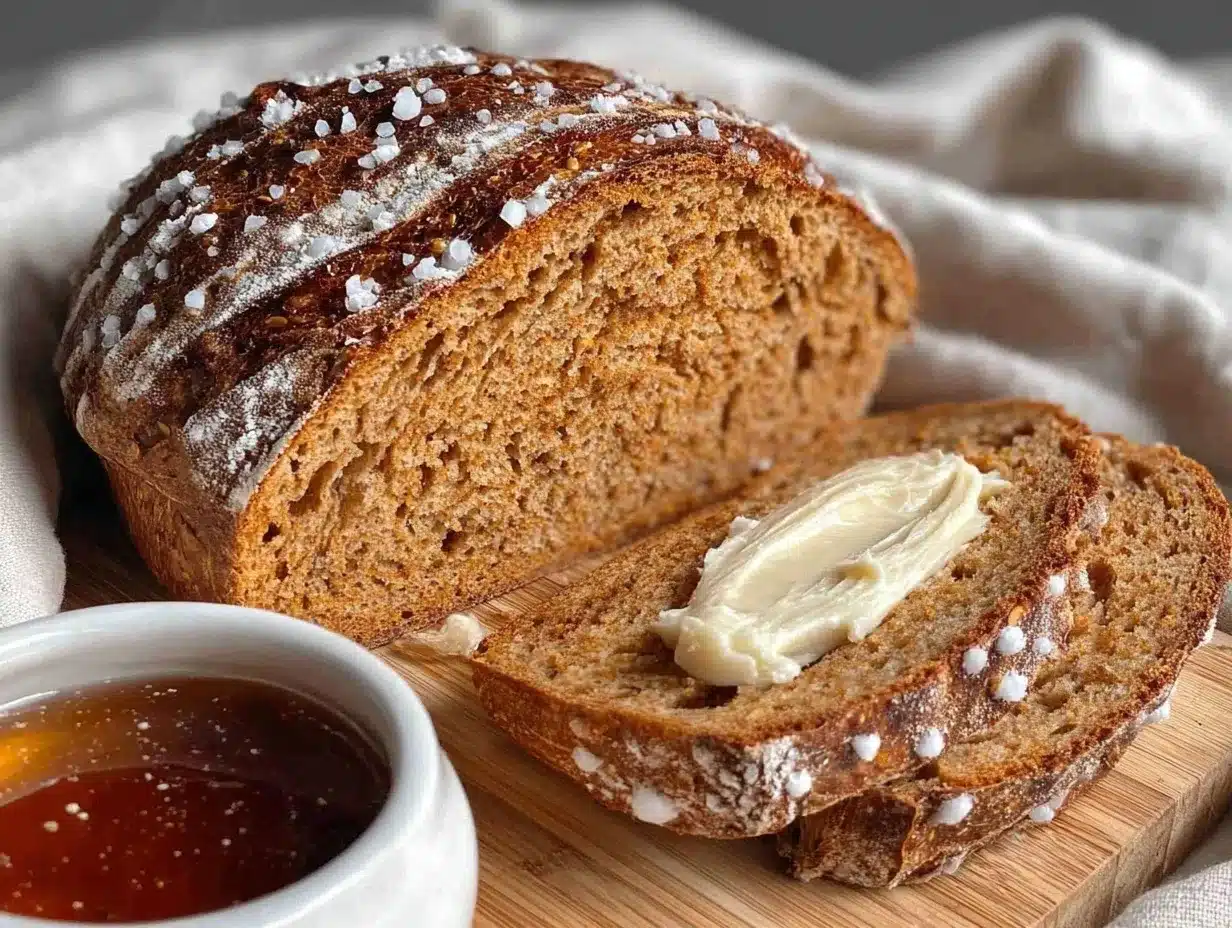
- Feed your sourdough starter: About 4–6 hours before baking, feed your starter to get it bubbly and active. It should roughly double in size and pass the float test.
- Mix the dough: In a large bowl, combine 450g all-purpose flour, 50g whole wheat flour, 2 tsp cinnamon, ½ tsp nutmeg, and 10g salt. In a separate bowl, whisk together 200g pumpkin puree, 120g blended cottage cheese, 50g brown sugar, and 200ml warm water. Add 100g active sourdough starter to the wet mixture, then pour into the dry ingredients. Stir with a wooden spoon until a shaggy dough forms. This should take about 5 minutes.
- Autolyse: Cover the bowl with a damp towel and let it rest for 30 minutes. This hydrates the flour and starts gluten development.
- Knead and fold: After autolyse, perform gentle stretch-and-folds every 30 minutes, 3 times total. To do this, wet your hand, grab one side of the dough, stretch it upward, and fold it over the rest. This builds structure without tough kneading. Total folding time is about 10 minutes.
- Bulk fermentation: Cover and let the dough rise at room temperature (around 70°F / 21°C) for 3–4 hours, or until it’s nearly doubled. You’ll notice bubbles forming and the dough feeling airy.
- Shape the loaf: Turn the dough onto a lightly floured surface. Shape it gently into a tight round or oval, depending on your pan, being careful not to deflate the air pockets. Transfer to your floured proofing basket or lined bowl.
- Final proof: Cover and proof for 2–3 hours at room temperature, or overnight in the fridge for a slower, deeper flavor. If refrigerating, bring to room temp before baking (about 1 hour).
- Preheat the oven: About 45 minutes before baking, preheat your oven to 450°F (230°C). Place a Dutch oven or baking stone inside if you have one; it helps with oven spring.
- Bake the bread: If using a Dutch oven, carefully transfer the dough onto parchment paper and place it inside. Score the top with a sharp blade to allow expansion. Bake covered for 20 minutes, then remove the lid and bake an additional 20-25 minutes until the crust is deep golden brown. If baking on a sheet, bake for 35-45 minutes, rotating halfway.
- Cool completely: Transfer the bread to a wire rack and let it cool for at least 2 hours before slicing. This step is key for the crumb to set properly.
- Make the cinnamon honey butter: While the bread cools, mix 113g softened unsalted butter with 2 tbsp honey, 1 tsp cinnamon, and a pinch of salt until creamy and smooth. Chill slightly if too soft.
Pro tip: Don’t rush the final proof—if the dough is under-proofed, the bread will feel dense. Over-proofing makes it collapse. Keep an eye on the dough’s volume and texture, not just the clock. And, if you forget to score the loaf, it might burst unpredictably in the oven, which is a fun but messy surprise.
Cooking Tips & Techniques
Mastering this cozy pumpkin sourdough bread comes down to a few key techniques. First, getting your sourdough starter active is non-negotiable. If your starter is sluggish, your bread won’t rise properly, which means a dense loaf. I always do a float test before mixing to check vitality.
When mixing, don’t be tempted to over-knead. The stretch-and-fold method is gentler and builds gluten gradually without exhausting the dough. Plus, it’s less messy (win!).
Temperature control is crucial—both for fermentation and baking. If your kitchen is too warm, the dough will ferment too fast and lose flavor complexity. If too cold, it can take forever to rise. I usually keep a small thermometer handy to check room temp and water temp.
Also, don’t skip the cooling step. I know it’s tempting to slice straight out of the oven, but the crumb continues to set as it cools. Cutting too soon leads to gummy texture, which is a bummer.
Last but not least, the cinnamon honey butter is easy to mess up if the butter isn’t softened enough or if the honey is too thick. Let the butter come to room temp naturally, then whip by hand or with a mixer for a smooth spread.
Variations & Adaptations
This pumpkin sourdough bread is flexible enough for several tasty twists. Here are some ideas to make it your own:
- Vegan Version: Replace cottage cheese with mashed silken tofu or a blend of soaked cashews. Use vegan butter or coconut oil for the cinnamon honey butter substitute.
- Spiced Up: Add ground cloves or ginger to the dough for a more complex spice profile. I like adding ¼ tsp cloves for a cozy warmth.
- Nutty Twist: Fold in chopped toasted pecans or walnuts during shaping for crunch and richness.
- Sweet Swirl: Before final shaping, spread a thin layer of brown sugar and cinnamon, then roll up like a cinnamon roll for a swirl effect.
- Gluten-Free Adaptation: Use a high-quality gluten-free flour blend with xanthan gum and increase hydration slightly. This one takes practice but is doable.
Personally, I once made a version with roasted butternut squash instead of pumpkin—same method, slightly different flavor, but equally cozy. It’s fun to experiment with whatever squash is in season.
Serving & Storage Suggestions
This pumpkin sourdough bread is best served slightly warm, spread generously with the cinnamon honey butter. The butter melts into the crumb, creating that cozy, melt-in-your-mouth experience. It pairs wonderfully with a hot cup of chai, coffee, or even a creamy latte for weekend breakfasts.
For a light meal, serve slices alongside a bowl of soup—think butternut squash or tomato bisque. The bread’s subtle sweetness complements savory flavors nicely.
To store, wrap the cooled bread tightly in plastic wrap or place it in an airtight container at room temperature for up to 3 days. For longer storage, slice and freeze in a resealable bag for up to 3 months. Toast slices straight from the freezer for a fresh-baked feel.
Reheating in a toaster oven or regular oven (at 350°F/175°C for 5–7 minutes) refreshes the crust and warms the crumb. The flavors actually deepen a bit after a day or two, which is a nice bonus if you can wait that long.
Nutritional Information & Benefits
One slice (about 60g) of this pumpkin sourdough bread provides roughly:
| Calories | 150 kcal |
|---|---|
| Carbohydrates | 28g |
| Protein | 5g |
| Fat | 2g |
| Fiber | 2g |
Thanks to pumpkin’s beta-carotene and fiber, this bread offers a bit of nutrition beyond the comfort. The cottage cheese adds protein and moisture without heaviness. Plus, using sourdough fermentation improves digestibility and nutrient absorption, which is a win for sensitive stomachs. Gluten-free adaptations can be made for those with sensitivities. Be mindful of the cinnamon honey butter’s sugar content if watching added sugars.
Conclusion
This cozy pumpkin sourdough bread with cinnamon honey butter is one of those recipes that sneaks up on you. It’s not trying too hard, but it delivers on flavor and that satisfying homemade feel. Whether you’re a pumpkin skeptic like Jamie or a pumpkin fanatic, this bread offers something authentic and comforting without the usual overload of sugar or spice.
Feel free to tweak the spices, swap in your favorite nuts, or play with the butter’s sweetness. The best part? It’s forgiving and reliably delicious. I’m always excited when the seasons call for this loaf because it means good company and good eats are just around the corner.
If you give it a try, I’d love to hear how your cozy pumpkin sourdough bread turns out, or what fun twists you come up with. Sharing recipes and stories like this is what makes baking feel like a warm, ongoing conversation.
FAQs
Can I use canned pumpkin pie filling instead of pumpkin puree?
It’s best to use pure pumpkin puree. Pumpkin pie filling contains added sugars and spices that can throw off the flavor and texture of the bread.
How do I know if my sourdough starter is ready?
A ready starter should be bubbly, roughly doubled in size within 4-6 hours after feeding, and pass the “float test” (a spoonful floats in water).
Can I make this bread without a sourdough starter?
You could experiment by using commercial yeast, but the flavor and texture will be quite different. Sourdough adds that unique tang and chewiness.
How long does the cinnamon honey butter keep?
Stored in an airtight container in the fridge, it will keep well for up to 2 weeks. Just bring it to room temperature before spreading.
Is it okay to freeze the baked bread?
Absolutely! Slice it first for convenience, then freeze in a sealed bag. Toast or warm slices directly from the freezer for best results.
Pin This Recipe!
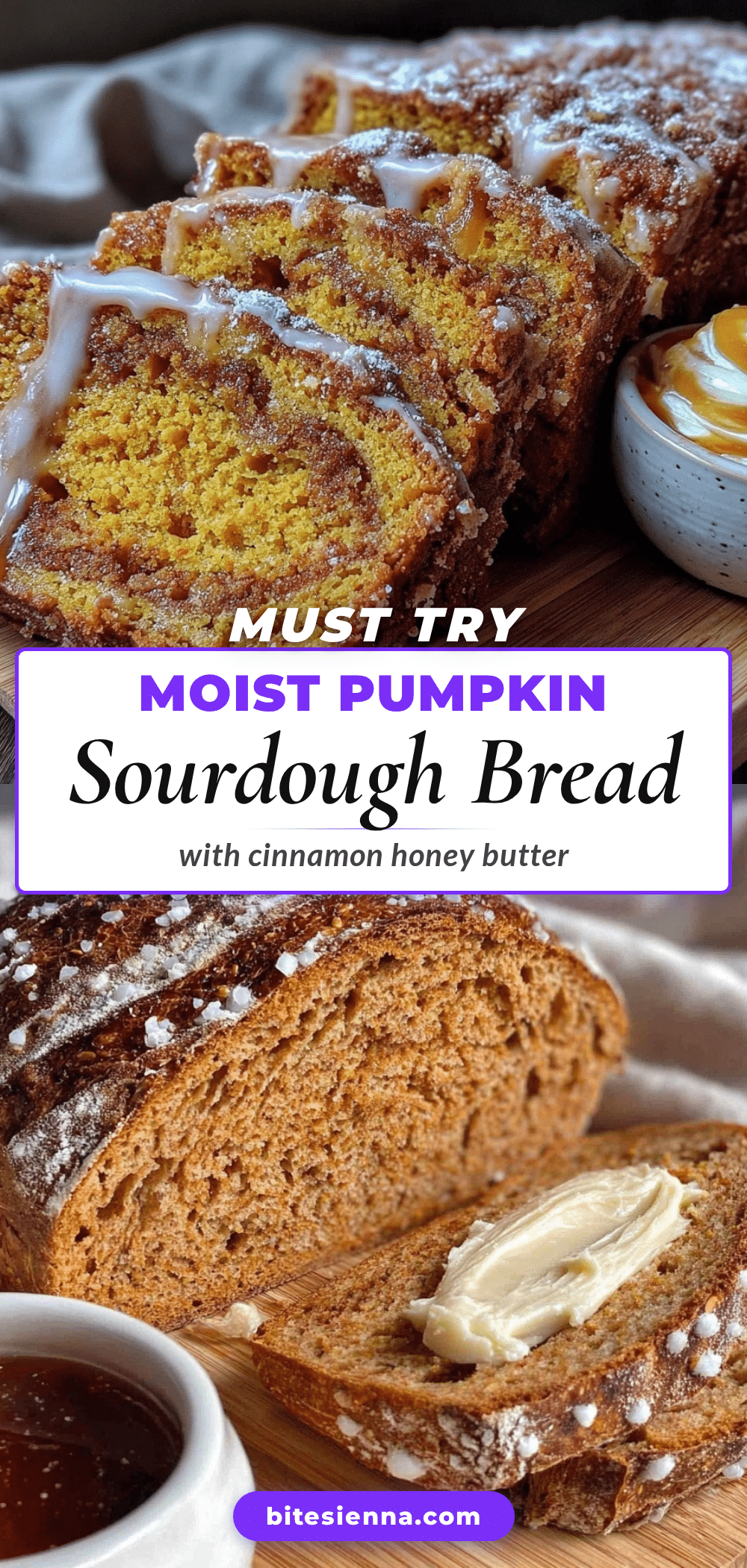
Cozy Pumpkin Sourdough Bread Recipe with Easy Cinnamon Honey Butter

A cozy pumpkin sourdough bread with a tender crumb and a tangy flavor, paired with an easy cinnamon honey butter that melts perfectly into every slice. This recipe balances flavor, texture, and approachability, making it a fall favorite and crowd-pleaser.
- Prep Time: 30 minutes (active hands-on time)
- Cook Time: 40-45 minutes
- Total Time: 6-8 hours (including fermentation and proofing time)
- Yield: 1 loaf (about 12 slices) 1x
- Category: Bread
- Cuisine: American
Ingredients
- 100g (3.5 oz) active sourdough starter
- 450g (3 ¾ cups) all-purpose flour
- 50g (½ cup) whole wheat flour
- 200g (¾ cup) pure pumpkin puree (canned or fresh, no spices)
- 120g (½ cup) full-fat cottage cheese, blended smooth
- 200ml (¾ cup + 2 tbsp) warm water (about 80°F/27°C)
- 50g (¼ cup packed) brown sugar
- 10g (1 ¾ tsp) salt
- 2 tsp cinnamon
- ½ tsp ground nutmeg (optional)
- 113g (½ cup) unsalted butter, softened
- 2 tbsp honey
- 1 tsp ground cinnamon
- Pinch of salt
Instructions
- Feed your sourdough starter about 4–6 hours before baking until bubbly and active, roughly doubled in size and passing the float test.
- In a large bowl, combine 450g all-purpose flour, 50g whole wheat flour, 2 tsp cinnamon, ½ tsp nutmeg, and 10g salt.
- In a separate bowl, whisk together 200g pumpkin puree, 120g blended cottage cheese, 50g brown sugar, and 200ml warm water.
- Add 100g active sourdough starter to the wet mixture, then pour into the dry ingredients. Stir with a wooden spoon until a shaggy dough forms, about 5 minutes.
- Cover the bowl with a damp towel and let it rest for 30 minutes (autolyse).
- Perform gentle stretch-and-folds every 30 minutes, 3 times total, about 10 minutes of folding in total.
- Cover and let the dough rise at room temperature (around 70°F/21°C) for 3–4 hours until nearly doubled and bubbly.
- Turn the dough onto a lightly floured surface and shape it gently into a tight round or oval. Transfer to a floured proofing basket or lined bowl.
- Cover and proof for 2–3 hours at room temperature, or overnight in the fridge for a slower, deeper flavor. Bring to room temperature before baking if refrigerated.
- Preheat the oven to 450°F (230°C) about 45 minutes before baking. Place a Dutch oven or baking stone inside if available.
- If using a Dutch oven, transfer the dough on parchment paper inside, score the top, bake covered for 20 minutes, then uncovered for 20–25 minutes until deep golden brown. If baking on a sheet, bake for 35–45 minutes, rotating halfway.
- Cool the bread completely on a wire rack for at least 2 hours before slicing.
- While the bread cools, mix 113g softened unsalted butter with 2 tbsp honey, 1 tsp cinnamon, and a pinch of salt until creamy and smooth. Chill slightly if too soft.
Notes
Do not rush the final proof to avoid dense or collapsed bread. Score the loaf before baking to prevent unpredictable bursting. Use a float test to check sourdough starter readiness. Cool bread completely before slicing to prevent gummy texture. Butter should be softened naturally for smooth cinnamon honey butter. For gluten-free, substitute flour with a blend containing xanthan gum and adjust hydration. Vegan options include replacing cottage cheese with silken tofu or soaked cashews and using vegan butter or coconut oil.
Nutrition
- Serving Size: 1 slice (about 60g)
- Calories: 150
- Fat: 2
- Carbohydrates: 28
- Fiber: 2
- Protein: 5
Keywords: pumpkin bread, sourdough bread, cinnamon honey butter, fall recipe, cozy bread, homemade bread, pumpkin sourdough