This was supposed to be a simple cheese platter. I had it all planned out—a neat little board with some cheddar cubes, crackers, and maybe some grapes for my neighbor Jenna’s Halloween get-together. But then the power went out. Not the whole house, just the kitchen circuit. The lights flickered, the hum of the fridge died, and I was left standing in the dark holding a block of brie. I remember muttering, “of course this happens now,” as I fumbled for my phone’s flashlight. The party was in two hours, and my grand plan was literally in the dark.
I grabbed the wrong baking sheet from the pantry—one that was way too big for what I needed—and I was already running late. Honestly, I was about to just give up and order pizza. But then I saw the spiderweb cookie cutter I’d picked up on a whim at the dollar store last Tuesday. It was sitting on the counter next to a bag of black olives, and something clicked. What if I didn’t fight the chaos? What if I just leaned into it? I started arranging things on that oversized board, using the cookie cutter as a stencil for a spiderweb pattern made of salami and prosciutto. It was messy, it was ridiculous, and I was convinced Jenna would laugh at me.
What came out was nothing like the plan—and better. My “failed” cheese platter turned into a full-blown Halloween charcuterie spiderweb board. The black olives became spiders, the red pepper strips turned into creepy-crawly legs, and the whole thing looked like it belonged in a haunted mansion. I walked into Jenna’s party with this giant board, feeling a little ridiculous, and people actually stopped talking to look at it. Someone asked me if I was a professional caterer. I almost choked on my cider. That night, I realized that the best recipes aren’t the ones you plan perfectly—they’re the ones that surprise you when everything goes wrong. And honestly, that’s why I keep making this board every single Halloween since. Maybe you’ve been there—the moment when the kitchen fights back, and you just have to roll with it. This board is for those moments.
Why You’ll Love This Recipe
Let’s face it—hosting a Halloween party is stressful enough without trying to make a fancy appetizer. You’ve got costumes to figure out, decorations to hang, and a playlist that needs just the right amount of spooky. This Crowd-Pleasing Halloween Charcuterie Spiderweb Board is your secret weapon. It looks like you spent hours on it, but honestly? It comes together in under 30 minutes. I’ve tested this board at three different parties now, and every single time, it’s the first thing to disappear.
- Quick & Easy : Comes together in under 30 minutes, perfect for last-minute party prep or when guests are about to walk through the door.
- Simple Ingredients : No fancy grocery trips needed. You likely already have most of these items in your fridge—cheese, deli meats, olives, and crackers.
- Perfect for Halloween Gatherings : Great for potlucks, costume parties, or even a spooky movie night with the kids.
- Crowd-Pleaser : Always gets rave reviews from both kids and adults. I’ve seen grown adults argue over the last olive spider.
- Unbelievably Delicious : The combination of salty meats, creamy cheeses, and crunchy crackers is next-level comfort food.
What makes this board different from the rest? It’s the spiderweb design. Instead of just throwing everything on a platter, you create a visual centerpiece that doubles as a conversation starter. The trick is using a round board and building the web from the center out—it’s a technique I picked up from watching too many food decorating videos at 2 AM. This isn’t just another charcuterie board. It’s your best version, the one that makes people pull out their phones for photos before they even grab a cracker.
This board is the kind that makes you close your eyes after the first bite. It’s comfort food reimagined—playful, festive, but with the same soul-soothing satisfaction of a classic cheese platter. Perfect for impressing guests without stress, or turning a simple gathering into something memorable. I mean, who doesn’t want to eat a spider made of black olives?
What Ingredients You Will Need
This recipe uses simple, crowd-friendly ingredients to deliver bold flavor and a spooky presentation without the fuss. Most of these are pantry staples or easy to find at any grocery store. I’ve tested this with different brands, and I recommend sticking with quality deli meats for the best texture.
For the Spiderweb Base
- 1 large round wooden board or platter (12-16 inches in diameter) – A round board makes the spiderweb design much easier to create.
- 8-10 slices of provolone cheese (about 200g) – Look for large, thin slices. I prefer Boar’s Head for its creamy texture.
- 8-10 slices of salami (about 150g) – Genoa salami works best for its firm texture and rich flavor.
- 8-10 slices of prosciutto (about 100g) – The thin, salty ribbons add a nice contrast to the cheese.
- 1 cup of mixed olives (about 150g) – Use black olives for the spider bodies and green olives for color contrast.
- 1 red bell pepper – Cut into thin strips to use as spider legs and web accents.
- 1 cup of cherry tomatoes (about 150g) – These add a pop of red and a juicy burst of flavor.
For the Spider Decorations
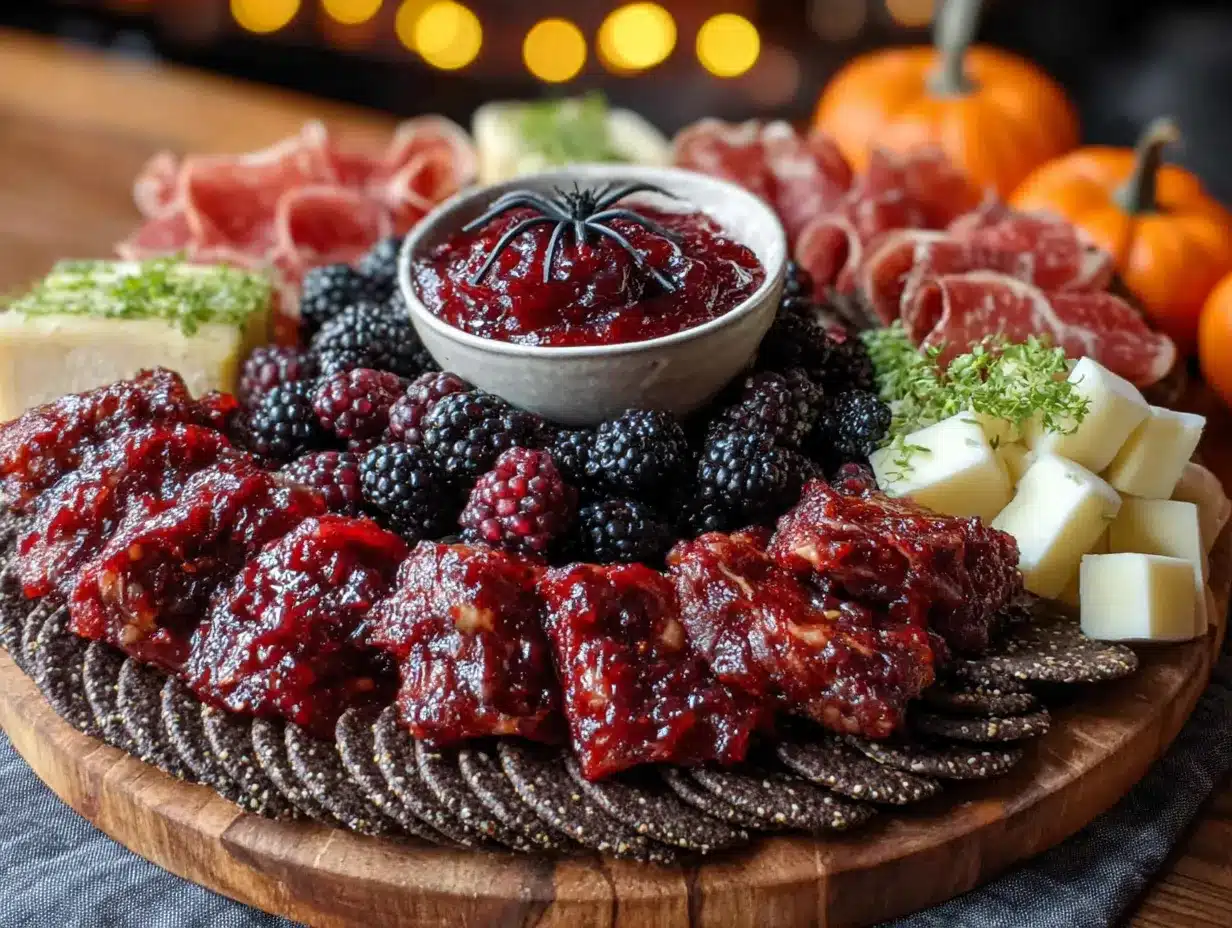
- 12-16 large black olives – These will become your spiders. Look for pitted ones so you can slice them easily.
- 1 small jar of pimento peppers – Cut into tiny strips for spider eyes (adds a fun, creepy touch).
- 1/4 cup of cream cheese (about 60g) – Use as “glue” to attach spider legs to the olive bodies.
- 1 tablespoon of capers (optional) – These make excellent tiny spider eyes if you want a more realistic look.
For the Accompaniments
- 1 cup of assorted crackers (about 100g) – I recommend a mix of plain water crackers and herbed crackers for variety.
- 1/2 cup of almonds (about 70g) – Smoked almonds add a nice smoky flavor that pairs well with the meats.
- 1/2 cup of dried apricots (about 80g) – The sweetness balances the saltiness of the meats.
- 1/4 cup of honey (about 60ml) – Drizzle over the cheese for a sweet-savory combo that everyone loves.
- Fresh rosemary sprigs – Use these as “spiderweb strands” or garnish for a rustic look.
Substitution Guidance
If you’re feeding a crowd with dietary restrictions, swap the provolone with dairy-free cheese slices. Use gluten-free crackers for a celiac-friendly option. For a vegetarian version, replace the meats with roasted red pepper strips and marinated artichoke hearts. I’ve tried this with vegan pepperoni, and honestly, it works just as well—just make sure to pat them dry so they don’t make the board soggy.
Equipment Needed
You don’t need fancy tools for this board, but a few key items make the process smoother. Here’s what I use every time:
- Large round wooden board or platter (12-16 inches) – A round board is essential for the spiderweb design. I got mine at a thrift store for $8, and it’s my most-used party item.
- Small offset spatula – Perfect for spreading cream cheese without tearing the cheese slices. A butter knife works too, but the offset spatula gives you more control.
- Paring knife – For cutting olive spiders and shaping pepper strips. A sharp knife makes all the difference.
- Spiderweb cookie cutter (optional) – Not essential, but it helps create a perfect web pattern with salami slices. I found mine at a dollar store.
- Small bowls – For holding olives, capers, and other small items. I use ramekins to keep things organized.
- Toothpicks – For securing spider legs to the olive bodies. Keep a few extra on hand for guests.
If you don’t have a round board, a rectangular cutting board works fine—just adjust the spiderweb pattern to fit the shape. I’ve used a pizza pan in a pinch, and it looked great. Just make sure to wash it thoroughly first.
Preparation Method
Follow these steps carefully, and you’ll have a show-stopping board in under 30 minutes. I’ve included time estimates and sensory cues so you know exactly what to look for.
- Prepare the board (5 minutes) : Place your round board on a clean, flat surface. If your board is new, wipe it with a damp cloth to remove any dust. You want a clean canvas for your masterpiece.
- Create the spiderweb base (10 minutes) : Start by placing the provolone slices in a circular pattern around the center of the board. Leave a small gap in the very center (about 2 inches wide). Layer the salami slices on top of the provolone, slightly overlapping them to create a textured look. The cheese should be visible underneath—this creates the “web” effect. Add the prosciutto in small, ruffled piles around the edges. You want the meats to look like they’re crawling outward from the center.
- Build the spiderweb lines (5 minutes) : Using the red bell pepper strips, create straight lines radiating from the center of the board to the edges. You should have 8-10 lines total, like a spiderweb. Then, use smaller pepper strips to connect these lines in curved arcs, creating the classic web pattern. Don’t worry if it’s not perfect—the imperfections make it look more organic and spooky.
- Assemble the olive spiders (10 minutes) : Take the large black olives and slice them in half lengthwise. For each spider, you’ll need one olive half for the body. Cut the pimento peppers into tiny strips (about 1/4 inch long) and insert two into the front of each olive half to create eyes. For the legs, cut thin strips of red bell pepper (about 1 inch long) and attach four on each side of the olive body using a small dab of cream cheese. Place the spiders randomly around the board, as if they’re crawling across the web.
- Add the accompaniments (5 minutes) : Fill the center gap of the spiderweb with a small bowl of honey or cream cheese. Arrange the crackers, almonds, and dried apricots in small clusters around the edges of the board. Scatter the cherry tomatoes and green olives in the gaps between the meats. The goal is to fill every empty space so the board looks abundant and inviting.
- Final touches (2 minutes) : Drizzle honey over the cheese slices for a sweet finish. Place fresh rosemary sprigs around the edges to mimic spiderweb strands. Step back and admire your work. The board should look like a scene from a haunted forest—dark, playful, and irresistible.
Sensory cues : The provolone should be soft and pliable, not dry or cracked. The salami should have a slight sheen from its natural oils. When you drizzle the honey, it should pool in the crevices of the cheese, creating a golden glow. The olives should look like tiny, shiny beetles ready to scurry away.
Troubleshooting tip : If your pepper strips keep curling up, dip them in ice water for 30 seconds before using. This relaxes the fibers and makes them easier to shape into spider legs. I learned this after my first batch of spiders looked like they were doing yoga.
Cooking Tips & Techniques
I’ve made this board about a dozen times now, and I’ve learned a few tricks along the way. Here are my best tips for getting it right every time.
Use room temperature cheese : Cold cheese is harder to arrange and doesn’t have the same creamy texture. Take the provolone out of the fridge 20 minutes before you start. This makes it more pliable and easier to layer without tearing. I once forgot to do this, and the cheese cracked into pieces—I ended up with a mosaic spiderweb instead of a clean one. It still tasted great, but it wasn’t as pretty.
Keep the meats dry : Pat the salami and prosciutto with a paper towel before placing them on the board. Excess moisture can make the board soggy and ruin the presentation. This is especially important if you’re using pre-packaged meats, which tend to have more liquid. I learned this the hard way when my first board turned into a wet mess after 20 minutes.
Build from the center out : Always start with the center of the spiderweb and work your way outward. This creates a natural focal point and makes the design look intentional. If you start from the edges, the center will look empty and unbalanced. Trust me, I’ve tried both ways, and center-first always wins.
Prep the spiders in advance : You can make the olive spiders up to 24 hours ahead and store them in an airtight container in the fridge. This saves time on party day and lets you focus on the rest of the board. Just make sure to let them come to room temperature before placing them on the board—cold spiders look less appetizing.
Use a template for the web : If you’re nervous about getting the spiderweb pattern right, use a piece of parchment paper as a guide. Draw a spiderweb on the paper, place it under the board, and trace the lines with your pepper strips. This is a trick I picked up from a professional caterer, and it makes the process foolproof.
Don’t overcrowd the board : It’s tempting to pile everything on, but leave some negative space so the spiderweb design is visible. A crowded board looks messy and confusing. Aim for a balance of 60% food and 40% empty space. This makes the board look curated and elegant, even if it’s actually just cheese and crackers.
Variations & Adaptations
This board is incredibly versatile. Here are some variations I’ve tried, each with its own personality.
Vegetarian Spiderweb Board
Replace the salami and prosciutto with roasted red pepper strips, marinated artichoke hearts, and grilled zucchini slices. The smoky flavor of the roasted peppers mimics the richness of the meats. I made this version for my vegetarian friend Sarah, and she practically licked the board clean. Just make sure to pat the artichokes dry so they don’t make the board soggy.
Spicy Halloween Board
Add a kick to your board by using spicy salami, jalapeño-stuffed olives, and a drizzle of sriracha honey. The heat contrasts beautifully with the creamy cheese. I tried this version for a Halloween party with a “spicy” theme, and it was a hit. Just warn your guests about the heat—I had one friend who didn’t realize the olives were stuffed with jalapeño and ended up chugging water.
Kid-Friendly Board
Skip the spicy elements and focus on fun shapes. Use cookie cutters to cut the cheese into bat, pumpkin, and ghost shapes. Replace the olives with grapes or cherry tomatoes for the spiders. I made this for my niece’s Halloween party, and the kids spent more time playing with the spider shapes than eating them—but they eventually ate everything.
Low-Carb/Keto Board
Swap the crackers with cucumber slices or bell pepper strips. Use full-fat cheese and meats to keep it keto-friendly. Add more nuts and olives for extra fat. I tried this version during my keto phase, and it was just as satisfying as the original. The cucumber slices add a refreshing crunch that pairs well with the salty meats.
Sweet & Savory Board
Add dark chocolate pieces, dried figs, and a drizzle of balsamic glaze. The sweetness balances the saltiness of the meats and cheese. I made this for a Halloween dessert party, and it was the perfect transition from savory to sweet. The balsamic glaze adds a tangy depth that elevates the whole board.
Serving & Storage Suggestions
This board is best served at room temperature, so take it out of the fridge 20 minutes before serving. The flavors are more pronounced, and the cheese is softer and creamier. I usually set the board out right as guests arrive, so it’s ready to eat by the time they’ve grabbed a drink.
Presentation tips : Place the board in the center of the table so guests can gather around it. Use small tongs or toothpicks for picking up items—this keeps the board looking tidy. I like to add a few extra rosemary sprigs around the edges right before serving for a fresh, aromatic touch.
What to serve alongside : This board pairs beautifully with a crisp white wine like Sauvignon Blanc or a light red like Pinot Noir. For non-alcoholic options, try sparkling apple cider or a pumpkin spice latte. If you’re serving a crowd, add a bowl of roasted pumpkin seeds or a small pot of honey for dipping.
Storage instructions : If you have leftovers (which is rare), store the meats, cheese, and crackers separately in airtight containers. The olives and peppers can be stored together. The board itself should be wiped clean and stored flat. Leftovers will keep in the fridge for up to 3 days, but the crackers will lose their crunch after 24 hours.
Reheating methods : This board is served cold, so no reheating is needed. If you’re using a cheese that benefits from being slightly warm (like brie), you can microwave it for 10-15 seconds before serving. Just make sure not to overheat it—warm cheese is delicious, but melted cheese will ruin the spiderweb design.
How flavors develop over time : The board is best within the first hour of assembly. After that, the crackers start to soften from the moisture of the meats and cheese. If you’re making it ahead, assemble the board up to 2 hours before serving and cover it loosely with plastic wrap. Add the crackers and crispy elements just before serving to keep them crunchy.
Nutritional Information & Benefits
Here’s an estimated nutritional breakdown for a serving of this board (about 1/8 of the total board):
| Nutrient | Amount per Serving |
|---|---|
| Calories | 420 |
| Protein | 22g |
| Fat | 28g |
| Carbohydrates | 18g |
| Fiber | 4g |
| Sugar | 8g |
| Sodium | 890mg |
Health benefits : This board is surprisingly balanced. The cheese provides calcium and protein, while the olives offer healthy monounsaturated fats. The red bell peppers are packed with vitamin C, and the almonds add vitamin E and magnesium. The honey provides quick energy, making this a great pre-party snack that won’t weigh you down.
Dietary considerations : This recipe is naturally gluten-free if you use gluten-free crackers. It’s also low-carb if you skip the crackers and dried fruit. For a dairy-free version, use vegan cheese and skip the cream cheese. The main allergens are dairy (cheese) and tree nuts (almonds). I always put a small sign next to the board listing the allergens for guests.
Personal wellness perspective : I love that this board feels indulgent but is actually made from whole, real ingredients. It’s the kind of food that makes you feel good after eating it—not heavy or sluggish. I’ve served it at parties where people were watching their diets, and they appreciated that they could control their portions by picking and choosing what they wanted.
Conclusion
This Crowd-Pleasing Halloween Charcuterie Spiderweb Board is more than just an appetizer—it’s a conversation starter, a photo opportunity, and a way to bring people together. It started as a happy accident in a dark kitchen, and now it’s my go-to for every Halloween gathering. The best part? It looks like you spent hours on it, but it comes together in under 30 minutes. That’s the kind of magic every host needs.
I encourage you to customize this board based on your preferences. Swap in your favorite cheeses, use different meats, or get creative with the spider decorations. The beauty of this recipe is that it’s a template, not a strict set of rules. Make it your own, and don’t be afraid to experiment. I once added gummy worms crawling out of the cheese, and it was a huge hit with the kids.
Honestly, I love this recipe because it reminds me that the best things in life often come from unexpected places. A power outage, a wrong baking sheet, and a last-minute panic turned into a tradition I look forward to every year. I hope it becomes a tradition for you too. So grab your board, raid your fridge, and let the chaos guide you. You might just create something amazing.
Have you tried this board? I’d love to hear about your spider creations! Drop a comment below with your favorite variation, or share a photo of your board on social media. Don’t forget to tag me so I can see your spooky masterpieces. Happy Halloween, and happy snacking!
Frequently Asked Questions
Can I make this board ahead of time?
Yes, you can assemble the board up to 2 hours before serving. Just cover it loosely with plastic wrap and keep it in the fridge. Add the crackers and any crispy elements right before serving to keep them from getting soggy. I’ve also prepped the olive spiders a day in advance, which saves a lot of time on party day.
What if I don’t have a round board?
No problem! A rectangular cutting board or even a large pizza pan works perfectly. Just adjust the spiderweb pattern to fit the shape. For a rectangular board, create a rectangular web pattern with straight lines and curved arcs. I’ve used a baking sheet in a pinch, and it looked great—just make sure to line it with parchment paper for a clean look.
How do I keep the spider legs from falling off?
Use a small dab of cream cheese as “glue” to attach the pepper strips to the olive bodies. Make sure the cream cheese is at room temperature so it’s spreadable. If the legs still fall off, try using thicker pepper strips—they hold their shape better. I’ve also used toothpicks to secure the legs, but I remove them before serving to avoid any accidents.
Can I use different types of cheese?
Absolutely! This board is very flexible. I’ve used brie, gouda, and even smoked cheddar with great results. Just make sure the cheese is firm enough to hold its shape when sliced. Soft cheeses like camembert work too, but they’re harder to arrange in the spiderweb pattern. I recommend using a mix of firm and soft cheeses for variety.
How many people does this board serve?
This board serves about 8-10 people as an appetizer. If you’re serving it as a main course for a light meal, it will serve 4-6 people. I always make a little extra because it disappears fast. If you’re feeding a larger crowd, double the ingredients and use a bigger board—or make two boards with different themes.
Pin This Recipe!
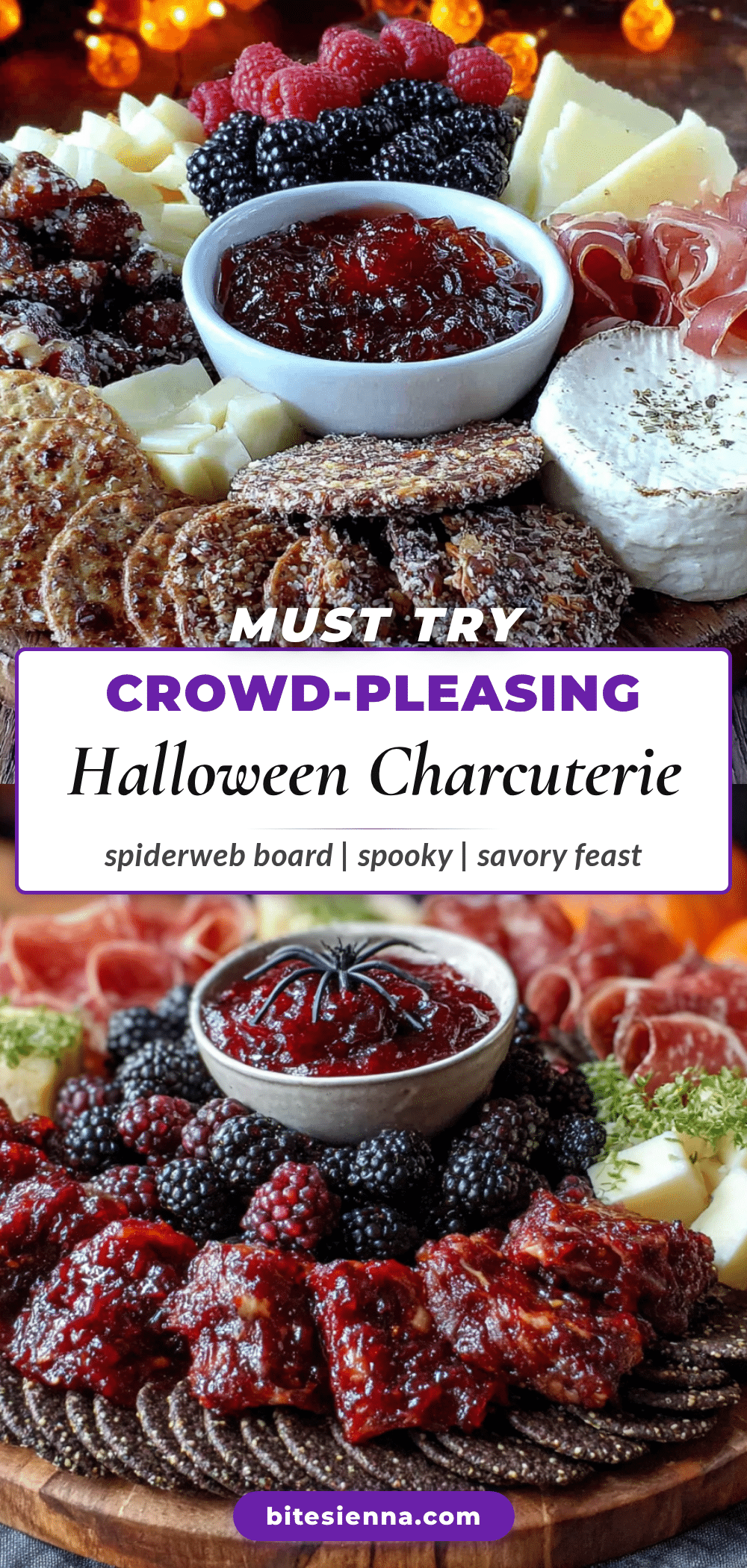
Crowd-Pleasing Halloween Charcuterie Spiderweb Board
A spooky and delicious charcuterie board featuring a spiderweb design made from salami, prosciutto, and cheese, topped with olive spiders and festive accompaniments. Perfect for Halloween parties and gatherings.
- Prep Time: 20 minutes
- Cook Time: 0 minutes
- Total Time: 27 minutes
- Yield: 8-10 servings 1x
- Category: Appetizer
- Cuisine: American
Ingredients
- 1 large round wooden board or platter (12–16 inches in diameter)
- 8–10 slices of provolone cheese (about 200g)
- 8–10 slices of salami (about 150g)
- 8–10 slices of prosciutto (about 100g)
- 1 cup of mixed olives (about 150g)
- 1 red bell pepper
- 1 cup of cherry tomatoes (about 150g)
- 12–16 large black olives
- 1 small jar of pimento peppers
- 1/4 cup of cream cheese (about 60g)
- 1 tablespoon of capers (optional)
- 1 cup of assorted crackers (about 100g)
- 1/2 cup of almonds (about 70g)
- 1/2 cup of dried apricots (about 80g)
- 1/4 cup of honey (about 60ml)
- Fresh rosemary sprigs
Instructions
- Prepare the board (5 minutes): Place your round board on a clean, flat surface. If your board is new, wipe it with a damp cloth to remove any dust.
- Create the spiderweb base (10 minutes): Start by placing the provolone slices in a circular pattern around the center of the board. Leave a small gap in the very center (about 2 inches wide). Layer the salami slices on top of the provolone, slightly overlapping them to create a textured look. Add the prosciutto in small, ruffled piles around the edges.
- Build the spiderweb lines (5 minutes): Using the red bell pepper strips, create straight lines radiating from the center of the board to the edges (8-10 lines total). Then, use smaller pepper strips to connect these lines in curved arcs, creating the classic web pattern.
- Assemble the olive spiders (10 minutes): Take the large black olives and slice them in half lengthwise. For each spider, use one olive half for the body. Cut the pimento peppers into tiny strips (about 1/4 inch long) and insert two into the front of each olive half to create eyes. For the legs, cut thin strips of red bell pepper (about 1 inch long) and attach four on each side of the olive body using a small dab of cream cheese. Place the spiders randomly around the board.
- Add the accompaniments (5 minutes): Fill the center gap of the spiderweb with a small bowl of honey or cream cheese. Arrange the crackers, almonds, and dried apricots in small clusters around the edges of the board. Scatter the cherry tomatoes and green olives in the gaps between the meats.
- Final touches (2 minutes): Drizzle honey over the cheese slices for a sweet finish. Place fresh rosemary sprigs around the edges to mimic spiderweb strands.
Notes
Use room temperature cheese for easier handling. Pat meats dry to prevent sogginess. Build from the center out for best presentation. Olive spiders can be made up to 24 hours ahead. For a perfect web pattern, use a parchment paper template under the board. Don’t overcrowd the board; leave some negative space.
Nutrition
- Serving Size: 1/8 of the board
- Calories: 420
- Sugar: 8
- Sodium: 890
- Fat: 28
- Carbohydrates: 18
- Fiber: 4
- Protein: 22
Keywords: Halloween, charcuterie board, spiderweb, appetizer, party food, cheese platter, spooky, easy, crowd-pleaser