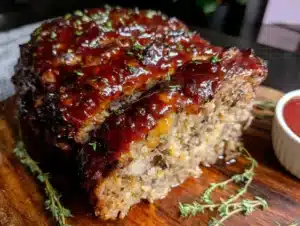
The neighborhood fall block party was in three hours and I’d completely forgotten. Everyone else would be bringing their signature complicated desserts—the kind with homemade caramel and layers that take all day. I had a half-gallon of fresh apple cider from the orchard run last weekend, a stick of butter softening on the counter, and maybe forty-five minutes before I needed to start getting ready. My kitchen was a mess, I was still in my sweatpants, and I had absolutely nothing to bring.
I stood there staring into the pantry like maybe a fully assembled pie would just materialize. You know that feeling when you’re short on time and longer on panic? That was me. I grabbed the flour, the sugar, the cinnamon—the usual suspects. But I also grabbed that jug of cider, thinking maybe, just maybe, I could fake my way through something that tasted like the apple cider donuts from the orchard stand. The ones with the thick coating of cinnamon sugar that gets all over your fingers. The ones that taste like autumn in a paper bag.
Honestly, I didn’t expect much. I was just trying to show up with something edible. I threw the batter together in one bowl—no mixer, no fuss—and poured it into a tube pan I’d forgotten I owned. While it baked, I showered and prayed to the kitchen gods. When I pulled that cake out of the oven, the whole apartment smelled like a county fair. I let it cool just enough to brush it with melted butter and roll the whole thing in cinnamon sugar. It looked ridiculous. It looked like I’d planned it for days.
I walked into that party feeling like a fraud, but I left with three people asking for the recipe and an empty plate. The cake that almost didn’t happen became the thing everyone talked about. That’s the kind of recipe this is—it’s the one you make when you have nothing to prove and everything to share. It’s simple, it’s fast, and it tastes like you spent hours at the stove. Maybe you’ve been there, standing in your kitchen with no plan and a clock ticking down. This cake is your answer.
Why You’ll Love This Recipe
This Easy Apple Cider Donut Cake with Cinnamon Sugar is the kind of recipe that makes you look like a hero with almost zero effort. I’ve tested this cake at least a dozen times—for potlucks, for Sunday breakfasts, for that one Tuesday when I needed a pick-me-up. It works every single time, and here’s why you’re going to love it just as much.
- Quick & Easy: From start to finish, this cake comes together in about an hour. Most of that is hands-off baking time. The batter takes maybe ten minutes to whisk together. No stand mixer required, no creaming butter and sugar for ages. Just stir, pour, and bake.
- Simple Ingredients: You probably have almost everything in your kitchen right now. Flour, sugar, eggs, butter, baking powder, cinnamon. The star ingredient—apple cider—is easy to find at any grocery store, especially in the fall. No fancy extracts or hard-to-find specialty items.
- Perfect for Fall Gatherings: This cake was literally born from a last-minute party panic, and it’s perfect for exactly that scenario. It also works beautifully for Thanksgiving brunch, Halloween parties, Friendsgiving, or just a cozy weekend morning at home.
- Crowd-Pleaser: I’ve served this to kids, to adults, to that one friend who “doesn’t really like cake.” They all go back for seconds. The cinnamon sugar coating is pure nostalgia. It reminds everyone of orchard trips and hayrides.
- Unbelievably Delicious: Here’s the thing—this cake has the dense, tender crumb of a real cake donut. The apple cider flavor is subtle but unmistakable. And that cinnamon sugar coating? It creates a slightly crunchy, sweet crust that’s absolutely addictive. It’s not just another coffee cake. It’s a donut in cake form, and that’s a beautiful thing.
What makes this recipe different from all the other apple cider cakes out there is the technique. By reducing the apple cider on the stovetop before adding it to the batter, you concentrate the flavor without adding extra liquid. It’s a small step that makes a huge difference. The result is a cake that tastes intensely of apples, without being soggy or dense. It’s my best version, and I’m pretty proud of it.
This recipe isn’t just good—it’s the kind that makes you close your eyes after the first bite. It’s comfort food reimagined: faster, simpler, but with the same soul-soothing satisfaction. Perfect for impressing guests without stress, or turning a simple Tuesday into something memorable.
What Ingredients You Will Need
This recipe uses simple, wholesome ingredients to deliver that classic apple cider donut flavor without any fuss. Most of these are pantry staples, and the ones that aren’t are easy to find at any grocery store. Let’s walk through what you’ll need and why each ingredient matters.
For the Cake
- Apple cider, 2 cups (480 ml): This is the star of the show. You’ll reduce it on the stovetop to concentrate the flavor. Use fresh, unfiltered apple cider if you can find it—it has a richer, more authentic apple taste. I like the brand from my local orchard, but any good quality cider works.
- All-purpose flour, 2 cups (250 grams): Gives the cake structure. Spoon and level your flour for the best results. Scooping directly from the bag can pack it down and give you too much flour, which makes the cake dry.
- Granulated sugar, 1 cup (200 grams): Adds sweetness and helps create that tender crumb. You can reduce this slightly if you prefer a less sweet cake, but don’t go below ¾ cup.
- Unsalted butter, ½ cup (1 stick, 113 grams), melted and slightly cooled: Adds richness and moisture. Using melted butter instead of creamed butter keeps this recipe quick and easy—no mixer needed. I always use unsalted so I can control the salt level.
- Large eggs, 2, at room temperature: Bind the ingredients together and add structure. Room temperature eggs incorporate more evenly into the batter. If you forgot to take them out of the fridge, place them in a bowl of warm water for 5 minutes.
- Buttermilk, ½ cup (120 ml): Adds tanginess and helps activate the baking soda for a tender crumb. No buttermilk? No problem. Add 1½ teaspoons of lemon juice or white vinegar to regular milk and let it sit for 5 minutes.
- Vanilla extract, 1 teaspoon: Enhances the overall flavor. Pure vanilla extract is best, but imitation will work in a pinch.
- Baking powder, 1½ teaspoons: Leavening agent that helps the cake rise. Make sure yours is fresh—test it by dropping a little in hot water; it should bubble vigorously.
- Baking soda, ½ teaspoon: Works with the buttermilk to create additional lift.
- Salt, ½ teaspoon: Balances the sweetness and enhances all the flavors. Don’t skip it, even if you’re using salted butter.
- Ground cinnamon, 1 teaspoon: Adds warm spice that pairs perfectly with apple cider. Fresh cinnamon makes a difference here.
- Ground nutmeg, ¼ teaspoon: A tiny amount adds that classic fall donut shop flavor. Freshly grated nutmeg is incredible if you have it.
For the Cinnamon Sugar Coating
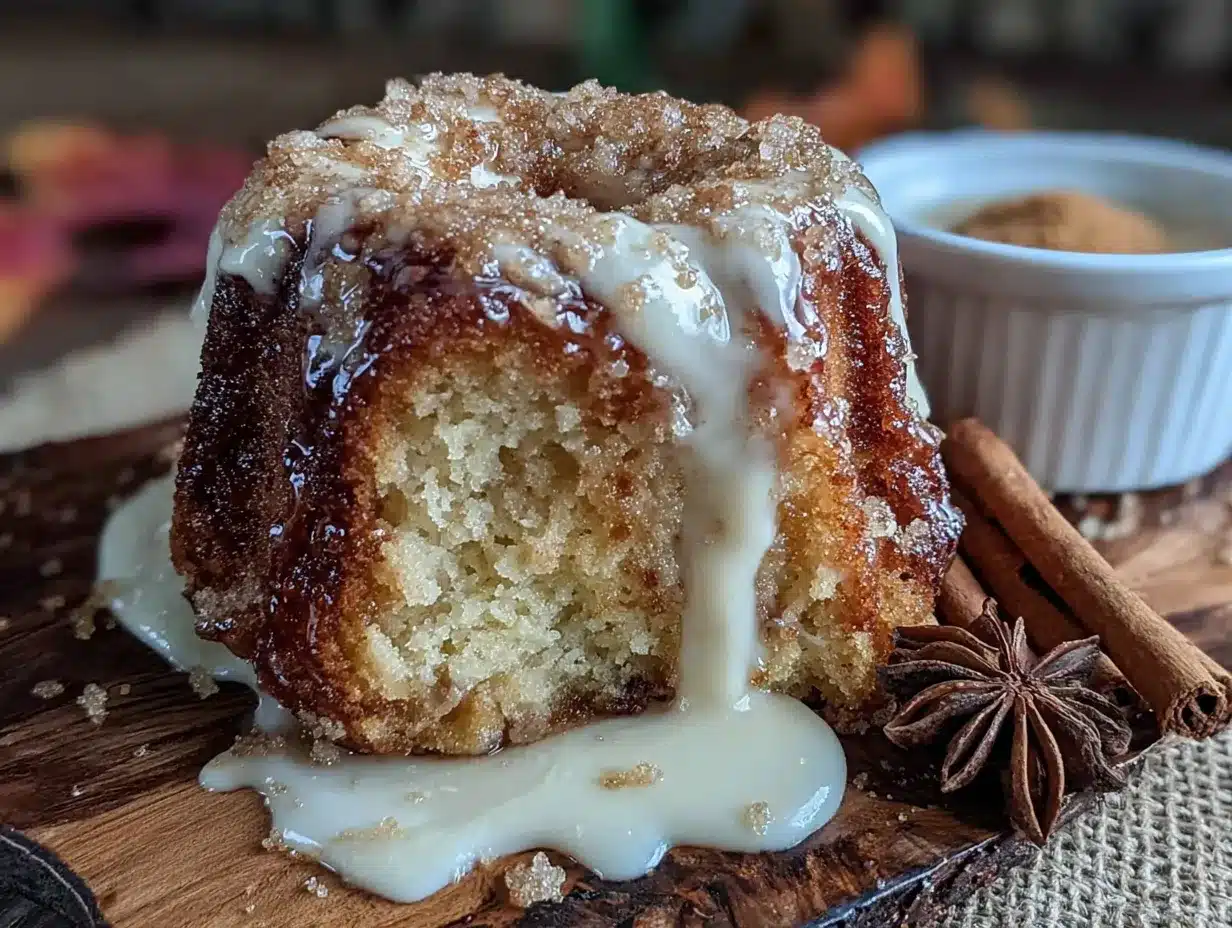
- Granulated sugar, ½ cup (100 grams): Forms the base of the coating. The texture is important here—granulated sugar gives that satisfying crunch.
- Ground cinnamon, 1½ tablespoons: This is more cinnamon than you might expect, and that’s intentional. You want a bold, spicy coating that contrasts with the tender cake.
- Unsalted butter, ¼ cup (½ stick, 57 grams), melted: Brushed onto the warm cake so the cinnamon sugar sticks. Don’t skip this step—it’s what gives the cake that authentic donut shop finish.
Ingredient Selection Tips: For the best apple cider flavor, look for cider that’s dark in color and has a bit of sediment at the bottom of the jug. That sediment is apple solids, and it means the cider is less filtered and more flavorful. Avoid apple juice here—it’s too thin and won’t reduce properly. If you’re in a pinch, you can use apple juice, but the flavor will be much milder.
Substitution Guidance: For a dairy-free version, use melted coconut oil or vegan butter in place of the regular butter, and use a dairy-free milk mixed with lemon juice in place of the buttermilk. For a gluten-free option, substitute a good quality 1:1 gluten-free flour blend that contains xanthan gum. I’ve tested this with Bob’s Red Mill 1:1 Baking Flour and it works beautifully.
Equipment Needed
You don’t need a fancy kitchen to make this cake. Here’s what you’ll need, along with some tips from my own experience.
- 10-cup Bundt pan or tube pan: This is the ideal pan for this cake. The center tube helps the cake bake evenly and gives it that classic donut-like shape. If you don’t have a Bundt pan, you can use a 9×5-inch loaf pan—just increase the baking time by 10-15 minutes. I’ve also used a 9-inch round cake pan in a pinch, though the cake will be shorter.
- Medium saucepan: For reducing the apple cider. Use one that’s at least 2 quarts so the cider has room to bubble up without boiling over. I learned that lesson the hard way—cider foam all over the stovetop is not fun to clean.
- Large mixing bowl: For combining the dry ingredients. Any large bowl will do.
- Medium mixing bowl: For whisking the wet ingredients together.
- Whisk: For mixing the batter. A wire whisk works perfectly—no electric mixer needed.
- Rubber spatula: For scraping down the sides of the bowl and folding the batter. A silicone spatula is my go-to because it doesn’t scratch my bowls.
- Cooling rack: Allows air to circulate around the cake so it cools evenly. If you don’t have one, you can use a cutting board, but the bottom of the cake might get a little soggy.
- Pastry brush: For brushing the melted butter onto the warm cake. A silicone brush works great and is easy to clean. If you don’t have one, you can use a paper towel, but be gentle so you don’t tear the cake’s surface.
- Small bowl: For mixing the cinnamon sugar coating.
- Measuring cups and spoons: For accurate measurements. I prefer metal measuring cups for dry ingredients and glass for liquids.
Budget-Friendly Options: You can find a perfectly good Bundt pan at any thrift store for a few dollars. That’s where I got mine, and it’s been going strong for years. A basic cooling rack costs under ten bucks at most kitchen stores. Don’t feel like you need to invest in expensive equipment—this recipe is forgiving enough to work with whatever you have.
Preparation Method
Let’s get baking. This method is straightforward, but I’ve included all the little details that make the difference between a good cake and a great one. Take your time with the first step—reducing the cider—because that’s where the magic happens.
- Preheat your oven to 350°F (175°C). Position the rack in the center of the oven. While the oven heats, generously grease your Bundt pan with butter or non-stick baking spray. Don’t skimp here—you want every nook and cranny coated. I use a pastry brush to get into all the ridges. Dust the pan with a little flour and tap out the excess. Set it aside.
- Reduce the apple cider. Pour the 2 cups of apple cider into your medium saucepan. Bring it to a boil over medium-high heat, then reduce the heat to medium-low so it’s at a steady simmer. Let it bubble away, stirring occasionally, until it reduces to about ½ cup (120 ml). This takes about 15-20 minutes. The cider will thicken slightly and smell intensely of apples. You’ll know it’s done when it coats the back of a spoon. Watch it closely toward the end—it can go from perfect to burnt quickly. Remove it from the heat and let it cool while you prepare the rest of the ingredients.
- Mix the dry ingredients. In your large mixing bowl, whisk together the flour, sugar, baking powder, baking soda, salt, cinnamon, and nutmeg. Whisk for about 30 seconds to aerate the flour and distribute the leavening agents evenly. This step is important—you don’t want a pocket of baking soda in your cake.
- Mix the wet ingredients. In your medium mixing bowl, whisk together the melted butter (make sure it’s not hot), eggs, buttermilk, vanilla extract, and the cooled reduced apple cider. Whisk until everything is well combined and smooth. The mixture will look a little thinner than you might expect, and that’s okay.
- Combine wet and dry ingredients. Pour the wet ingredients into the dry ingredients. Use your rubber spatula to fold everything together gently. Stir just until no streaks of flour remain—about 15 to 20 strokes. A few small lumps are fine. Over-mixing will develop the gluten and make your cake tough. Trust me, I’ve made that mistake. You want a tender crumb, so be gentle.
- Pour the batter into the prepared pan. Use your spatula to scrape every last bit of batter into the pan. Give the pan a gentle tap on the counter to release any air bubbles. The batter will be thick but pourable. Spread it evenly with the spatula.
- Bake the cake. Place the pan in the preheated oven and bake for 35 to 40 minutes. The cake is done when a toothpick inserted into the center comes out clean or with just a few moist crumbs. The top should be golden brown and spring back when lightly touched. Start checking at the 30-minute mark—every oven runs a little differently. My old oven took 42 minutes; my current one takes 36. Get to know your oven.
- Cool the cake in the pan. Place the pan on a cooling rack and let the cake cool for 15 minutes. This is critical. If you try to remove it too soon, it will fall apart. If you wait too long, it might stick. Fifteen minutes is the sweet spot. After 15 minutes, run a thin knife or offset spatula around the edges of the pan to loosen the cake. Place the cooling rack upside down on top of the pan, then carefully invert the whole thing. Lift the pan off gently. Let the cake cool on the rack for another 10 minutes.
- Apply the cinnamon sugar coating. While the cake is still warm (but not hot), brush the entire surface with the melted butter. Use your pastry brush to get into all the crevices. The butter will soak in slightly, creating a perfect base for the sugar. In your small bowl, whisk together the ½ cup sugar and 1½ tablespoons cinnamon. Sprinkle this mixture generously over the buttered cake, using your hands to press it gently onto the sides and into the center hole. Don’t be shy—pile it on. The coating is the best part.
- Let the cake cool completely. Allow the coated cake to cool fully on the rack before slicing. The coating will set as it cools, creating that signature crunchy crust. If you slice it too soon, the sugar will slide right off. Patience, my friend.
Sensory Cues: When the cake is done, your kitchen will smell like a combination of apple cider, cinnamon, and warm butter. It’s intoxicating. The cake should be a deep golden brown on top, and the edges will have pulled away slightly from the pan. When you tap the top, it should feel firm but springy. The cinnamon sugar coating will look like a snowy dusting of autumn—uneven in the best way, with little crystals catching the light.
Cooking Tips & Techniques
I’ve made this cake more times than I can count, and I’ve learned a few things along the way. Here are my best tips to ensure your cake turns out perfect every time.
Don’t Rush the Cider Reduction: I know it’s tempting to crank up the heat and try to reduce the cider in five minutes, but low and slow is the way to go. High heat can scorch the sugars in the cider and give it a bitter, burnt flavor. Keep it at a gentle simmer and stir occasionally. The cider will reduce to about a quarter of its original volume, and it should look syrupy and dark. If you’re worried about timing, you can reduce the cider a day ahead and store it in the fridge.
The Temperature of Your Ingredients Matters: I learned this the hard way when I used cold eggs straight from the fridge and ended up with a lumpy batter. Room temperature eggs and buttermilk incorporate more smoothly into the batter, creating a more even crumb. Take them out of the fridge about 30 minutes before you start baking. If you forget, place the eggs in a bowl of warm water for 5 minutes and microwave the buttermilk for 10 seconds.
Grease Your Pan Thoroughly: There’s nothing sadder than a beautiful cake that refuses to leave the pan. Use a generous amount of butter or baking spray, and don’t forget the center tube. I like to use a pastry brush to get into all the ridges of my Bundt pan. After greasing, dust the pan with flour and tap out the excess. This creates a non-stick barrier that guarantees clean release.
The Toothpick Test Is Your Friend: Ovens vary wildly in temperature. My friend’s oven runs hot and bakes this cake in 32 minutes. Mine takes 38. Don’t rely solely on the timer. Start checking at the 30-minute mark by inserting a toothpick or skewer into the thickest part of the cake. If it comes out clean or with a few moist crumbs, it’s done. If there’s wet batter on it, give it another 3-5 minutes and check again.
Cooling Time Is Non-Negotiable: I once tried to rush the cooling process because I was impatient, and the cake cracked right down the middle. Let it cool in the pan for exactly 15 minutes. This allows the structure to set without sticking. Then invert it onto a rack and let it cool for another 10 minutes before adding the coating. If the cake is too hot when you add the butter and sugar, the coating will melt and slide off. Too cold, and the butter won’t soak in, and the sugar won’t stick. Warm is the sweet spot.
Multitasking Strategy: While the cider is reducing, measure out your dry ingredients and get your eggs and buttermilk to room temperature. While the cake is baking, mix your cinnamon sugar coating and melt the butter for brushing. This way, everything is ready to go when the cake comes out of the oven. You’ll be done in under an hour, start to finish.
Variations & Adaptations
One of the best things about this Easy Apple Cider Donut Cake with Cinnamon Sugar is how adaptable it is. I’ve tried several variations over the years, and they’re all delicious in their own way. Here are some of my favorites.
Gluten-Free Version: Substitute the all-purpose flour with a good quality 1:1 gluten-free baking flour that contains xanthan gum. I’ve had great results with Bob’s Red Mill 1:1 Baking Flour. The texture is slightly more tender, but the flavor is spot on. No other adjustments needed.
Dairy-Free Version: Use melted coconut oil or a plant-based butter in place of the regular butter. For the buttermilk, mix ½ cup of unsweetened almond milk or oat milk with 1½ teaspoons of lemon juice and let it sit for 5 minutes. The cake will be a little less rich, but still incredibly moist and flavorful.
Spiced Apple Version: Add ½ cup of finely diced fresh apple (like Honeycrisp or Granny Smith) to the batter along with the wet ingredients. Toss the diced apple in a tablespoon of flour first to prevent it from sinking to the bottom of the pan. This adds little pockets of tender fruit throughout the cake. I love this version for a more rustic, homey feel.
Maple Glaze Variation: Instead of the cinnamon sugar coating, drizzle the cooled cake with a simple maple glaze. Whisk together 1 cup of powdered sugar, 2 tablespoons of maple syrup, and 1-2 tablespoons of milk until smooth. Pour it over the top and let it drip down the sides. This version is less crunchy but more decadent.
Apple Cider Donut Muffins: Pour the batter into a greased muffin tin (fills about 12 muffins) and bake at 350°F for 18-22 minutes. While still warm, dip the tops in melted butter and then in cinnamon sugar. These are perfect for breakfast on the go or for packing in lunchboxes. They disappear fast.
Slow Cooker Version: Yes, you can make this in a slow cooker! Grease the insert well, pour in the batter, and cook on low for 2-3 hours or on high for 1-1.5 hours, until a toothpick comes out clean. The texture will be denser and more pudding-like, but it’s incredibly moist and delicious. This is my go-to when I want the house to smell amazing all afternoon.
Serving & Storage Suggestions
This cake is wonderful in so many ways. Here’s how to serve it, store it, and enjoy it at its best.
Serving Temperature: This cake is best served at room temperature or slightly warm. If you’ve stored it in the fridge, let it sit on the counter for about 30 minutes before serving. The flavors are more pronounced at room temperature, and the texture is softer and more tender.
Presentation Ideas: Place the cake on a beautiful cake stand or a wooden board for a rustic look. Dust it with a little extra cinnamon sugar just before serving for a fresh, snowy appearance. You can also add a few fresh apple slices or cinnamon sticks around the base for a seasonal touch. For individual servings, slice the cake and place each piece on a small plate with a dollop of lightly sweetened whipped cream or a scoop of vanilla ice cream.
Complementary Dishes and Beverages: This cake pairs beautifully with a hot cup of coffee, a chai latte, or a glass of cold milk. For a more indulgent dessert, serve it with a drizzle of warm caramel sauce and a sprinkle of flaky sea salt. It also works wonderfully as part of a fall brunch spread alongside scrambled eggs, bacon, and fresh fruit.
Storage Instructions: Store the cake in an airtight container at room temperature for up to 3 days. The cinnamon sugar coating will soften slightly over time, but the cake will remain moist and delicious. If your kitchen is very warm, you can store it in the fridge, but bring it to room temperature before serving.
Freezer Instructions: This cake freezes beautifully. Wrap the completely cooled, uncoated cake tightly in plastic wrap, then in a layer of aluminum foil. Freeze for up to 3 months. When you’re ready to serve, thaw the cake overnight in the refrigerator, then warm it in a 300°F oven for 10-15 minutes. Brush with melted butter and coat with cinnamon sugar just before serving. The coating is best applied fresh—if you freeze the coated cake, the sugar can become gummy.
How Flavors Develop: This cake actually tastes even better the day after it’s made. The apple cider flavor deepens and melds with the spices overnight. If you can resist eating it all on day one, you’ll be rewarded with an even more flavorful cake on day two. I often make this cake a day ahead of when I plan to serve it for exactly this reason.
Nutritional Information & Benefits
While this is definitely a treat, it’s made with real, wholesome ingredients. Here’s the nutritional breakdown for one slice (based on 12 servings).
| Nutrient | Amount Per Serving |
|---|---|
| Calories | 320 |
| Total Fat | 14g |
| Saturated Fat | 8g |
| Cholesterol | 65mg |
| Sodium | 280mg |
| Total Carbohydrates | 47g |
| Dietary Fiber | 1g |
| Sugars | 32g |
| Protein | 4g |
Health Benefits of Key Ingredients: Apple cider contains antioxidants called polyphenols, which can help reduce oxidative stress in the body. Cinnamon has anti-inflammatory properties and may help regulate blood sugar levels. Eggs provide high-quality protein and essential vitamins like B12 and D. While this cake is definitely an indulgence, it’s made from real food ingredients without artificial preservatives or additives.
Dietary Considerations: This recipe contains gluten, dairy, and eggs. For gluten-free and dairy-free adaptations, see the Variations section above. This cake is not suitable for a vegan diet in its current form, but you could experiment with flax eggs and plant-based butter for a vegan version.
Potential Allergens: Wheat (gluten), dairy (butter, buttermilk), eggs. Please check your specific ingredients if you have allergies or sensitivities.
Personal Wellness Perspective: I believe in balance. This cake is a celebration of fall flavors and simple pleasures. It’s not an everyday breakfast, but it’s absolutely the kind of thing you make for a special occasion, a gathering with loved ones, or a cozy weekend when you just need something wonderful. Enjoy every bite without guilt, and share it with people you care about.
Conclusion
This Easy Apple Cider Donut Cake with Cinnamon Sugar started as a panicked solution to a forgotten party commitment, and it’s become one of my most-requested recipes. It’s proof that you don’t need hours in the kitchen or a long list of fancy ingredients to create something truly memorable. Sometimes the best recipes come from a moment of chaos and a leap of faith.
I love this cake because it’s honest. It doesn’t pretend to be something it’s not. It’s a simple, tender, cinnamon-sugar-coated cake that tastes like a trip to the apple orchard. It’s the cake you make when you want to feel like fall has arrived in your kitchen. It’s the cake that makes people close their eyes and say “mmm” after the first bite.
I encourage you to make this recipe your own. Add a little extra cinnamon if that’s your thing. Try the maple glaze version. Make it into muffins for your kid’s school bake sale. The beauty of this recipe is that it’s forgiving, adaptable, and always delicious. Don’t be afraid to experiment and see what works for you.
I’d love to hear how your cake turns out! Drop a comment below and let me know if you tried any variations, or tag me in your photos on social media. Your feedback and creativity are what make this community so wonderful. Happy baking, my friend. May your kitchen smell like apples and cinnamon, and may your cake come out of the pan perfectly every time.
Frequently Asked Questions
Can I use apple juice instead of apple cider?
You can, but the flavor will be much milder. Apple juice is thinner and less concentrated than cider, so it won’t have that same rich, tangy apple taste. If you use apple juice, consider adding an extra teaspoon of cinnamon to boost the flavor. The texture of the cake will be similar, but the apple flavor won’t be as pronounced.
Why did my cake stick to the pan?
This usually happens for one of two reasons: either the pan wasn’t greased thoroughly enough, or the cake wasn’t cooled long enough in the pan. Make sure you get butter or spray into every ridge of your Bundt pan, and dust it with flour after greasing. Also, be patient and let the cake cool for the full 15 minutes before inverting it. If it still sticks, gently run a thin knife around the edges and the center tube to loosen it.
Can I make this cake ahead of time?
Absolutely! This cake actually tastes better the next day. You can bake the cake a day ahead, let it cool completely, and store it wrapped tightly in plastic wrap at room temperature. When you’re ready to serve, warm it slightly, brush with melted butter, and coat with cinnamon sugar. The coating is best applied fresh for maximum crunch.
How do I know when the apple cider is reduced enough?
The cider should reduce from 2 cups to about ½ cup. It will look syrupy and dark, like a thin caramel. It should coat the back of a spoon and smell intensely of cooked apples. If you tilt the pan, the cider should move slowly, like maple syrup. Keep a close eye on it during the last few minutes—it can go from perfect to burnt very quickly.
Can I use a different pan shape?
Yes! This batter works well in a 9×5-inch loaf pan (bake for 45-50 minutes), a 9-inch round cake pan (bake for 30-35 minutes), or as muffins (bake for 18-22 minutes). Just adjust the baking time accordingly and check for doneness with a toothpick. The texture will be slightly different depending on the pan shape, but it will still be delicious.
Pin This Recipe!
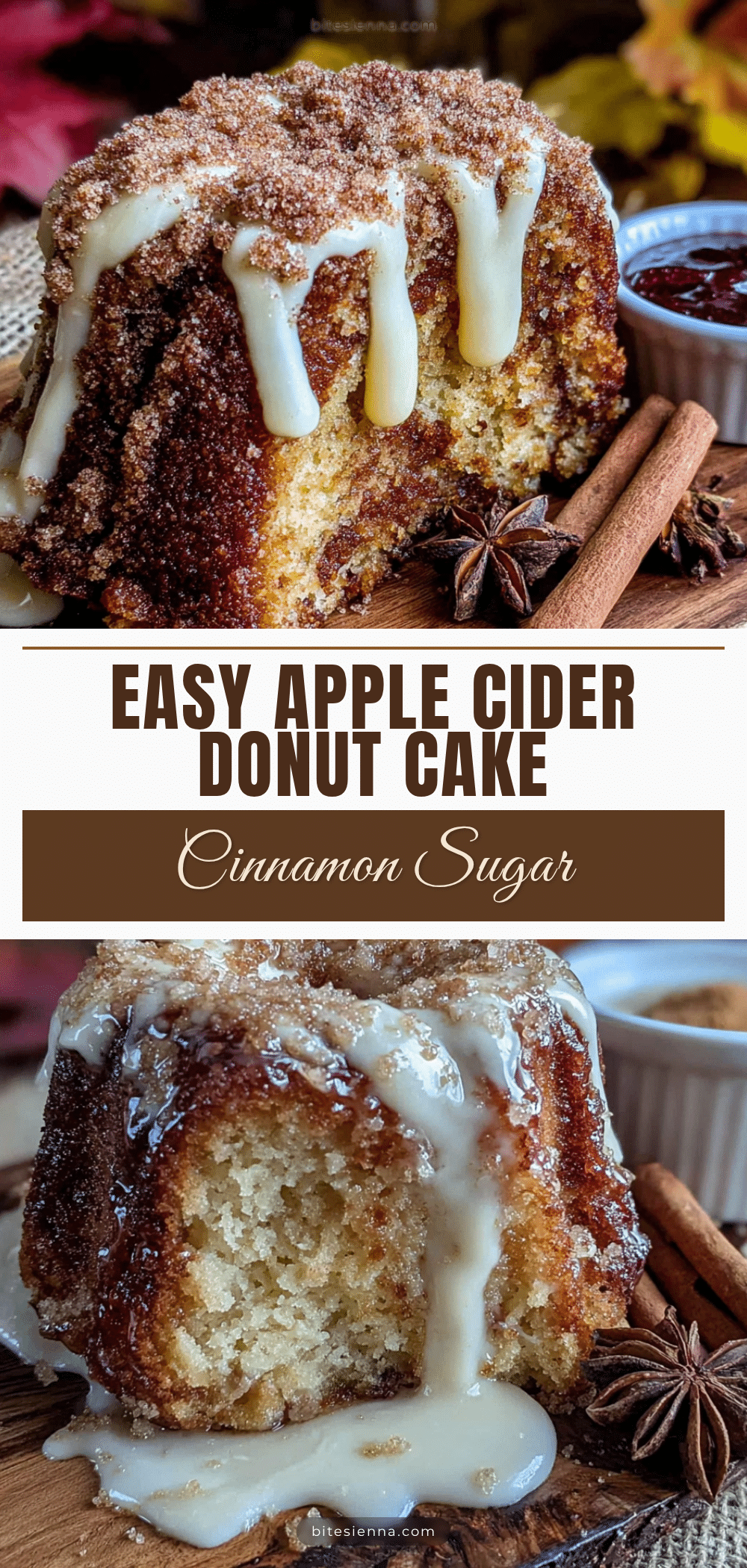
Easy Apple Cider Donut Cake with Cinnamon Sugar
A quick and easy cake that tastes like apple cider donuts, with a tender crumb and a crunchy cinnamon sugar coating. Perfect for fall gatherings or a cozy weekend treat.
- Prep Time: 15 minutes
- Cook Time: 35 minutes
- Total Time: 50 minutes
- Yield: 12 servings 1x
- Category: Dessert
- Cuisine: American
Ingredients
- 2 cups (480 ml) apple cider
- 2 cups (250 grams) all-purpose flour
- 1 cup (200 grams) granulated sugar
- 1/2 cup (1 stick, 113 grams) unsalted butter, melted and slightly cooled
- 2 large eggs, at room temperature
- 1/2 cup (120 ml) buttermilk
- 1 teaspoon vanilla extract
- 1 1/2 teaspoons baking powder
- 1/2 teaspoon baking soda
- 1/2 teaspoon salt
- 1 teaspoon ground cinnamon
- 1/4 teaspoon ground nutmeg
- For the Cinnamon Sugar Coating:
- 1/2 cup (100 grams) granulated sugar
- 1 1/2 tablespoons ground cinnamon
- 1/4 cup (1/2 stick, 57 grams) unsalted butter, melted
Instructions
- Preheat your oven to 350°F (175°C). Generously grease a 10-cup Bundt pan with butter or non-stick baking spray, dust with flour, and tap out excess. Set aside.
- Reduce the apple cider: Pour 2 cups of apple cider into a medium saucepan. Bring to a boil over medium-high heat, then reduce to a steady simmer. Cook, stirring occasionally, until reduced to about 1/2 cup (120 ml), about 15-20 minutes. Remove from heat and let cool.
- Mix the dry ingredients: In a large mixing bowl, whisk together flour, sugar, baking powder, baking soda, salt, cinnamon, and nutmeg for about 30 seconds.
- Mix the wet ingredients: In a medium mixing bowl, whisk together melted butter (not hot), eggs, buttermilk, vanilla extract, and cooled reduced apple cider until smooth.
- Combine wet and dry ingredients: Pour the wet ingredients into the dry ingredients. Fold gently with a rubber spatula until just combined (about 15-20 strokes). Do not overmix.
- Pour the batter into the prepared pan. Tap the pan gently on the counter to release air bubbles.
- Bake for 35 to 40 minutes, until a toothpick inserted into the center comes out clean or with a few moist crumbs. Start checking at 30 minutes.
- Cool the cake in the pan on a cooling rack for 15 minutes. Then run a thin knife around the edges, invert onto the rack, and let cool for another 10 minutes.
- While the cake is still warm, brush the entire surface with melted butter. In a small bowl, mix 1/2 cup sugar and 1 1/2 tablespoons cinnamon. Sprinkle generously over the buttered cake, pressing gently to adhere.
- Let the cake cool completely on the rack before slicing. The coating will set as it cools.
Notes
For best results, use fresh unfiltered apple cider. Reduce the cider slowly to avoid burning. The cake tastes even better the next day. For a dairy-free version, use melted coconut oil and dairy-free milk with lemon juice. For gluten-free, use a 1:1 gluten-free flour blend with xanthan gum.
Nutrition
- Serving Size: 1 slice
- Calories: 320
- Sugar: 32
- Sodium: 280
- Fat: 14
- Saturated Fat: 8
- Carbohydrates: 47
- Fiber: 1
- Protein: 4
Keywords: apple cider donut cake, cinnamon sugar cake, fall dessert, easy cake recipe, apple cider recipe