Lena wasn’t trying to impress anyone. I’d stopped by her place on a random Tuesday to drop off a book I’d borrowed, and the smell of sage and browned butter hit me before I even got through the front door. It was that deep, nutty, almost-too-good-to-be-true aroma that makes you forget why you came in the first place. She was standing there in her worn-out slippers, pulling a bubbling baking dish out of the oven, and she just shrugged when I asked what it was. “Oh, it’s just that butternut squash lasagna I threw together,” she said. Just. She said just. Honestly, I think I stood there for a solid ten seconds, mouth half-open, before I managed to ask for the recipe. It was one of those moments where you realize the best food doesn’t come from a fancy restaurant or a complicated cookbook—it comes from someone who doesn’t think they’re doing anything special. That casual, no-big-deal attitude is the whole point of this cozy butternut squash lasagna with sage brown butter. It’s a dish that feels like a warm hug on a chilly evening, and I haven’t stopped making it since. Maybe you’ve been there—you taste something at a friend’s house, and you know you’ll be thinking about it for weeks. This is that recipe.
Why You’ll Love This Recipe
Let’s be real—lasagna can be a project. But this version? It’s worth every single minute, and I’ve tweaked it over countless batches to make sure it’s as foolproof as possible. I’ve tested it with different cheeses, roasted the squash at varying temperatures, and even tried skipping the browning step on the butter (don’t do it). This is the final, perfected version that I’m genuinely proud of.
- Quick & Easy: While it’s not a 30-minute meal, the active prep time is only about 45 minutes. The oven does the rest of the work.
- Simple Ingredients: No weird, hard-to-find items. You’ll grab a butternut squash, some fresh sage, lasagna noodles, and a few cheeses. That’s it.
- Perfect for Cozy Nights: This is the ultimate fall and winter comfort food. It’s made for those evenings when you want something hearty and soul-warming.
- Crowd-Pleaser: I’ve served this to my family, picky eaters, and even a few skeptics who “don’t like squash.” Every single person went back for seconds.
- Unbelievably Delicious: The combination of sweet, roasted butternut squash with nutty, aromatic brown butter and sage is next-level. It’s the kind of meal that makes you close your eyes after the first bite.
What makes this different from other squash lasagnas? It’s the double hit of sage—both in the brown butter and scattered between the layers. Plus, I use a blend of ricotta and mozzarella that keeps everything creamy without being too heavy. This isn’t just another version; it’s the best version I’ve ever made.
What Ingredients You Will Need
This recipe uses simple, wholesome ingredients to build layers of flavor without any fuss. Most of these are pantry staples or easy to find at any grocery store, especially during the fall season.
- For the Roasted Squash:
- 1 medium butternut squash (about 2.5 lbs), peeled, seeded, and cut into 1-inch cubes
- 2 tablespoons olive oil
- 1/2 teaspoon salt
- 1/4 teaspoon black pepper
- For the Sage Brown Butter:
- 1/2 cup unsalted butter (1 stick)
- 12-15 fresh sage leaves (plus extra for garnish)
- For the Cheese Mixture:
- 15 ounces whole milk ricotta cheese (I prefer Galbani for its creaminess)
- 1 large egg, lightly beaten
- 1/2 cup grated Parmesan cheese
- 1/4 teaspoon ground nutmeg (freshly grated is best)
- 1/2 teaspoon salt
- 1/4 teaspoon black pepper
- For Assembling:
- 12 no-boil lasagna noodles (such as Barilla)
- 3 cups shredded whole milk mozzarella cheese
- 1/2 cup grated Parmesan cheese (for topping)
A quick note on the squash: look for one that feels heavy for its size with a firm, unblemished skin. If you’re short on time, you can buy pre-cut squash, but roasting it yourself gives so much more flavor. For the sage, fresh is non-negotiable here—dried sage just won’t give you that same aromatic punch in the brown butter.
Equipment Needed
You don’t need a ton of fancy gadgets for this, which is part of why I love it. Here’s what you’ll need:
- 9×13-inch baking dish – This is the standard size for a lasagna. I use a glass one because I like being able to see the layers.
- Large rimmed baking sheet – For roasting the squash. A half-sheet pan works perfectly.
- Medium saucepan – For making the sage brown butter. A light-colored pan helps you see the butter change color.
- Mixing bowls – One large for the ricotta mixture, one small for the brown butter.
- Chef’s knife and cutting board – For prepping the squash and sage.
- Wooden spoon or spatula – For stirring the brown butter.
If you don’t have a 9×13, you can use a slightly smaller dish—just adjust the number of noodles and layers. I’ve also used a metal pan before, and it works fine, though the edges might brown a bit faster. No-boil noodles save a ton of time, but if you only have regular noodles, just boil them for 6-7 minutes before assembling. And honestly, I’ve forgotten to buy no-boil noodles before and used regular ones without pre-cooking—they turned out a little firmer, but it still worked in a pinch.
Preparation Method

Alright, let’s get cooking. This recipe comes together in a few steps, but I promise it’s not as complicated as it looks. Take your time, and don’t rush the brown butter—it’s the star of the show.
- Roast the Squash: Preheat your oven to 400°F (200°C). Toss the cubed butternut squash with the olive oil, salt, and pepper on your baking sheet. Spread it out in a single layer. Roast for 25-30 minutes, flipping halfway through, until the squash is tender and lightly caramelized on the edges. You’ll know it’s done when a fork slides in easily. Let it cool slightly, then mash it with a fork or potato masher. You want it chunky, not a puree. Set aside.
- Make the Sage Brown Butter: While the squash roasts, place the butter in your medium saucepan over medium heat. Melt it completely, then add the fresh sage leaves. Continue cooking, stirring occasionally with your wooden spoon. The butter will start to foam, then the milk solids will turn golden brown. Watch it closely—it goes from perfect to burnt in seconds. When you see a deep amber color and smell a nutty aroma (about 4-5 minutes), remove it from the heat immediately. Pour it into a small bowl, sage leaves and all, and set aside.
- Prepare the Cheese Mixture: In a large bowl, combine the ricotta, beaten egg, 1/2 cup Parmesan, nutmeg, salt, and pepper. Stir until smooth and well combined. Give it a taste—you want it well-seasoned because it’s a key layer.
- Assemble the Lasagna: Reduce the oven temperature to 375°F (190°C). Spread a thin layer of the sage brown butter (about 2 tablespoons) on the bottom of your 9×13 dish. This prevents sticking and adds flavor right from the start.
- Layer 1: Place 3 no-boil lasagna noodles over the butter.
- Layer 2: Spread 1/3 of the mashed butternut squash over the noodles.
- Layer 3: Dollop 1/3 of the ricotta mixture over the squash and spread it gently.
- Layer 4: Drizzle 1/3 of the remaining sage brown butter over the ricotta.
- Layer 5: Sprinkle 1 cup of shredded mozzarella cheese.
Repeat these layers two more times, ending with a final layer of noodles. On top of the last noodles, spread any remaining ricotta mixture (if any), then the last of the brown butter, and top with the remaining 1 cup of mozzarella and the 1/2 cup of Parmesan.
- Bake: Cover the dish tightly with aluminum foil. Bake for 40 minutes. Then, remove the foil and bake for another 15-20 minutes, until the cheese is bubbly and golden brown on top. Let it rest on the counter for at least 15 minutes before cutting. This is crucial—if you cut it too soon, it will turn into a soupy mess. Trust me, I learned that the hard way.
A little tip: if the top is browning too quickly but the center isn’t bubbly yet, just tent the foil back on loosely for the last 10 minutes. You want that golden crust, but not a burnt one.
Cooking Tips & Techniques
I’ve made this lasagna more times than I can count, and I’ve messed it up in almost every way possible. Here’s what I’ve learned:
- Don’t skip roasting the squash. I tried boiling it once to save time, and it turned into a watery mess that made the lasagna soggy. Roasting concentrates the sweetness and keeps the texture right.
- Watch the brown butter like a hawk. The first time I made this, I got distracted by my phone and ended up with black butter. It smelled awful. Stay at the stove, and the moment you see that amber color, pull it off the heat. Swirl the pan a few times after removing it to let the residual heat finish the job.
- Let the lasagna rest. I cannot stress this enough. The 15-minute rest allows the layers to set so you get clean slices. If you’re impatient like me, you’ll end up with a delicious but messy pile on your plate. Still tasty, but not as pretty.
- Use room temperature ricotta. If you take it out of the fridge right before mixing, it can make the filling cold and affect baking time. Let it sit on the counter for 15 minutes while you prep other things.
- No-boil noodles are your friend. They absorb moisture from the sauce and squash as they bake, so you don’t have to boil them first. Just make sure you have enough moisture in the dish—the brown butter and roasted squash provide plenty.
One time, I forgot to add the egg to the ricotta mixture. The lasagna still held together, but it was a bit looser than normal. It’s a small mistake that won’t ruin the dish, but the egg really does help bind everything.
Variations & Adaptations
This recipe is pretty forgiving, so feel free to play around with it. Here are a few ways I’ve adapted it over the years:
- Make it Vegetarian: It already is! But if you want to add more veggies, try layering in some sautéed spinach or thinly sliced mushrooms between the ricotta layers. I did this once with cremini mushrooms, and it added a lovely earthy note.
- Gluten-Free Version: Swap the regular lasagna noodles for gluten-free no-boil noodles. I’ve used the Jovial brand brown rice noodles with great success. Just note that they can be a bit more delicate, so handle them gently.
- Add Some Protein: If you want to make it heartier, cook up 1 pound of Italian sausage (casings removed) and crumble it into the layers. I did this for a Super Bowl party, and it was a huge hit. Just brown the sausage first and drain the fat before adding it.
- Different Cheese Options: Not a fan of ricotta? Use cottage cheese (blended smooth in a food processor) instead. I’ve also swapped in fontina for the mozzarella, which melts beautifully and has a slightly nuttier flavor.
- Seasonal Twist: In the summer, try using roasted zucchini or yellow squash instead of butternut. You’ll need to salt and drain them first to remove excess moisture, but it’s a lighter, fresher take.
My personal favorite variation is adding a pinch of red pepper flakes to the ricotta mixture. It gives the lasagna a tiny, unexpected kick that cuts through the richness. Try it if you like a little heat.
Serving & Storage Suggestions
This lasagna is best served warm, straight from the oven after its 15-minute rest. I like to cut it into generous squares and garnish with a few fresh sage leaves that I’ve quickly fried in a little butter until crispy. It adds a nice crunch and a pop of color.
For sides, a simple green salad with a lemony vinaigrette is perfect—it balances the richness of the lasagna. I also love serving it with some crusty bread to soak up any extra brown butter that pools on the plate. If you’re feeling fancy, a glass of dry white wine like a Sauvignon Blanc or a light Pinot Grigio pairs beautifully.
Storage: Leftovers keep well in the fridge for up to 4 days. Store them in an airtight container. The flavors actually meld together even more overnight, so it might taste even better the next day.
Reheating: The best way to reheat is in the oven at 350°F (175°C) for about 15-20 minutes, covered with foil to prevent drying out. You can also use the microwave, but the noodles will be softer. I’ve even reheated individual slices in a skillet with a splash of water and a lid—it works surprisingly well.
Freezing: This lasagna freezes like a dream. Assemble it completely in a freezer-safe baking dish (use a disposable aluminum one if you want), but don’t bake it. Cover tightly with plastic wrap, then foil, and freeze for up to 3 months. When you’re ready to bake, thaw it in the fridge overnight, then bake as directed, adding about 10 extra minutes since it’s starting cold.
Nutritional Information & Benefits
Here’s an approximate breakdown per serving (based on 8 servings):
| Nutrient | Amount |
|---|---|
| Calories | 485 |
| Protein | 22g |
| Fat | 28g |
| Carbohydrates | 42g |
| Fiber | 4g |
| Vitamin A | 290% DV |
| Calcium | 35% DV |
Butternut squash is packed with vitamin A, which is great for your eyes and immune system. The sage in the brown butter isn’t just for flavor—it’s also known for its anti-inflammatory properties. And hey, the cheese provides a good dose of calcium and protein. It’s comfort food with a few hidden benefits, which always makes me feel a little better about going back for seconds.
One note: this recipe contains dairy and gluten. For a dairy-free version, you can try using a plant-based ricotta and mozzarella, but I haven’t tested it myself. If you do, let me know how it turns out!
Conclusion
This cozy butternut squash lasagna with sage brown butter is the kind of recipe that makes you feel like you’ve done something special, even though it’s surprisingly simple. It’s perfect for a quiet night in, a holiday dinner, or just because you want to fill your kitchen with that incredible smell. I love how it brings together the sweetness of the squash with the nutty, aromatic butter—it’s a combination that never gets old.
I really hope you give it a try. Don’t be afraid to make it your own—swap in different cheeses, add some sausage, or throw in extra sage if you’re feeling bold. The best recipes are the ones you tweak until they feel like yours. When you do make it, come back and let me know how it went. Leave a comment below or tag me in your photos—I’d love to see your creation!
Happy cooking, friends. This one’s a keeper.
Frequently Asked Questions
Can I use frozen butternut squash instead of fresh?
You can, but I don’t recommend it. Frozen squash tends to release a lot of water when it thaws, which can make your lasagna soggy. If you’re in a pinch, thaw it completely and pat it very dry with paper towels before roasting.
Do I have to use no-boil noodles?
No, you can use regular lasagna noodles. Just boil them according to the package directions until al dente (about 6-7 minutes), then drain and lay them out on a kitchen towel to prevent sticking. The baking time should stay the same.
Can I make this ahead of time?
Absolutely! Assemble the lasagna completely, cover it, and refrigerate for up to 24 hours. When you’re ready to bake, add about 10-15 minutes to the covered baking time since it’s starting cold. You might also need to add a few minutes after removing the foil.
My brown butter turned black. What did I do wrong?
You probably cooked it too long or had the heat too high. Brown butter goes from perfect to burnt very quickly. Next time, keep the heat on medium and watch for the milk solids to turn a light amber color. As soon as you see that, pull it off the heat immediately. Swirl the pan for another 10 seconds to let the residual heat finish it.
Can I use dried sage instead of fresh?
I really wouldn’t. Fresh sage is key for the brown butter—it becomes crispy and infuses the butter with its aroma. Dried sage can be bitter and won’t give you the same texture or flavor. If you absolutely have to, use about 1 teaspoon of dried rubbed sage, but the result won’t be the same.
Pin This Recipe!
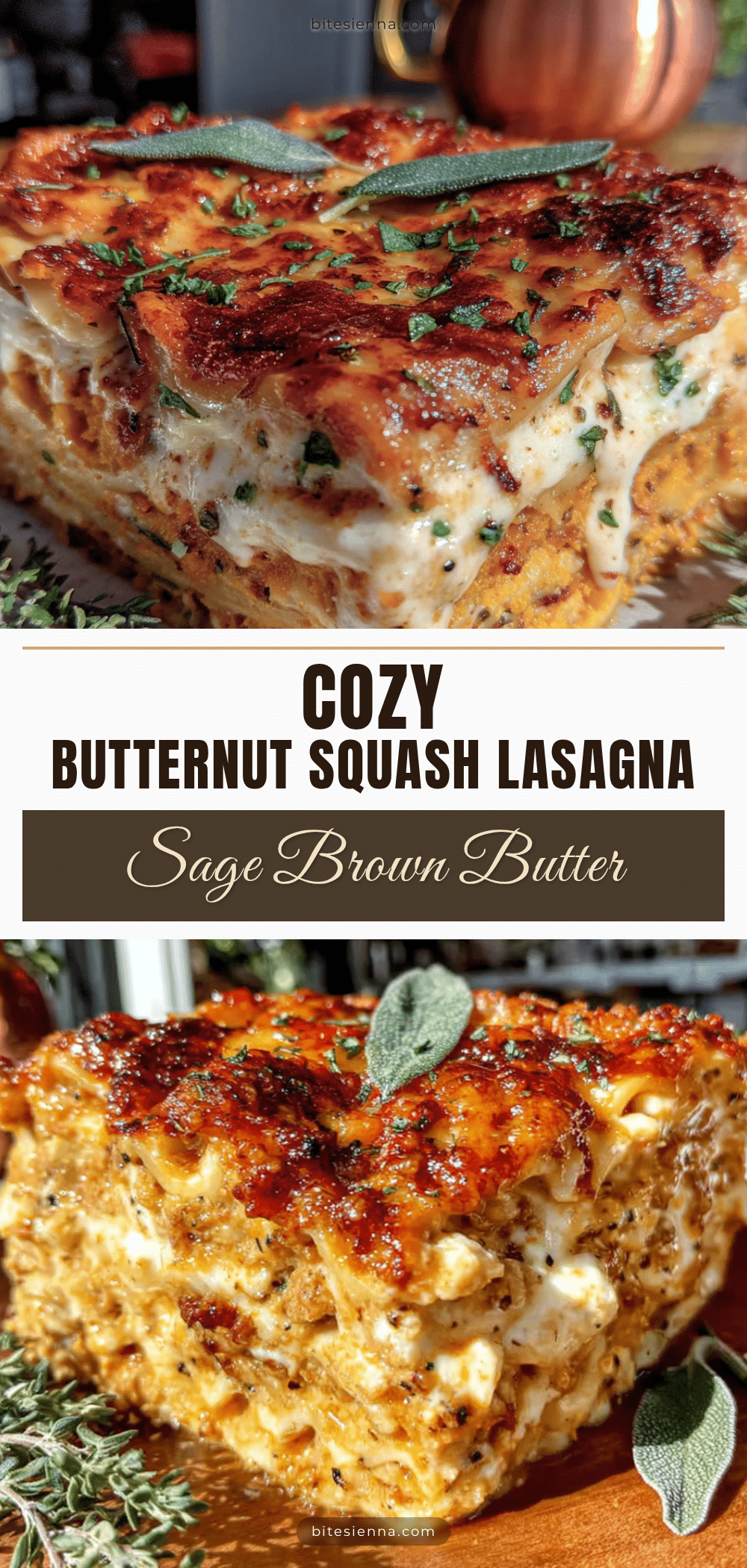
Easy Cozy Butternut Squash Lasagna with Sage Brown Butter

A cozy, comforting lasagna featuring roasted butternut squash, creamy ricotta, and nutty sage brown butter. Perfect for fall and winter evenings, this dish is a crowd-pleaser that feels like a warm hug.
- Prep Time: 45 minutes
- Cook Time: 1 hour 15 minutes
- Total Time: 2 hours
- Yield: 8 servings 1x
- Category: Main Course
- Cuisine: Italian
Ingredients
- 1 medium butternut squash (about 2.5 lbs), peeled, seeded, and cut into 1-inch cubes
- 2 tablespoons olive oil
- 1/2 teaspoon salt
- 1/4 teaspoon black pepper
- 1/2 cup unsalted butter (1 stick)
- 12–15 fresh sage leaves (plus extra for garnish)
- 15 ounces whole milk ricotta cheese
- 1 large egg, lightly beaten
- 1/2 cup grated Parmesan cheese
- 1/4 teaspoon ground nutmeg
- 1/2 teaspoon salt
- 1/4 teaspoon black pepper
- 12 no-boil lasagna noodles
- 3 cups shredded whole milk mozzarella cheese
- 1/2 cup grated Parmesan cheese (for topping)
Instructions
- Preheat oven to 400°F (200°C). Toss cubed butternut squash with olive oil, salt, and pepper on a baking sheet. Roast for 25-30 minutes, flipping halfway, until tender and caramelized. Mash with a fork until chunky. Set aside.
- While squash roasts, melt butter in a medium saucepan over medium heat. Add fresh sage leaves. Cook, stirring occasionally, until butter turns deep amber and smells nutty (about 4-5 minutes). Remove from heat immediately and pour into a small bowl, sage leaves included. Set aside.
- In a large bowl, combine ricotta, beaten egg, 1/2 cup Parmesan, nutmeg, salt, and pepper. Stir until smooth. Taste and adjust seasoning.
- Reduce oven temperature to 375°F (190°C). Spread about 2 tablespoons of sage brown butter on the bottom of a 9×13-inch baking dish.
- Layer 1: Place 3 no-boil lasagna noodles over the butter.
- Layer 2: Spread 1/3 of the mashed butternut squash over the noodles.
- Layer 3: Dollop 1/3 of the ricotta mixture over the squash and spread gently.
- Layer 4: Drizzle 1/3 of the remaining sage brown butter over the ricotta.
- Layer 5: Sprinkle 1 cup of shredded mozzarella cheese.
- Repeat layers two more times, ending with a final layer of noodles. On top, spread any remaining ricotta mixture, then the last of the brown butter, and top with remaining 1 cup mozzarella and 1/2 cup Parmesan.
- Cover tightly with aluminum foil. Bake for 40 minutes. Remove foil and bake for another 15-20 minutes, until cheese is bubbly and golden brown.
- Let rest on counter for at least 15 minutes before cutting.
Notes
Don’t skip roasting the squash; it prevents sogginess. Watch the brown butter closely to avoid burning. Let the lasagna rest for 15 minutes before cutting to ensure clean slices. Use room temperature ricotta for even baking. No-boil noodles are recommended for convenience.
Nutrition
- Serving Size: 1 slice (1/8 of lasa
- Calories: 485
- Sugar: 6
- Sodium: 680
- Fat: 28
- Saturated Fat: 16
- Carbohydrates: 42
- Fiber: 4
- Protein: 22
Keywords: butternut squash lasagna, sage brown butter, fall recipe, comfort food, vegetarian lasagna