My neighbor Kate wasn’t trying to impress me. I’d stopped by to return her slow cooker—the one she’d loaned me three months ago, honestly, I’d forgotten I even had it—and the smell hit me before I’d even knocked. It was warm and sweet, with this savory edge that made my stomach actually growl, right there on her porch. She opened the door looking frazzled, spatula in hand, and waved me in like it was nothing.
“Oh, just throwing together some salmon,” she said, shrugging. “It’s the easiest thing.”
I watched her slide a baking sheet into the oven. The salmon fillets were glistening, coated in this gorgeous amber-colored sauce, and there were bright green asparagus spears tucked around them like they were keeping the fish company. She closed the oven door, wiped her hands on her jeans, and completely changed the subject to my dog’s weird habit of eating socks. She had no idea she’d just changed my cooking life.
That night, I couldn’t stop thinking about it. The way that honey and garlic had caramelized around the salmon. The way the asparagus had come out tender but still snappy. I texted her at 10 PM—sorry, Kate—and she sent me the recipe in three lines, no caps, like it was barely worth typing. But let me tell you, that casual little recipe became my go-to for busy nights, lazy Sundays, and every time I need to feel like I’ve got my act together in the kitchen. Maybe you’ve been there—needing a dinner that feels fancy but takes almost no effort. This is that dinner.
Why You’ll Love This Recipe
Let me break it down for you. This honey garlic baked salmon with asparagus isn’t just another weeknight dinner—it’s the one that’ll make you feel like a rockstar without actually doing much work. I’ve tested this probably a dozen times (okay, maybe more) to get every detail just right, and here’s why it keeps ending up on my table.
- Ready in 30 Minutes: From the moment you open the fridge to the moment you’re sitting down with a fork, it’s half an hour. That’s less time than it takes to decide what to order for delivery.
- Simple Pantry Ingredients: Honey, soy sauce, garlic, salmon, asparagus. That’s basically it. No weird specialty items, no trips to three different stores.
- Perfect for Cozy Nights: Cold weather? Rough day? This is the kind of meal that wraps around you like a warm blanket. It’s comfort food that’s actually good for you.
- Crowd-Pleaser: I’ve served this to picky kids, health-conscious friends, and my dad who “doesn’t really like fish.” Every single plate came back clean.
- Unbelievably Delicious: The honey caramelizes into this sticky-sweet glaze, the garlic gets all roasty and mellow, and the salmon stays so tender it flakes apart with a fork. The asparagus soaks up all that saucy goodness. Honestly, it’s next-level.
What makes this recipe different from the dozens of other salmon recipes out there? It’s the balance. The honey isn’t too sweet because the soy sauce cuts through it. The garlic isn’t too sharp because it roasts gently in the oven. And the asparagus cooks right alongside everything, so you get a complete meal on one pan with almost no cleanup. I’ve tried versions with maple syrup, with brown sugar, with balsamic—and this honey garlic combo is the one I keep coming back to. It’s my best version, and I think it’ll become yours too.
This recipe isn’t just good—it’s the kind that makes you close your eyes after the first bite. It’s comfort food reimagined: faster, simpler, but with the same soul-soothing satisfaction. Perfect for impressing guests without stress, or turning a simple Tuesday night into something memorable.
What Ingredients You Will Need
This recipe uses simple, wholesome ingredients that come together to deliver bold flavor and satisfying texture without any fuss. Most of these are probably already in your kitchen, which is honestly my favorite kind of recipe.
For the Salmon and Asparagus:
- 4 salmon fillets (about 6 ounces each, skin-on or skinless—your call)
- 1 bunch fresh asparagus (about 1 pound, woody ends snapped off)
- 2 tablespoons olive oil (divided—use a good quality one for drizzling)
- Salt and black pepper (to taste; I use kosher salt for better seasoning)
- 1/2 teaspoon garlic powder (for a little extra savory depth)
- Optional: sesame seeds and sliced green onions (for garnish, if you’re feeling fancy)
For the Honey Garlic Glaze:
- 1/3 cup honey (use a runny honey, not crystallized—it mixes better)
- 3 tablespoons low-sodium soy sauce (or tamari if you’re gluten-free)
- 4 cloves garlic (minced—fresh is non-negotiable here, please don’t use the jarred stuff)
- 1 tablespoon fresh lemon juice (about half a lemon; it brightens everything up)
- 1 teaspoon grated fresh ginger (optional but highly recommended; adds warmth)
- 1/2 teaspoon red pepper flakes (optional, for a tiny kick—I skip it for the kids)
Let me talk you through a few of these choices. For the salmon, I personally prefer wild-caught when I can find it—the texture is firmer and the flavor is cleaner. But honestly, good-quality farmed salmon works beautifully here too, and it’s often more affordable. Look for fillets that are similar in thickness so they cook evenly. If your fillets have pin bones, run your fingers along the surface and pull them out with tweezers. It takes two minutes and saves you from that awkward moment at the table.
For the asparagus, I look for spears that are bright green and firm, not limp or mushy. Thicker spears hold up better during roasting, so don’t worry if they’re not pencil-thin. To trim them, just hold a spear at both ends and bend gently—it’ll snap right where the woody part ends. Then line up the rest and cut them to match.
The honey is the star of the glaze, so use one you actually like the taste of. I reach for a local wildflower honey when I can, but clover honey or even orange blossom work great. Just avoid anything labeled “honey-flavored syrup”—that’s not real honey and it won’t caramelize the same way.
And the garlic? Please use fresh. I know, I know, the jarred minced garlic is convenient. But this recipe really shines with fresh garlic cloves that you mince yourself. The flavor is sharper, more aromatic, and it mellows into something almost sweet as it roasts. You’ll taste the difference, I promise.
If you need substitutions, here are a few that work well: swap honey with maple syrup for a slightly earthier sweetness, use coconut aminos instead of soy sauce for a soy-free option, or replace asparagus with broccolini or green beans when asparagus isn’t in season.
Equipment Needed
You don’t need a fancy kitchen to make this honey garlic baked salmon. Here’s what you’ll actually use:
- Large baking sheet (rimmed, please—you don’t want that glaze running everywhere)
- Parchment paper or aluminum foil (for easy cleanup; I’m a parchment person myself)
- Small bowl (for whisking the glaze together)
- Whisk or fork (to mix the glaze)
- Chef’s knife and cutting board (for mincing garlic and trimming asparagus)
- Measuring spoons and cups (because eyeballing honey gets sticky fast)
- Tongs (for flipping the asparagus halfway through)
- Instant-read thermometer (optional but highly recommended—takes the guesswork out of doneness)
If you don’t have a rimmed baking sheet, a 9×13-inch baking dish works too—just keep in mind the salmon won’t get quite as caramelized on the bottom. And if you don’t have an instant-read thermometer, don’t stress. I’ll give you visual cues so you’ll know when the salmon is perfectly cooked.
One thing I’ve learned the hard way: line your baking sheet with parchment paper. The first time I made this, I skipped it, and spent twenty minutes scrubbing caramelized honey off the pan. Not my finest moment. Parchment makes cleanup almost nonexistent, and that’s a win in my book.
Preparation Method
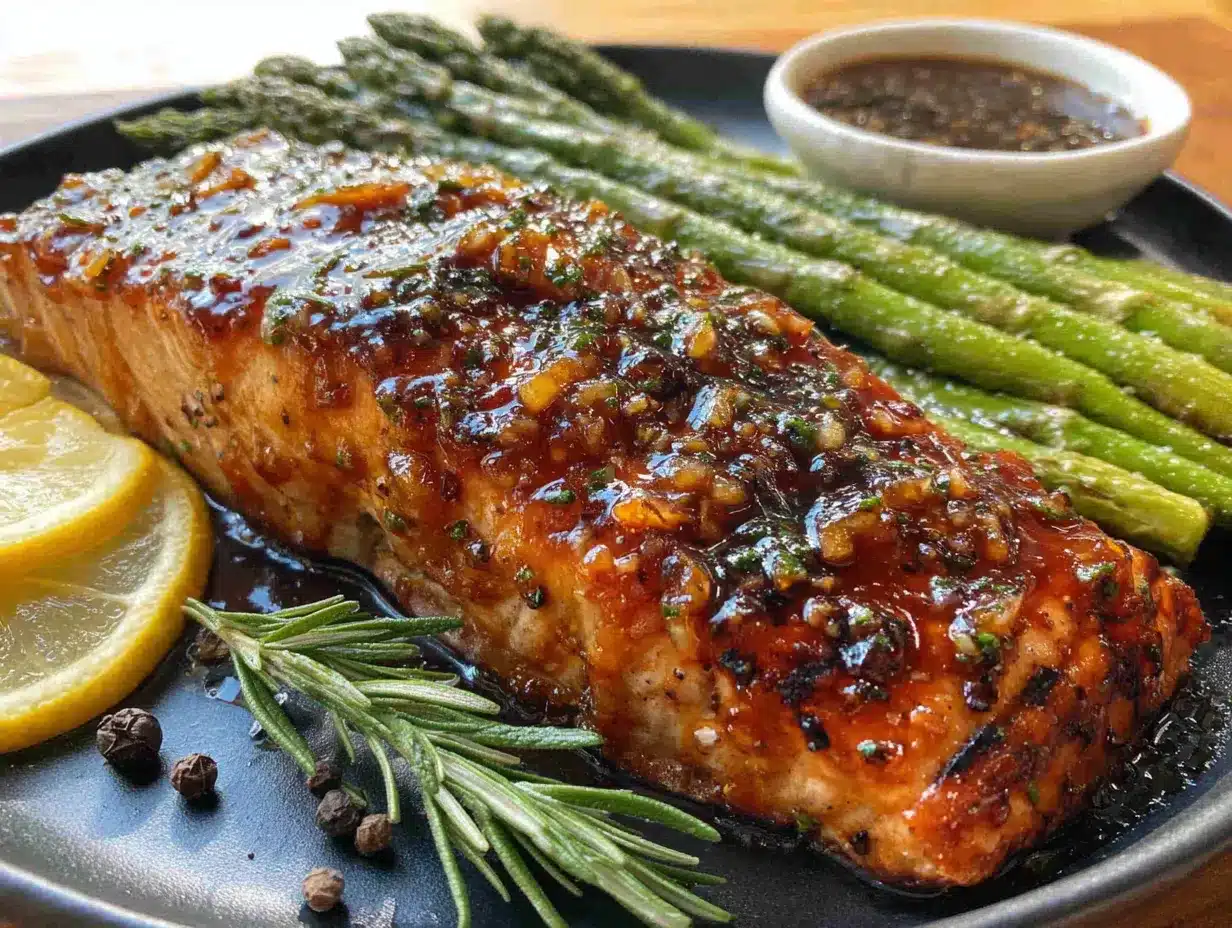
Alright, let’s get cooking. This honey garlic baked salmon with asparagus comes together in about 30 minutes, and most of that is hands-off oven time. Here’s exactly how to do it.
Step 1: Preheat and Prep
Preheat your oven to 400°F (200°C). While it’s heating up, line a large rimmed baking sheet with parchment paper. This is your insurance policy against sticky cleanup later. Trust me on this.
Step 2: Make the Glaze
In a small bowl, whisk together 1/3 cup honey, 3 tablespoons low-sodium soy sauce, 4 minced garlic cloves, 1 tablespoon fresh lemon juice, 1 teaspoon grated ginger (if using), and 1/2 teaspoon red pepper flakes (if using). Whisk until everything’s combined and the honey has fully dissolved into the soy sauce. Give it a taste—it should be sweet, savory, and a little tangy. If it’s too sweet for your liking, add another splash of lemon juice.
Step 3: Season the Asparagus
Snap the woody ends off your asparagus spears and arrange them on one side of the baking sheet. Drizzle with 1 tablespoon of olive oil, then sprinkle with salt, pepper, and 1/4 teaspoon garlic powder. Toss them gently with your hands (or tongs, if you’re not a hands-on cooker) to coat evenly. Spread them out in a single layer so they roast instead of steam.
Step 4: Prep the Salmon
Pat your salmon fillets dry with paper towels. This is important—dry salmon gets a better sear and the glaze clings to it properly. Place the fillets on the other side of the baking sheet, skin-side down if they have skin. Drizzle with the remaining 1 tablespoon olive oil, then season with salt, pepper, and the remaining 1/4 teaspoon garlic powder.
Step 5: Glaze the Salmon
Spoon about half of the honey garlic glaze over the salmon fillets, spreading it evenly with the back of the spoon. Reserve the other half for later. Don’t pour it all on now—you want to save some for brushing on after cooking, so the glaze stays glossy and fresh-tasting.
Step 6: Bake
Place the baking sheet in the preheated oven and bake for 12 to 15 minutes, depending on the thickness of your salmon. For fillets that are about 1 inch thick, 13 minutes is usually perfect. The asparagus should be tender-crisp and the salmon should flake easily with a fork. If you’re using an instant-read thermometer, the internal temperature should reach 145°F (63°C) at the thickest part.
Step 7: Glaze Again and Serve
Remove the baking sheet from the oven. Brush the reserved honey garlic glaze over the cooked salmon fillets. The residual heat will warm it up and make it extra glossy. If you’re using garnishes, sprinkle sesame seeds and sliced green onions over the top. Serve immediately, with the roasted asparagus alongside.
A few things to watch for: If your salmon fillets are thinner (like 3/4 inch), check them at 10 minutes. If they’re thicker (like 1 1/2 inches), they might need 16 to 18 minutes. The asparagus should be bright green and easily pierced with a fork but not mushy. And here’s a little tip I learned from my third attempt: don’t crowd the pan. If your fillets are touching each other or the asparagus is piled up, they’ll steam instead of roast. Give everything some breathing room.
Cooking Tips & Techniques
After making this honey garlic baked salmon more times than I can count (and messing it up a few memorable times), I’ve picked up some tricks that make a real difference.
Don’t Overcook the Salmon. This is the number one mistake I see people make. Salmon goes from perfectly flaky to dry and sad in about 90 seconds. Pull it out of the oven when it’s just barely opaque in the center—it’ll continue cooking from residual heat as it rests. If you’re nervous, use that instant-read thermometer. 145°F is the target, but honestly, I pull mine at 140°F and let it rest for a few minutes. It’s perfect every time.
Room Temperature Salmon Cooks More Evenly. Take your salmon out of the fridge about 15 minutes before you start cooking. Cold salmon straight from the fridge cooks unevenly—the outside can overcook while the inside stays cold. Letting it sit on the counter while you prep the other ingredients makes a noticeable difference.
Pat the Salmon Dry. I know I said this already, but it’s worth repeating. Wet salmon doesn’t brown properly, and the glaze will slide right off instead of sticking and caramelizing. Take an extra 30 seconds with a paper towel.
Watch the Asparagus Thickness. If your asparagus spears are very thick, they might need a head start in the oven. Pop them in for 3 to 4 minutes before adding the salmon. If they’re very thin, keep an eye on them—they can go from perfect to limp in a flash. I’ve definitely had a batch of pencil-thin asparagus turn into sad green noodles before.
Double the Glaze if You Love Sauce. The recipe as written gives you a nice coating, but if you’re a sauce person (I see you), make one and a half times the glaze. Use the extra to drizzle over rice or quinoa that you serve alongside. My family fights over the last drops.
Let the Salmon Rest. I know it’s tempting to dig in immediately, but letting the salmon rest for 2 to 3 minutes after brushing on the reserved glaze makes a difference. The glaze sets slightly, the juices redistribute, and every bite is more flavorful.
Variations & Adaptations
One of the best things about this honey garlic baked salmon is how easy it is to switch things up. Here are a few variations I’ve tried and loved.
Lemon Herb Version: Add the zest of one lemon and 2 teaspoons of dried thyme or rosemary to the glaze. Skip the ginger and red pepper flakes. The result is brighter, more herbaceous, and perfect for spring. I made this version for Easter brunch last year and it disappeared in minutes.
Spicy Maple Variation: Swap the honey for maple syrup and increase the red pepper flakes to 1 teaspoon. Add a splash of sriracha or sambal oelek if you’re feeling brave. This one’s become my go-to when I want something that wakes up my taste buds. The maple syrup gets this incredible smoky-sweet caramelization that’s just chef’s kiss.
Low-Carb / Keto-Friendly: Use a sugar-free honey substitute or just a few drops of liquid stevia mixed with a bit of water. Replace the honey with a sugar-free maple syrup alternative. The texture will be slightly different, but the flavor is still fantastic. Serve with extra asparagus or a side of cauliflower rice.
Sheet Pan with Vegetables: Swap the asparagus for broccoli florets, sliced bell peppers, or halved Brussels sprouts. Just keep in mind that different vegetables have different cooking times. If you’re using denser vegetables like Brussels sprouts, cut them small and give them a 5-minute head start in the oven before adding the salmon.
Garlic Butter Salmon: Melt 3 tablespoons of butter and mix it with the honey garlic glaze instead of olive oil. The butter adds a richness that’s absolutely decadent. I save this version for special occasions or when I’ve had a really long week and deserve something indulgent.
I once made a version with orange juice instead of lemon juice and added a pinch of cinnamon—it sounds weird, I know, but it was surprisingly good. Don’t be afraid to experiment. That’s half the fun of cooking.
Serving & Storage Suggestions
This honey garlic baked salmon is gorgeous on its own, but here’s how to make it a full meal.
What to Serve With It: The roasted asparagus is already on the pan, so you’re halfway there. Add a side of fluffy white rice, brown rice, or quinoa to soak up all that extra glaze. A simple cucumber salad with rice vinegar and sesame oil adds a refreshing crunch. Or go with crusty bread to mop up every last bit of sauce—no judgment here.
For a Cozy Presentation: Serve the salmon on a warm plate with the asparagus arranged artfully alongside. Drizzle any remaining pan juices over the top. Sprinkle with sesame seeds and sliced green onions for color and texture. It looks like something from a restaurant, but you made it in your own kitchen in 30 minutes.
Storage: Leftovers keep well in an airtight container in the refrigerator for up to 3 days. The salmon won’t be quite as flaky when reheated, but the flavor is still wonderful. I actually love the cold leftovers flaked over a salad the next day for lunch.
Reheating: The best way to reheat is in a low oven (300°F) for about 10 minutes, or in a skillet over medium-low heat with a splash of water or extra soy sauce. Please don’t use the microwave—it’ll turn your beautiful salmon into rubber. I learned that one the hard way.
Freezing: You can freeze the cooked salmon for up to 2 months. Wrap each fillet individually in plastic wrap, then place in a freezer bag. Thaw overnight in the refrigerator and reheat gently. The asparagus doesn’t freeze well, so plan to make fresh vegetables when you serve the leftovers.
One thing I’ve noticed: the flavors actually meld and deepen overnight. The honey garlic glaze seeps into the salmon, and the second-day leftovers are almost better than the first. Not that they usually last that long in my house.
Nutritional Information & Benefits
Here’s the thing about this honey garlic baked salmon—it’s not just delicious, it’s genuinely good for you. And that matters, especially when you’re craving comfort food.
Estimated Nutritional Values (per serving, based on 4 servings):
| Nutrient | Amount |
|---|---|
| Calories | 420 |
| Protein | 38g |
| Fat | 18g |
| Saturated Fat | 3g |
| Carbohydrates | 28g |
| Fiber | 3g |
| Sugar | 24g |
| Sodium | 680mg |
Health Benefits: Salmon is packed with omega-3 fatty acids, which are fantastic for heart health and brain function. It’s also an excellent source of high-quality protein and vitamin D. Asparagus is loaded with fiber, folate, and vitamins A, C, and K. It’s also a natural diuretic, which helps reduce bloating. The honey provides quick energy and has antibacterial properties, while garlic is known for its immune-boosting effects.
Dietary Considerations: This recipe is naturally gluten-free if you use tamari or coconut aminos instead of soy sauce. It’s also dairy-free and can be made low-carb by using a sugar-free honey substitute. The main allergens are fish (salmon) and soy (if using traditional soy sauce).
I love that I can serve this to my family knowing it’s nourishing them from the inside out. It’s comfort food that doesn’t come with guilt—just satisfaction.
Conclusion
So there you have it—my go-to honey garlic baked salmon with asparagus, the recipe that started with a casual visit to my neighbor’s house and ended up becoming a staple in my kitchen. It’s the kind of meal that makes you feel like you’ve got everything under control, even on days when you definitely don’t.
What I love most about this recipe is how forgiving it is. You can tweak the glaze, swap the vegetables, use a different type of fish—it’ll still come out delicious. It’s not about being perfect. It’s about putting something warm and satisfying on the table that makes everyone at your table feel cared for.
I’d love to hear how yours turns out. Did you add something unexpected? Serve it with a side I haven’t thought of? Leave a comment below and tell me about it. And if you make it for someone you love, send them a photo—I want to see your beautiful salmon dinners!
Until next time, happy cooking. And remember: the best recipes are the ones that come from a place of generosity and a little bit of happy accident. Just like Kate’s.
Frequently Asked Questions
Can I use frozen salmon for this recipe?
Yes, you can! Just make sure to thaw it completely in the refrigerator overnight. Pat it very dry before glazing, because frozen salmon releases more water as it thaws. You might need to add a minute or two to the cooking time.
Can I make the honey garlic glaze ahead of time?
Absolutely. You can whisk the glaze together up to 3 days in advance and store it in an airtight container in the refrigerator. Give it a good stir before using, as the honey can settle at the bottom.
What if I don’t have fresh asparagus?
No problem at all. Broccoli florets, green beans, zucchini slices, or even halved cherry tomatoes all work beautifully. Just adjust the cooking time based on the vegetable’s density. Broccoli might need an extra 2 to 3 minutes, while cherry tomatoes need less.
How do I know when the salmon is done without a thermometer?
Look for visual cues. The salmon should be opaque all the way through, and it should flake easily when you gently press it with a fork. The thickest part of the fillet should feel firm but still have a little give. If it’s still translucent in the center or feels mushy, give it another minute or two.
Can I double this recipe for a crowd?
Definitely. Just use a larger baking sheet or two sheets, and make sure the fillets aren’t touching. You may need to rotate the pans halfway through baking if your oven has hot spots. The glaze recipe doubles easily—just whisk everything together in a bigger bowl.
Pin This Recipe!
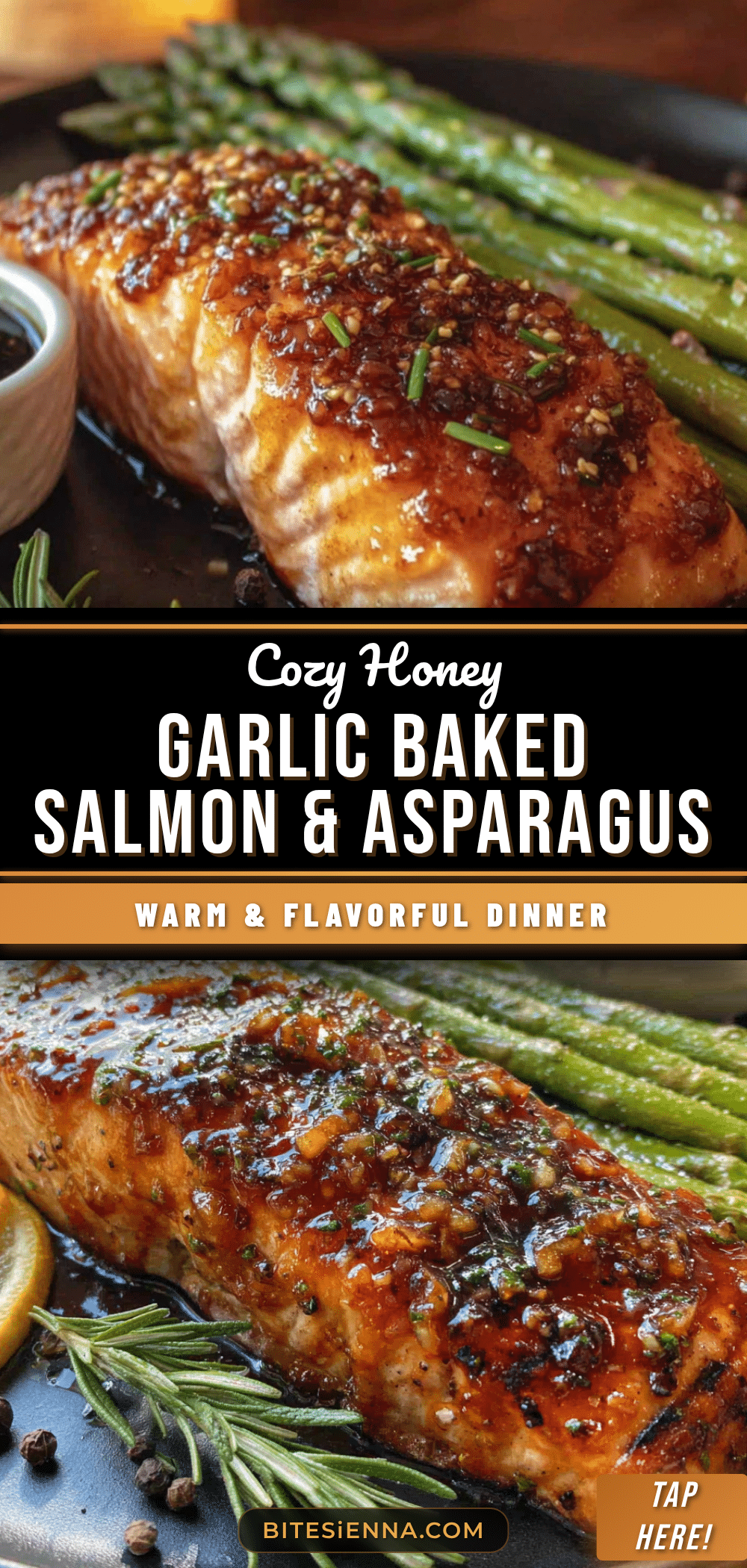
Easy Honey Garlic Salmon with Asparagus in 30 Minutes
A quick and delicious honey garlic baked salmon with tender asparagus, ready in 30 minutes. Perfect for busy weeknights or cozy dinners.
- Prep Time: 10 minutes
- Cook Time: 15 minutes
- Total Time: 25 minutes
- Yield: 4 servings 1x
- Category: Main Course
- Cuisine: American
Ingredients
- 4 salmon fillets (about 6 ounces each)
- 1 bunch fresh asparagus (about 1 pound, woody ends snapped off)
- 2 tablespoons olive oil, divided
- Salt and black pepper to taste
- 1/2 teaspoon garlic powder
- Optional: sesame seeds and sliced green onions for garnish
- 1/3 cup honey
- 3 tablespoons low-sodium soy sauce
- 4 cloves garlic, minced
- 1 tablespoon fresh lemon juice
- 1 teaspoon grated fresh ginger (optional)
- 1/2 teaspoon red pepper flakes (optional)
Instructions
- Preheat your oven to 400°F (200°C). Line a large rimmed baking sheet with parchment paper.
- In a small bowl, whisk together honey, soy sauce, minced garlic, lemon juice, ginger (if using), and red pepper flakes (if using) until combined.
- Snap the woody ends off the asparagus and arrange on one side of the baking sheet. Drizzle with 1 tablespoon olive oil, then sprinkle with salt, pepper, and 1/4 teaspoon garlic powder. Toss to coat and spread in a single layer.
- Pat salmon fillets dry with paper towels. Place on the other side of the baking sheet, skin-side down if skin-on. Drizzle with remaining 1 tablespoon olive oil and season with salt, pepper, and remaining 1/4 teaspoon garlic powder.
- Spoon about half of the honey garlic glaze over the salmon fillets, spreading evenly. Reserve the other half for later.
- Bake for 12 to 15 minutes, depending on thickness, until salmon flakes easily with a fork and asparagus is tender-crisp. Internal temperature should reach 145°F (63°C).
- Remove from oven. Brush reserved glaze over the cooked salmon. Garnish with sesame seeds and sliced green onions if desired. Serve immediately with the roasted asparagus.
Notes
For best results, let salmon sit at room temperature for 15 minutes before cooking. Pat dry thoroughly. If asparagus is thick, give it a 3-4 minute head start in the oven. Double the glaze if you love extra sauce. Let salmon rest 2-3 minutes after brushing with reserved glaze.
Nutrition
- Serving Size: 1 salmon fillet with
- Calories: 420
- Sugar: 24
- Sodium: 680
- Fat: 18
- Saturated Fat: 3
- Carbohydrates: 28
- Fiber: 3
- Protein: 38
Keywords: honey garlic salmon, baked salmon, asparagus, quick dinner, healthy, 30-minute meal