The neighborhood potluck was in twelve hours and I’d completely forgotten. Not just a little forgot—the kind where you RSVP’d “yes” two weeks ago and then let life happen. Everyone else would be bringing their signature dishes: layered enchiladas, homemade lasagnas, those fancy salads with ingredients I can’t pronounce. I had a butternut squash sitting on my counter, a box of pasta, and roughly zero energy for anything complicated.
Honestly, I almost just brought a store-bought veggie tray. But then I remembered my mom’s trick for sneaking vegetables into things. You know that feeling when you’re staring at your pantry, hoping something magical will happen? That was me at 9 PM on a Tuesday, trying to convince myself that butternut squash could somehow become dinner for twenty people.
I roasted that squash in a panic, pureed it with some milk I prayed wasn’t expired, and tossed it with pasta and whatever cheese was hanging out in my fridge. The whole thing took maybe thirty minutes of actual effort. I walked into that potluck with my casserole dish, fully prepared to be the person who brought the “eh” dish.
Here’s the thing—it won. Not in a dramatic, everyone-clapped way. More like people kept going back for seconds, and then asking for the recipe, and then my neighbor Deb actually texted me the next day saying her kids demanded I make it again. The quick roasted butternut squash mac and cheese became this accidental star, and I’ve been making it ever since. It’s the recipe that taught me you don’t need hours in the kitchen to make something people actually remember.
Why You’ll Love This Recipe
Let me tell you why this quick roasted butternut squash mac and cheese has earned a permanent spot in my weeknight rotation. I’ve tested this recipe more times than I care to admit—through burnt squash, curdled sauce, and one particularly sad attempt where I forgot the cheese entirely. What I landed on is something special.
- Quick & Easy: From start to table in about 35 minutes. The oven does most of the work while you boil pasta. Perfect for those nights when you’re staring at the clock wondering how it’s already 6 PM.
- Simple Ingredients: You probably have most of this stuff already. No fancy cheese shops required. The butternut squash does the heavy lifting for flavor and creaminess.
- Perfect for Weeknights: This is real food for real schedules. It’s cozy enough for a Tuesday and impressive enough for guests without the stress.
- Crowd-Pleaser: Kids eat it without knowing there’s a vegetable hiding in there. Adults appreciate the grown-up flavor. Everyone wins.
- Unbelievably Delicious: The roasted squash adds this natural sweetness and silky texture that makes the cheese sauce next-level. It’s comfort food that actually feels good to eat.
What makes this version different? It’s the roasting, honestly. Most squash mac recipes boil the squash, which waters everything down. Roasting concentrates the flavor and gives you that caramelized sweetness that makes the whole dish sing. Plus, the squash replaces most of the heavy cream, so you get a lighter sauce that still feels indulgent.
This recipe isn’t just good—it’s the kind that makes you close your eyes after the first bite. It’s comfort food reimagined: faster, healthier, but with the same soul-soothing satisfaction. Perfect for impressing your family on a random Wednesday, or turning a simple meal into something memorable.
What Ingredients You Will Need
This recipe uses simple, wholesome ingredients to deliver bold flavor and satisfying texture without the fuss. Most of these are pantry staples or easy to find at any grocery store.
- Butternut squash, 3 cups cubed (about 1 medium squash) — look for one that feels heavy for its size with smooth, unblemished skin
- Olive oil, 2 tablespoons — a good quality extra virgin adds flavor, but regular works fine too
- Salt and black pepper, to taste — I use kosher salt for better control
- Garlic cloves, 3, smashed — roasting them whole mellows the sharpness
- Elbow macaroni, 8 ounces (about 2 cups dry) — or any small pasta shape you have on hand
- Unsalted butter, 2 tablespoons — salted works if that’s what you’ve got, just adjust salt later
- All-purpose flour, 2 tablespoons — for thickening the sauce
- Whole milk, 1 cup — 2% works too, but avoid skim for creaminess
- Sharp cheddar cheese, 1 cup shredded — freshly shredded melts better than pre-shredded (I learned this the hard way)
- Parmesan cheese, 1/4 cup grated — adds that salty, nutty finish
- Dijon mustard, 1 teaspoon — trust me, it brightens everything without tasting mustardy
- Pinch of nutmeg, fresh grated if possible — sounds fancy but makes the squash flavor pop
- Panko breadcrumbs, 1/2 cup (optional, for topping) — adds a nice crunch if you have the extra 5 minutes
I recommend using a good sharp cheddar—I personally love Cabot or Tillamook for the best melt and flavor. For the Parmesan, buy a wedge and grate it yourself. The pre-shredded stuff has anti-caking agents that mess with the sauce texture.
If you’re dairy-sensitive, you can substitute the butter with plant-based butter, use unsweetened oat milk, and swap the cheeses for dairy-free versions. The texture won’t be exactly the same, but it’ll still be delicious.
Equipment Needed
Nothing too fancy here. Most of this you probably already have in your kitchen.
- Baking sheet, rimmed — a half-sheet pan works perfectly for roasting the squash
- Large pot, 4-5 quart — for boiling pasta
- Medium saucepan — for making the cheese sauce
- Food processor or blender — to puree the roasted squash until smooth. A high-speed blender works great, but even an immersion blender will do the job
- Cheese grater — please don’t buy pre-shredded cheese, I’m begging you
- Wooden spoon or whisk — for stirring the sauce without scratching your pans
- 9×13 baking dish — if you’re doing the baked version with the panko topping
- Measuring cups and spoons — for accuracy, though I’ll admit I eyeball the garlic most times
- Sharp knife and cutting board — for prepping the squash (be careful, those things are dense)
If you don’t have a food processor, a potato masher works in a pinch, but the texture won’t be as silky. I’ve used both and honestly, the blender version is worth the extra minute of cleanup.
Preparation Method
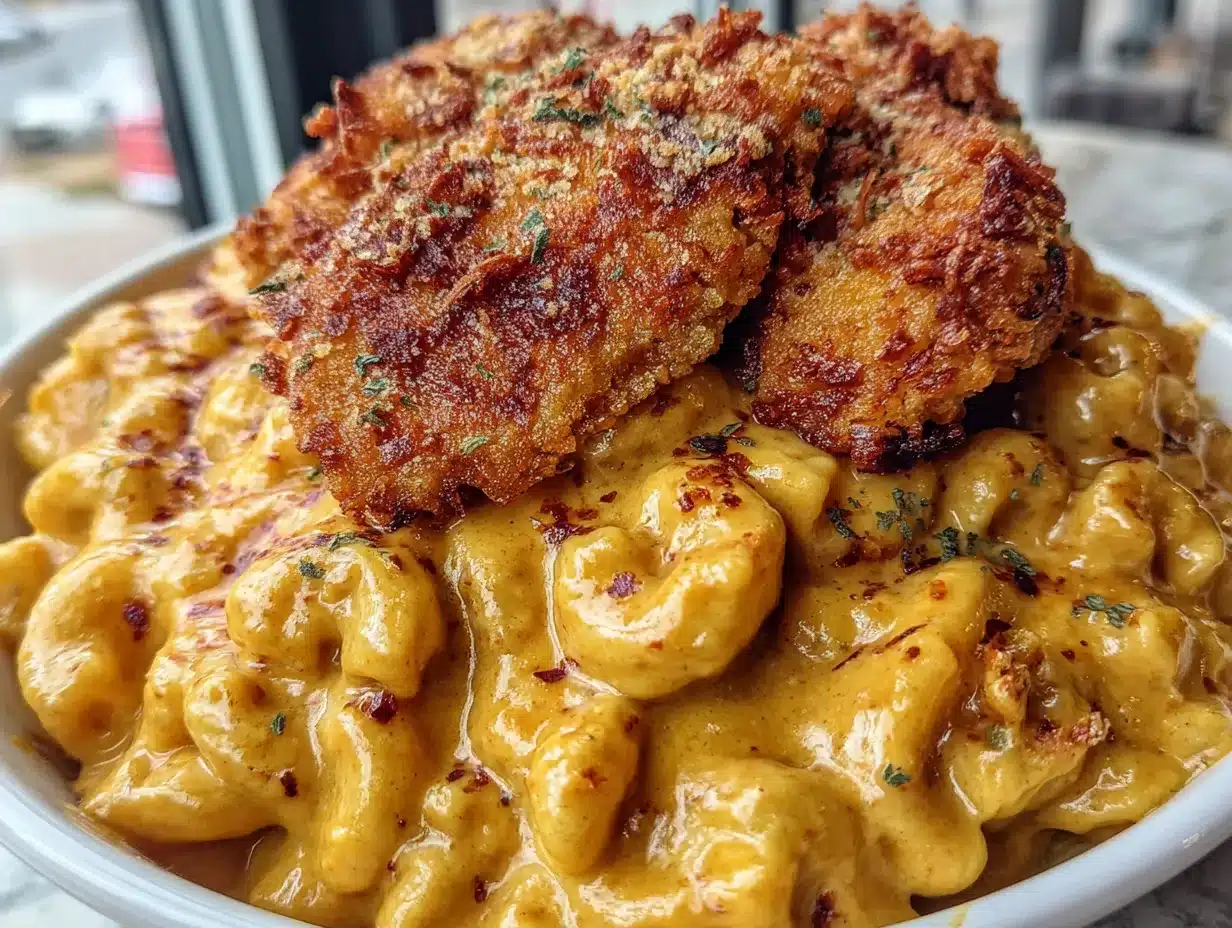
Let’s get cooking. I’ve broken this down into clear steps so you don’t miss anything.
- Preheat your oven to 400°F (200°C). Line a rimmed baking sheet with parchment paper if you have it—makes cleanup way easier.
- Prep the squash. Peel the butternut squash with a vegetable peeler, then cut it in half lengthwise. Scoop out the seeds with a spoon. Cut the flesh into 1-inch cubes. Aim for uniform size so everything roasts evenly. You’ll need about 3 cups of cubes.
- Roast the squash. Toss the cubed squash with the olive oil, smashed garlic cloves, and a generous pinch of salt and pepper. Spread in a single layer on the baking sheet. Roast for 20-25 minutes, flipping halfway through, until the squash is tender and the edges are starting to caramelize. It should be fork-tender with some golden brown spots—that’s where the flavor lives.
- Cook the pasta. While the squash roasts, bring a large pot of salted water to a boil. Add the elbow macaroni and cook according to package directions until al dente. Usually that’s about 7-8 minutes. Drain and set aside. Don’t rinse it—you want that starch to help the sauce stick.
- Puree the roasted squash. Transfer the roasted squash and garlic to a food processor or blender. Add about 1/4 cup of the milk and blend until completely smooth. You’re looking for a velvety, baby-food-like consistency. Scrape down the sides as needed.
- Make the cheese sauce. In the medium saucepan, melt the butter over medium heat. Whisk in the flour and cook for about 1 minute, stirring constantly. This is called a roux, and it’s what thickens your sauce. It should smell slightly nutty and look like wet sand.
- Add the milk. Slowly pour in the remaining milk while whisking constantly to prevent lumps. Continue whisking until the mixture thickens, about 2-3 minutes. It should coat the back of a spoon.
- Combine everything. Reduce the heat to low. Add the squash puree, shredded cheddar, grated Parmesan, Dijon mustard, and a pinch of nutmeg. Stir until the cheese is completely melted and the sauce is smooth and glossy. Taste and adjust salt and pepper.
- Mix pasta and sauce. Add the cooked macaroni to the sauce and stir until every piece is coated. The sauce will seem thin at first, but it thickens as it sits.
- Optional: Add the topping. If you’re using panko breadcrumbs, melt a tablespoon of butter and mix it with the crumbs. Sprinkle over the mac and cheese in a baking dish. Broil for 2-3 minutes until golden and crispy. Watch it carefully—broilers are sneaky and will burn things in seconds.
- Let it rest. Let the mac and cheese sit for 5 minutes before serving. This lets the sauce set up so it’s creamy instead of soupy. I know you want to dig in immediately, but trust me on this one.
A note from personal experience: if your sauce looks grainy, you either overheated it or used pre-shredded cheese. Low and slow is the way to go. And if it’s too thick, just splash in a little extra warm milk to loosen it up.
Cooking Tips & Techniques
I’ve made this quick roasted butternut squash mac and cheese at least thirty times, and I’ve messed it up in almost every way possible. Here’s what I’ve learned.
Don’t skip the roasting. I know boiling seems faster, but it’s not. Roasting concentrates the squash flavor and removes excess moisture. Boiled squash makes watery sauce, and nobody wants that. The caramelization from roasting adds a depth that you just can’t get any other way.
Cut the squash evenly. This was my biggest failure early on. Some pieces would be burnt while others were still raw. Take the extra minute to cut uniform cubes. Your future self will thank you.
Grate your own cheese. I cannot stress this enough. Pre-shredded cheese is coated with cellulose and starches that prevent clumping in the bag—and also prevent smooth melting in your sauce. Freshly grated cheese melts like a dream. It takes two extra minutes and makes all the difference.
Low heat for the sauce. High heat will break the cheese and give you a grainy, greasy mess. Keep it on low once you add the cheese. Patience is not my strong suit either, but I’ve learned this the hard way.
Season in layers. Salt the squash before roasting. Salt the pasta water (it should taste like the sea). Season the sauce. Each layer builds flavor. If your final dish tastes flat, you probably undersalted somewhere along the way.
Multitask like a pro. While the squash roasts, boil your pasta and grate your cheese. While the pasta cooks, make your roux. Good timing means everything comes together at once, and you’re not standing around waiting.
Variations & Adaptations
This recipe is forgiving, so feel free to play around. Here are some variations I’ve tried and loved.
Make it gluten-free. Use gluten-free pasta and swap the all-purpose flour for a 1:1 gluten-free flour blend or cornstarch. For the topping, use gluten-free panko or crushed rice crackers. The sauce works exactly the same way.
Add some protein. I’ve stirred in leftover shredded rotisserie chicken, crispy bacon bits, and even Italian sausage. My personal favorite is crumbled cooked bacon—the salty, smoky flavor plays beautifully with the sweet squash.
Go vegan. Use plant-based butter, unsweetened oat milk, and your favorite vegan cheddar shreds. Nutritional yeast (about 2 tablespoons) adds that cheesy flavor without dairy. The texture won’t be identical, but it’s surprisingly good.
Switch up the vegetables. Roasted sweet potato works beautifully instead of butternut squash. I’ve also used frozen butternut squash cubes in a pinch (just roast them a little longer to evaporate the moisture). Carrots or pumpkin would work too.
Try different cheeses. Smoked gouda adds a wonderful depth. Gruyere makes it extra fancy. A mix of cheddar and Monterey Jack gives you that perfect melt. Just avoid pre-shredded blends—you know the drill.
Spice it up. Add a pinch of cayenne pepper or red pepper flakes for heat. A dash of smoked paprika adds warmth without spice. Fresh thyme or sage leaves stirred in at the end bring an herby freshness that cuts through the richness.
Serving & Storage Suggestions
This mac and cheese is best served hot, straight from the pot or baking dish. The sauce is at its creamiest right after it’s made. If you’re using the panko topping, it stays crunchy for about 15 minutes, so serve it quickly.
For sides, I love a simple green salad with a tangy vinaigrette to cut through the richness. Roasted broccoli or steamed green beans work great too. If you’re feeling extra, some crusty bread for sopping up any leftover sauce is never a bad idea.
Storage: Leftovers keep in an airtight container in the refrigerator for up to 4 days. The pasta will absorb some of the sauce overnight, so it won’t be quite as saucy the next day—but the flavor actually gets better.
Reheating: The microwave works in a pinch, but the stovetop is better. Add a splash of milk and reheat over medium-low heat, stirring gently, until warmed through. For the oven, cover with foil and bake at 350°F for 15-20 minutes. If you have the panko topping, reheat without the foil to keep it crispy.
Freezing: This recipe freezes well for up to 3 months. Let it cool completely, then transfer to a freezer-safe container. Thaw overnight in the refrigerator before reheating. Don’t freeze it with the panko topping—add that fresh when you reheat.
The flavors actually meld and deepen overnight. I’ve been known to make a double batch just for the leftovers. Cold mac and cheese straight from the fridge at midnight? Don’t judge me.
Nutritional Information & Benefits
Here’s the nutritional breakdown per serving (based on 6 servings, without the panko topping):
| Nutrient | Amount |
|---|---|
| Calories | 385 |
| Total Fat | 18g |
| Saturated Fat | 10g |
| Cholesterol | 45mg |
| Sodium | 520mg |
| Total Carbohydrates | 42g |
| Dietary Fiber | 4g |
| Sugars | 6g |
| Protein | 14g |
| Vitamin A | 180% DV |
| Vitamin C | 25% DV |
| Calcium | 30% DV |
| Iron | 10% DV |
Butternut squash is packed with vitamin A (great for your eyes and immune system) and fiber (keeps you full). The squash also helps you use less cheese, so this mac and cheese has less saturated fat than traditional versions. Plus, you’re getting a serving of vegetables in every bowl—your body won’t know what hit it.
This recipe is vegetarian as written and can easily be made gluten-free or vegan with the substitutions mentioned above. It contains dairy and gluten in its standard form, so keep that in mind for any allergies.
I love that this dish feels indulgent but actually has some nutritional merit. It’s comfort food that doesn’t leave you feeling heavy and guilty afterward. That’s a win in my book.
Frequently Asked Questions
Can I use frozen butternut squash instead of fresh?
Yes, you can. Frozen butternut squash works in a pinch, but you’ll need to roast it a bit longer to evaporate the extra moisture. Spread it on the baking sheet and roast at 400°F for about 30 minutes instead of 20. The texture won’t be quite as caramelized, but it still tastes great.
Why is my sauce grainy?
Grainy sauce usually means one of two things: you used pre-shredded cheese (the anti-caking agents cause graininess) or you overheated the sauce. Keep the heat on low after adding cheese and always grate your own. If it’s already grainy, you can try whisking in a splash of warm milk to smooth it out, but prevention is really the best cure here.
Can I make this ahead of time?
Absolutely. You can assemble the entire dish (without the panko topping) up to 2 days ahead. Cover and refrigerate. When you’re ready to serve, add the topping and bake at 375°F for 20-25 minutes until bubbly and hot. You might need to add a splash of milk before baking if it seems dry.
How do I peel butternut squash without losing a finger?
I feel this question in my soul. The safest method is to microwave the whole squash for 2-3 minutes to soften the skin slightly. Then use a sharp vegetable peeler. Alternatively, cut the squash in half, scoop out the seeds, and roast it face-down until tender. Then you can scoop out the flesh without any peeling at all—perfect for this recipe.
Can I use a different pasta shape?
Absolutely. Any small to medium pasta shape works well. I’ve used shells, rotini, penne, and even bowties. The key is to cook it al dente since it will continue cooking slightly in the sauce. Avoid really large shapes like lasagna noodles or really tiny ones like orzo—they just don’t hold the sauce as well.
Conclusion
This quick roasted butternut squash mac and cheese has become my go-to for so many reasons. It’s fast enough for a harried weeknight, impressive enough for company, and secretly healthy enough to make you feel good about serving it to your family. The roasted squash adds a creamy sweetness that makes the cheese sauce sing, and the whole thing comes together in about 35 minutes.
I love that this recipe proves you don’t need complicated techniques or fancy ingredients to make something truly special. It’s real food, made by real people, in real kitchens. Whether you’re feeding hungry kids, impressing guests, or just treating yourself to a cozy night in, this mac and cheese delivers.
Try it this week and let me know how it goes. Did you add bacon? Use a different cheese? Forget to set a timer and slightly burn the squash? (Been there.) Drop a comment below and share your version—I genuinely love hearing how people make recipes their own. And if you snap a photo, tag me so I can see your beautiful creation.
Now go roast some squash. Your dinner tonight will thank you.
Pin This Recipe!
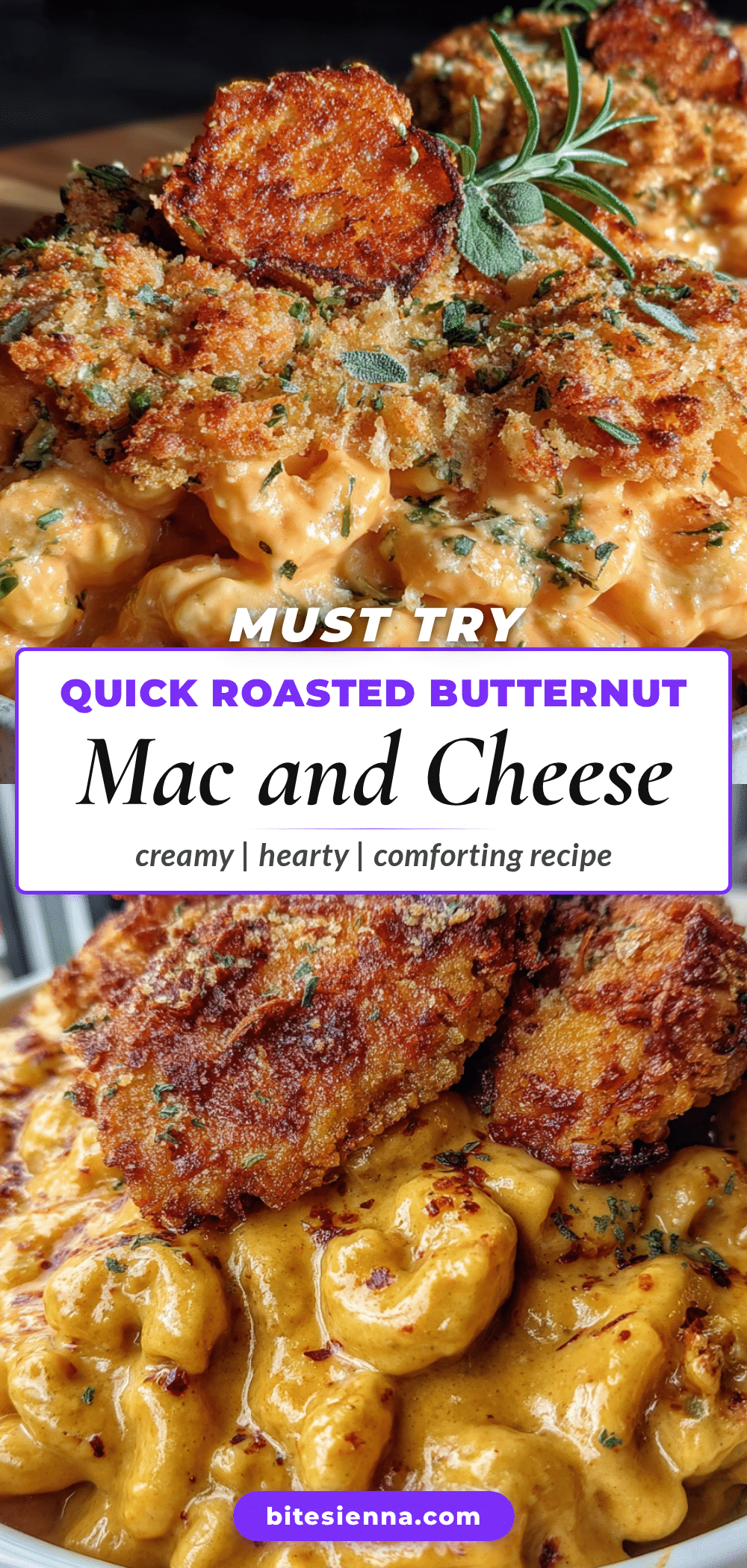
Easy Roasted Butternut Squash Mac and Cheese

A quick and easy weeknight dinner featuring roasted butternut squash blended into a creamy cheese sauce. This comforting dish is ready in about 35 minutes and is a crowd-pleaser that secretly packs a serving of vegetables.
- Prep Time: 10 minutes
- Cook Time: 25 minutes
- Total Time: 35 minutes
- Yield: 6 servings 1x
- Category: Main Course
- Cuisine: American
Ingredients
- 3 cups cubed butternut squash (about 1 medium squash)
- 2 tablespoons olive oil
- Salt and black pepper, to taste
- 3 garlic cloves, smashed
- 8 ounces elbow macaroni (about 2 cups dry)
- 2 tablespoons unsalted butter
- 2 tablespoons all-purpose flour
- 1 cup whole milk
- 1 cup shredded sharp cheddar cheese
- 1/4 cup grated Parmesan cheese
- 1 teaspoon Dijon mustard
- Pinch of nutmeg, fresh grated if possible
- 1/2 cup panko breadcrumbs (optional, for topping)
Instructions
- Preheat your oven to 400°F (200°C). Line a rimmed baking sheet with parchment paper if desired.
- Peel the butternut squash, cut in half lengthwise, scoop out seeds, and cut into 1-inch cubes. You’ll need about 3 cups of cubes.
- Toss the cubed squash with olive oil, smashed garlic cloves, and a generous pinch of salt and pepper. Spread in a single layer on the baking sheet. Roast for 20-25 minutes, flipping halfway, until tender and edges are caramelized.
- While the squash roasts, bring a large pot of salted water to a boil. Cook the elbow macaroni according to package directions until al dente (about 7-8 minutes). Drain and set aside (do not rinse).
- Transfer the roasted squash and garlic to a food processor or blender. Add about 1/4 cup of the milk and blend until completely smooth.
- In a medium saucepan, melt the butter over medium heat. Whisk in the flour and cook for about 1 minute, stirring constantly, until the mixture smells nutty and looks like wet sand.
- Slowly pour in the remaining milk while whisking constantly. Continue whisking until the mixture thickens, about 2-3 minutes, until it coats the back of a spoon.
- Reduce heat to low. Add the squash puree, shredded cheddar, grated Parmesan, Dijon mustard, and a pinch of nutmeg. Stir until the cheese is completely melted and the sauce is smooth. Season with salt and pepper to taste.
- Add the cooked macaroni to the sauce and stir until every piece is coated.
- Optional: For a crispy topping, melt 1 tablespoon of butter and mix with panko breadcrumbs. Sprinkle over the mac and cheese in a baking dish and broil for 2-3 minutes until golden and crispy.
- Let the mac and cheese rest for 5 minutes before serving to allow the sauce to set.
Notes
For best results, grate your own cheese (pre-shredded contains anti-caking agents that can make the sauce grainy). Roast the squash until caramelized for maximum flavor. If the sauce is too thick, add a splash of warm milk. Leftovers keep in the refrigerator for up to 4 days and can be frozen for up to 3 months.
Nutrition
- Serving Size: 1 serving (about 1.5
- Calories: 385
- Sugar: 6
- Sodium: 520
- Fat: 18
- Saturated Fat: 10
- Carbohydrates: 42
- Fiber: 4
- Protein: 14
Keywords: butternut squash mac and cheese, easy mac and cheese, weeknight dinner, vegetarian, comfort food, roasted squash