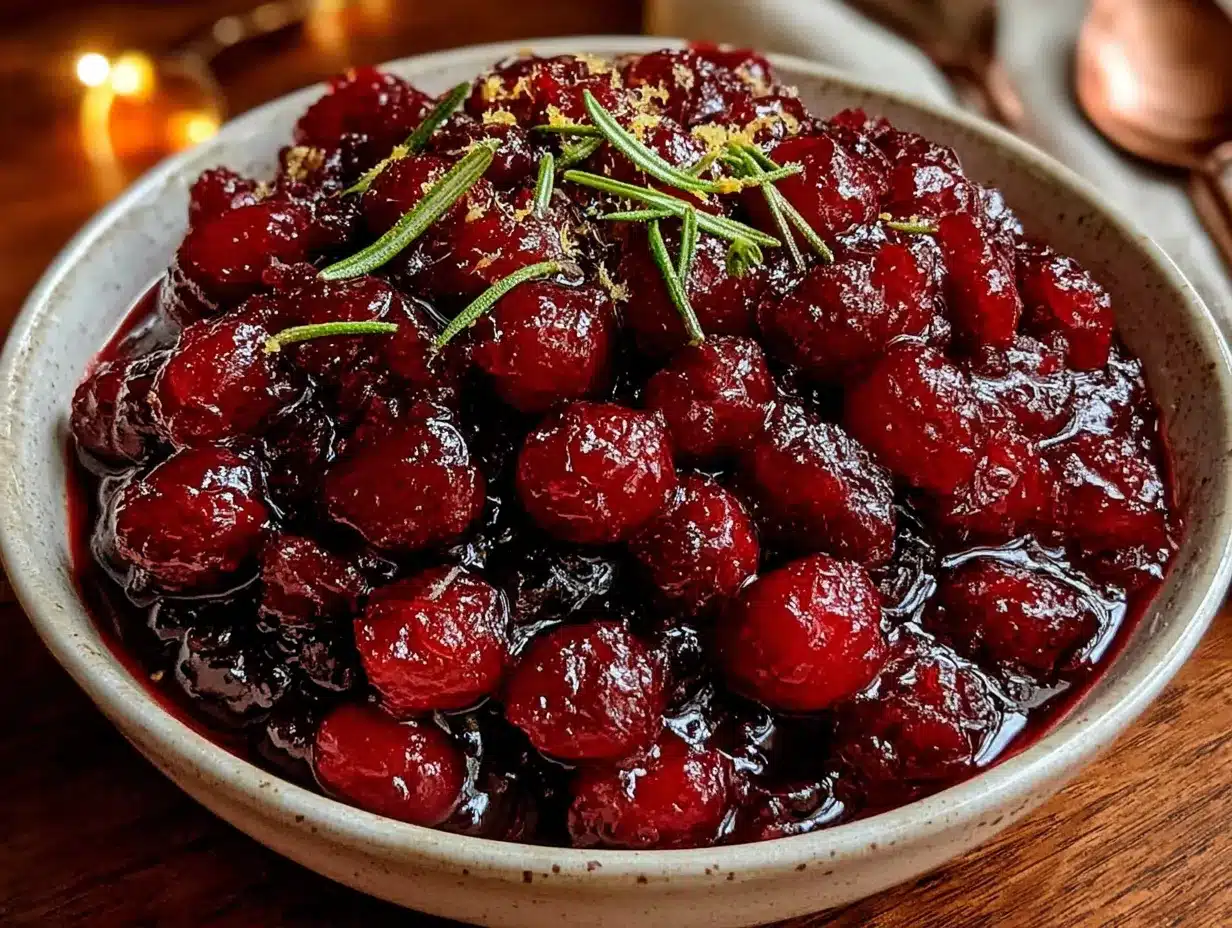
It was 11:47 PM on a random Wednesday in November, and I was wide awake, staring at the ceiling. The craving hit me out of nowhere—not for a turkey sandwich or leftover pie, but for that one thing that always seems like an afterthought on the Thanksgiving table: cranberry sauce. I didn’t have a bag of fresh cranberries (the obvious choice), but I had a half-empty bag of frozen ones from a summer smoothie phase and a sprig of rosemary that was looking a little sad in the crisper drawer. The idea that arrived was weirdly specific: what if I made it savory? What if I treated it like a jam, not a jiggly log from a can?
Honestly, I was half-asleep when I threw everything into the pot. I didn’t measure anything—just a splash of orange juice from the bottle, a few strips of zest I zested over the sink, and that rosemary sprig, which I bruised with the back of a knife because it made me feel like a real chef. The whole thing came together in about fifteen minutes, and I stood there in my pajamas, stirring, watching the berries pop and the kitchen fill with this incredible, herby-citrus smell. The dog came in to see what was happening, and for a second, I felt like I’d unlocked some secret culinary level that only exists after 11 PM.
That first bite—warm, tart, a little woodsy from the rosemary, with bright orange notes cutting through—was a total revelation. I mean, I’ve made cranberry sauce a dozen times before, but never like this. It was the kind of moment where you just stand in the dark kitchen, spoon in hand, nodding to yourself like you’ve figured something out. And maybe you’ve been there too, you know? That late-night, no-audience cooking session where the rules just kind of dissolve. That’s exactly why this recipe stayed with me, and why I keep making it, even when it’s not Thanksgiving.
Why You’ll Love This Recipe
Let me tell you, this isn’t just another cranberry sauce recipe you’ll forget about by December 1st. This is the one that people actually ask for by name. I’ve tested it at three different family gatherings now, and each time, someone who swore they hated cranberry sauce went back for seconds. That’s not a brag—that’s just the power of orange zest and rosemary working together like they were meant to be.
- Quick & Easy: Comes together in under 20 minutes, start to finish. No fussing, no complicated techniques—just one pot and a wooden spoon.
- Simple Ingredients: You probably already have orange juice and rosemary in your fridge. If not, they’re cheap and easy to find at any grocery store.
- Perfect for Family Meals: This sauce isn’t just for Thanksgiving. It’s amazing on weeknight pork chops, spooned over brie, or even swirled into yogurt for a quick breakfast.
- Crowd-Pleaser: Kids love the sweetness, adults love the herbaceous twist. It’s that rare side dish that actually unites the table.
- Unbelievably Delicious: The texture is jammy but not gloopy, and the flavor is bright without being overly tart. It’s comfort food that feels a little fancy.
What makes this recipe different from the rest? It’s the way the rosemary infuses the syrup without overpowering the cranberries. Most recipes just dump herbs in and hope for the best, but I’ve learned that bruising the rosemary first and removing it at the right moment makes all the difference. It’s a small technique that yields big results—the kind of thing you’d only know if you’ve burned a batch or two learning the hard way. And honestly, I’ve done that so you don’t have to.
This recipe isn’t just good—it’s the kind that makes you close your eyes after the first bite. It’s comfort food reimagined: faster, brighter, and with the same soul-soothing satisfaction that makes you feel like everything’s going to be okay. Perfect for impressing guests without stress, or turning a simple Tuesday dinner into something your family will actually remember.
What Ingredients You Will Need
This recipe uses simple, wholesome ingredients to deliver bold flavor and satisfying texture without the fuss. Most of these are pantry or fridge staples, which makes this perfect for last-minute cooking.
For the Cranberry Sauce
- 12 ounces (340g) fresh or frozen cranberries – (I prefer fresh for the best texture, but frozen works perfectly in a pinch; no need to thaw first)
- 1 cup (200g) granulated sugar – (adds sweetness to balance the tartness; you can reduce to 3/4 cup if you like it tangier)
- 1/2 cup (120ml) fresh orange juice – (from about 2 large oranges; bottled works, but fresh really does make a difference here)
- 1 tablespoon orange zest – (from the same oranges you juiced; this is where the bright, aromatic flavor lives)
- 1 large sprig fresh rosemary – (about 4-5 inches long; bruise it with the back of a knife to release the oils)
- 1/4 cup (60ml) water – (helps the sugar dissolve and creates the syrupy base)
- Pinch of salt – (just a tiny one; it balances the sweetness and brightens the fruit flavor)
Optional Add-Ins
- 1 cinnamon stick – (adds warmth and a subtle spice; remove before serving)
- 1 tablespoon bourbon or Grand Marnier – (for an adult version; stir in after removing from heat)
- 1/2 teaspoon vanilla extract – (adds a soft, sweet undertone)
I recommend using fresh oranges if you can—the zest is really the star here, and bottled zest just doesn’t have the same punch. For the rosemary, look for sprigs that are vibrant green and fragrant. If your rosemary is looking a bit dry, give it a quick soak in cold water for 10 minutes to perk it up. As for the cranberries, I’ve used both Ocean Spray and store-brand bags, and honestly, they all work the same. Just make sure they’re firm and not shriveled.
If you’re feeding picky eaters, you can absolutely leave the rosemary out and just make a classic orange cranberry sauce. But trust me—the rosemary is what makes this recipe memorable. It’s subtle enough that kids won’t complain, but adults will notice that something special is going on.
Equipment Needed
You don’t need a fancy kitchen to make this sauce. Here’s what you’ll need:
- Medium saucepan – (2-3 quart size works best; avoid nonstick if possible, as the sugar can scratch it)
- Wooden spoon or silicone spatula – (for stirring; metal can scratch your pan)
- Microplane or fine grater – (for zesting the orange; a vegetable peeler works in a pinch, but you’ll want to finely mince the strips)
- Sharp knife and cutting board – (for bruising the rosemary and any prep)
- Measuring cups and spoons – (eyeballing is fine if you’re confident, but measuring ensures consistency)
- Fine-mesh strainer – (optional, if you want to remove the rosemary and any stray seeds for a smoother sauce)
- Glass jar or bowl for storage – (with a tight-fitting lid; the sauce keeps beautifully)
If you don’t have a microplane, honestly, just use the smallest holes on a box grater. I’ve done that more times than I can count, and it works just fine. And if you don’t have a saucepan? A small pot works, too—just keep an eye on the heat so it doesn’t scorch. I once made this in a cast-iron skillet when my pots were all dirty, and it turned out amazing. The key is just having something that can hold the liquid without boiling over.
One tip: if you’re making this for a holiday meal, double the recipe and use a larger pot. The sauce freezes beautifully, and having extra on hand is never a bad thing. Trust me on this one.
Preparation Method
This comes together fast, so I like to have everything measured and ready before I start. It’s not complicated, but the cooking window is short, and you don’t want to be scrambling for the sugar while the berries are popping.
- Zest and juice the oranges first. Wash the oranges well, then use your microplane to remove the bright orange outer layer—avoid the white pith, which is bitter. You’ll need about 1 tablespoon of zest. Then cut the oranges in half and juice them until you have 1/2 cup. Set the zest aside separately from the juice.
- Bruise the rosemary sprig. Take your rosemary sprig and give it a firm whack with the back of a knife, or press down on it with the flat side of the blade. This releases the essential oils and helps the flavor infuse faster. Don’t chop it—you want to be able to fish the whole sprig out later.
- Combine the sugar and water in your saucepan. Add the 1 cup of sugar and 1/4 cup of water. Stir them together over medium heat until the sugar dissolves completely. This takes about 2 minutes. You’ll see the mixture turn clear and syrupy—that’s your cue.
- Add the orange juice and rosemary. Pour in the orange juice and drop in the bruised rosemary sprig. Give it a stir, then let it come to a gentle simmer. Let it bubble for about 3 minutes, just to let the rosemary do its thing. The kitchen will start smelling incredible right about now.
- Add the cranberries. Dump in the whole bag of cranberries—fresh or frozen, doesn’t matter. Stir them into the syrup. If you’re using frozen berries, the pot will hiss and steam a bit. That’s normal. Don’t panic.
- Bring to a boil, then reduce to a simmer. Turn the heat up to medium-high until you see the mixture come to a full boil. Then immediately reduce the heat to medium-low so it’s at a gentle simmer. You’ll hear the berries start to pop—that’s the sound of magic happening.
- Cook for 10-12 minutes, stirring occasionally. Don’t walk away completely, but you don’t need to stand guard. Stir every 2-3 minutes to prevent sticking. You’ll notice the berries softening and bursting, and the liquid will thicken into a syrupy consistency. The sauce is done when most of the berries have popped and the mixture coats the back of a spoon.
- Remove the rosemary sprig. Fish out the rosemary sprig with tongs or a fork. Taste the sauce at this point—if you want more rosemary flavor, you can add a fresh sprig and let it steep for another 2 minutes off the heat.
- Stir in the orange zest. Add the reserved orange zest and a tiny pinch of salt. Stir well. The zest adds brightness and a little texture. If you’re adding any optional ingredients like cinnamon or bourbon, stir them in now.
- Let it cool. Pour the sauce into a heat-safe bowl or jar. Let it cool to room temperature on the counter. The sauce will continue to thicken as it cools—don’t worry if it looks a little loose right now. Once it’s completely cool, cover and refrigerate.
One thing I learned the hard way: don’t skip the salt. I know it sounds weird in a fruit sauce, but that tiny pinch balances the sweetness and makes the cranberry flavor pop. I forgot it once, and the sauce was just… flat. Lesson learned.
Cooking Tips & Techniques
I’ve made this recipe at least a dozen times now, and I’ve made every mistake in the book so you don’t have to. Here are the things I wish someone had told me:
Don’t overcook the cranberries. I know it’s tempting to let them go longer for a thicker sauce, but overcooked cranberries turn bitter. The pectin in the berries naturally thickens the sauce as it cools, so if it looks a little loose at the 10-minute mark, trust the process. Take it off the heat and let it cool completely before judging the consistency.
Watch the sugar. Cranberries are tart little beasts, and they need sugar to balance them out. But here’s the thing: different brands of sugar have different moisture content, and some oranges are sweeter than others. Start with 1 cup of sugar, taste the sauce before you add the zest, and adjust if needed. You can always add more sugar, but you can’t take it out.
Bruise, don’t chop. I made the mistake of chopping the rosemary into tiny pieces the first time I tried this. Big mistake. The little needles got everywhere, and biting into a whole rosemary leaf is not pleasant. Leaving the sprig whole and removing it at the end gives you all the flavor without the texture issues.
Use a wide pot if you can. A wider surface area means faster evaporation, which means a thicker sauce in less time. I’ve used a narrow saucepan before, and it took almost 18 minutes to get the same consistency. If you’re in a hurry, go wide.
Multitasking tip: While the sauce is simmering, wash the dishes you used for zesting and juicing. It takes exactly the same amount of time, and you’ll thank yourself later when you have a clean kitchen and a finished sauce.
If it’s too tart: Stir in a tablespoon of maple syrup or honey at the end. It adds sweetness without making the sauce cloying. I’ve done this for friends who prefer a sweeter sauce, and it works beautifully.
Variations & Adaptations
One of the best things about this recipe is how flexible it is. I’ve played around with it quite a bit, and here are some variations that actually work:
Maple-Bourbon Version: Replace half the granulated sugar with maple syrup, and stir in 1 tablespoon of bourbon after removing the sauce from heat. The smoky sweetness of the bourbon pairs amazingly with the rosemary. I made this for a Friendsgiving once, and someone asked for the recipe before they even finished their plate.
Spiced Cranberry Sauce: Add a cinnamon stick and 3 whole cloves along with the rosemary. The warm spices make this feel extra cozy for winter holidays. Just remember to fish out the cloves before serving—nobody wants to bite into a whole clove.
Low-Sugar Version: Use 1/2 cup of sugar and add 1/4 cup of unsweetened applesauce. The applesauce adds natural sweetness and body without the extra sugar. It’s a little looser in texture, but the flavor is still bright and delicious. I tested this for a friend who’s watching her sugar intake, and she said it was the best cranberry sauce she’d ever had.
Savory Twist: Add a minced shallot (sautéed in butter before adding the sugar) and a splash of balsamic vinegar at the end. This version is incredible on roasted pork or as a topping for brie. It’s the kind of thing that makes you look like a gourmet chef with almost zero extra effort.
Dried Cranberry Version: If you only have dried cranberries, don’t worry. Rehydrate 1 cup of dried cranberries in 1 cup of hot water for 15 minutes, then drain and proceed with the recipe. The texture will be different—more like a chutney—but the flavor is still fantastic.
If you’re cooking for someone with allergies, this recipe is naturally gluten-free, dairy-free, and nut-free. Just make sure your bourbon or other add-ins are certified gluten-free if that’s a concern. And if you’re serving someone with a citrus allergy, you can substitute the orange juice with apple cider and skip the zest—it won’t be the same, but it’ll still be delicious.
Serving & Storage Suggestions
This sauce is best served at room temperature or slightly chilled. I actually prefer it cold, straight from the fridge—the texture firms up beautifully, and the flavors seem more concentrated. If you’re serving it as part of a holiday meal, make it a day or two ahead so the flavors have time to meld.
Presentation ideas: Spoon the sauce into a pretty glass bowl and garnish with a fresh rosemary sprig and a few thin orange slices. It looks stunning on a buffet table, and the bright red color is so festive. For individual servings, I love using small mason jars—they make great take-home gifts for guests.
What to serve with it: This sauce is amazing with roasted turkey or chicken, but don’t stop there. Try it on pork chops, spooned over brie or goat cheese, swirled into yogurt or oatmeal, or even as a topping for vanilla ice cream. I’ve also used it as a glaze for baked ham—just brush it on during the last 15 minutes of cooking.
Storage instructions: Store the sauce in an airtight container in the refrigerator for up to 2 weeks. The flavors actually get better after a day or two—the rosemary and orange have time to really marry with the cranberries. If you want to freeze it, pour the cooled sauce into a freezer-safe container and freeze for up to 3 months. Thaw overnight in the refrigerator before serving.
Reheating tips: If you prefer your cranberry sauce warm, gently reheat it in a saucepan over low heat, stirring occasionally. Add a splash of water or orange juice if it’s too thick. You can also microwave it in 30-second bursts, stirring between each. Just don’t boil it—the texture will change, and you’ll lose that lovely jammy consistency.
One thing I love about this sauce: it thickens as it sits. So if you’re making it ahead, don’t worry if it looks a little loose on day one. By day two, it’ll be perfect. That’s the magic of cranberries—they’re natural thickeners.
Nutritional Information & Benefits
Here’s the honest truth: this is a sweet sauce, so it’s not exactly health food. But cranberries themselves are packed with antioxidants and vitamin C, and the orange zest adds even more immune-boosting nutrients. A serving of this sauce is about 1/4 cup, and it contains roughly:
- Calories: 120-140
- Carbohydrates: 32g
- Sugar: 28g (naturally occurring from cranberries and added sugar)
- Fiber: 2g
- Vitamin C: 15% of the daily value
- Antioxidants: High (thanks to the cranberries and orange zest)
If you’re watching your sugar intake, the low-sugar variation I mentioned earlier cuts the sugar by about half. And honestly, even with the sugar, this is still a better choice than the canned stuff, which often has high fructose corn syrup and preservatives. At least here, you know exactly what’s going in.
One thing I appreciate about this recipe: it’s naturally vegan, gluten-free, and dairy-free, so it works for almost any dietary restriction. The only potential allergen is the orange itself, but citrus allergies are relatively rare. If you’re serving someone with a citrus allergy, swap the orange juice for apple cider and skip the zest.
I’m not a nutritionist, but I do believe that food should be enjoyed without guilt. A spoonful of this sauce on your plate isn’t going to derail your health goals—it’s going to make your meal more joyful. And honestly, that counts for something.
Conclusion
So there you have it—my late-night, pajama-clad, totally improvised cranberry sauce that somehow became a family favorite. It’s proof that sometimes the best recipes come from not overthinking things, from just trusting your instincts and working with what you have. This sauce is tart, sweet, herbaceous, and bright all at once, and it’s exactly the kind of thing that makes a simple meal feel special.
I really hope you give this one a try. Whether you’re making it for a holiday feast or just a random Tuesday pork chop dinner, I think you’ll be surprised at how much flavor comes from such a short ingredient list. And if you do make it, I’d love to hear how it turns out. Did you add the bourbon? Did your kids actually eat it? Did you find yourself standing in the kitchen at 11 PM, eating it straight from the jar?
Drop a comment below and let me know—I genuinely read every single one. And if you have your own twist on this recipe, please share it. The best thing about cooking is how we all put our own spin on things. Happy cooking, friends.
Frequently Asked Questions
Can I use frozen cranberries instead of fresh?
Absolutely. Frozen cranberries work perfectly in this recipe—no need to thaw them first. Just add them straight to the pot and adjust the cooking time by about 2 minutes. The sauce might be slightly looser, but it’ll thicken as it cools.
How do I make this sauce less tart?
If you prefer a sweeter sauce, increase the sugar to 1 1/4 cups, or stir in a tablespoon of maple syrup or honey at the end. You can also add a peeled and diced apple along with the cranberries—the natural sweetness of the apple balances the tartness beautifully.
Can I make this sauce ahead of time?
Yes, and I actually recommend it. This sauce tastes even better after a day or two in the fridge—the flavors have time to meld and deepen. Make it up to 2 weeks ahead and store it in an airtight container in the refrigerator. It also freezes beautifully for up to 3 months.
How do I thicken cranberry sauce if it’s too runny?
If your sauce is too runny after cooling, don’t panic. Pour it back into the saucepan and simmer it over medium-low heat for another 5-7 minutes, stirring frequently. The extra evaporation will thicken it right up. Alternatively, you can stir in 1 teaspoon of cornstarch mixed with 1 tablespoon of cold water, but I prefer the simmering method for the best texture.
Can I leave out the rosemary?
Of course. If you’re not a fan of rosemary or you’re cooking for picky eaters, just leave it out. The orange zest and juice provide plenty of flavor on their own. You’ll end up with a classic orange cranberry sauce that’s still miles better than anything from a can.
Pin This Recipe!
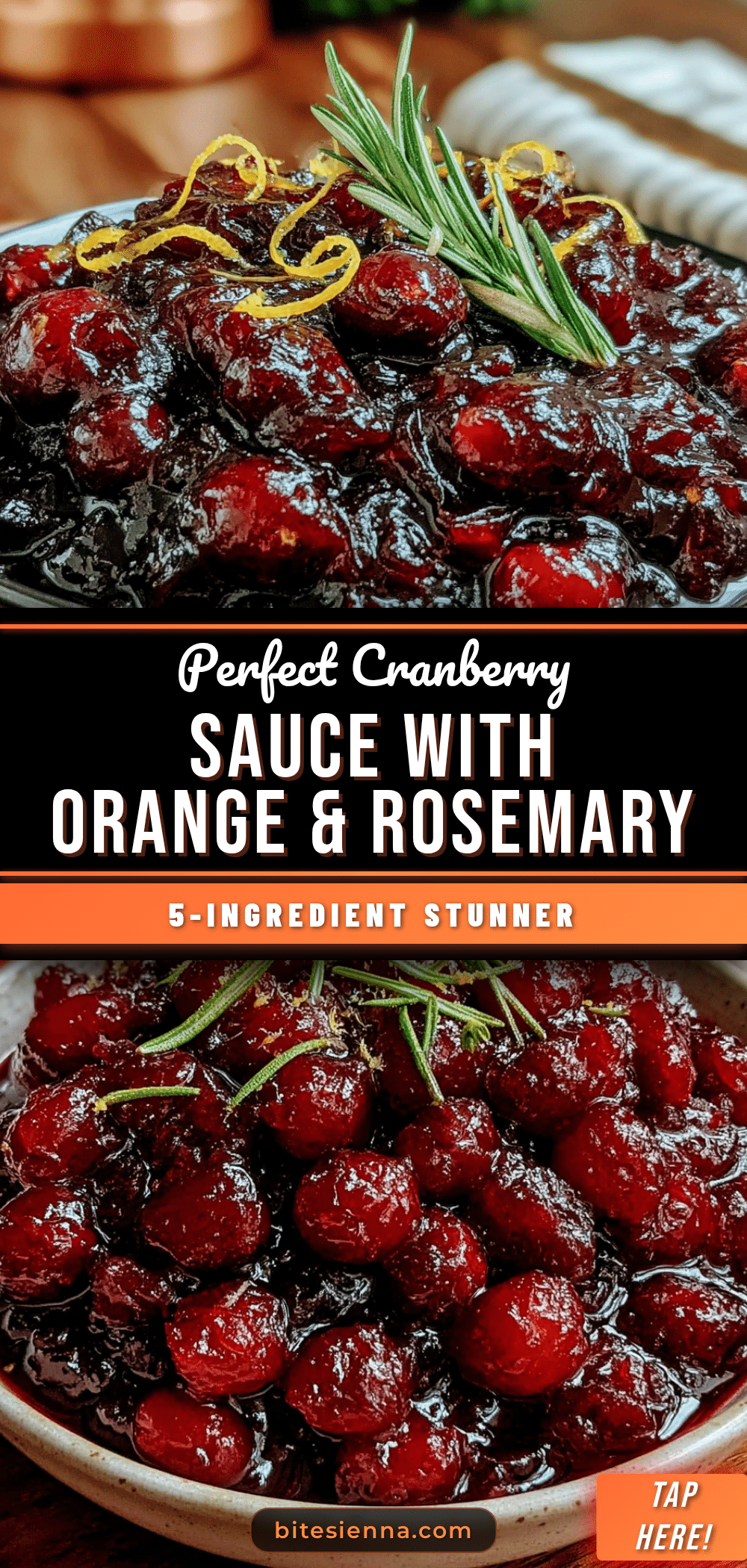
Perfect Cranberry Orange Sauce with Rosemary

A quick and easy cranberry sauce with bright orange zest and aromatic rosemary, perfect for Thanksgiving or any meal. This jammy, herb-infused sauce comes together in under 20 minutes and is a crowd-pleaser that even cranberry skeptics will love.
- Prep Time: 5 minutes
- Cook Time: 15 minutes
- Total Time: 20 minutes
- Yield: 8 servings 1x
- Category: Side Dish
- Cuisine: American
Ingredients
- 12 ounces (340g) fresh or frozen cranberries
- 1 cup (200g) granulated sugar
- 1/2 cup (120ml) fresh orange juice
- 1 tablespoon orange zest
- 1 large sprig fresh rosemary (about 4–5 inches long)
- 1/4 cup (60ml) water
- Pinch of salt
- 1 cinnamon stick (optional)
- 1 tablespoon bourbon or Grand Marnier (optional)
- 1/2 teaspoon vanilla extract (optional)
Instructions
- Zest and juice the oranges first. Wash the oranges well, then use your microplane to remove the bright orange outer layer—avoid the white pith, which is bitter. You’ll need about 1 tablespoon of zest. Then cut the oranges in half and juice them until you have 1/2 cup. Set the zest aside separately from the juice.
- Bruise the rosemary sprig. Take your rosemary sprig and give it a firm whack with the back of a knife, or press down on it with the flat side of the blade. This releases the essential oils and helps the flavor infuse faster. Don’t chop it—you want to be able to fish the whole sprig out later.
- Combine the sugar and water in your saucepan. Add the 1 cup of sugar and 1/4 cup of water. Stir them together over medium heat until the sugar dissolves completely. This takes about 2 minutes. You’ll see the mixture turn clear and syrupy—that’s your cue.
- Add the orange juice and rosemary. Pour in the orange juice and drop in the bruised rosemary sprig. Give it a stir, then let it come to a gentle simmer. Let it bubble for about 3 minutes, just to let the rosemary do its thing.
- Add the cranberries. Dump in the whole bag of cranberries—fresh or frozen, doesn’t matter. Stir them into the syrup. If you’re using frozen berries, the pot will hiss and steam a bit. That’s normal.
- Bring to a boil, then reduce to a simmer. Turn the heat up to medium-high until you see the mixture come to a full boil. Then immediately reduce the heat to medium-low so it’s at a gentle simmer.
- Cook for 10-12 minutes, stirring occasionally. Stir every 2-3 minutes to prevent sticking. The sauce is done when most of the berries have popped and the mixture coats the back of a spoon.
- Remove the rosemary sprig. Fish out the rosemary sprig with tongs or a fork. Taste the sauce at this point—if you want more rosemary flavor, you can add a fresh sprig and let it steep for another 2 minutes off the heat.
- Stir in the orange zest. Add the reserved orange zest and a tiny pinch of salt. Stir well. If you’re adding any optional ingredients like cinnamon or bourbon, stir them in now.
- Let it cool. Pour the sauce into a heat-safe bowl or jar. Let it cool to room temperature on the counter. The sauce will continue to thicken as it cools. Once it’s completely cool, cover and refrigerate.
Notes
Don’t skip the salt—it balances the sweetness and makes the cranberry flavor pop. Bruise the rosemary instead of chopping it to avoid texture issues. The sauce thickens as it cools, so don’t worry if it looks loose at the 10-minute mark. For a sweeter sauce, increase sugar to 1 1/4 cups or add maple syrup/honey at the end. Store in an airtight container in the refrigerator for up to 2 weeks or freeze for up to 3 months.
Nutrition
- Serving Size: 1/4 cup
- Calories: 130
- Sugar: 28
- Sodium: 5
- Carbohydrates: 32
- Fiber: 2
Keywords: cranberry sauce, orange cranberry sauce, rosemary cranberry sauce, Thanksgiving side dish, homemade cranberry sauce, easy cranberry sauce, holiday recipe