I wasn’t supposed to be in the kitchen that day. I’d stopped by to borrow a ladder—mine had given out in the middle of a gutter-cleaning disaster—and the smell hit me before I even got through the back door. That warm, yeasty, almost-beer-like aroma that makes your brain stop what it’s doing and pay attention. My neighbor Klaus barely looked up from his counter. “Pretzels,” he said, like it was nothing. Like he wasn’t doing something that smelled like a bakery had exploded in the best possible way.
Klaus is German, and I’ve learned over the years that he doesn’t “try” to impress anyone with his cooking. He just makes things the way his grandmother made them, and somehow that effortless approach produces food that ruins you for all other versions. I watched him shape those ropes of dough with quick, practiced hands—no measuring, no second-guessing—and I honestly felt a little jealous. Here I was, someone who writes about food for a living, and I’d never made a proper soft pretzel from scratch. Maybe you’ve been there too, watching someone do something you’ve always wanted to try, making it look so simple you almost laugh.
He threw me a piece of dough without asking. “Shape it,” he said. My first attempt looked like a sad, lumpy knot. He didn’t laugh, but his eyebrows did this thing that said everything. By the third try, I had something that vaguely resembled a pretzel. When they came out of the oven—deep golden brown, glistening with salt, that signature chewy crust—I understood why he’d been so casual about the whole thing. This recipe doesn’t need fanfare. It speaks for itself. I’ve been making them ever since, and honestly, I still think about that afternoon every single time.
Why You’ll Love This Recipe
Let me be straight with you—I’ve tested a lot of pretzel recipes over the years. Some were too dense. Some were too airy. Some had that weird baking soda flavor that just doesn’t quit. This one? It’s the real deal. I’ve made it at least twenty times now, tweaking and adjusting, and I can tell you with confidence that this is the version you want in your life.
- Bakery-Quality at Home: These pretzels have that deep brown, glossy crust you usually only get from a professional oven. The secret is in the boiling step—and no, it’s not as scary as it sounds.
- Simple Ingredients: Flour, yeast, butter, salt, baking soda, and water. That’s it for the pretzels. You probably have everything except maybe the yeast, and that’s a cheap add.
- Perfect for Game Day or Oktoberfest: Whether you’re hosting a party or just want a cozy weekend project, these pretzels fit the bill. They’re impressive without being pretentious—pun absolutely intended.
- That Beer Cheese Dip Though: The dip is almost as good as the pretzels themselves. Sharp cheddar, your favorite beer, a little mustard—it’s the kind of thing you’ll want to put on everything.
- Freezer-Friendly: Make a double batch and freeze half. Reheat them in the oven and nobody will know they weren’t fresh-baked.
What makes this recipe different from the dozens of others out there is the technique. Most recipes skip the overnight rest in the fridge, but that cold fermentation is what gives these pretzels their complex flavor and that perfect chewy interior. It’s a small extra step that makes a huge difference. I learned this the hard way after making a batch that tasted like bread-shaped nothing. The overnight rest changed everything.
This isn’t just another pretzel recipe. It’s the one that makes you close your eyes after the first bite. It’s comfort food that tastes like a warm hug from someone who really knows what they’re doing in the kitchen.
What Ingredients You Will Need
This recipe uses straightforward ingredients to create something that tastes far more complicated than it is. The magic happens through technique, not fancy shopping lists.
For the Pretzels
- All-purpose flour, 4 cups (500g) – King Arthur Flour is my go-to for consistent results, but any brand works. Bread flour also works for a chewier texture.
- Warm water, 1 ½ cups (355ml) – About 110°F. Too hot kills the yeast, too cold and it won’t activate. Think warm bathwater, not hot tub.
- Active dry yeast, 2 ¼ teaspoons (one packet) – I use Red Star or Fleischmann’s. Instant yeast works too, just skip the proofing step.
- Unsalted butter, 2 tablespoons (28g), melted – Salted butter works if that’s what you have, just reduce the added salt slightly.
- Brown sugar, 1 tablespoon – Adds a touch of sweetness and helps with browning. White sugar works in a pinch.
- Salt, 1 teaspoon – Fine sea salt or table salt. Don’t use coarse salt here—it won’t distribute evenly.
- Baking soda, ½ cup (for the boiling bath) – This is what gives pretzels their signature dark crust and chewy texture.
- Coarse sea salt or pretzel salt, for topping – Maldon salt flakes work beautifully. Don’t use table salt—it’ll just dissolve.
- Egg wash, 1 egg beaten with 1 tablespoon water – For that glossy, professional finish.
For the Beer Cheese Dip
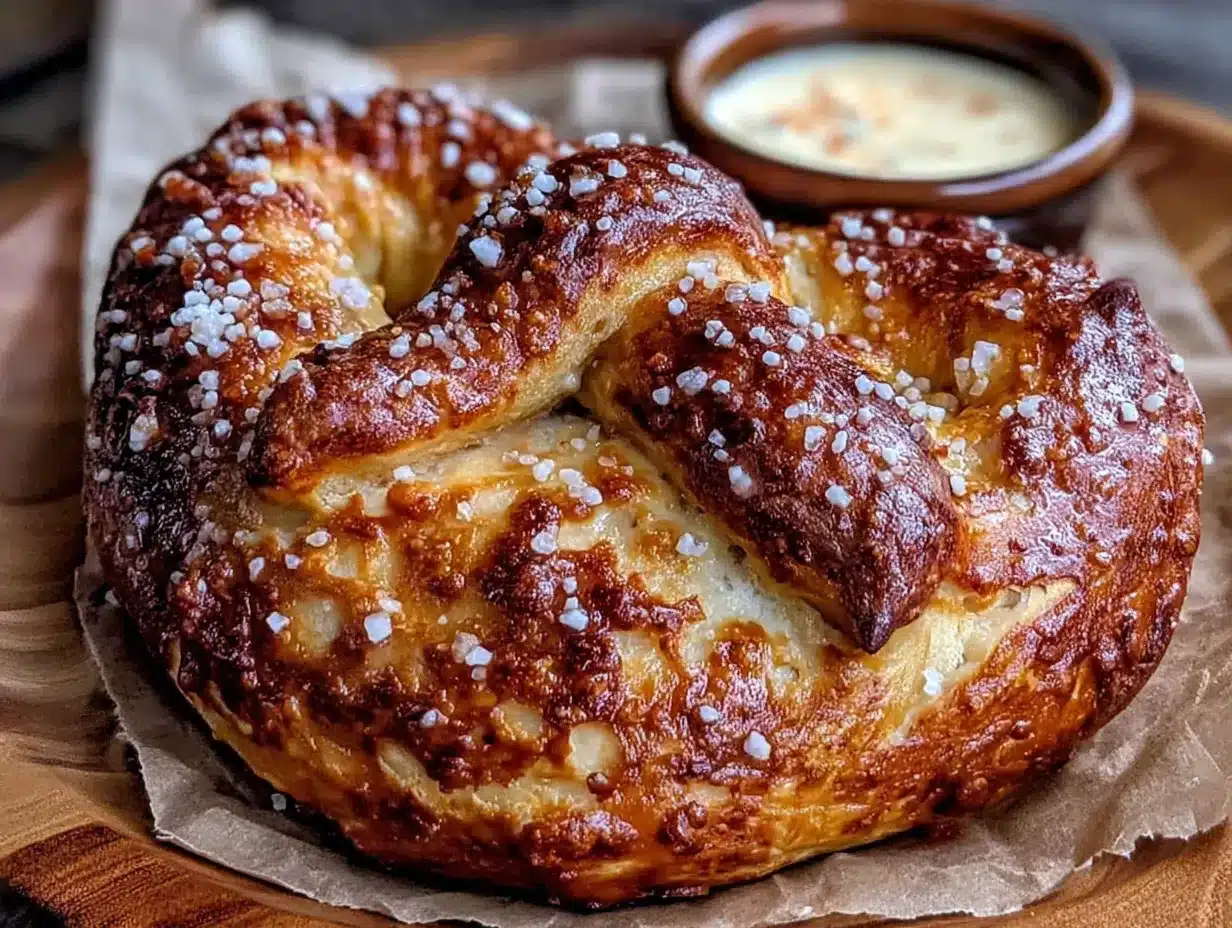
- Sharp cheddar cheese, 8 ounces (226g), freshly shredded – Pre-shredded cheese has anti-caking agents that prevent smooth melting. Grate it yourself—trust me.
- Beer, ¾ cup (177ml) – A pale ale or lager works best. Nothing too hoppy or dark. I like using a local Oktoberfest-style beer when it’s in season.
- Cream cheese, 4 ounces (113g), softened – This gives the dip its creamy texture. Let it sit out for 30 minutes before starting.
- Dijon mustard, 1 tablespoon – Adds a subtle tang that cuts through the richness. Whole grain mustard works too.
- Worcestershire sauce, 1 teaspoon – Don’t skip this. It adds depth you can’t quite identify but would miss.
- Garlic powder, ½ teaspoon – Fresh garlic can make the dip grainy. Stick with powder here.
- Salt and pepper, to taste – Go easy on the salt—the cheese and mustard add plenty.
Equipment Needed
You don’t need much for this recipe, which is part of its charm. Here’s what you’ll want to have on hand:
- Stand mixer with dough hook – Not strictly necessary, but it makes the kneading so much easier. A large bowl and some elbow grease work too. I’ve done it both ways, and honestly, the hand-kneaded version feels more satisfying.
- Large pot – For boiling the pretzels. You need something wide enough to fit a pretzel without folding it in half.
- Slotted spatula or spider strainer – For fishing the pretzels out of the boiling water. A regular spatula works if you’re careful.
- Baking sheets – Two large sheets, lined with parchment paper or silicone baking mats. Silpat mats are worth the investment here—the pretzels slide right off.
- Pastry brush – For the egg wash. A silicone brush is easier to clean than a natural bristle one.
- Kitchen thermometer – Optional but helpful for checking water temperature and oil temperature if you’re frying anything alongside.
- Small saucepan – For the beer cheese dip. A double boiler works too, but I find the direct heat method faster if you keep the heat low.
One tip: if you don’t have a stand mixer, you can mix the dough by hand and knead it for about 8-10 minutes. It’s a great arm workout, and there’s something meditative about working dough with your hands. Just make sure you’re using a large enough bowl—this dough likes to climb.
Preparation Method
- Activate the yeast: In the bowl of your stand mixer (or a large mixing bowl), combine the warm water and brown sugar. Sprinkle the yeast over the top and let it sit for 5-10 minutes until it’s foamy. If it doesn’t foam, your yeast might be dead—start over with fresh yeast. I learned this the hard way after waiting an hour for dough that never rose.
- Make the dough: Add the melted butter, salt, and 2 cups of flour to the yeast mixture. Mix on low speed with the dough hook until combined, then gradually add the remaining flour, ½ cup at a time. The dough should come together into a smooth, slightly sticky ball. If it’s too sticky, add flour a tablespoon at a time. Too dry? Add water a teaspoon at a time. You’re looking for dough that feels like a baby’s bottom—soft and smooth.
- Knead the dough: Knead on medium-low speed for 6-8 minutes, or by hand on a lightly floured surface for 8-10 minutes. The dough should be smooth, elastic, and spring back when you poke it. If it tears easily, keep kneading. If it feels tight and resistant, let it rest for 5 minutes and try again.
- First rise: Shape the dough into a ball and place it in a lightly greased bowl. Cover with plastic wrap or a clean kitchen towel and let it rise in a warm spot for 1-1.5 hours, until doubled in size. I like to put mine in the oven with the light on—it’s consistently warm and draft-free.
- Cold fermentation (the secret step): Punch down the dough, cover it tightly, and refrigerate for at least 4 hours or overnight. This step develops flavor and makes the dough easier to shape. I’ve skipped this before, and the pretzels were fine but not amazing. The overnight rest is worth the wait.
- Shape the pretzels: Line two baking sheets with parchment paper. Divide the cold dough into 8 equal pieces (about 100g each). Roll each piece into a 20-24 inch rope, thicker in the middle and tapered at the ends. Form a U-shape, cross the ends over each other twice, then fold them down to the bottom of the U. Press gently to seal. This takes practice—my first few looked like sad, deformed knots. By the third batch, they looked like actual pretzels.
- Second rise: Place the shaped pretzels on the prepared baking sheets, cover loosely with plastic wrap, and let them rise at room temperature for 30 minutes. They’ll puff up slightly but shouldn’t double in size.
- Preheat and prepare the bath: Preheat your oven to 425°F (220°C). Bring a large pot of water to a boil, then carefully add the baking soda. It will foam up dramatically, so make sure your pot is big enough. I once used a too-small pot and spent 20 minutes cleaning baking soda water off my stovetop. Learn from my mistakes.
- Boil the pretzels: Gently lower each pretzel into the boiling water, one or two at a time. Boil for 30 seconds on each side. Use the slotted spatula to flip them carefully. The longer they boil, the thicker and chewier the crust will be. I like 30 seconds per side for the perfect balance.
- Egg wash and salt: Transfer the boiled pretzels back to the baking sheets. Brush each one with egg wash and sprinkle generously with coarse salt. Don’t be shy with the salt—it’s a pretzel, after all.
- Bake: Bake for 12-15 minutes, rotating the pans halfway through, until the pretzels are deep golden brown. Keep an eye on them in the last few minutes—they go from perfect to overdone quickly. Your kitchen will smell incredible at this point.
- Make the beer cheese dip while they bake: In a small saucepan over medium-low heat, combine the beer and cream cheese. Whisk until the cream cheese is melted and smooth. Gradually add the shredded cheddar, a handful at a time, whisking constantly until each addition is melted before adding more. Stir in the Dijon mustard, Worcestershire sauce, and garlic powder. Season with salt and pepper to taste. Keep warm over low heat, stirring occasionally.
- Serve immediately: Pretzels are best warm, within 30 minutes of baking. Serve with the warm beer cheese dip and maybe some whole grain mustard on the side for variety.
Cooking Tips & Techniques
I’ve made a lot of mistakes with pretzels so you don’t have to. Here are the things I wish someone had told me:
Don’t skip the cold rest. I know it’s tempting to rush, but that overnight chill in the fridge is what gives these pretzels their complex, almost tangy flavor. It also makes the dough much easier to shape. Cold dough doesn’t spring back as much, so your pretzel shapes actually hold.
The baking soda bath is non-negotiable. Some recipes use lye for that authentic German pretzel crust, but baking soda works beautifully and is much safer to handle. Just make sure your water is at a rolling boil and you’re using enough baking soda. I’ve tried cutting the amount in half, and the pretzels came out pale and sad.
Watch your shaping technique. The classic pretzel shape isn’t just for looks—it ensures even baking. When you roll the ropes, make sure the ends are tapered and the middle is thicker. This way, the thinner ends get a little more done (giving you those crispy bits) while the middle stays soft and chewy.
Temperature matters. Your water for the yeast should be around 110°F. Too hot kills the yeast, too cold and it won’t activate. I use a kitchen thermometer, but if you don’t have one, the water should feel warm but not hot on your wrist—like a comfortable bath.
Don’t overcrowd the pot. Boil one or two pretzels at a time. If you crowd them, they’ll stick together and cook unevenly. I learned this when I tried to boil four at once and ended up with a pretzel blob.
Multitask wisely. While the pretzels are doing their final rise, get your water boiling and your oven preheating. Have your egg wash ready and your salt within reach. The boiling step goes fast, and you don’t want to be scrambling.
Variations & Adaptations
One of the best things about this recipe is how adaptable it is. Here are some variations I’ve tried and loved:
Everything Pretzels: After the egg wash, sprinkle with everything bagel seasoning instead of plain salt. The sesame seeds, poppy seeds, garlic, and onion flakes add incredible flavor. This is my current favorite version.
Cinnamon Sugar Pretzels: Skip the salt and brush the baked pretzels with melted butter, then toss in a mixture of cinnamon and sugar. Serve with a cream cheese frosting dip for a dessert version that’s dangerously good.
Gluten-Free Version: Substitute the all-purpose flour with a 1:1 gluten-free baking flour blend. The texture will be slightly different—a bit more cakey than chewy—but still delicious. Add an extra tablespoon of butter to help with moisture.
Spicy Beer Cheese: Add ½ teaspoon of cayenne pepper or a minced jalapeño to the beer cheese dip. The heat pairs beautifully with the salty pretzel.
Whole Wheat Pretzels: Replace half the all-purpose flour with whole wheat flour. The pretzels will be denser and heartier, with a nuttier flavor. Add an extra tablespoon of water since whole wheat absorbs more liquid.
Stuffed Pretzels: Before shaping, flatten each piece of dough, place a small cube of cheddar or a piece of cooked sausage in the center, then seal and shape as usual. The melted cheese inside is a lovely surprise.
Serving & Storage Suggestions
These pretzels are best served warm, within 30 minutes of baking. That’s when the crust is at its crispiest and the inside is pillowy soft. I like to set them out on a wooden board with the beer cheese dip in a small bowl, maybe some extra mustard on the side, and watch people grab them before I can even sit down.
For a complete spread, pair these pretzels with bratwurst, sauerkraut, or a simple German-style potato salad. A cold German lager or wheat beer is the obvious beverage choice, but they’re also fantastic with a crisp apple cider or even a dark stout if you’re feeling adventurous.
Storage: Store leftover pretzels in an airtight container at room temperature for up to 2 days. Don’t refrigerate them—it dries them out and makes the crust tough. If you need to keep them longer, freeze them instead.
Freezing: Freeze the baked and cooled pretzels in a single layer on a baking sheet, then transfer to a freezer bag. They’ll keep for up to 3 months. To reheat, place frozen pretzels on a baking sheet and warm in a 350°F oven for 8-10 minutes. They come back almost as good as fresh.
Reheating: The microwave will make them rubbery. Trust me, I’ve tried. The oven method is the only way to go. If you’re in a hurry, an air fryer at 350°F for 3-4 minutes works beautifully too.
Beer cheese dip storage: Store leftover dip in an airtight container in the refrigerator for up to 5 days. Reheat gently on the stovetop or in the microwave, stirring frequently. You might need to add a splash of beer or milk to bring back the creamy consistency.
Nutritional Information & Benefits
Let’s be real—these are not health food. But they’re made with real ingredients, and there’s something to be said for that. Here’s the approximate nutritional breakdown per pretzel (without dip):
| Nutrient | Amount |
|---|---|
| Calories | 280 |
| Total Fat | 6g |
| Saturated Fat | 3.5g |
| Carbohydrates | 47g |
| Fiber | 2g |
| Sugar | 3g |
| Protein | 8g |
| Sodium | 680mg (before salt topping) |
The beer cheese dip adds approximately 80-100 calories per 2-tablespoon serving. Worth every single one, if you ask me.
On the plus side, these pretzels are made with simple, recognizable ingredients. No preservatives, no artificial flavors, nothing you can’t pronounce. The whole wheat variation adds fiber and nutrients. And honestly, there’s a mental health benefit too—there’s something deeply satisfying about making bread from scratch. It’s therapy you can eat.
If you’re watching your sodium, go easy on the salt topping or use a flaky salt that gives you more flavor per grain. The dough itself isn’t overly salty—most of the sodium comes from that finishing salt.
Conclusion
Look, I know making pretzels from scratch seems like a project. It takes time, it takes patience, and yes, there’s a learning curve with the shaping. But I promise you—the first time you pull a tray of golden, glossy, perfectly salted pretzels out of your own oven, you’ll understand why it’s worth it.
These aren’t just pretzels. They’re a little piece of German tradition that you can bring into your own kitchen. They’re the thing you make when you want to impress someone without being showy about it. They’re the recipe that becomes a tradition—the thing your friends start requesting for game days and gatherings.
I still think about that afternoon at Klaus’s house every time I make these. The way he shaped the dough like it was nothing. The way the kitchen smelled like warmth and belonging. The way he handed me a pretzel without saying a word, like we both knew it was perfect.
Now it’s your turn. Give this recipe a try, and don’t worry if your first pretzel looks a little wonky. Mine did too. The taste is what matters, and I promise you—the taste is unforgettable.
I’d love to hear how yours turn out! Drop a comment below and let me know if you tried any variations, or tag me in your photos. Happy baking, friends.
Frequently Asked Questions
Can I use instant yeast instead of active dry yeast?
Yes, absolutely. If using instant yeast, skip the proofing step and mix it directly with the flour. Reduce the rise time slightly, as instant yeast works faster. Use the same amount—2 ¼ teaspoons for this recipe.
Why did my pretzels turn out pale and not brown?
This usually means the baking soda bath wasn’t alkaline enough. Make sure you’re using the full ½ cup of baking soda and that your water is at a rolling boil before adding the pretzels. Also, don’t skimp on the egg wash—it’s essential for that deep golden color.
Can I make the dough ahead of time?
Definitely. After the first rise, you can refrigerate the dough for up to 24 hours. In fact, the overnight rest improves the flavor. Just make sure the dough is well-covered so it doesn’t dry out. Let it sit at room temperature for about 20 minutes before shaping.
My pretzels came out too dense. What went wrong?
Several possibilities: your yeast might have been old or dead, you might have added too much flour, or the dough wasn’t kneaded enough. Make sure your yeast is fresh and foamy before proceeding. When adding flour, stop when the dough is smooth and slightly sticky—too much flour makes dense pretzels.
Can I use a different cheese for the dip?
Absolutely. Sharp cheddar is classic, but you can use Gouda, Swiss, or even pepper jack for a spicy kick. Just make sure you’re grating it yourself—pre-shredded cheese won’t melt as smoothly. A mix of cheeses can also be lovely, like half cheddar and half Monterey Jack.
Pin This Recipe!
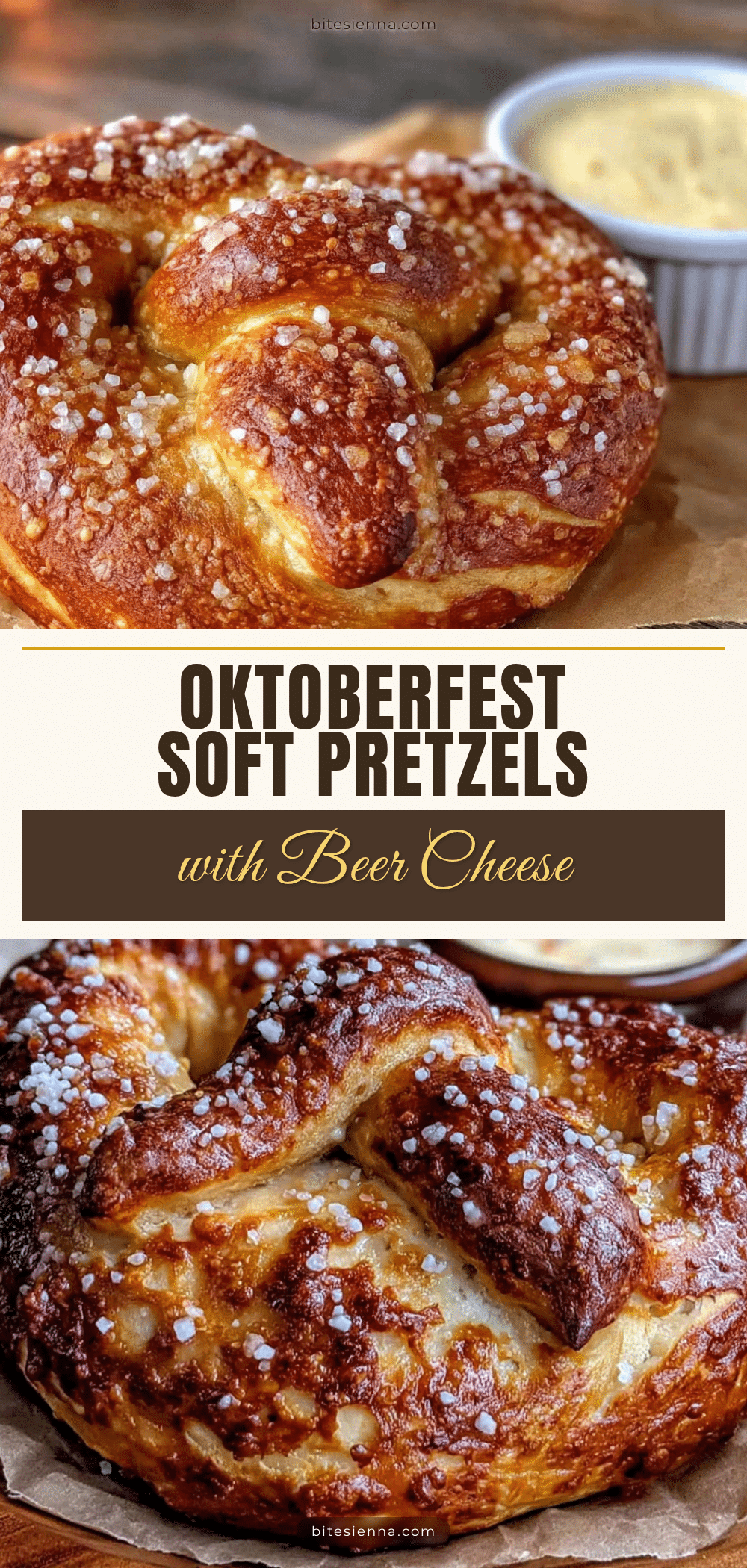
Perfect German Soft Pretzels with Beer Cheese Dip
These homemade German soft pretzels have a deep golden, glossy crust and a chewy interior, thanks to a cold fermentation step. Served with a creamy beer cheese dip, they’re perfect for game day, Oktoberfest, or any cozy gathering.
- Prep Time: 30 minutes
- Cook Time: 15 minutes
- Total Time: 45 minutes (plus 4 hours to overnight cold fermentation and 1.5 hours rising time)
- Yield: 8 servings 1x
- Category: Appetizer
- Cuisine: German
Ingredients
- 4 cups (500g) all-purpose flour
- 1 ½ cups (355ml) warm water (about 110°F)
- 2 ¼ teaspoons active dry yeast (one packet)
- 2 tablespoons (28g) unsalted butter, melted
- 1 tablespoon brown sugar
- 1 teaspoon fine sea salt or table salt
- ½ cup baking soda (for boiling bath)
- Coarse sea salt or pretzel salt, for topping
- 1 egg beaten with 1 tablespoon water (egg wash)
- 8 ounces (226g) sharp cheddar cheese, freshly shredded
- ¾ cup (177ml) beer (pale ale or lager)
- 4 ounces (113g) cream cheese, softened
- 1 tablespoon Dijon mustard
- 1 teaspoon Worcestershire sauce
- ½ teaspoon garlic powder
- Salt and pepper to taste
Instructions
- Activate the yeast: In the bowl of a stand mixer (or large mixing bowl), combine warm water and brown sugar. Sprinkle yeast over the top and let sit for 5-10 minutes until foamy.
- Make the dough: Add melted butter, salt, and 2 cups of flour to the yeast mixture. Mix on low speed with the dough hook until combined, then gradually add remaining flour, ½ cup at a time, until a smooth, slightly sticky ball forms.
- Knead the dough: Knead on medium-low speed for 6-8 minutes (or by hand for 8-10 minutes) until smooth, elastic, and springs back when poked.
- First rise: Shape dough into a ball, place in a lightly greased bowl, cover, and let rise in a warm spot for 1-1.5 hours until doubled in size.
- Cold fermentation: Punch down the dough, cover tightly, and refrigerate for at least 4 hours or overnight.
- Shape the pretzels: Line two baking sheets with parchment paper. Divide cold dough into 8 equal pieces (about 100g each). Roll each into a 20-24 inch rope, thicker in the middle and tapered at the ends. Form a U-shape, cross ends over twice, then fold down to the bottom of the U. Press to seal.
- Second rise: Place shaped pretzels on prepared baking sheets, cover loosely with plastic wrap, and let rise at room temperature for 30 minutes.
- Preheat and prepare the bath: Preheat oven to 425°F (220°C). Bring a large pot of water to a boil, then carefully add baking soda (it will foam).
- Boil the pretzels: Gently lower each pretzel into boiling water, one or two at a time. Boil for 30 seconds on each side. Use a slotted spatula to flip.
- Egg wash and salt: Transfer boiled pretzels back to baking sheets. Brush each with egg wash and sprinkle generously with coarse salt.
- Bake: Bake for 12-15 minutes, rotating pans halfway through, until deep golden brown.
- Make the beer cheese dip: In a small saucepan over medium-low heat, combine beer and cream cheese. Whisk until smooth. Gradually add shredded cheddar, a handful at a time, whisking constantly until melted. Stir in Dijon mustard, Worcestershire sauce, and garlic powder. Season with salt and pepper. Keep warm over low heat.
- Serve immediately: Pretzels are best warm within 30 minutes of baking. Serve with warm beer cheese dip.
Notes
Don’t skip the cold rest—it develops flavor and makes dough easier to shape. The baking soda bath is essential for the dark crust. For best results, use freshly shredded cheese for the dip. Pretzels are best served warm; reheat in the oven or air fryer, not the microwave.
Nutrition
- Serving Size: 1 pretzel
- Calories: 280
- Sugar: 3
- Sodium: 680
- Fat: 6
- Saturated Fat: 3.5
- Carbohydrates: 47
- Fiber: 2
- Protein: 8
Keywords: soft pretzels, German pretzels, beer cheese dip, homemade pretzels, Oktoberfest, game day snack