My neighbor Jen wasn’t trying to impress anyone. I’d stopped by to borrow a ladder—our gutters were overflowing from the autumn leaves—and the smell hit me before I even got to her front door. It was warm, cinnamony, and unmistakably like apple cider, but richer somehow. She opened the door holding a muffin tin, flour on her cheek, and said, “Oh, these are just something I threw together. You want one?”
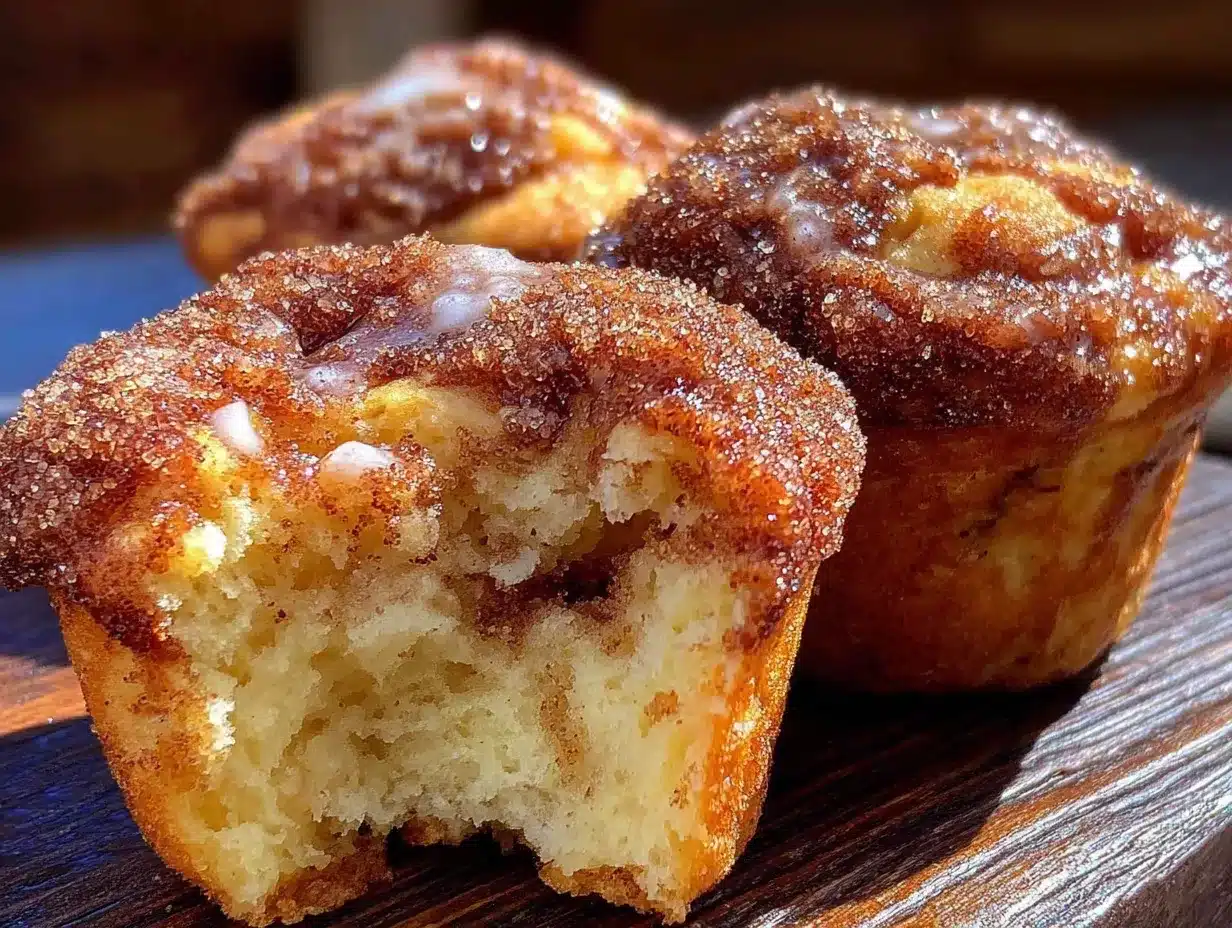
Honestly, “threw together” felt like an understatement. The muffin I bit into had this perfect domed top, tender crumb, and a coating of cinnamon sugar that crackled slightly when I bit into it. It tasted like a trip to the orchard without the hayride. I stood there in her doorway, ladder completely forgotten, asking her what she’d done. She shrugged and said it was basically her apple cider donut recipe but baked in a muffin pan because she didn’t feel like dealing with oil.
That moment stayed with me. I mean, how often do you stumble onto a recipe that feels both completely familiar and totally new? I went home, scribbled down what I remembered from her instructions, and spent the next two weekends testing and tweaking until I got it just right. Maybe you’ve been there—that sudden craving for something cozy and autumnal that doesn’t require a deep fryer or a trip to the farm stand. These best baked apple cider donut muffins are that recipe. They capture everything you love about the classic donut—the spiced sugar coating, the tender, moist interior—but they’re baked, not fried, which means you can make them on a random Tuesday without any fuss.
Let me tell you, these muffins have become my fall obsession. They fill the house with that unbeatable aroma, they come together in under 30 minutes, and they disappear faster than I’d like to admit. Every time I make them, I think of Jen standing in her doorway with flour on her face, completely unaware she’d changed my baking game forever.
Why You’ll Love This Recipe
I’ve tested this recipe more times than I can count—through different apple cider brands, various flour types, and even one disastrous batch where I forgot the sugar entirely (don’t ask). What emerged is genuinely the best version I’ve ever made. Here’s why you’ll feel the same way:
- Quick & Easy: From start to finish, these muffins take about 30 minutes. No yeast, no rising time, no deep-frying mess. Just mix, bake, and roll in cinnamon sugar.
- Simple Ingredients: You probably have most of these in your pantry right now. The star ingredient—apple cider—is easy to find at any grocery store during fall, and the rest is basic baking staples.
- Perfect for Autumn Gatherings: Whether it’s a weekend brunch, a Thanksgiving morning treat, or just a cozy Tuesday, these muffins fit right in. They’re portable, crowd-friendly, and everyone thinks you spent way more effort than you actually did.
- Crowd-Pleaser: I’ve brought these to potlucks, book clubs, and even a casual work meeting. Kids love them, adults love them, and I’ve never brought any home.
- Unbelievably Delicious: The texture is what gets me every time—tender and moist on the inside, with that signature cinnamon-sugar crunch on the outside. It’s comfort food at its finest, baked into muffin form.
What makes this recipe different from the dozens of other apple cider muffin recipes out there? Two things: reducing the cider and the butter technique. By simmering the apple cider down to concentrate its flavor, you get that intense, tangy-sweet apple taste without any artificial extracts. And by browning the butter just slightly, you add a nutty depth that complements the cinnamon and nutmeg perfectly. It’s not just another muffin—it’s the one you’ll keep coming back to.
This is the kind of recipe that makes you close your eyes after the first bite. It’s fall in muffin form, and honestly, it doesn’t get much better than that.
What Ingredients You Will Need
This recipe uses simple, wholesome ingredients to deliver that iconic apple cider donut flavor without any fuss. Most of these are pantry staples, so you can whip up a batch whenever the craving strikes.
- Apple Cider (1 cup / 240 ml): Use fresh, unfiltered apple cider if you can find it. The cloudy kind has more apple solids and deeper flavor. You’ll reduce this on the stove to concentrate the taste, so don’t skip this step—it’s the secret to that intense apple punch.
- Unsalted Butter (1/2 cup / 113 g): You’ll brown this slightly for a nutty, toasty flavor that pairs beautifully with the apple. I prefer using unsalted so I can control the salt level.
- Granulated Sugar (1/2 cup / 100 g) + 1/4 cup (50 g) for coating: Regular white sugar works perfectly here. The extra sugar mixed with cinnamon creates that iconic donut coating that makes these muffins so addictive.
- Brown Sugar (1/4 cup / 50 g, packed): Light or dark brown sugar both work. It adds moisture and a hint of molasses flavor that deepens the apple cider taste.
- All-Purpose Flour (2 cups / 240 g): Spoon and level your flour for the best results. Scooping directly from the bag can pack in too much flour and make the muffins dense.
- Baking Powder (1 1/2 teaspoons): Make sure your baking powder is fresh—it’s what gives these muffins their rise. If it’s been sitting in your pantry for over a year, it’s time for a new can.
- Baking Soda (1/2 teaspoon): Helps with browning and tenderness.
- Salt (1/2 teaspoon): Don’t skip this—salt balances the sweetness and enhances the apple flavor.
- Ground Cinnamon (2 teaspoons + 1 tablespoon for coating): The star spice. Use a fresh jar for the best flavor. I prefer Saigon cinnamon for its warm, slightly spicy kick.
- Ground Nutmeg (1/4 teaspoon): Just a pinch adds warmth without overwhelming the apple.
- Ground Cloves (1/8 teaspoon): Optional but lovely. Adds that classic mulled cider depth.
- Large Egg (1): Room temperature, so it incorporates more evenly into the batter.
- Vanilla Extract (1 teaspoon): Pure vanilla, not imitation, for the best flavor.
- Buttermilk (1/4 cup / 60 ml): The acidity tenderizes the crumb and reacts with the baking soda for a better rise. If you don’t have buttermilk, stir 1 teaspoon of lemon juice into 1/4 cup of milk and let it sit for 5 minutes.
For the coating, you’ll need 1/4 cup melted butter and that reserved cinnamon-sugar mixture. Trust me, the double-dip (butter then sugar) is non-negotiable for that authentic donut experience.
Equipment Needed
You don’t need a professional bakery setup for these muffins, but having the right tools makes the process smoother. Here’s what I use:
- 12-Cup Muffin Pan: Standard size works best. I’ve tried mini muffin pans, but the texture isn’t quite the same—the larger size gives you that perfect crust-to-crumb ratio.
- Paper Muffin Liners: Optional but helpful for easy cleanup. If you skip them, make sure to grease the pan thoroughly with butter or non-stick spray.
- Medium Saucepan: For reducing the apple cider. A small saucepan works too, but watch it closely so it doesn’t boil over.
- Large Mixing Bowl: For the dry ingredients.
- Medium Mixing Bowl: For the wet ingredients.
- Whisk: A good whisk aerates the flour mixture and helps prevent lumps.
- Rubber Spatula: For folding the wet and dry ingredients together. Don’t use an electric mixer here—overmixing is the enemy of tender muffins.
- Cooling Rack: Essential for letting the muffins cool evenly before coating. If you coat them while they’re too hot, the butter melts right off.
- Pastry Brush: For brushing the melted butter onto the muffins. A silicone brush works best and is easier to clean.
- Small Bowl: For the cinnamon-sugar coating mixture.
If you don’t have a cooling rack, you can use a wire rack from your oven or even just a clean cutting board—just flip the muffins on their sides to cool. And if you’re short on time, you can skip the pastry brush and just dip the muffin tops directly into melted butter. It’s messier but just as delicious.
Preparation Method
Let’s get baking! I’ll walk you through each step with the exact timing and sensory cues so you know exactly what to look for.
- Reduce the Apple Cider: Pour 1 cup of apple cider into a medium saucepan. Bring it to a boil over medium-high heat, then reduce the heat to medium and let it simmer. You’re looking for it to reduce down to about 1/4 cup. This takes around 10-12 minutes. You’ll know it’s done when it’s syrupy and coats the back of a spoon. The kitchen will smell incredible at this point. Set it aside to cool while you prepare the rest.
- Brown the Butter: In the same saucepan (or a small skillet), melt 1/2 cup of unsalted butter over medium heat. Swirl the pan occasionally. After about 3-4 minutes, the butter will start to foam and turn golden brown. You’ll see little brown specks forming at the bottom, and it will smell nutty and toasty. Remove it from the heat immediately and pour it into a heatproof bowl to stop the cooking. Let it cool slightly.
- Preheat and Prep: Preheat your oven to 375°F (190°C). Line your muffin pan with paper liners or grease it well with butter or non-stick spray.
- Mix Dry Ingredients: In a large bowl, whisk together 2 cups all-purpose flour, 1 1/2 teaspoons baking powder, 1/2 teaspoon baking soda, 1/2 teaspoon salt, 2 teaspoons cinnamon, 1/4 teaspoon nutmeg, and 1/8 teaspoon cloves (if using). Whisk until everything is evenly distributed—about 15 seconds of vigorous whisking.
- Mix Wet Ingredients: In a medium bowl, whisk together 1/2 cup granulated sugar, 1/4 cup packed brown sugar, the cooled browned butter, the reduced apple cider, 1 large egg, 1 teaspoon vanilla extract, and 1/4 cup buttermilk. Whisk until smooth and well combined. The mixture will look slightly thicker than regular melted butter, and it should smell like warm apple pie.
- Combine Wet and Dry: Pour the wet ingredients into the dry ingredients. Use a rubber spatula to fold them together gently. Stir only until you see the last streaks of flour disappear—about 10-12 strokes. A few lumps are perfectly fine. Overmixing at this stage will make your muffins tough, so resist the urge to keep stirring.
- Fill the Muffin Cups: Divide the batter evenly among the 12 muffin cups. Each cup should be about 3/4 full. I use a cookie scoop for even portions, but a spoon works too. The batter will be thick and slightly sticky—that’s normal.
- Bake: Place the muffin pan in the preheated oven and bake for 15-18 minutes. At 15 minutes, start checking. The muffins are done when a toothpick inserted into the center comes out clean or with just a few moist crumbs. The tops should be golden brown and spring back when lightly touched. My oven runs hot, so I usually start checking at 14 minutes.
- Cool: Let the muffins cool in the pan for 5 minutes. Then transfer them to a cooling rack. This is important—if you leave them in the pan too long, they’ll steam and become soggy on the bottom.
- Prepare the Coating: While the muffins cool, melt 1/4 cup of butter in a small bowl. In another small bowl, mix 1/4 cup granulated sugar with 1 tablespoon of cinnamon.
- Dip and Coat: Once the muffins are cool enough to handle (about 5 minutes on the rack), brush each muffin top with melted butter. Then dip the buttered top into the cinnamon-sugar mixture, pressing gently so the coating sticks. You can also roll the entire muffin in the sugar if you want full coverage—I won’t judge.
That’s it. Eleven steps to autumn perfection. The coating will set as the muffins cool, creating that signature crackly crust that makes these muffins so special.
Cooking Tips & Techniques
After making these muffins more times than I care to count, I’ve picked up a few tricks that make a real difference. Here are the lessons I learned the hard way so you don’t have to.
Don’t Skip Reducing the Cider: I know it adds an extra step, but it’s non-negotiable. Full-strength apple cider has too much water and not enough flavor. Reducing it concentrates the apple taste and removes excess liquid that would make your muffins soggy. I once tried to shortcut this step and ended up with flat, bland muffins. Never again.
Watch the Butter Closely: Brown butter goes from perfect to burnt in about 30 seconds. Once you see golden specks forming and smell that nutty aroma, pull it off the heat immediately. Pour it into a cool bowl to stop the cooking process. Burnt butter tastes bitter and will ruin the delicate apple flavor.
Room Temperature Ingredients Matter: Cold egg and cold buttermilk will seize the browned butter and create a lumpy batter. Take them out of the fridge 30 minutes before you start baking. If you forget, place the egg in a bowl of warm water for 5 minutes and microwave the buttermilk for 10 seconds.
Measure Flour Correctly: This is the most common mistake in baking. Spoon the flour into your measuring cup and level it off with a knife. Scooping directly from the bag can add up to 25% more flour, which makes muffins dry and dense. I learned this the hard way with a batch that turned out like hockey pucks.
Don’t Overmix: When you combine the wet and dry ingredients, mix only until you can’t see any more dry flour. Lumps are fine. Overmixing develops gluten, and too much gluten means tough muffins. Think of it like folding in chocolate chips—gentle and quick.
Timing the Coating: The sweet spot for coating is when the muffins are still warm but not hot. Too hot, and the butter melts right off, taking the sugar with it. Too cold, and the butter doesn’t spread evenly. About 5 minutes after they come out of the pan is perfect.
Make Ahead Tip: You can prepare the reduced cider and browned butter up to 3 days in advance. Store them in separate containers in the fridge. Bring them to room temperature before using. This makes the actual baking process even faster.
Variations & Adaptations
One of the best things about this recipe is how adaptable it is. Here are some variations I’ve tried and loved:
- Gluten-Free Version: Substitute the all-purpose flour with a 1:1 gluten-free baking blend. I’ve had great results with Bob’s Red Mill and King Arthur brands. Add 1/2 teaspoon of xanthan gum if your blend doesn’t already include it. The texture is slightly more delicate, but the flavor is spot-on.
- Dairy-Free Adaptation: Use vegan butter (I like Miyoko’s) and swap the buttermilk with 1/4 cup of unsweetened almond milk mixed with 1 teaspoon of apple cider vinegar. The vinegar mimics the acidity of buttermilk and helps with the rise.
- Spiced Apple Variation: Fold in 1/2 cup of finely diced fresh apple (Honeycrisp or Granny Smith work well) into the batter just before baking. The little pieces of apple add bursts of moisture and texture. Toss the diced apple in a teaspoon of flour first to prevent them from sinking to the bottom.
- Maple Glaze Option: Instead of the cinnamon-sugar coating, whisk together 1 cup of powdered sugar with 2 tablespoons of maple syrup and 1 tablespoon of milk. Drizzle over the cooled muffins for a completely different—but equally delicious—finish.
- Pumpkin Spice Twist: Swap the apple cider for pumpkin puree (reduce to 1/2 cup) and add an extra egg. Replace the cinnamon-nutmeg-clove mix with 2 teaspoons of pumpkin pie spice. These are perfect for when you want a change from apple but still want that fall vibe.
I personally love the diced apple variation. It makes the muffins feel even more rustic and autumnal, and my family fights over the ones with the most apple pieces.
Serving & Storage Suggestions
These muffins are best served warm, within an hour of baking. The cinnamon-sugar coating is at its peak crunchiness right after it sets, and the interior is still tender and moist. Here’s how to serve and store them:
Serving: Arrange the muffins on a wooden board or a simple white platter. They’re lovely on their own, but a hot cup of coffee or a steaming mug of mulled cider takes them to another level. For brunch, serve them alongside scrambled eggs and crisp bacon—the salty-sweet combination is irresistible. If you’re feeling fancy, warm them slightly in the microwave for 10 seconds before serving to revive that just-baked texture.
Storage: Store leftover muffins in an airtight container at room temperature for up to 3 days. Place a paper towel at the bottom of the container to absorb excess moisture, and another paper towel on top. Change the paper towels daily if you’re storing for more than a day. Do not refrigerate them—the fridge dries out baked goods and makes the coating sticky.
Freezing: These muffins freeze beautifully. Freeze them uncoated (skip the butter and cinnamon-sugar step) for up to 3 months. Wrap each muffin tightly in plastic wrap, then place them in a freezer bag. When you’re ready to enjoy them, thaw at room temperature, then reheat in a 350°F oven for 5 minutes. Coat them with melted butter and cinnamon-sugar while they’re still warm. The coating stays perfectly crunchy this way.
Reheating: For a single muffin, microwave for 15-20 seconds. For a batch, wrap them in foil and warm in a 300°F oven for 8-10 minutes. The oven method keeps the coating crunchier.
One thing I’ve noticed: these muffins actually taste even better the next day. The flavors meld together overnight, and the apple cider taste becomes even more pronounced. If you can resist eating them all on day one, you’re in for a treat on day two.
Nutritional Information & Benefits
While these muffins are definitely a treat, they’re made with real, wholesome ingredients. Here’s the estimated nutritional breakdown per muffin (based on 12 muffins):
- Calories: 245
- Total Fat: 12g
- Saturated Fat: 7g
- Cholesterol: 45mg
- Sodium: 210mg
- Total Carbohydrates: 33g
- Dietary Fiber: 1g
- Sugars: 19g
- Protein: 3g
Health Benefits: Apple cider contains antioxidants called polyphenols, which may help reduce inflammation and support heart health. Cinnamon is known for its anti-inflammatory properties and can help regulate blood sugar levels. The butter provides vitamin A, and the egg offers a good source of protein. While these aren’t health food, using real ingredients means you’re getting more nutrients than you would from a store-bought donut.
Dietary Considerations: This recipe contains gluten, dairy, and eggs. For gluten-free and dairy-free options, see the variations section above. Each muffin has about 19g of sugar, so if you’re watching your sugar intake, you can reduce the sugar in the coating by half or skip it entirely—the muffins are still delicious plain.
I believe in balance. These muffins are a celebration of fall flavors, and enjoying them mindfully is part of the joy of seasonal eating.
Conclusion
These best baked apple cider donut muffins are everything I love about autumn baking—warm spices, tender crumb, and that nostalgic apple cider flavor that takes me right back to crisp October afternoons. They’re proof that you don’t need a deep fryer or complicated techniques to create something truly special. Just simple ingredients, a little patience with the cider reduction, and the willingness to get a little flour on your face.
I hope you make these muffins your own. Maybe you’ll add extra cinnamon, or skip the coating for a lighter version, or double the batch because one dozen is never enough. Whatever you do, I’d love to hear about it. Drop a comment below and tell me how they turned out—did your family love them as much as mine does? Did you try a variation I haven’t thought of?
And if you’re looking for more fall baking inspiration, you might also enjoy my cinnamon sugar pumpkin muffins or these apple cider caramel sauce that’s perfect for drizzling over everything. Happy baking, friends. May your kitchen smell like warm apples and your heart feel full.
Frequently Asked Questions
Can I use apple juice instead of apple cider?
Technically yes, but the flavor won’t be as rich. Apple cider is unfiltered and has more apple solids, which gives a deeper, more authentic apple taste. Apple juice is clearer and sweeter, with less complexity. If you only have apple juice, reduce it the same way, but expect a milder apple flavor.
Why did my muffins turn out dry?
Dry muffins usually come from one of three problems: overmixing the batter, overbaking, or using too much flour. Make sure you spoon and level your flour, mix only until combined, and start checking for doneness at 15 minutes. Every oven runs differently, so trust the toothpick test over the timer.
Can I make these into actual donuts instead of muffins?
Absolutely! You can bake the batter in a donut pan instead. Reduce the baking time to 10-12 minutes, and keep a close eye on them. The coating method stays the same. They won’t have the same texture as fried donuts, but they’re delicious in their own right.
How do I get the cinnamon-sugar coating to stick better?
The key is brushing the muffins with melted butter while they’re still warm but not hot. If the butter is too hot, it runs off. If the muffins are too cold, the butter doesn’t spread evenly. Also, make sure your cinnamon-sugar mixture is well combined—clumps of cinnamon can fall off easily.
Can I prepare the batter in advance?
I don’t recommend it. The baking powder and baking soda start reacting as soon as they hit the wet ingredients, so the batter loses its lift over time. For best results, bake the muffins immediately after mixing. You can, however, prepare the reduced cider and browned butter up to 3 days ahead and store them in the fridge.
Pin This Recipe!
Best Baked Apple Cider Donut Muffins

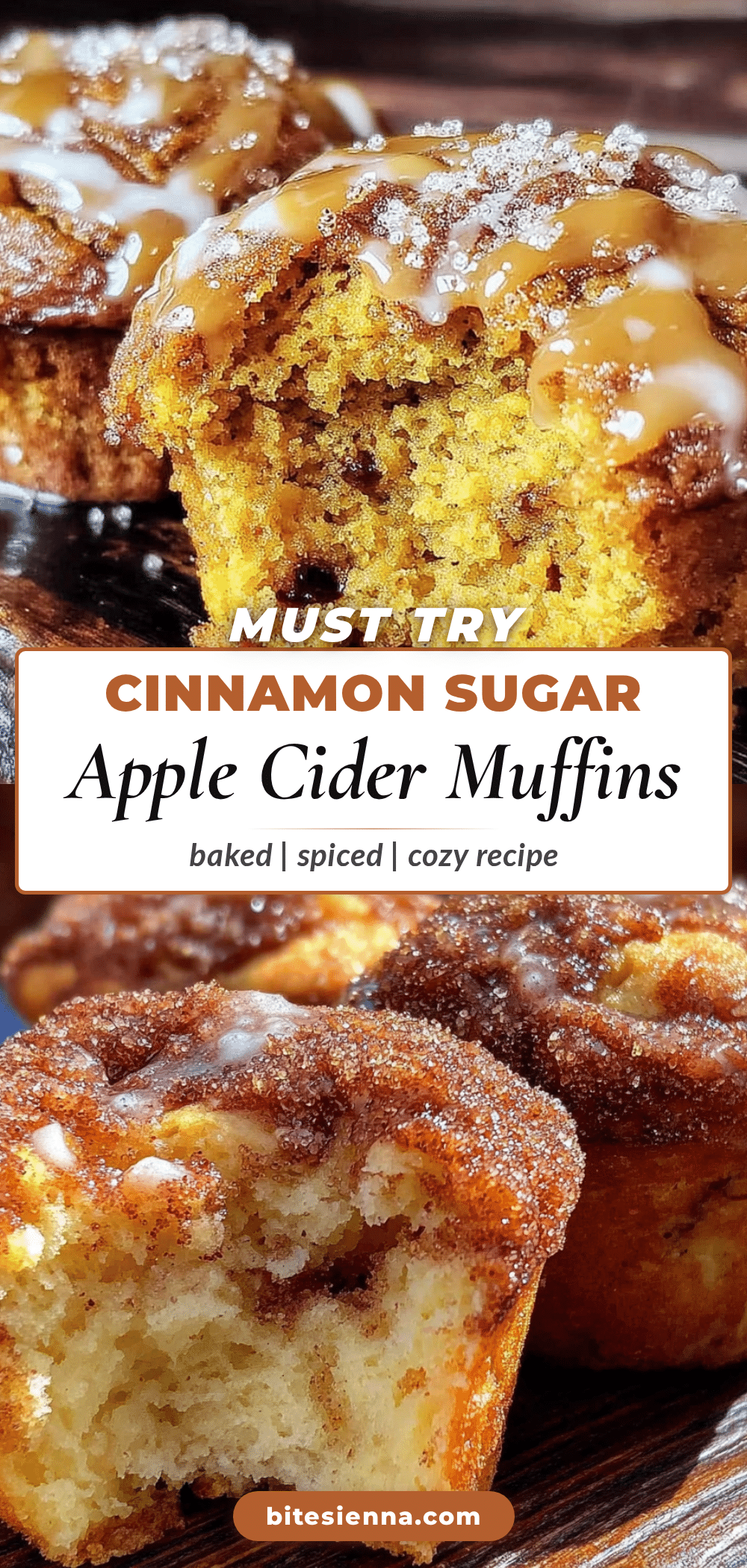
These baked apple cider donut muffins capture everything you love about the classic donut—the spiced sugar coating, the tender, moist interior—but they’re baked, not fried. Made with reduced apple cider and browned butter for intense flavor, they come together in under 30 minutes and are perfect for autumn gatherings.
- Prep Time: 15 minutes
- Cook Time: 18 minutes
- Total Time: 33 minutes
- Yield: 12 muffins 1x
- Category: Dessert
- Cuisine: American
Ingredients
- 1 cup (240 ml) apple cider
- 1/2 cup (113 g) unsalted butter
- 1/2 cup (100 g) granulated sugar
- 1/4 cup (50 g) packed brown sugar
- 2 cups (240 g) all-purpose flour
- 1 1/2 teaspoons baking powder
- 1/2 teaspoon baking soda
- 1/2 teaspoon salt
- 2 teaspoons ground cinnamon
- 1/4 teaspoon ground nutmeg
- 1/8 teaspoon ground cloves (optional)
- 1 large egg, room temperature
- 1 teaspoon vanilla extract
- 1/4 cup (60 ml) buttermilk, room temperature
- For the coating:
- 1/4 cup (50 g) granulated sugar
- 1 tablespoon ground cinnamon
- 1/4 cup (57 g) melted butter
Instructions
- Reduce the apple cider: Pour 1 cup apple cider into a medium saucepan. Bring to a boil over medium-high heat, then reduce heat to medium and simmer until reduced to about 1/4 cup, about 10-12 minutes. Set aside to cool.
- Brown the butter: In the same saucepan, melt 1/2 cup unsalted butter over medium heat. Swirl occasionally until it foams and turns golden brown with brown specks, about 3-4 minutes. Remove from heat and pour into a heatproof bowl to cool slightly.
- Preheat oven to 375°F (190°C). Line a 12-cup muffin pan with paper liners or grease well.
- Mix dry ingredients: In a large bowl, whisk together flour, baking powder, baking soda, salt, 2 teaspoons cinnamon, nutmeg, and cloves (if using).
- Mix wet ingredients: In a medium bowl, whisk together 1/2 cup granulated sugar, brown sugar, browned butter, reduced apple cider, egg, vanilla, and buttermilk until smooth.
- Combine wet and dry: Pour wet ingredients into dry ingredients. Fold gently with a rubber spatula until just combined (about 10-12 strokes). Do not overmix; a few lumps are fine.
- Fill muffin cups: Divide batter evenly among 12 muffin cups, filling each about 3/4 full.
- Bake for 15-18 minutes, until a toothpick inserted into the center comes out clean or with a few moist crumbs. Tops should be golden and spring back when touched.
- Cool in pan for 5 minutes, then transfer to a cooling rack.
- Prepare coating: In a small bowl, mix 1/4 cup granulated sugar with 1 tablespoon cinnamon. In another small bowl, melt 1/4 cup butter.
- Coat muffins: While still warm, brush each muffin top with melted butter, then dip into cinnamon-sugar mixture, pressing gently to adhere. For full coverage, roll the entire muffin in the sugar.
Notes
Don’t skip reducing the cider—it concentrates the apple flavor. Watch the brown butter closely as it can burn quickly. Use room temperature ingredients for best results. Measure flour by spooning and leveling. Coat muffins while still warm for best adhesion. Muffins can be stored at room temperature for up to 3 days or frozen uncoated for up to 3 months.
Nutrition
- Serving Size: 1 muffin
- Calories: 245
- Sugar: 19
- Sodium: 210
- Fat: 12
- Saturated Fat: 7
- Carbohydrates: 33
- Fiber: 1
- Protein: 3
Keywords: apple cider donut muffins, baked donut muffins, fall muffins, apple cider muffins, cinnamon sugar muffins, easy muffin recipe