I wasn’t expecting cooking advice from the IT guy, but there I was, sitting on a folding chair in a breakroom, listening to him describe exactly how to make sweet potato casserole. It was 2019, and the office holiday party was being planned by committee. We were arguing over caterers, budgets, and whether to serve champagne or just beer. Then, Marcus, who usually just fixed our Wi-Fi, cleared his throat and mentioned his grandmother’s recipe.
Let me tell you, nobody in that room thought Marcus could cook. He wore button-down shirts with little cartoon servers on them. But he insisted this dish was the secret weapon for their family gatherings. He said it wasn’t just about the potatoes; it was about the balance of sweet and salty. I was skeptical, honestly. I’ve made enough sad, gluey sweet potato mixes in my life to know better.
So, I asked him for the details. He scribbled it on a napkin right there at the fluorescent-lit table. It involved a specific type of marshmallow and a secret ingredient in the topping. I went home that weekend and tried it. The smell alone pulled my entire family into the kitchen. My husband, who usually claims he doesn’t like sweet sides, went back for seconds.
This isn’t your standard, dry, canned-potato dish. It’s creamy, rich, and has that crunch that makes everyone fight for the corner pieces. I’ve been making this for every Friendsgiving since. You know that feeling when you finally nail a dish that becomes a tradition? That’s this. It’s the kind of recipe that turns a simple Tuesday dinner into a celebration. I mean, it’s basically magic in a baking dish.
I keep making it because it’s reliable, but also because it brings people together. Whether you have ten guests or just your partner, this Best Friendsgiving Sweet Potato Casserole is the star of the table. It’s got that homemade soul that store-bought mixes just can’t touch. And honestly, once you try the crunchy pecan topping, you’ll never go back to plain marshmallows again.
Why You’ll Love This Recipe
This Best Friendsgiving Sweet Potato Casserole is the result of years of trial, error, and a few burned batches. I’ve tested this with five different brands of sweet potatoes and three types of brown sugar to get the flavor profile just right. The result is a dish that is deeply comforting yet sophisticated enough for your most picky guests.
- Quick & Easy: If you buy pre-cooked sweet potatoes, you can have this on the table in under 45 minutes. It’s perfect for busy weeknights or last-minute gatherings when you don’t want to spend hours in the kitchen.
- Simple Ingredients: No fancy grocery trips needed. You likely already have most of this in your pantry. Sweet potatoes, butter, brown sugar, cinnamon, and pecans are staples in most homes.
- Perfect for Friendsgiving: This dish is a crowd-pleaser that bridges the gap between traditional Thanksgiving and a casual friend gathering. It’s warm, inviting, and easy to serve buffet-style.
- Crowd-Pleaser: Kids love the sweetness, and adults appreciate the savory notes from the salt and butter. It always gets rave reviews from everyone alike.
- Unbelievably Delicious: The texture combo of the creamy base and the crunchy, caramelized topping is next-level comfort food. It’s the kind of dish that makes you close your eyes after the first bite.
What makes this recipe different is the base. I roast the potatoes instead of boiling them. Boiling leaches out flavor. Roasting concentrates the natural sugars, giving you a richer, deeper taste. It’s a small step, but it changes everything. This isn’t just another version—it’s the best version because it respects the ingredient.
It’s comfort food reimagined. It’s faster than a from-scratch pie but has more soul than a boxed mix. Perfect for impressing guests without stress, or turning a simple meal into something memorable. You’ll find yourself making this for birthdays, brunches, and just because.
What Ingredients You Will Need
This recipe uses simple, wholesome ingredients to deliver bold flavor and satisfying texture without the fuss. The key is quality. Since there are so few components, each one needs to shine. I recommend using fresh, firm sweet potatoes rather than canned ones if you have the time. The flavor difference is night and day.
For the Sweet Potato Base:
- Sweet Potatoes: 3 to 4 pounds of large, firm sweet potatoes. Look for ones that feel heavy for their size. Garnet or Jewel varieties are best because they are naturally sweeter and have a smoother texture.
- Unsalted Butter: 1/2 cup (113g), softened. Using unsalted allows you to control the sodium level. I prefer European-style butter for its higher fat content and richer flavor, but any good quality butter works.
- Brown Sugar: 1/2 cup (100g), packed. Dark brown sugar adds a molasses note that pairs beautifully with the potatoes. If you need a lighter taste, you can use light brown sugar, but dark is my go-to.
- Heavy Cream: 1/4 cup (60ml). This adds richness and helps create that smooth, custard-like consistency. Half-and-half works in a pinch, but heavy cream gives the best mouthfeel.
- Eggs: 2 large eggs, room temperature. Eggs bind the mixture together so it holds its shape when sliced. Room temperature eggs incorporate more easily than cold ones.
- Vanilla Extract: 1 teaspoon. Pure vanilla extract adds warmth. Avoid imitation vanilla if you can help it; it can taste chemical.
- Cinnamon: 1 teaspoon. Ground cinnamon is essential. Make sure yours isn’t old; smell it first. If it doesn’t smell like cinnamon, toss it.
- Nutmeg: 1/4 teaspoon. Freshly grated nutmeg is ideal, but ground works fine. It adds a subtle, earthy depth.
- Salt: 1/2 teaspoon. Salt is crucial to balance the sweetness. Don’t skip it.
For the Crunchy Topping:
- Old-Fashioned Oats: 1 cup. These provide the texture. Do not use quick oats, as they will turn mushy.
- All-Purpose Flour: 1/2 cup. This helps bind the oats and butter into a crumbly topping.
- Brown Sugar: 1/2 cup, packed. Again, dark brown sugar for that caramelized flavor.
- Unsalted Butter: 1/2 cup (113g), melted. Cold butter doesn’t mix as well for this crumble.
- Pecans: 1 cup, chopped. Toasting them first enhances their flavor, but raw works too. I like them coarse-chopped for texture.
- Mini Marshmallows: 1 cup. Optional, but highly recommended for that classic Friendsgiving vibe. If you want a less sweet version, you can skip these.
For the oats, I recommend brands like Bob’s Red Mill for their consistent quality. For the pecans, look for ones that are whole and not dusty. If you have a nut allergy, you can swap pecans for sunflower seeds or skip them entirely.
Equipment Needed
You don’t need much fancy gear for this, which is part of the appeal. A large baking sheet is essential for roasting the sweet potatoes. A rimmed sheet pan works best to catch any potential spills, though sweet potatoes are pretty low-mess.
For mashing, a large potato masher is traditional, but a hand mixer or food processor gives a smoother result. I prefer the hand mixer for this recipe because it incorporates air, making the base fluffier. If you don’t have one, a fork will do, but it takes more elbow grease.
A 9×13 inch baking dish is the standard size for this casserole. Glass or ceramic dishes work well because they heat evenly. If you only have a metal pan, keep an eye on the top, as metal conducts heat faster and might brown the topping too quickly.
A medium mixing bowl is needed for the topping. A whisk helps combine the dry ingredients with the melted butter. I also recommend using a silicone spatula for scraping the sides of the bowl to ensure no batter is wasted. It’s a small thing, but it matters when you’re trying to get every bit of flavor.
If you’re making this ahead, airtight containers are useful for storage. No specialty equipment is required, making this accessible for any home cook. Just keep your tools clean and ready, and you’ll be fine.
Preparation Method
Start by preheating your oven to 400°F (200°C). This high heat is necessary for roasting the potatoes properly. Wash the sweet potatoes thoroughly. You don’t need to peel them before roasting, as the skin helps them hold their shape and prevents them from becoming watery. Poke each potato a few times with a fork to let steam escape. This prevents them from exploding, which is a messy and annoying problem.
Place the potatoes directly on the oven rack or on a lined baking sheet. Roast them for 45 to 60 minutes. They are done when they are soft all the way through. You can test this by squeezing one gently with an oven mitt; it should yield easily. Let them cool until they are safe to handle. This step usually takes about 20 minutes. While they cool, you can prep your topping ingredients.
Once cool, cut the potatoes in half and scoop the flesh into a large mixing bowl. Discard the skins. Add the softened butter, brown sugar, heavy cream, eggs, vanilla, cinnamon, nutmeg, and salt. Mix everything together until smooth. If you’re using a hand mixer, blend on medium speed for about 2 minutes. The mixture should be creamy and uniform. If there are large lumps, mash them out. Taste the mixture now. It should be sweet but not cloying. Adjust sugar or spices if needed.
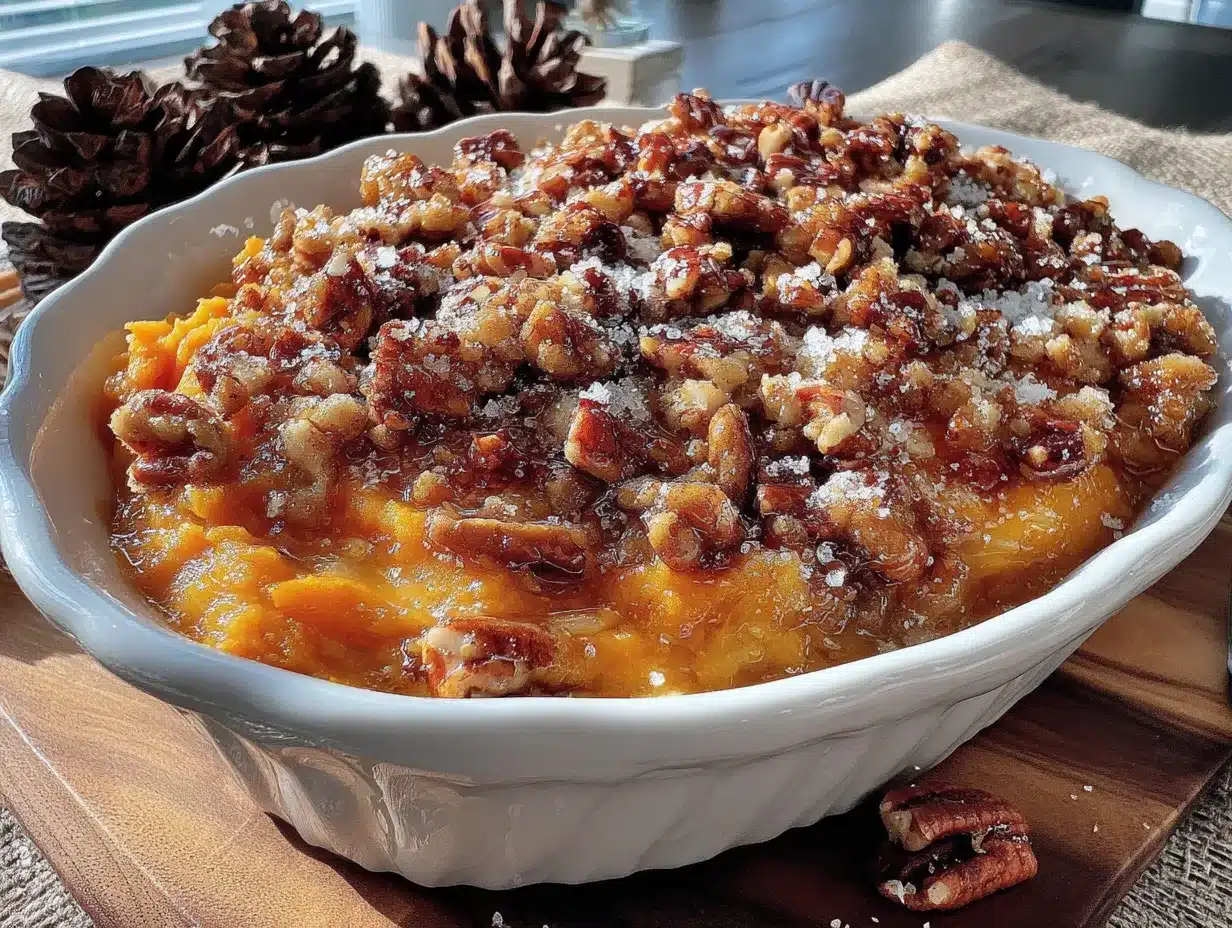
Transfer the sweet potato mixture into your 9×13 inch baking dish. Spread it out evenly with a spatula. This ensures consistent cooking. Now, let’s make the topping. In a medium bowl, combine the oats, flour, brown sugar, and chopped pecans. Pour in the melted butter and stir until the mixture resembles wet sand. It should clump together when you squeeze it.
Spread this topping evenly over the sweet potato layer. If you’re using mini marshmallows, sprinkle them over the topping now. You don’t need to cover every inch; the marshmallows will melt and bond with the crumbs. Place the dish in the oven and reduce the heat to 350°F (175°C). Bake for 25 to 30 minutes. You want the topping to be golden brown and crispy, and the marshmallows to be puffed and slightly browned.
If the topping is browning too fast, loosely tent the dish with aluminum foil. This protects the top while the center heats through. Remove from the oven and let it rest for 10 minutes before serving. This resting time allows the casserole to set, making it easier to scoop. Serve warm. The contrast between the hot, soft potatoes and the crunchy topping is what makes this dish special. Enjoy every bite.
Cooking Tips & Techniques
One common mistake is under-roasting the potatoes. If they aren’t fully soft, they will be stringy and difficult to mash. Trust the fork test. Another issue is a watery casserole. This happens if the potatoes aren’t cooled enough before mashing, or if too much liquid is added. Stick to the measurements.
For the best texture, roast the potatoes on a rack rather than a flat pan. This allows air to circulate, preventing the bottoms from steaming. I learned this the hard way after a batch turned out soggy. Now, I always use a wire rack.
When mixing the base, don’t overmix once the eggs are added. Overmixing can make the casserole rubbery. Just combine until no streaks of egg remain. Also, ensure your butter is softened for the base but melted for the topping. Different states of butter serve different purposes here.
Timing is key. If you’re hosting a dinner, start the potatoes early. They take the longest. You can assemble the casserole and refrigerate it for up to 24 hours before baking. This is a great strategy for busy hosts. Just add 10 minutes to the baking time if cooking from cold.
For a consistent result, use a kitchen scale for the dry ingredients. Volume measurements can vary, especially with brown sugar. A scale ensures your ratios are always correct. It’s a small habit that makes a big difference in baking and cooking.
Finally, don’t skip the salt in the base. Sweet potatoes are sweet, but without salt, the flavor feels one-dimensional. The salt balances the sugar and brings out the natural earthiness of the potatoes. It’s a simple step that elevates the entire dish.
Variations & Adaptations
This recipe is versatile. For a gluten-free version, swap the all-purpose flour in the topping with almond flour or a gluten-free 1:1 baking blend. The texture will be slightly different but still delicious. For a dairy-free option, use coconut oil or a vegan butter substitute instead of regular butter. Use coconut cream instead of heavy cream for the base.
Want a spicier kick? Add a pinch of cayenne pepper or a dash of maple syrup with cinnamon. The heat complements the sweetness beautifully. For a nut-free version, replace the pecans with toasted sunflower seeds or pumpkin seeds. This is great for school events or allergy-sensitive gatherings.
I’ve also tried adding a layer of cream cheese to the base for a cheesecake-like twist. Spread a thin layer of sweetened cream cheese over the potatoes before adding the topping. It adds a tangy contrast that some people love. For a lighter version, reduce the butter in the topping and use less brown sugar. It won’t be as rich, but it’s still tasty.
Seasonal variations are easy. In the fall, add a splash of apple cider to the base. In winter, add a hint of orange zest. These small tweaks keep the recipe fresh and interesting year after year. The base recipe is a canvas, so feel free to experiment.
Serving & Storage Suggestions
Serve this casserole warm, straight from the oven. It pairs well with roasted chicken, turkey, or even grilled tofu for a vegetarian meal. A side of green beans or a crisp salad cuts through the richness. For beverages, try a spiced cider or a light white wine.
Store leftovers in an airtight container in the refrigerator for up to 4 days. The flavors meld together over time, making it even better on day two. To reheat, place individual portions in the microwave for 1-2 minutes. For a crispier topping, reheat in the oven at 350°F for 10 minutes.
You can also freeze the unbaked casserole. Assemble it, cover tightly with plastic wrap and foil, and freeze for up to 3 months. Thaw in the refrigerator overnight before baking. The marshmallows might lose some structure after freezing, so it’s best to add fresh marshmallows after thawing.
The casserole thickens as it cools. If you find it too stiff after storage, add a splash of milk or cream when reheating. This restores the creamy texture. Enjoy it as a side or even as a dessert with a scoop of vanilla ice cream.
Nutritional Information & Benefits
Sweet potatoes are a nutritional powerhouse. They are rich in Vitamin A, which supports eye health and immune function. They also provide fiber, which aids digestion, and Vitamin C. Compared to white potatoes, they have a lower glycemic index, meaning they release sugar more slowly into the bloodstream.
This casserole is moderately high in calories due to the butter and sugar, so enjoy it in moderation. For a lower-calorie version, reduce the butter and sugar amounts. The pecans add healthy fats and protein, which help with satiety. Overall, this dish offers a balance of comfort and nutrition.
It is not naturally gluten-free or dairy-free, but adaptations exist. For those with specific dietary needs, the substitutions mentioned earlier work well. Always check labels on packaged ingredients like oats and marshmallows for hidden allergens.
From a wellness perspective, this recipe is about balance. It’s a treat, but it uses whole foods. It’s not empty calories. The vitamins and minerals in the potatoes provide real health benefits. Enjoy it as part of a varied diet.
Conclusion
This Best Friendsgiving Sweet Potato Casserole is worth trying because it combines simplicity with incredible flavor. It’s a dish that brings people together and creates memories. I love it because it’s reliable and always a hit. Whether you’re feeding a crowd or just your family, it delivers.
Feel free to customize it to your taste. Add more nuts, less sugar, or different spices. Make it your own. I hope you enjoy making it as much as I have. Please share your results in the comments below. Did you add a twist? Let me know!
Don’t forget to share this recipe with your friends. Maybe they need a new favorite side dish. Thanks for reading, and happy cooking. Here’s to good food and great company.
FAQs
Can I make this casserole ahead of time?
Yes, you can assemble the casserole up to 24 hours in advance. Cover it tightly and refrigerate. When ready to bake, let it sit at room temperature for 20 minutes, then bake as directed, adding 10 minutes to the cook time.
What kind of sweet potatoes should I use?
Garnet or Jewel sweet potatoes are best. They are naturally sweeter and have a moist, soft texture that mashes easily. Avoid Beauregard potatoes, which can be drier.
Can I use canned sweet potatoes?
It’s not recommended. Canned sweet potatoes are often packed in syrup and have a mushy texture. Freshly roasted potatoes provide a much better flavor and consistency.
How do I store leftovers?
Store leftovers in an airtight container in the refrigerator for up to 4 days. Reheat in the microwave or oven until warm.
Can I freeze this casserole?
You can freeze the unbaked casserole for up to 3 months. Thaw in the refrigerator before baking. The marshmallows may not melt as nicely after freezing, so consider adding fresh ones after thawing.
Pin This Recipe!
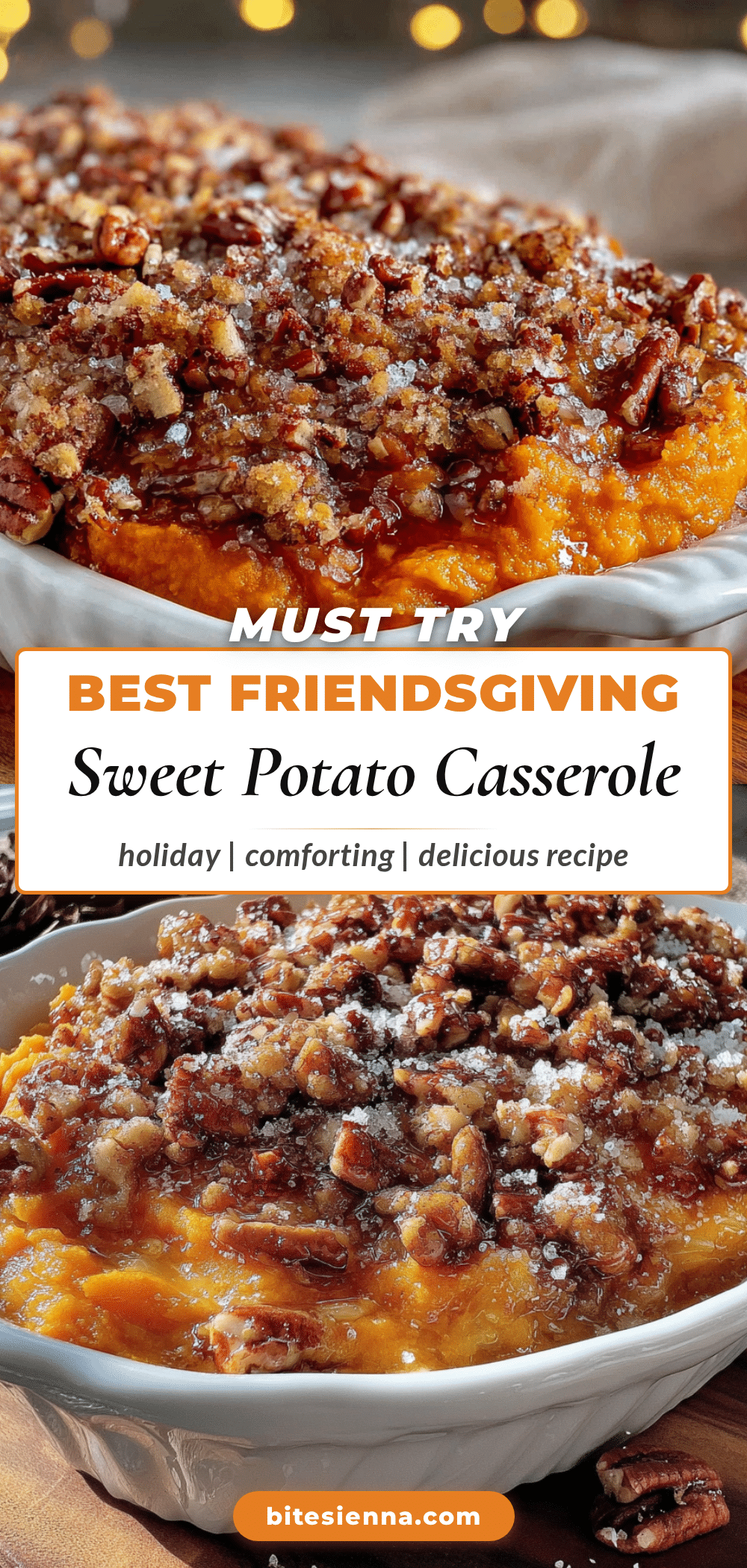
Best Friendsgiving Sweet Potato Casserole: Easy Holiday Side
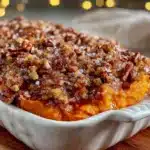
A creamy, rich sweet potato casserole with a crunchy pecan and oat topping, roasted for deeper flavor. This reliable crowd-pleaser is perfect for Friendsgiving, holidays, or any gathering.
- Prep Time: 20 minutes
- Cook Time: 85 minutes
- Total Time: 105 minutes
- Yield: 8 servings 1x
- Category: Side Dish
- Cuisine: American
Ingredients
- 3 to 4 pounds large, firm sweet potatoes (Garnet or Jewel varieties)
- 1/2 cup (113g) unsalted butter, softened
- 1/2 cup (100g) packed dark brown sugar
- 1/4 cup (60ml) heavy cream
- 2 large eggs, room temperature
- 1 teaspoon pure vanilla extract
- 1 teaspoon ground cinnamon
- 1/4 teaspoon ground nutmeg
- 1/2 teaspoon salt
- 1 cup old-fashioned oats
- 1/2 cup all-purpose flour
- 1/2 cup packed dark brown sugar
- 1/2 cup (113g) unsalted butter, melted
- 1 cup chopped pecans
- 1 cup mini marshmallows (optional)
Instructions
- Preheat oven to 400°F (200°C). Wash sweet potatoes and poke them several times with a fork.
- Roast potatoes directly on the oven rack or on a lined baking sheet for 45-60 minutes until soft all the way through. Let cool for 20 minutes.
- Cut potatoes in half and scoop flesh into a large mixing bowl, discarding skins.
- Add softened butter, brown sugar, heavy cream, eggs, vanilla, cinnamon, nutmeg, and salt to the bowl.
- Mix until smooth and creamy, ensuring no large lumps remain.
- Transfer the sweet potato mixture to a 9×13 inch baking dish and spread evenly.
- In a medium bowl, combine oats, flour, brown sugar, and chopped pecans.
- Pour in melted butter and stir until the mixture resembles wet sand and clumps together.
- Spread the topping evenly over the sweet potato layer.
- Sprinkle mini marshmallows over the topping if using.
- Reduce oven temperature to 350°F (175°C). Bake for 25-30 minutes until topping is golden brown and marshmallows are puffed.
- If topping browns too quickly, tent loosely with aluminum foil.
- Remove from oven and let rest for 10 minutes before serving.
Notes
Roasting the potatoes instead of boiling concentrates natural sugars and improves flavor. Ensure potatoes are fully cooled before mashing to prevent a watery casserole. Do not overmix once eggs are added to avoid a rubbery texture. For make-ahead, assemble and refrigerate for up to 24 hours, adding 10 minutes to baking time if cooking from cold.
Nutrition
- Serving Size: 1/8 of the casserole
- Calories: 380
- Sugar: 38
- Sodium: 220
- Fat: 18
- Saturated Fat: 8
- Carbohydrates: 52
- Fiber: 5
- Protein: 4
Keywords: sweet potato casserole, friendsgiving, holiday side dish, Thanksgiving recipe, roasted sweet potatoes, pecan topping, easy holiday cooking