It was 11:47 PM on a random Thursday, and I had that familiar, restless energy — the kind that makes you open the fridge just to stare at its contents. I was supposed to be prepping for a brunch gathering the next morning, a small get-together for some neighbors I barely knew, and honestly, I was nervous. I had a plan for a fancy frittata, but I didn’t have the patience for delicate whisking and precise timing at that hour. What I did have was a pound of breakfast sausage, a block of cheddar, a dozen eggs, and a bag of stale bread heels I’d been meaning to toss. The idea that arrived was born from pure laziness and a desperate need to sleep: just throw it all in a dish and let the oven do the work. I mean, it was almost midnight — who has the energy for a roux?
I roughly cubed that bread, browned the sausage in a pan, and layered everything in my grandmother’s old baking dish like I was building a savory lasagna of desperation. I whisked the eggs with some milk, poured it over the top, and shoved the whole thing in the fridge, hoping for the best. The next morning, I pulled it out, baked it while I made coffee, and watched as the neighbors devoured it. One guy, a retired chef named Pete, asked for the recipe with a look of genuine surprise on his face. “This is the best breakfast casserole I’ve had in years,” he said, reaching for seconds. I just smiled, thinking about my late-night kitchen experiment. Maybe you’ve been there — when the best recipes aren’t planned, they just happen because you were too tired to overthink it.
That’s the thing about this Easy Cheesy Sausage Breakfast Casserole. It’s not fancy, and it doesn’t try to be. It’s the kind of dish that saves you when you’re hosting, that makes you look like you spent hours when you actually spent about twenty minutes of active work. It’s forgiving, it’s filling, and it’s the reason I became the designated brunch host on my street. Honestly, I keep making it because it works every single time, and it makes people happy — and that’s the whole point of cooking, isn’t it?
Why You’ll Love This Recipe
Let me tell you why this casserole has become my secret weapon for every gathering, from holiday mornings to lazy Sunday brunches with friends. I’ve tested this recipe at least a dozen times, tweaking the ratios and the cheese blend until it was absolutely foolproof. It’s the one dish I can make in my sleep — and sometimes, I basically do.
- Quick & Easy: This comes together in under 20 minutes of active prep. The oven does the heavy lifting while you set the table or, let’s be real, pour yourself a mimosa.
- Simple Ingredients: You probably have most of these in your kitchen right now. No trips to a specialty store for obscure ingredients. Just good, honest food.
- Perfect for Hosting: This is the ultimate crowd-pleaser for brunch gatherings, holiday mornings, or potlucks. You can assemble it the night before, which is a game-changer when you have guests.
- Crowd-Pleaser: I’ve served this to kids, picky eaters, and even a few self-proclaimed “breakfast skeptics.” It always gets rave reviews. The combo of savory sausage, melted cheese, and soft bread is just irresistible.
- Unbelievably Delicious: The texture is what gets me every time — the top gets golden and slightly crispy, while the inside stays soft, custard-like, and packed with flavor. It’s comfort food at its finest.
What makes this version different from the dozens of other breakfast casseroles out there? It’s the ratio. I spent a lot of time figuring out the perfect egg-to-milk-to-bread balance so you get a custard that’s rich but not soggy, and a cheese blend that melts into every crevice without making it greasy. It’s not just another recipe — it’s the one you’ll bookmark and use for years.
This is the kind of dish that makes you close your eyes after the first bite. It’s comfort food reimagined — hearty, cheesy, and deeply satisfying, but without any stress. Perfect for impressing guests without breaking a sweat, or turning a simple weekend breakfast into something memorable.
What Ingredients You Will Need
This recipe uses simple, wholesome ingredients to deliver bold flavor and satisfying texture without any fuss. Most of these are pantry staples or easy to find at any grocery store. Let’s break down what you need and why each one matters.
- 1 lb breakfast sausage (ground, not links) — This is the flavor backbone. I prefer a mild or sage variety, but you can use hot sausage for a spicy kick. Look for a brand with good seasoning, like Jimmy Dean or a local butcher’s blend.
- 10 large eggs — The foundation of the custard. Room temperature eggs blend more smoothly, so pull them out of the fridge about 15 minutes before you start.
- 2 cups whole milk — Adds richness and creates that soft, custard-like texture. You can use 2% in a pinch, but whole milk gives the best results. For a dairy-free option, unsweetened oat milk works surprisingly well.
- 1/2 cup heavy cream — This is my secret for extra richness. It makes the casserole feel decadent. If you don’t have it, just use an extra 1/2 cup of whole milk.
- 8 cups cubed bread (about 1 loaf) — Day-old or slightly stale bread works best because it absorbs the custard without turning into mush. I love using a crusty sourdough or a French loaf. Brioche or challah makes it extra indulgent.
- 2 cups shredded sharp cheddar cheese — Sharp cheddar cuts through the richness of the eggs and sausage beautifully. I always shred my own from a block — it melts so much better than pre-shredded, which has anti-caking agents.
- 1 cup shredded mozzarella cheese — This adds that glorious, stretchy melt. Low-moisture mozzarella is best here.
- 1 small yellow onion, diced — Adds savory depth. Sautéing it with the sausage softens its bite and releases its natural sweetness.
- 1 red bell pepper, diced — For a pop of color and a slight sweetness. You can swap in green bell pepper for a more savory flavor.
- 2 cloves garlic, minced — Because everything is better with garlic. Fresh is best, but 1/2 teaspoon of garlic powder works in a pinch.
- 1 teaspoon salt — I use kosher salt for its clean flavor. Adjust to taste, especially if your sausage is already salty.
- 1/2 teaspoon black pepper — Freshly ground is always better.
- 1/2 teaspoon smoked paprika — This is my little secret. It adds a subtle smokiness that complements the sausage perfectly.
- 1/4 teaspoon cayenne pepper (optional) — For a tiny kick of heat. Leave it out if you’re serving kids or sensitive palates.
- 2 tablespoons chopped fresh parsley (for garnish) — Adds a fresh, bright finish. Chives or green onions work great too.
Substitution Guidance: For a gluten-free version, use your favorite gluten-free bread — just make sure it’s sturdy enough to hold up to the custard. You can swap the sausage for cooked bacon, diced ham, or even a plant-based sausage crumble. If you’re avoiding dairy, use unsweetened almond milk and a dairy-free cheese blend, though the texture will be slightly less creamy.
Equipment Needed
You don’t need a fancy kitchen to pull this off, which is part of the beauty. Here’s what I use every time I make this casserole.
- 9×13-inch baking dish — This is the standard size for a crowd. A ceramic or glass dish works best because it heats evenly. I’ve used a metal pan before, and the edges tend to cook faster, so keep an eye on it if you go that route.
- Large skillet or frying pan — For browning the sausage and sautéing the veggies. A cast-iron skillet is my go-to for even browning, but any non-stick pan will do.
- Large mixing bowl — For whisking the eggs, milk, and cream together. A bowl with a spout makes pouring easier, but it’s not essential.
- Whisk — Essential for getting the eggs fully beaten and the custard smooth.
- Cutting board and sharp knife — For dicing the onion, bell pepper, and mincing the garlic. A good chef’s knife makes this step quick and painless.
- Measuring cups and spoons — Accuracy matters, especially with the liquid ingredients. I like using a glass measuring cup for the milk.
- Wooden spoon or spatula — For stirring the sausage as it cooks. A slotted spoon is handy for transferring the sausage to the dish, leaving excess grease behind.
- Aluminum foil — For covering the casserole during the first part of baking to prevent the top from burning before the center is set.
Budget-Friendly Options: Don’t have a 9×13 dish? You can use two 8×8 pans or even a disposable aluminum pan — just adjust the baking time slightly. No whisk? A fork works in a pinch, though you’ll need to put in a little more elbow grease.
Preparation Method
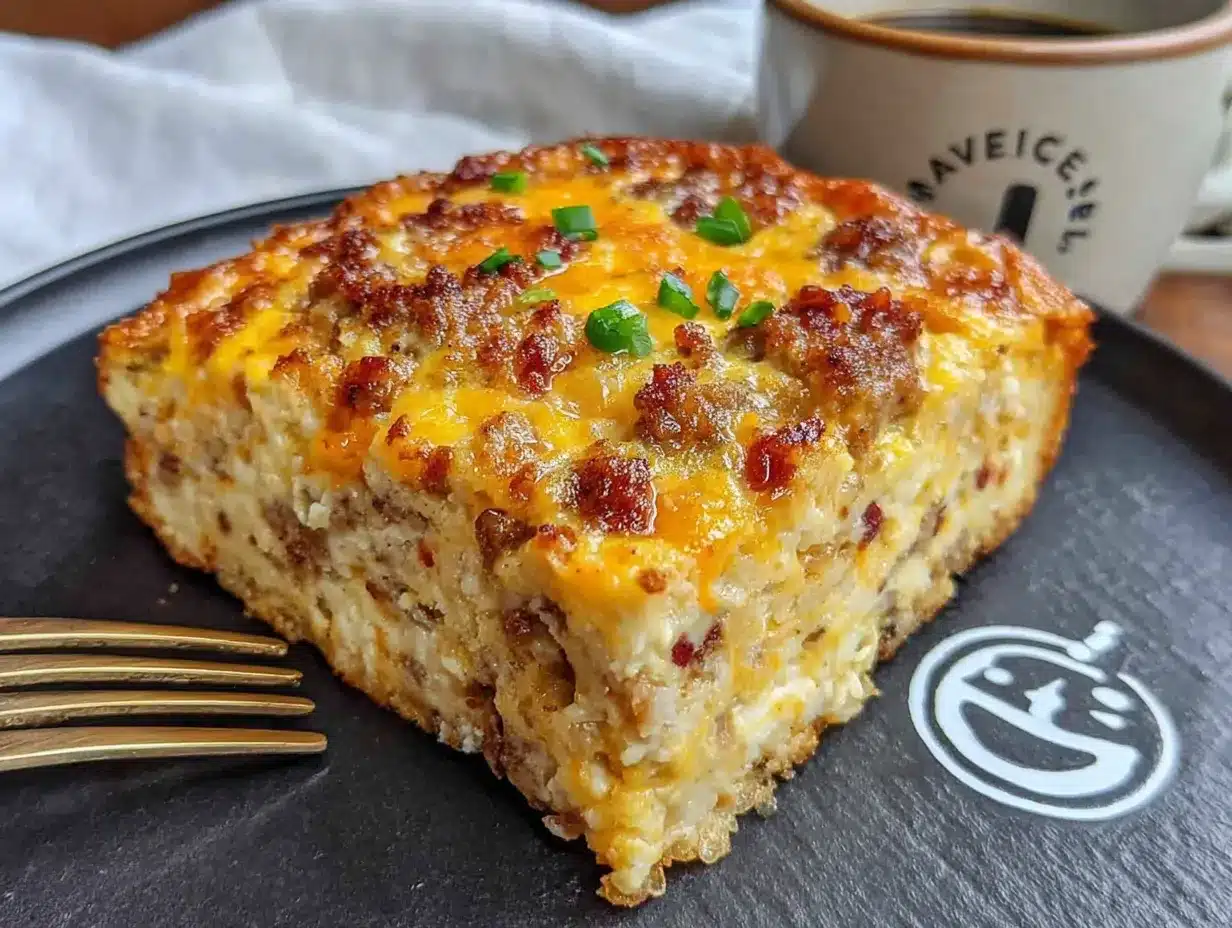
This casserole is forgiving, but following these steps will guarantee you get that perfect, golden, custardy result every single time. Let’s walk through it together.
- Preheat your oven to 350°F (175°C). While it’s heating, grease your 9×13-inch baking dish with butter or non-stick spray. This prevents sticking and helps the edges get beautifully crispy.
- Cook the sausage and vegetables. Place your large skillet over medium-high heat. Add the ground sausage and cook, breaking it up with a wooden spoon, until it’s browned and cooked through — about 6-8 minutes. Don’t drain all the fat; leave about a tablespoon in the pan for flavor. Add the diced onion and red bell pepper, and cook for 3-4 minutes until softened. Stir in the minced garlic and cook for another 30 seconds until fragrant. Remove from heat and set aside.
- Prepare the bread base. Spread the cubed bread evenly across the bottom of your greased baking dish. I like to let it sit out for a few minutes while I prep the custard, which helps it dry out slightly and absorb more liquid later.
- Make the custard. In your large mixing bowl, crack all 10 eggs. Whisk them vigorously until they’re completely uniform in color — about 1 minute of solid whisking. Add the whole milk, heavy cream, salt, black pepper, smoked paprika, and cayenne (if using). Whisk again until everything is fully combined. The mixture should look smooth and slightly frothy.
- Layer the casserole. Spoon the cooked sausage and vegetable mixture evenly over the bread cubes. Sprinkle half of the shredded cheddar and half of the mozzarella over the sausage layer. Pour the egg custard carefully and evenly over the entire dish, making sure to saturate all the bread. Gently press down on the top with a spatula to help the bread absorb the liquid.
- Top with remaining cheese. Sprinkle the rest of the cheddar and mozzarella over the top. This creates that gorgeous, bubbly crust we’re after.
- Let it rest. At this point, you can either bake it immediately or cover it tightly with foil and refrigerate overnight. If you’re baking right away, let it sit on the counter for 15 minutes to let the bread soak up some custard. This step is crucial — don’t skip it, or you’ll end up with dry spots.
- Bake. If baking immediately, cover the dish with aluminum foil and bake for 30 minutes. Then, remove the foil and bake for another 15-20 minutes, until the top is golden brown and the center is set (it should jiggle just slightly when you shake the dish). If you refrigerated it overnight, add 10-15 minutes to the covered baking time since you’re starting from cold.
- Check for doneness. The best way to tell is to insert a knife into the center — if it comes out clean, it’s done. The internal temperature should reach 160°F (71°C). If the top is browning too quickly but the center isn’t set, cover it loosely with foil for the remaining time.
- Rest before serving. This is the hardest part, I know. Let the casserole sit for 5-10 minutes after it comes out of the oven. This allows the custard to set fully and makes it easier to cut clean squares. Garnish with fresh parsley before serving.
Cooking Tips & Techniques
After making this casserole more times than I can count, I’ve picked up a few tricks that make a real difference. Trust me, I’ve learned some of these the hard way.
Don’t over-soak the bread. I once let the assembled casserole sit in the fridge for almost 24 hours, thinking it would be even better. The bread turned into a complete mush. Overnight is perfect — anything beyond 18 hours, and the texture starts to suffer. The bread should be soft but still have some structure.
Brown the sausage properly. Don’t rush this step. You want deep, caramelized bits on the sausage because that’s where the flavor lives. If you crowd the pan, the sausage will steam instead of brown. Work in batches if you need to, or use a larger skillet.
Use a water bath for extra creamy texture. This is a trick I stole from cheesecake recipes. If you place your baking dish inside a larger pan and pour hot water into the outer pan until it comes about halfway up the sides of the casserole dish, you get an incredibly soft, silky custard. It’s optional, but if you’re feeling fancy, it’s worth the extra step.
Watch your salt. Sausage, cheese, and bread all contain varying amounts of salt. I learned this lesson after making a casserole that was borderline inedible because I didn’t account for the salt in the pre-shredded cheese. Always use low-sodium sausage if you’re sensitive to salt, and taste the sausage before adding extra salt to the custard.
Let it rest before cutting. I know you’ll be tempted to dig in right away, but resting is non-negotiable. I once served it immediately, and it fell apart into a soupy mess on everyone’s plates. Those 10 minutes of patience turn a good casserole into a great one.
Multitasking strategy: While the sausage is browning, cube your bread and shred your cheese. While the casserole is baking, set the table and make your coffee. This dish practically manages itself — that’s why I love it for hosting.
Variations & Adaptations
This recipe is a fantastic base, and I’ve played around with it more times than I can count. Here are some of my favorite variations.
- Southwest Style: Swap the cheddar for pepper jack cheese, add a can of drained diced green chiles to the sausage mixture, and top with fresh cilantro instead of parsley. Serve with a dollop of sour cream and salsa on the side.
- Vegetarian Version: Omit the sausage and sauté 8 ounces of sliced mushrooms with the onions and peppers. Add a cup of fresh spinach and cook until wilted. The mushrooms provide that savory, umami flavor that mimics meat beautifully.
- Hash Brown Crust: For extra crunch, line the bottom of the baking dish with a layer of frozen shredded hash browns (thawed and patted dry) before adding the bread. Bake the hash browns for 10 minutes first to get them crispy, then proceed with the recipe.
- Spicy Italian Twist: Use spicy Italian sausage instead of breakfast sausage, add 1/2 teaspoon of fennel seeds to the custard, and use provolone or fontina cheese for a richer, more complex flavor profile.
- Low-Carb Option: Replace the bread with 4 cups of cauliflower florets (roasted until tender) or use a low-carb bread alternative. The texture will be different — more like a crustless quiche — but it’s still delicious and satisfying.
I once tried a version with leftover roasted butternut squash instead of bread, and honestly, it was incredible. The squash added a subtle sweetness that paired perfectly with the savory sausage and cheese. Don’t be afraid to experiment — this recipe is incredibly forgiving.
Serving & Storage Suggestions
This casserole is a star on any brunch table, but how you serve and store it makes a big difference.
Serving: Let the casserole rest for 10 minutes after baking, then cut into squares using a sharp knife. Serve warm, not piping hot, so the flavors have a chance to meld. I love to set up a little brunch bar with sides like fresh fruit salad, a simple green salad with vinaigrette, and maybe some roasted potatoes. For beverages, mimosas, fresh orange juice, or a pot of strong coffee are perfect companions.
Presentation tip for hosting: Sprinkle extra fresh parsley or chives on top just before serving for a pop of green. Place the baking dish on a wooden board or a trivet in the center of the table — it looks rustic and inviting. I always put out a small bowl of hot sauce for those who want extra heat.
Storage: Leftovers keep beautifully in the refrigerator for up to 4 days. Let the casserole cool completely, then cover the dish tightly with plastic wrap or transfer individual portions to airtight containers. The flavors actually deepen overnight, so leftovers might taste even better the next day.
Freezing: This casserole freezes like a dream. Bake it completely, let it cool, then wrap the entire dish in a layer of plastic wrap followed by a layer of aluminum foil. Freeze for up to 3 months. To reheat, thaw overnight in the refrigerator, then bake at 350°F for 20-25 minutes until warmed through. You can also reheat individual slices in the microwave for about 2 minutes.
Reheating: For the best texture, reheat in the oven rather than the microwave. Place a portion on a baking sheet and warm at 350°F for 10-15 minutes. The top will get crispy again, and the inside will be perfectly tender. If you’re in a hurry, the microwave works fine — just know the bread will be softer.
Nutritional Information & Benefits
Let’s be honest — this is not a health food, and it doesn’t pretend to be. But it does have some redeeming qualities, and knowing what’s in it helps you balance your plate.
| Nutrient | Per Serving (1/12 of recipe) |
|---|---|
| Calories | 385 |
| Total Fat | 25g |
| Saturated Fat | 12g |
| Cholesterol | 215mg |
| Sodium | 720mg |
| Total Carbohydrates | 18g |
| Dietary Fiber | 1g |
| Sugars | 4g |
| Protein | 22g |
This casserole is packed with protein from the eggs, sausage, and cheese, which will keep you full and satisfied for hours. Eggs are a great source of choline, which supports brain health, and the bell peppers add a nice dose of vitamin C. If you’re watching your sodium, use low-sodium sausage and reduce the added salt. For a lighter option, serve it with a big side of fresh fruit or a green salad to round out the meal.
Dietary Considerations: This recipe contains gluten, dairy, and eggs. For gluten-free, use gluten-free bread. For dairy-free, use unsweetened oat milk and a dairy-free cheese alternative. This recipe is not suitable for vegan diets, but the vegetarian version above works well for lacto-ovo vegetarians.
Frequently Asked Questions
Can I make this breakfast casserole the night before?
Absolutely! In fact, I recommend it. Assemble the casserole completely, cover it tightly with foil, and refrigerate for up to 18 hours. The bread soaks up the custard beautifully overnight, resulting in an even more cohesive texture. Just add 10-15 minutes to the covered baking time since you’re starting from a cold dish.
Can I use a different type of bread?
Yes, but the texture will vary. Sturdy breads like sourdough, French loaf, or ciabatta work best because they hold their shape. Soft breads like white sandwich bread or brioche will result in a softer, more pudding-like casserole — which is delicious, just different. Avoid very dense breads like rye or pumpernickel, as they can overpower the other flavors.
How do I know when the casserole is fully baked?
The best test is inserting a knife into the center — if it comes out clean, it’s done. The center should be set but still have a slight jiggle, similar to a cheesecake. The internal temperature should reach 160°F (71°C). If the top is browning too quickly, cover it loosely with foil for the remainder of the baking time.
Can I use pre-shredded cheese?
You can, but I don’t recommend it. Pre-shredded cheese is coated with anti-caking agents like cellulose or potato starch, which prevent it from melting smoothly. Your casserole will still taste good, but you won’t get that beautiful, creamy, stretchy melt that freshly shredded cheese provides. It takes an extra 2 minutes to shred your own, and it makes a noticeable difference.
How do I prevent the casserole from being soggy?
Sogginess usually comes from too much liquid or bread that’s too fresh. Use day-old or slightly stale bread, and don’t go overboard with the milk mixture. The bread should be saturated but not swimming in liquid. Also, make sure to let the assembled casserole rest for at least 15 minutes before baking so the bread can absorb the custard evenly.
Conclusion
This Easy Cheesy Sausage Breakfast Casserole is more than just a recipe — it’s a solution for every host who wants to serve something impressive without the stress. It’s the dish that lets you sleep in, enjoy your coffee, and still put a gorgeous, homemade breakfast on the table for your guests. The combination of savory sausage, melted cheese, and soft, custardy bread is pure comfort, and the best part is how forgiving and adaptable it is.
I encourage you to make this your own. Swap in your favorite cheese, add some veggies, or spice it up with a little extra heat. The first time I made this, I was just trying to use up leftovers, and now it’s the recipe I’m most known for. That’s the magic of cooking — sometimes the simplest things become the most beloved.
I’d love to hear how yours turns out! Leave a comment below and tell me about any variations you tried, or share a photo of your casserole. Don’t forget to pin this recipe for later and share it with your fellow brunch lovers. Happy cooking, and here’s to many more mornings around the table with the people you love!
Pin This Recipe!

Easy Cheesy Sausage Breakfast Casserole Recipe

This Easy Cheesy Sausage Breakfast Casserole is a forgiving, crowd-pleasing dish that comes together in under 20 minutes of active prep. Perfect for brunch gatherings, holiday mornings, or lazy weekends, it features savory sausage, melted cheese, and a soft, custardy bread base.
- Prep Time: 20 minutes
- Cook Time: 45 minutes
- Total Time: 1 hour 5 minutes
- Yield: 12 servings 1x
- Category: Main Course
- Cuisine: American
Ingredients
- 1 lb breakfast sausage (ground, not links)
- 10 large eggs
- 2 cups whole milk
- 1/2 cup heavy cream
- 8 cups cubed bread (about 1 loaf, day-old or slightly stale)
- 2 cups shredded sharp cheddar cheese
- 1 cup shredded mozzarella cheese
- 1 small yellow onion, diced
- 1 red bell pepper, diced
- 2 cloves garlic, minced
- 1 teaspoon salt
- 1/2 teaspoon black pepper
- 1/2 teaspoon smoked paprika
- 1/4 teaspoon cayenne pepper (optional)
- 2 tablespoons chopped fresh parsley (for garnish)
Instructions
- Preheat your oven to 350°F (175°C). Grease a 9×13-inch baking dish with butter or non-stick spray.
- Cook the sausage and vegetables: In a large skillet over medium-high heat, cook the ground sausage, breaking it up, until browned and cooked through (6-8 minutes). Leave about a tablespoon of fat in the pan. Add diced onion and red bell pepper, cook for 3-4 minutes until softened. Stir in minced garlic and cook for 30 seconds until fragrant. Remove from heat.
- Prepare the bread base: Spread the cubed bread evenly across the bottom of the greased baking dish. Let it sit while you prepare the custard.
- Make the custard: In a large mixing bowl, whisk the 10 eggs until uniform. Add whole milk, heavy cream, salt, black pepper, smoked paprika, and cayenne (if using). Whisk until fully combined and slightly frothy.
- Layer the casserole: Spoon the cooked sausage and vegetable mixture evenly over the bread cubes. Sprinkle half of the shredded cheddar and half of the mozzarella over the sausage. Pour the egg custard evenly over the entire dish, pressing down gently with a spatula to help the bread absorb the liquid.
- Top with remaining cheese: Sprinkle the rest of the cheddar and mozzarella over the top.
- Let it rest: Either bake immediately after letting it sit on the counter for 15 minutes, or cover tightly with foil and refrigerate overnight. If refrigerating, add 10-15 minutes to the covered baking time.
- Bake: Cover the dish with aluminum foil and bake for 30 minutes. Remove the foil and bake for another 15-20 minutes, until the top is golden brown and the center is set (it should jiggle slightly). The internal temperature should reach 160°F (71°C).
- Check for doneness: Insert a knife into the center; if it comes out clean, it’s done. If the top browns too quickly, cover loosely with foil.
- Rest before serving: Let the casserole sit for 5-10 minutes after baking. Garnish with fresh parsley before serving.
Notes
For best results, use day-old or slightly stale bread. Let the assembled casserole rest for at least 15 minutes before baking to allow the bread to absorb the custard. If refrigerating overnight, add 10-15 minutes to the covered baking time. For a gluten-free version, use gluten-free bread. For a dairy-free version, use unsweetened oat milk and dairy-free cheese.
Nutrition
- Serving Size: 1/12 of recipe
- Calories: 385
- Sugar: 4
- Sodium: 720
- Fat: 25
- Saturated Fat: 12
- Carbohydrates: 18
- Fiber: 1
- Protein: 22
Keywords: breakfast casserole, sausage casserole, easy breakfast, brunch recipe, cheesy casserole, overnight casserole